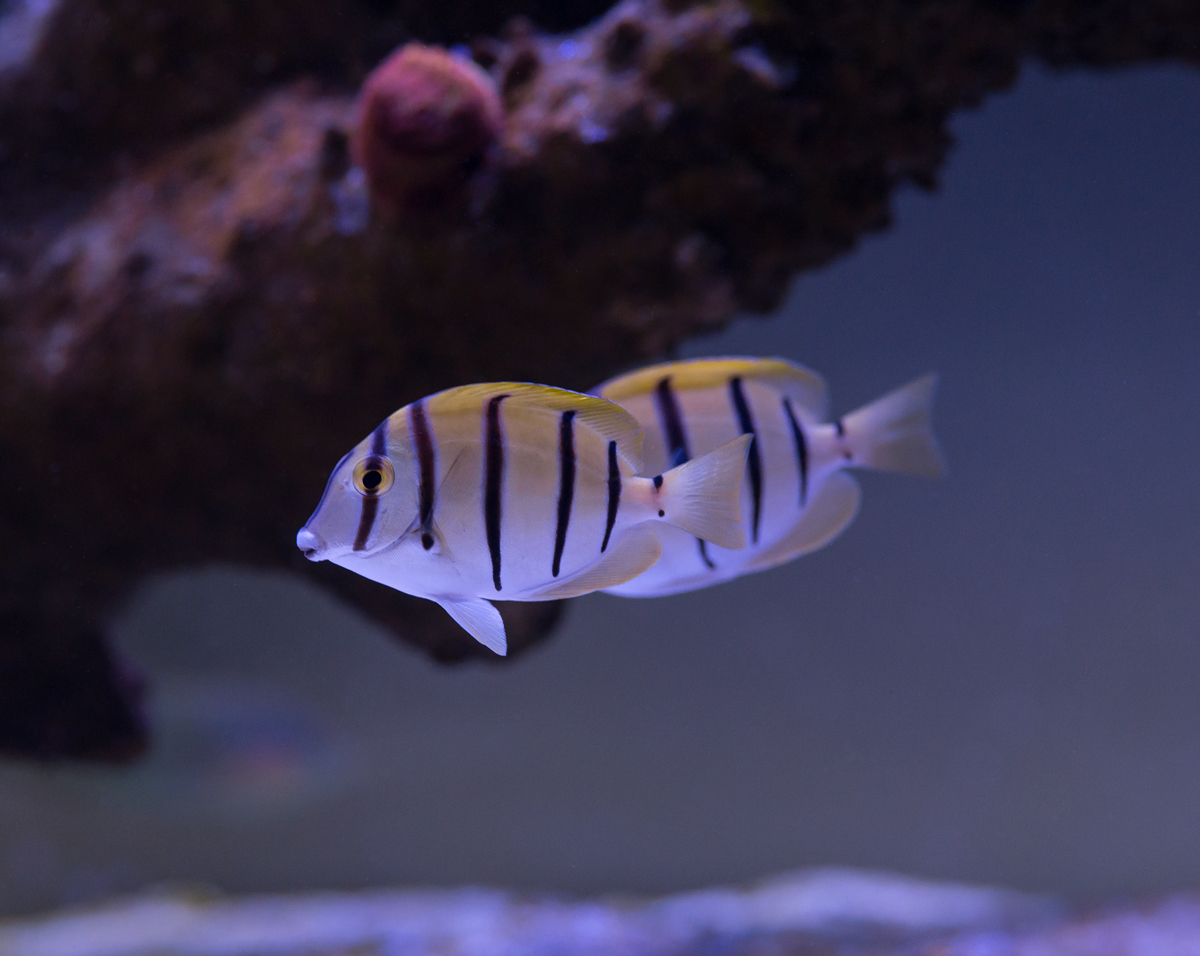
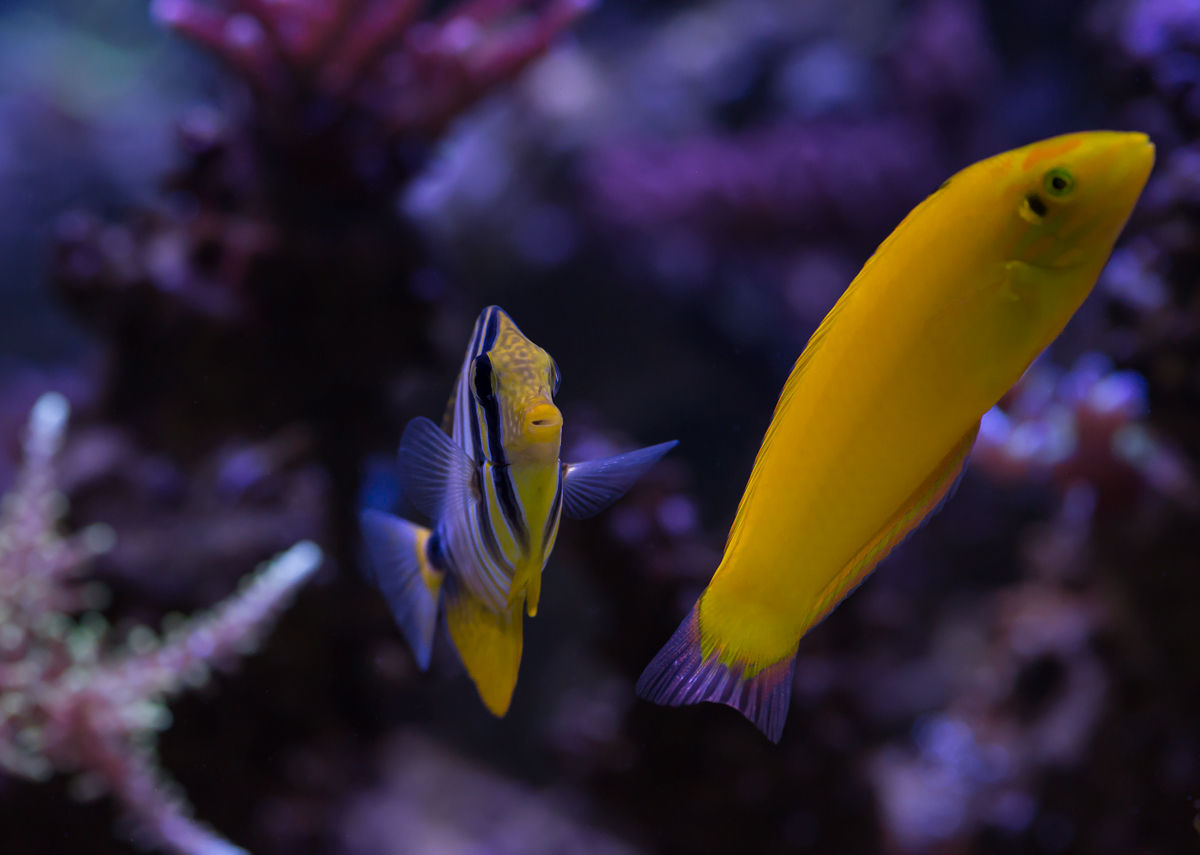
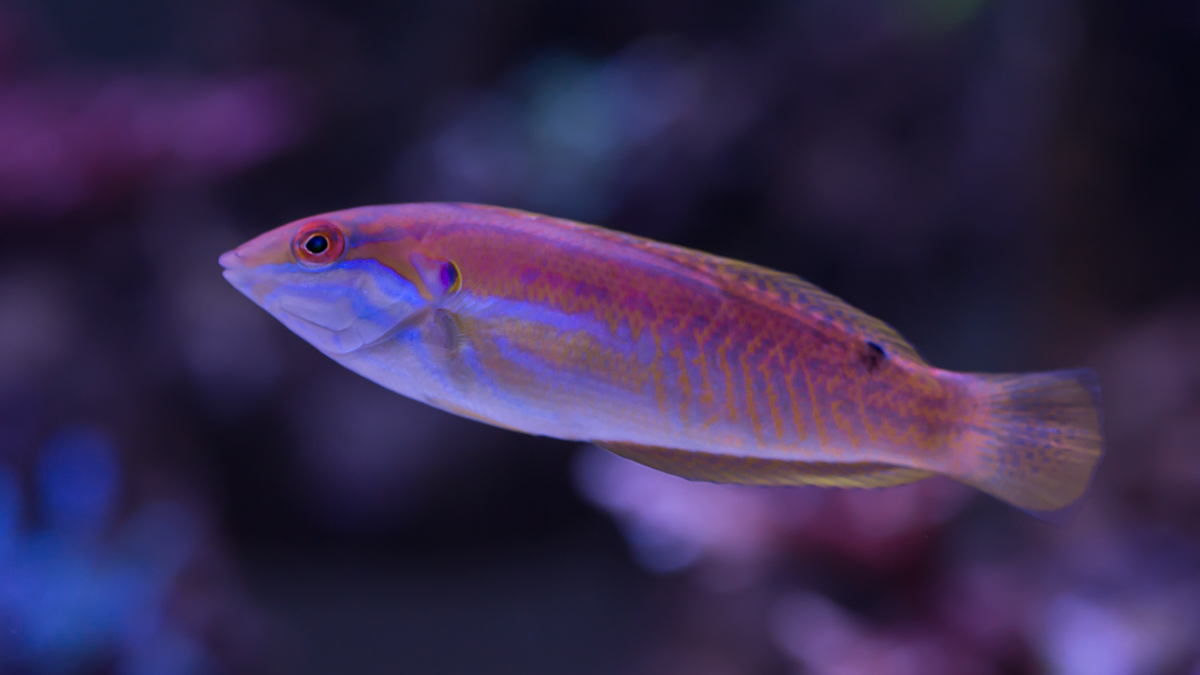
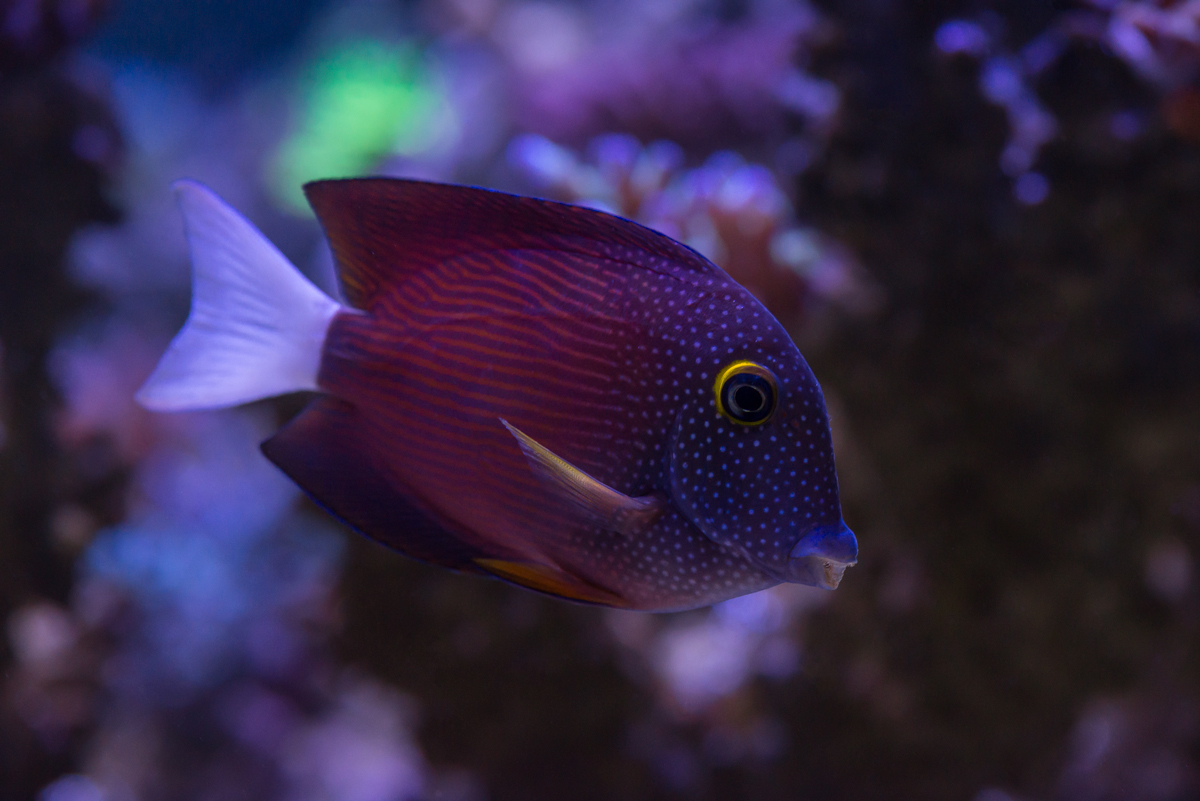
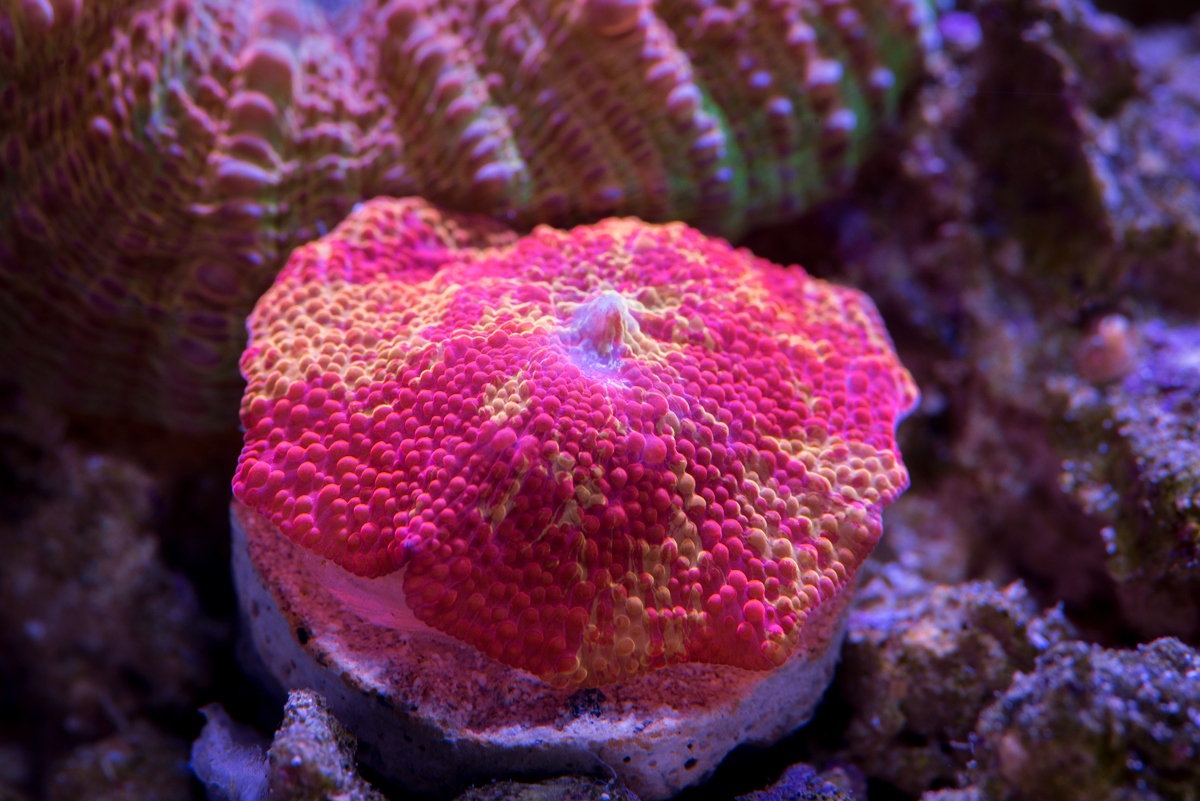
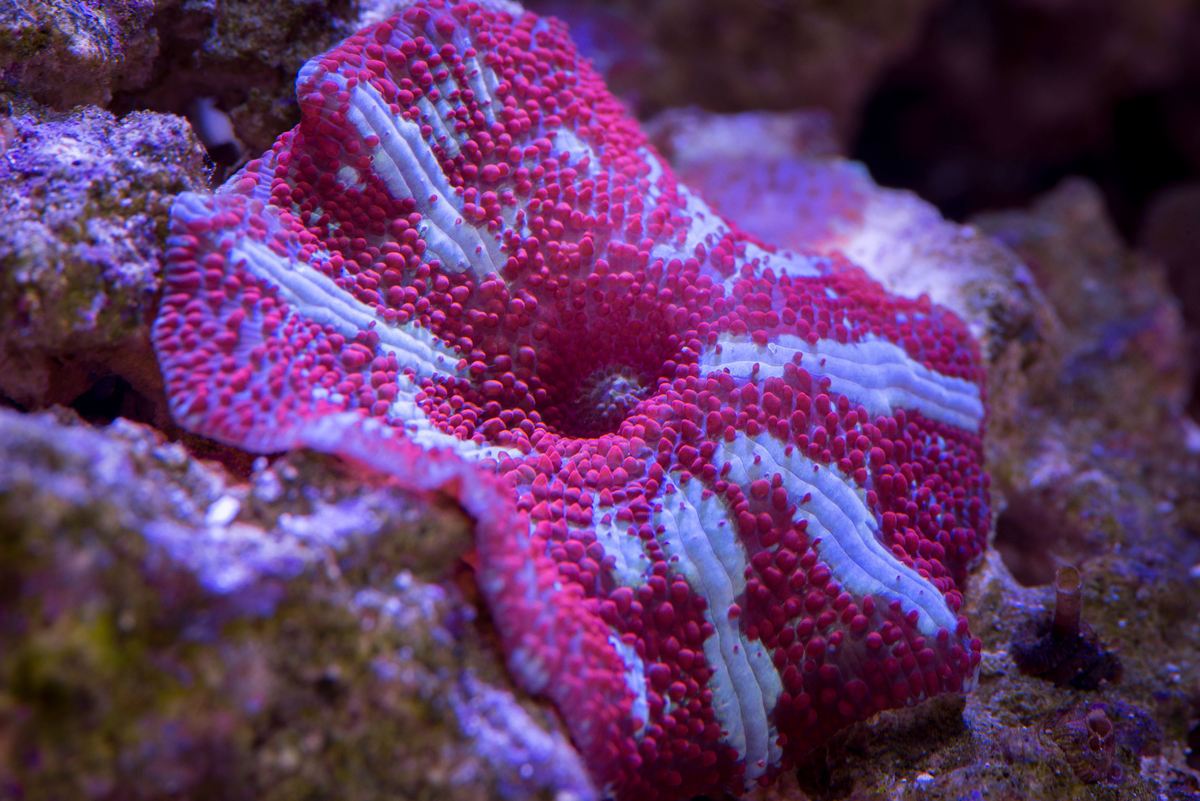
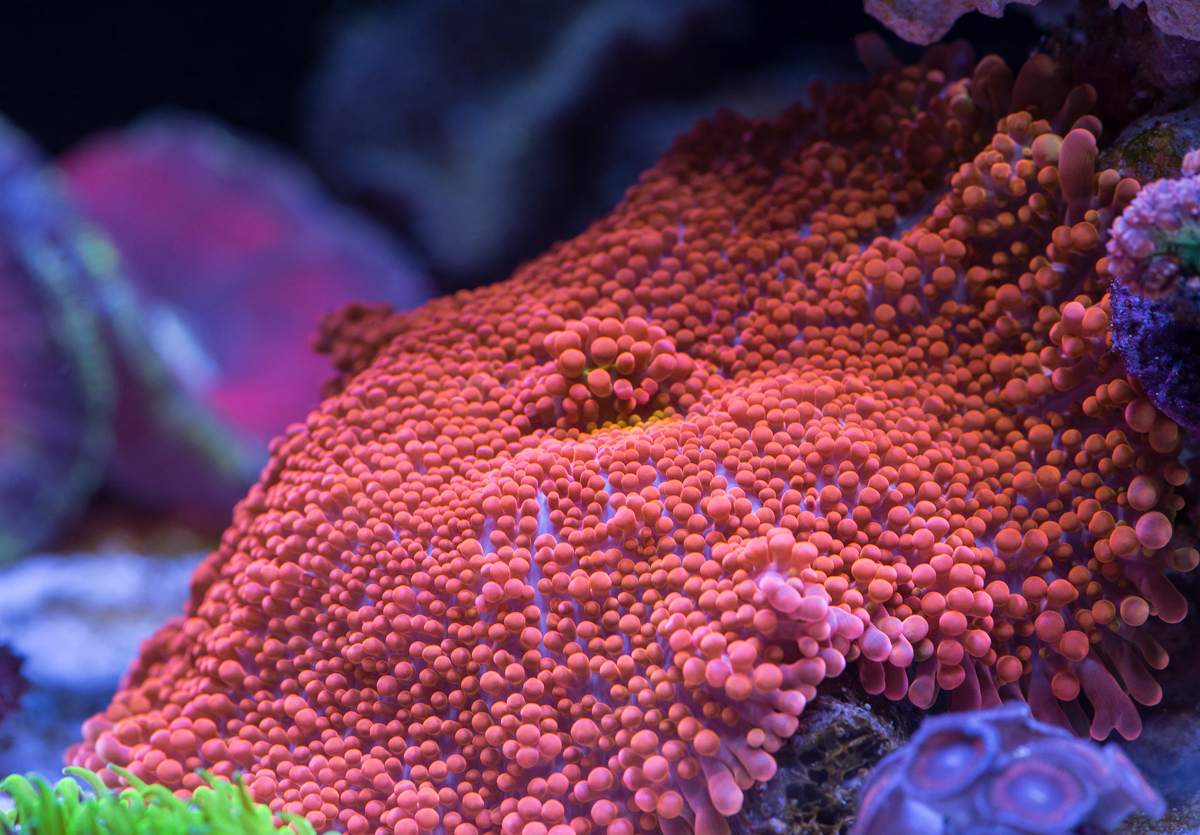
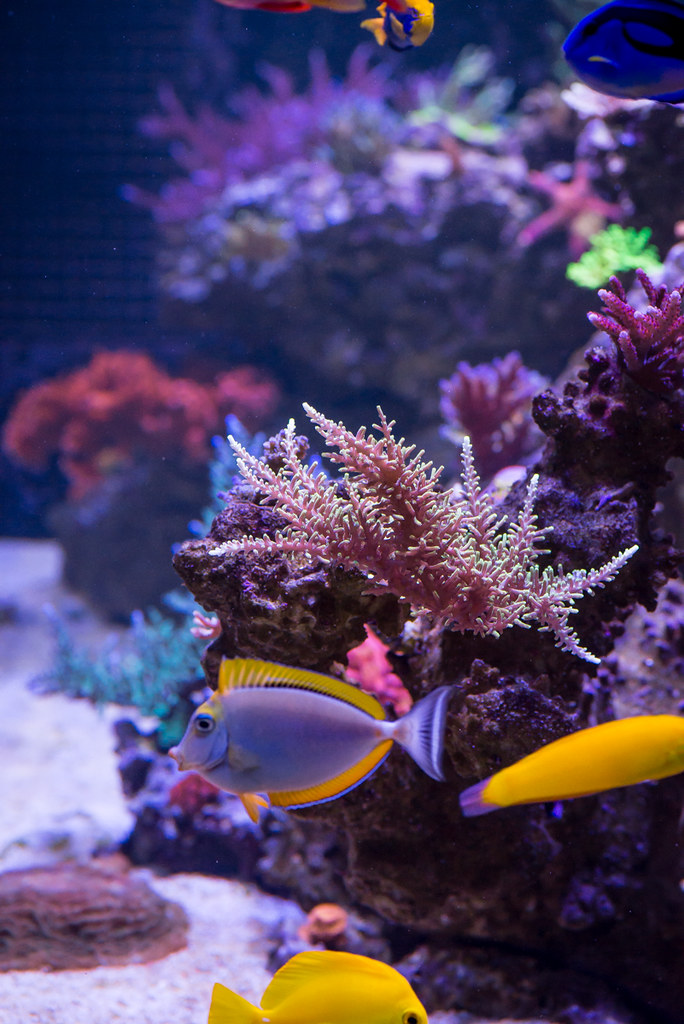
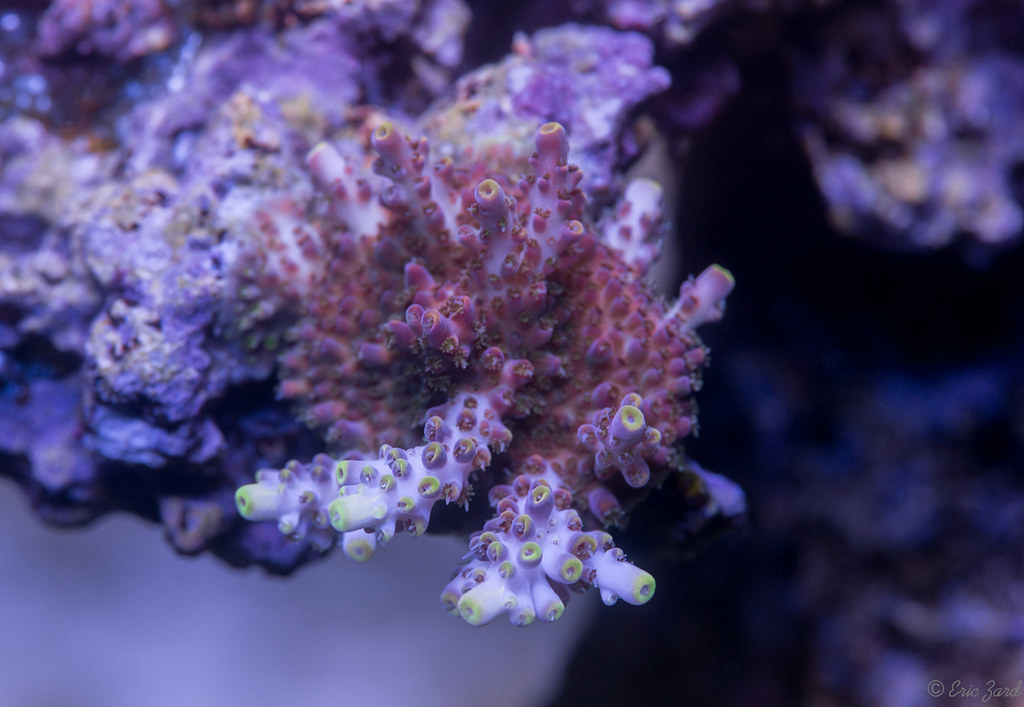
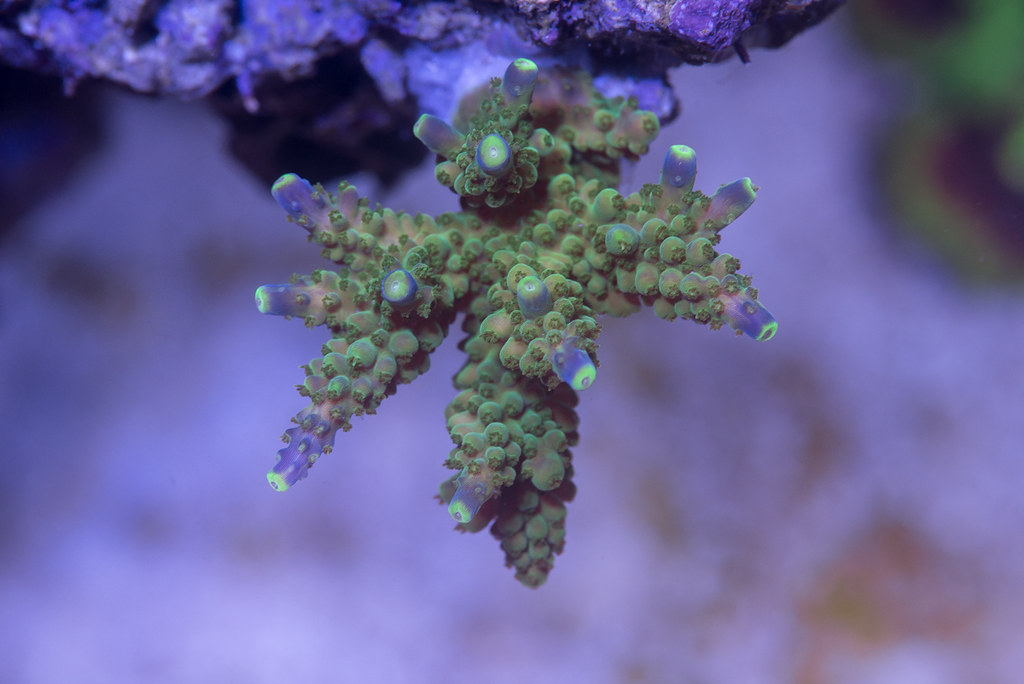
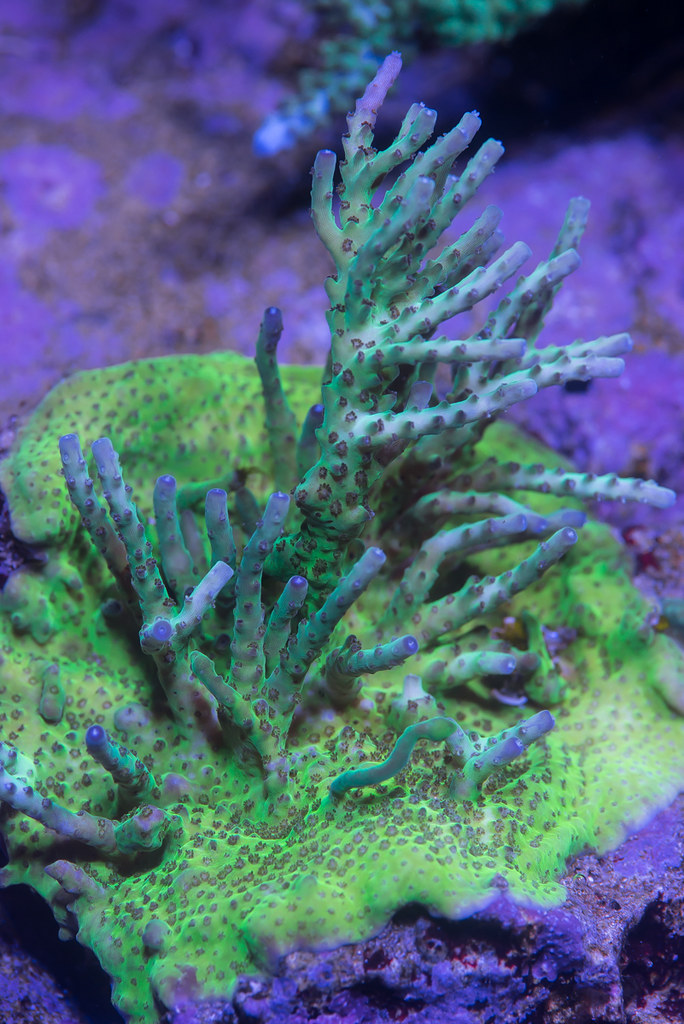
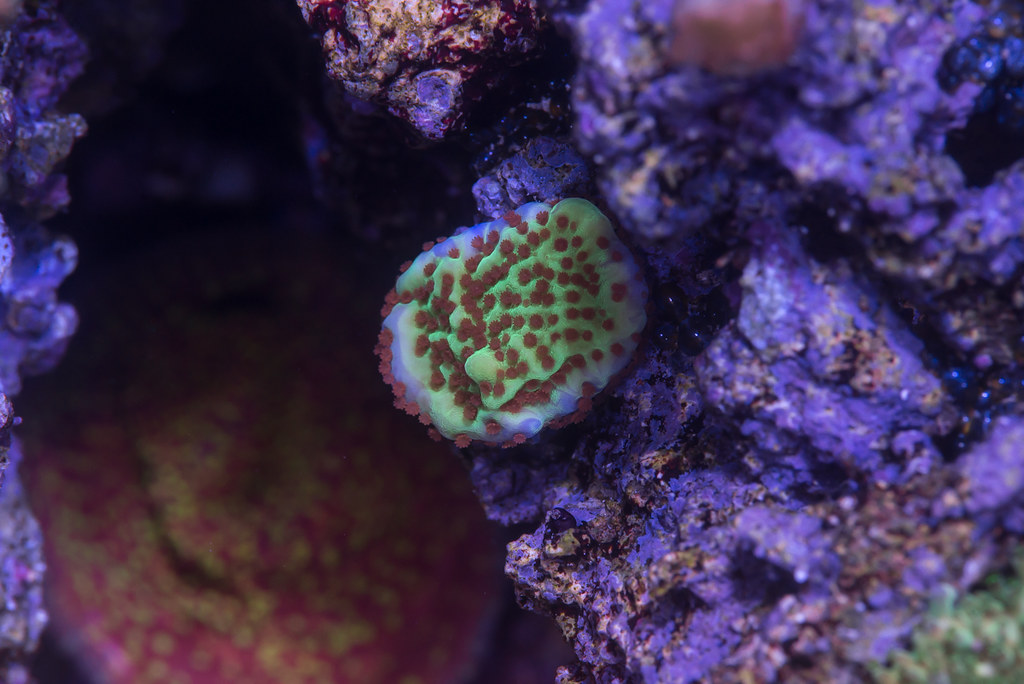
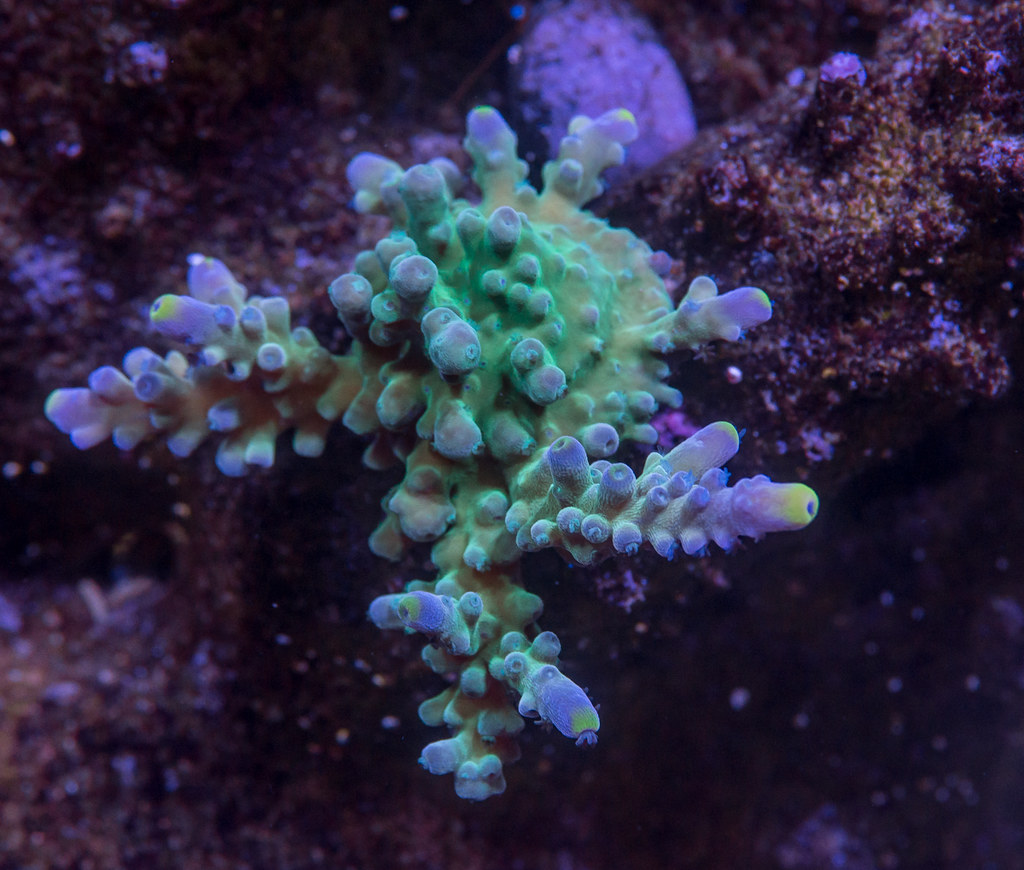
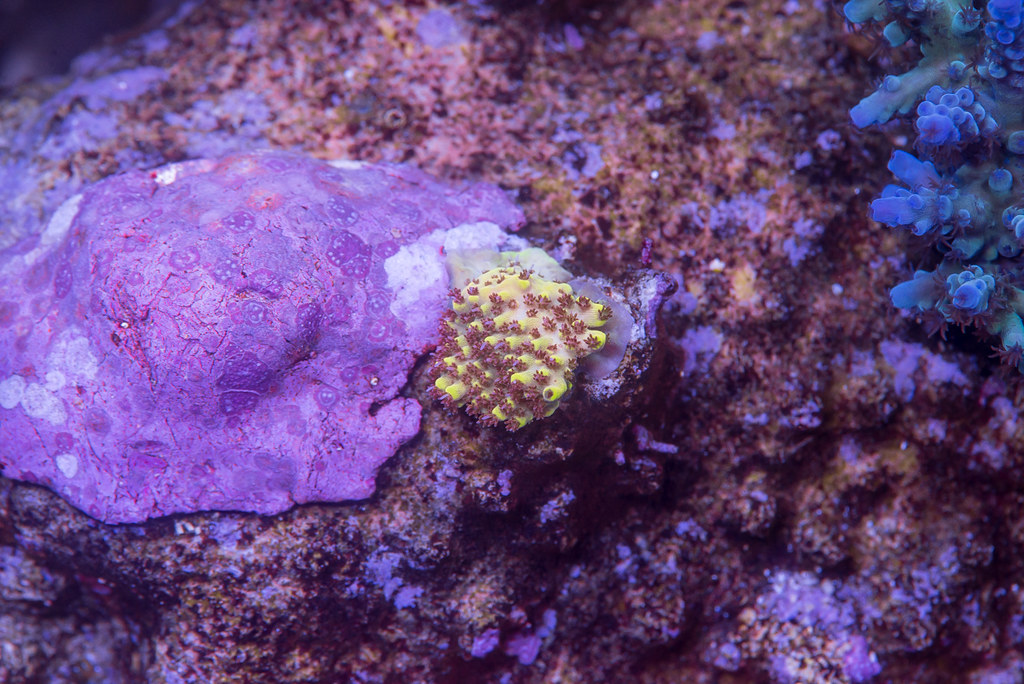
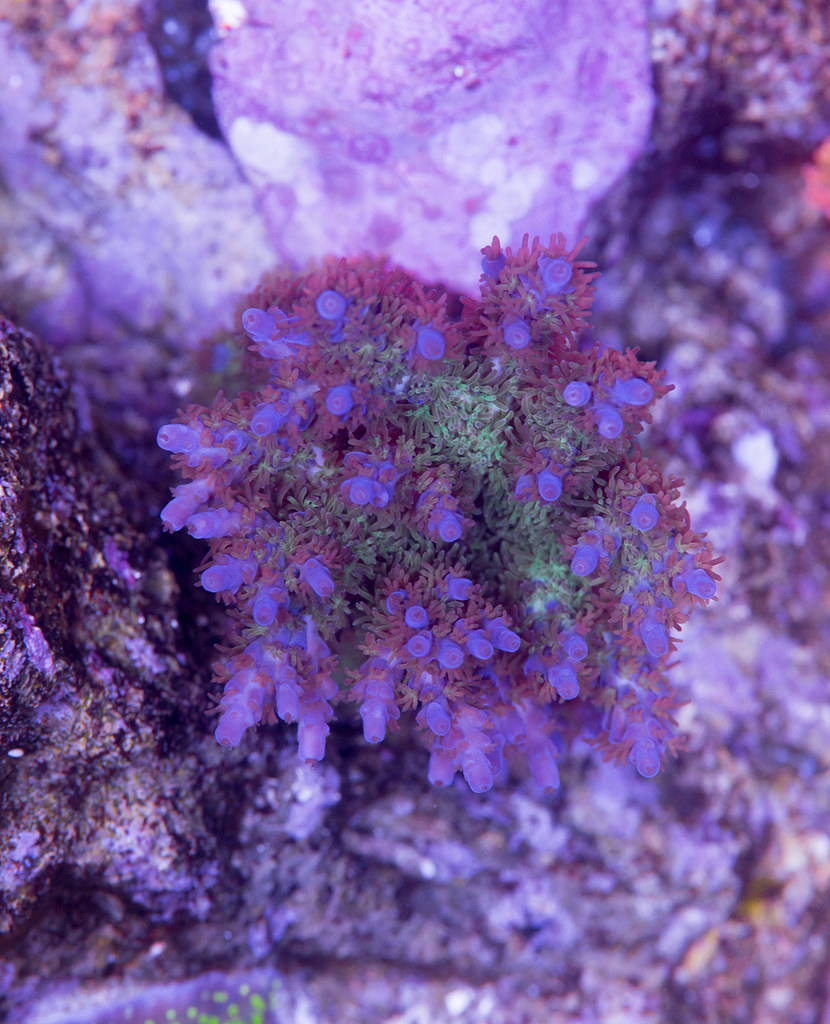
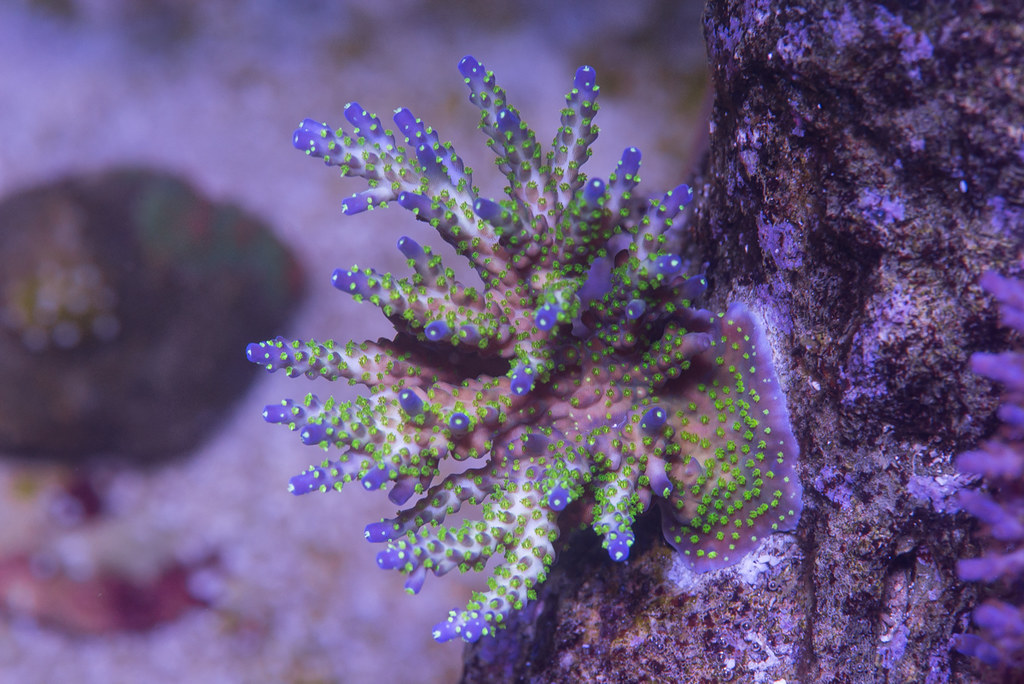
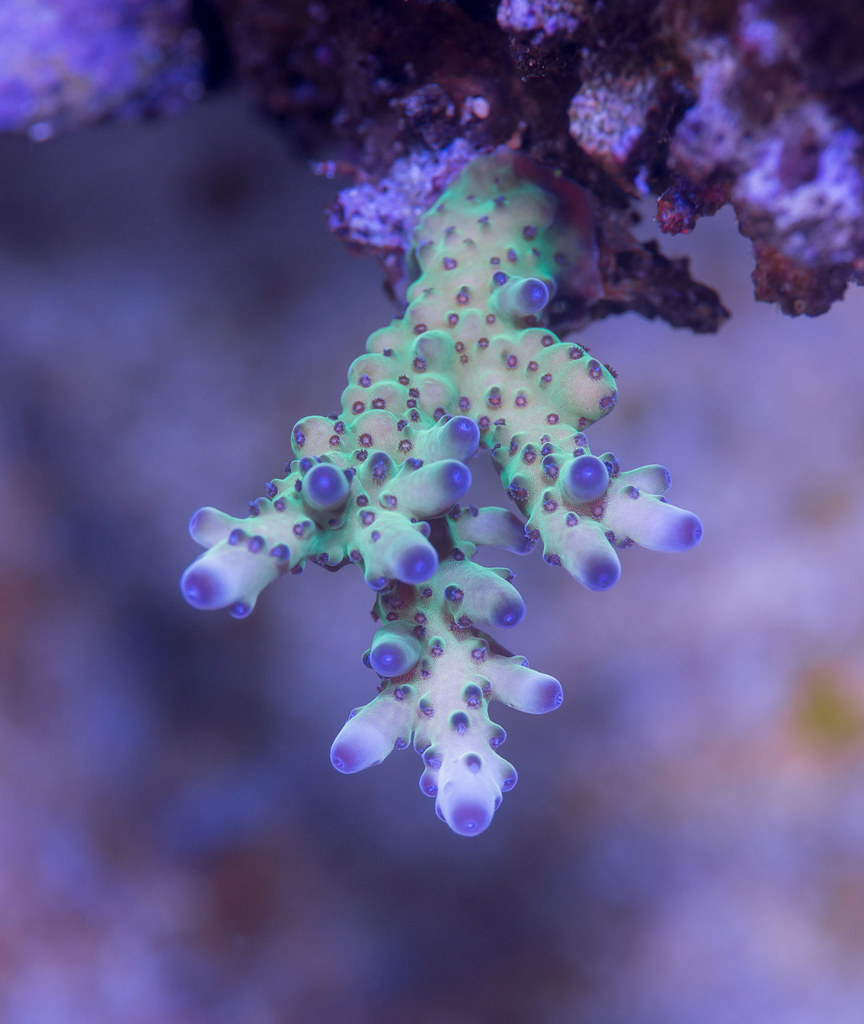
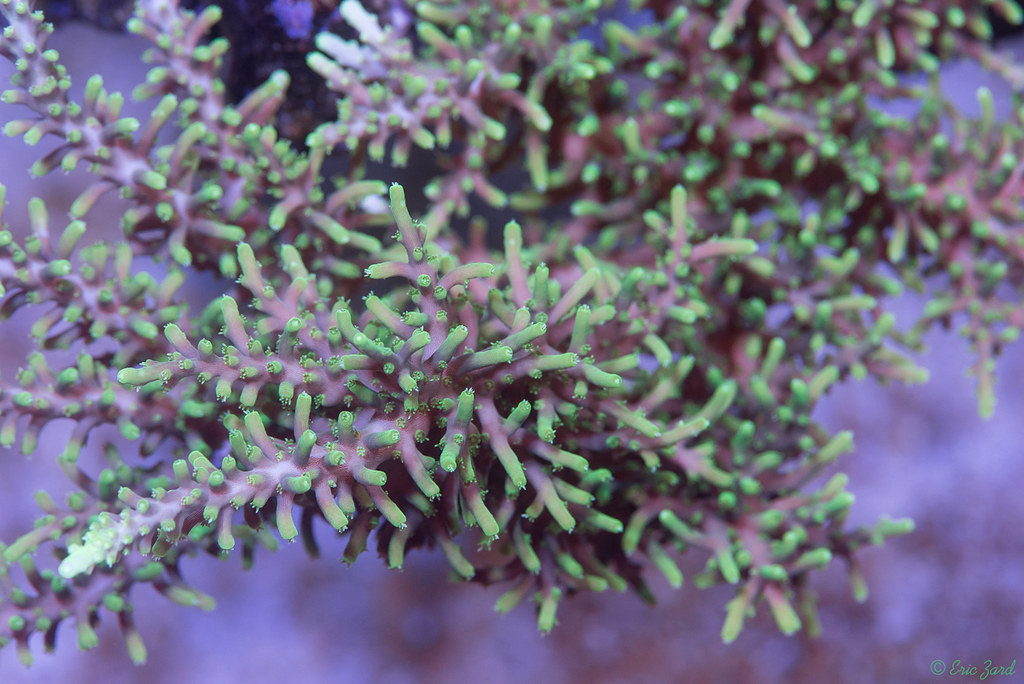
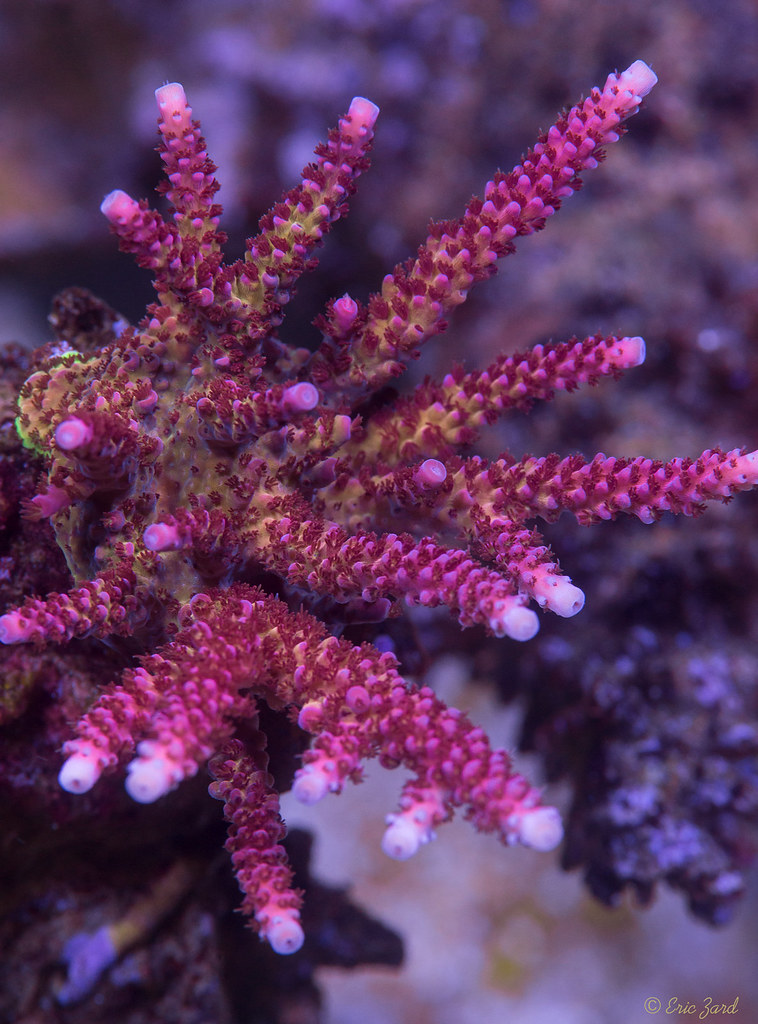
I used a Nikon D600 with the Nikon 105mm f/2.8 macro lens. Sounds like a very similar set up to yours only Nikon vs. Canon.
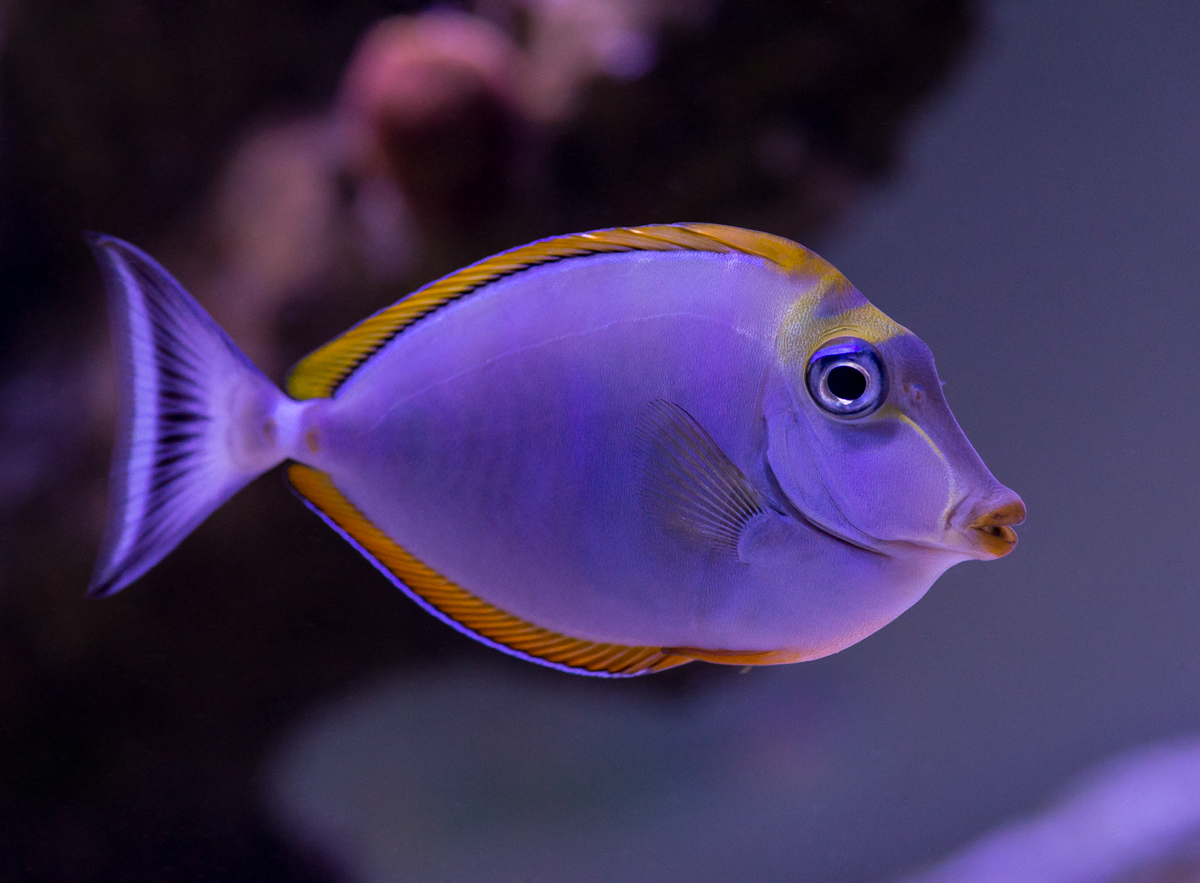
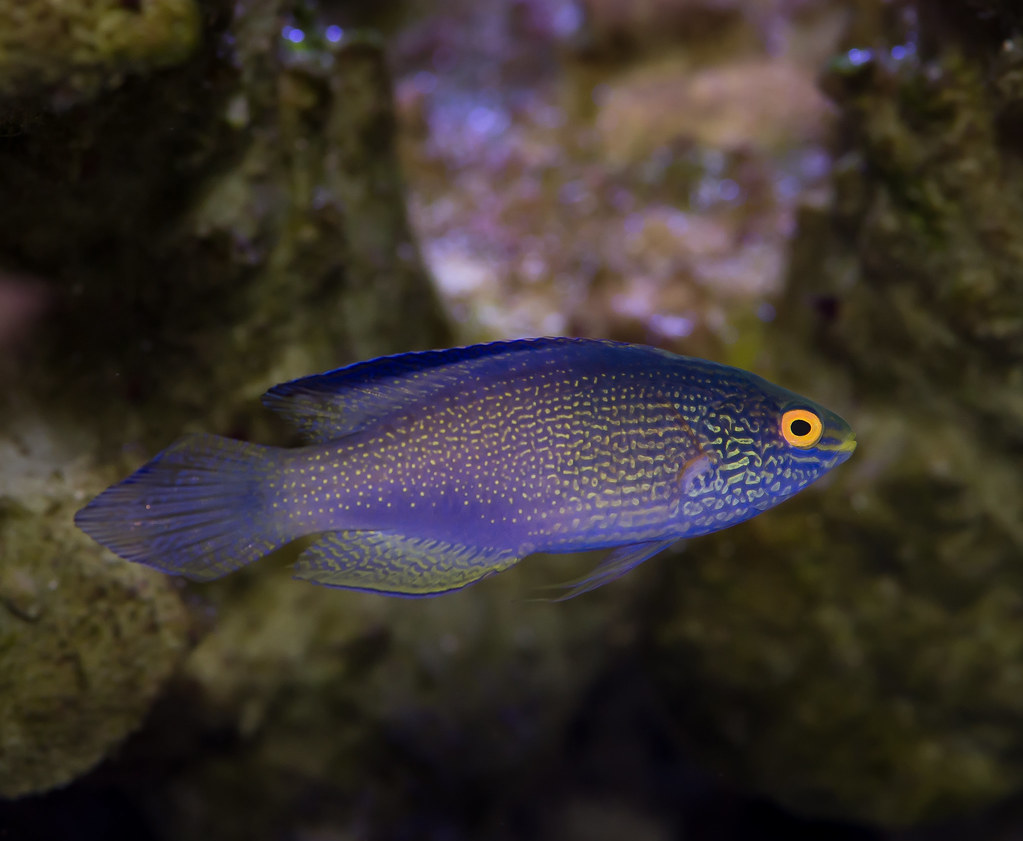
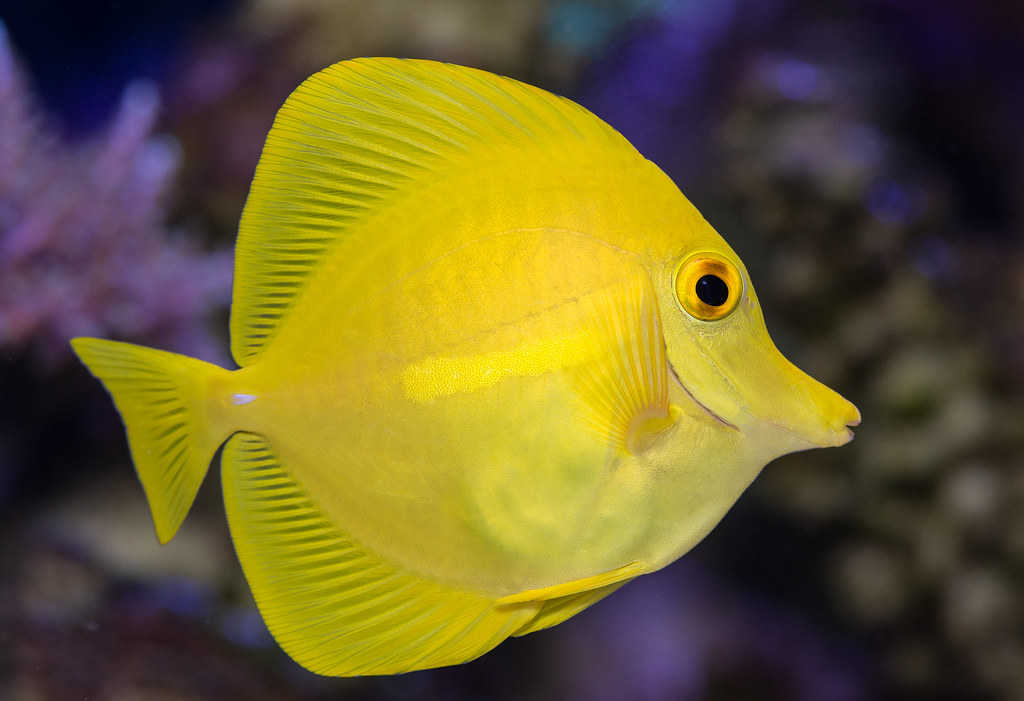
Normally I use a flash for fish pictures (like the one of the Rhomboid and of the Yellow Tang above), but the others were taken without a flash. For those pictures, I put the camera in Manual mode and adjusted the shutter to 1/250, f/8.0 and ISO of 2000. With those settings, I was able to get enough light into the shot to stop the fish. The trick is to get the eye in focus as it makes for a much better picture, so just try to keep that in mind.
If the fish was still blurry, I would have to increase the ISO on my camera to around 2500-3200, but with my D600, things start getting "noise," which has to be processed out in Adobe Lightroom, and you lose detail/sharpness.
My preference is to shoot with ISO around 400 though since it creates a much cleaner/sharper image. But there just isn't enough light to stop fish swimming without a flash.
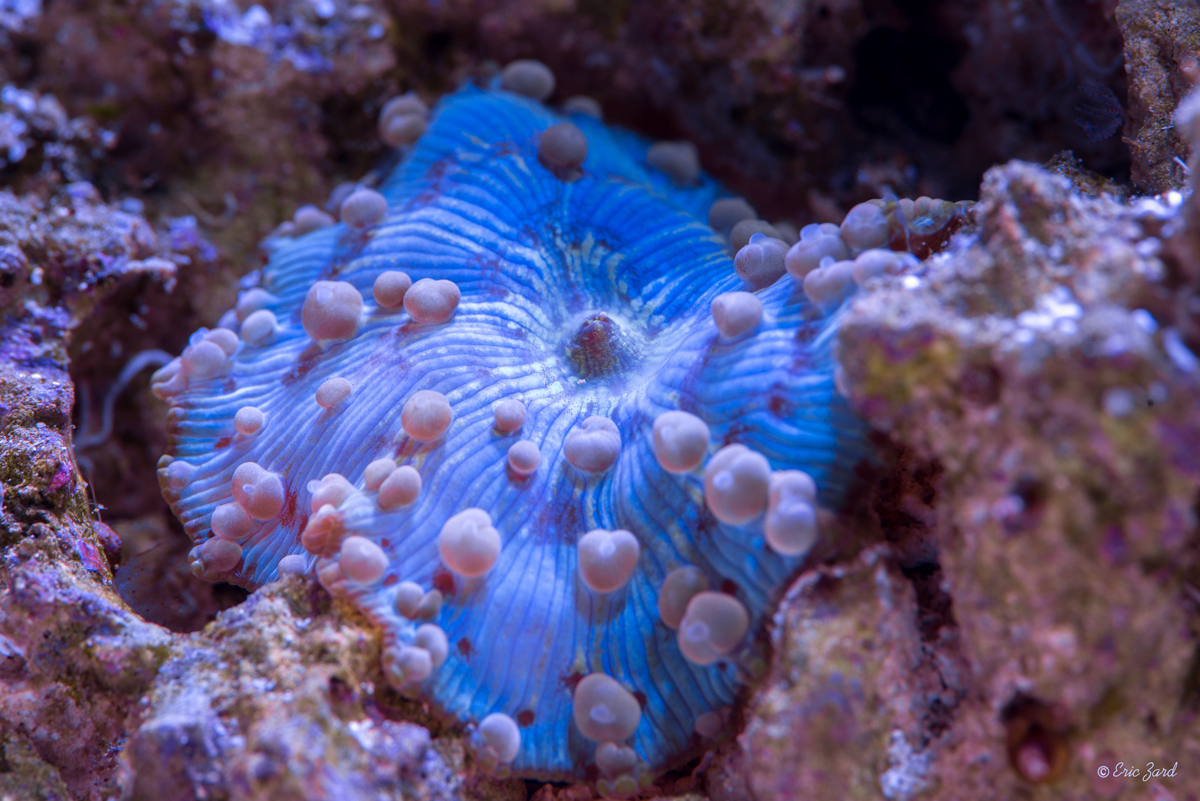
For corals, I use a tripod and a 2-second delayed shutter (there's an internal setting on almost every camera for this). ISO is typically set to around 400. I play with the aperture range depending on how much of the coral I want to appear in focus but I'd say f/9-16 is my typical range. Then, I just take pictures with different shutter speeds until there's enough light to make it as accurate as I can.
I post-process all of my pictures using Adobe Lightroom CC for a more accurate white balance and some color/clarity tweaks (the camera's processor is pretty good at getting the colors right, but never perfect). Occasionally I'll use Adobe Photoshop CC if there is a lot of particulate in the water column that I want to remove -- it's just distracting -- because there's a tool on there that's more efficient to use.
Happy to answer more specific questions or clarify things.