Show Your Skills on ID

I've always wondered - there seems to be some selective force that creates calicos and piebalds in populations of animals with limited genetic exchange; the queen angel, this hogfish, calico damba cichlids in Madagascar, OB cichlids in Malawi, etc. Even calico cats are inbred I believe.

Jay
 
it.jpg
 
<a href=showthread.php?s=&postid=14210336#post14210336 target=_blank>Originally posted</a> by JHemdal
I've always wondered - there seems to be some selective force that creates calicos and piebalds in populations of animals with limited genetic exchange; the queen angel, this hogfish, calico damba cichlids in Madagascar, OB cichlids in Malawi, etc. Even calico cats are inbred I believe.

Jay

I also wonder if it may be caused by the lack of a specific pressure in the isolated locations they are found. Are there any other large angels found at St. Paul's Rocks?
 
My first guess was Chaetodon argentatus, but it doesn't seem quite black enough. OR - it could be a hybrid argentatus x xanthurus.

You wouldn't post a picture of a fish in its night coloration would you? C. rafflesii lose their yellow at night.

Jay
 
Yeah - that's my new strategy - throw out three names at a time, better chances that way!

O.K., this is "old school" no crop, just who can open their books the fastest:

wrasse.jpg


Jay
 
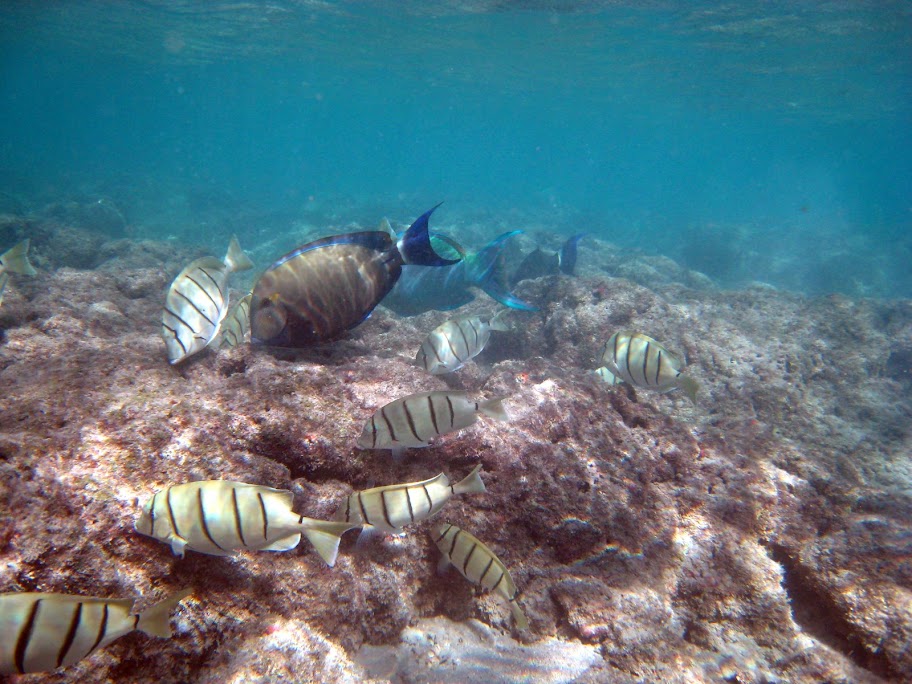
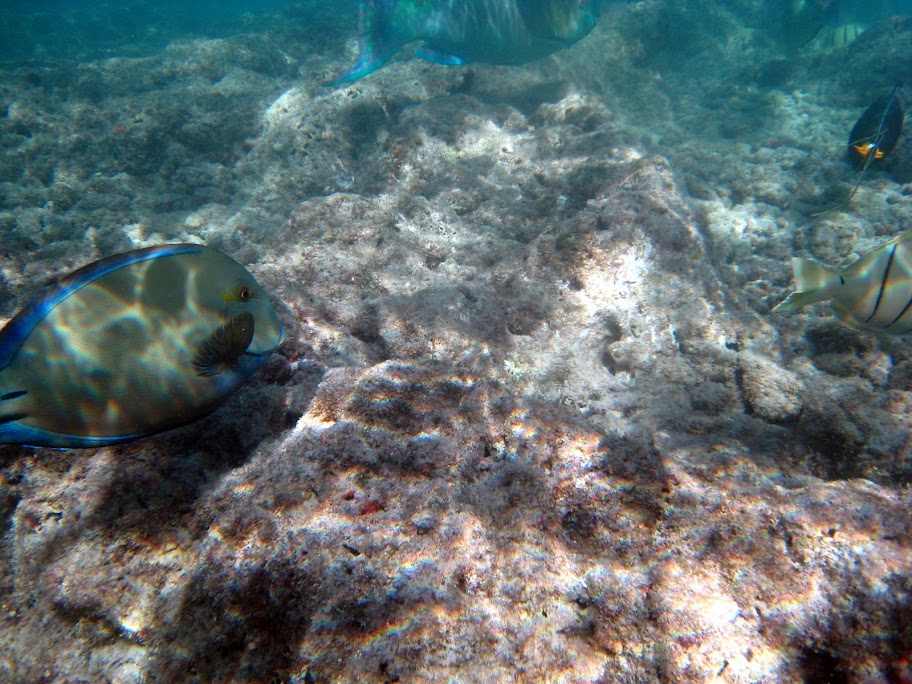
Can someone please help me identify the tang in these pictures?

IMG_0934.JPG


IMG_0937.JPG


Not the convict tang or the naso tang but the other one. The pictures were taken in Hanauma bay, Hawaii. I believe it is either Acanthurus xanthopterus or dussumieri. Thanks.
 
<a href=showthread.php?s=&postid=14220070#post14220070 target=_blank>Originally posted</a> by hwttdz
How can one tell it's not Acanthurus blochii?

Actually, now that you mention it I think it is A. blochii. :) A. xanthopterus has pec fins that are a bit more yellow rather than grayish-blue as seen in the above photos.
 
Bumping this back up. I believe we are still on Matt's picture. :)

Hint: You won't be able to use Fishbase for this species, as the main picture doesn't look much like it.
 
Back
Top