
You are using an out of date browser. It may not display this or other websites correctly.
You should upgrade or use an alternative browser.
You should upgrade or use an alternative browser.
what do h.crispa look like when new to a tank
- Thread starter adtravels
- Start date


jer77
Phish Lover
One of mines in my avatar, here's another pic:
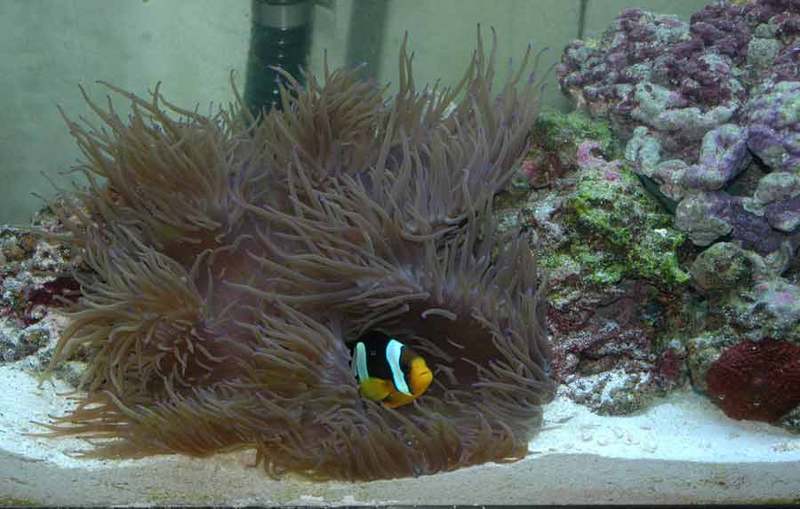
When I first got it it was severely bleached and smaller with smaller tentacles.
Here's another one of my H. crispa's recently eating some shrimp:
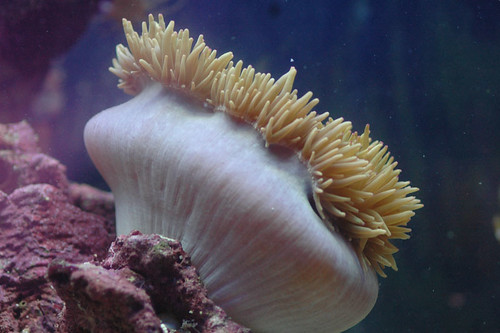
Aquarium raised H. crispa's do look different than the pics I've seen of wild ones that have a leathery appearance. Some do not have purple tips too.
When I first got it it was severely bleached and smaller with smaller tentacles.
Here's another one of my H. crispa's recently eating some shrimp:
Aquarium raised H. crispa's do look different than the pics I've seen of wild ones that have a leathery appearance. Some do not have purple tips too.
marc price
Active member
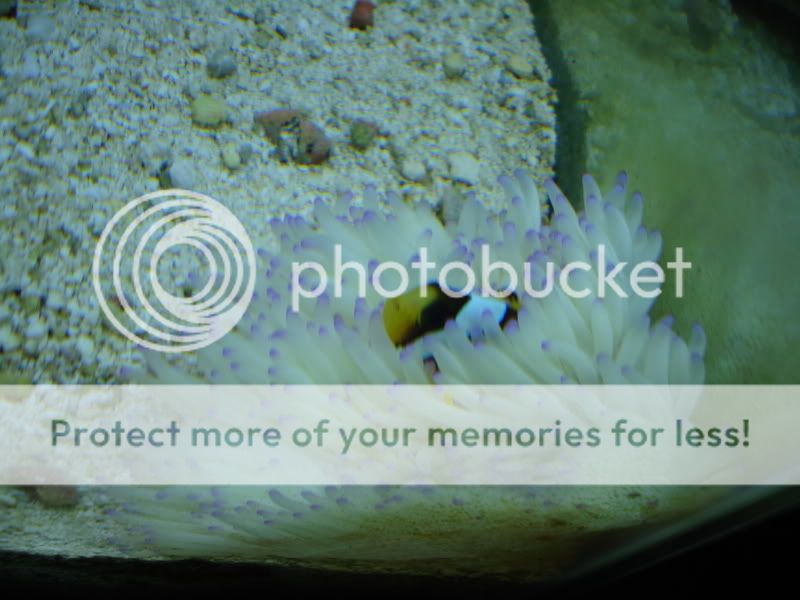
before clownfish took up residence

marc price
Active member
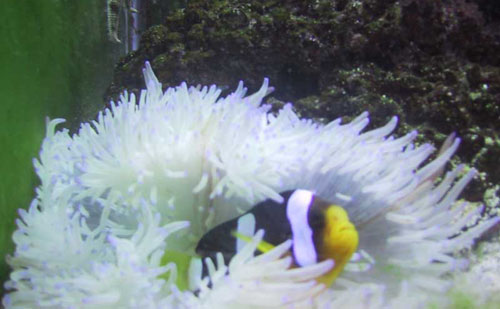
and after

marc price
Active member
notice the shape of the tentacles in the before and after pics .


marc price
Active member
bluecarpet,
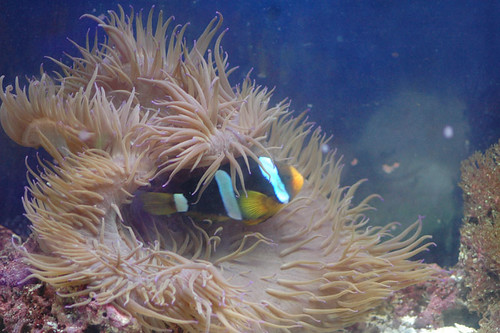
you seem to have missed the point of the post . 55 does have a healthy sebae but it is well established . "adtravels" asked to see what they look like when new and first introduced to the tank . he described the most common size and condition found in at lfs's . my pic's are of a sebae which has been in my tank for 2.5 months the first pic was taken a month after i got it . it's now 5'' was 1.25"-2" at the store and when first introduced to my aquarium :
 [/IMG]
you seem to have missed the point of the post . 55 does have a healthy sebae but it is well established . "adtravels" asked to see what they look like when new and first introduced to the tank . he described the most common size and condition found in at lfs's . my pic's are of a sebae which has been in my tank for 2.5 months the first pic was taken a month after i got it . it's now 5'' was 1.25"-2" at the store and when first introduced to my aquarium :





marc price
Active member
yes blue , i did know of those pic's , they weren't the pic's on your link . it's good that you posted them , nice to see it regained it's expelled zooxanthellae . my last sebae (sold to make room for a diff. species), looked like 55's except that i picked one with a hint more color when new , thanks to phender's 12/95 F.A.M.A. article titled choosing your next anemone . sorry but it's pic's are on film and no scanner on hand .
i have noticed more and more sebae's making it to the stores not so bleached as in years past . my lfs currently has a sebae with yellow tips on pinkish flesh tone tentacles which i may buy to see if and how it colors up . they had a chestnut brown with white tips sebae a few months ago that was different looking . i'd like to see what it looks like now but you know how that goes .
i have noticed more and more sebae's making it to the stores not so bleached as in years past . my lfs currently has a sebae with yellow tips on pinkish flesh tone tentacles which i may buy to see if and how it colors up . they had a chestnut brown with white tips sebae a few months ago that was different looking . i'd like to see what it looks like now but you know how that goes .

55semireef
Moved On
<a href=showthread.php?s=&postid=10085359#post10085359 target=_blank>Originally posted</a> by adtravels
very good
The specimins I see here usually have stubby tentacles with purple tips and a creamy brown colour. I just do not want a malu but I also know that malu are quite rare here anyway.
What about verucae?
Both Heteractis Crispa and Heteractis Malu have adhesive verrucae under their oral disk. The Verrucae are basically used for grasping on to the surfaces of the rock structure or sand so they are not "lifted" by the current.
From what I have observed, the key differences between H. Crispa and H. Malu is the tentacle length, tentacle width and how much visibility there is of the mouth. H. Malu tends to have shorter, stubbier tentacles while a healthy Crispa has longer, slim tentacles. However, as we all know, most LFS primarily import Crispas that are ususally unhealthy. Unhealthy Crispas are most commonly bleached with short, stubby tentacles making proper identification difficult. If the method of looking at the tentacle shape in determining the species of either H. Crispa or H. Malu is not useful, you could always take a look at the oral disk. Like I mentioned earlier, H. Malu tends to show their mouth while "most" Crispas tend to hide their mouth.
adtravels, honestly I wouldn't be to worried about accidentally purchasing a H. Malu instead of a H. Crispa. Like you said, H. Malu tends to be more rare while H. Crispa is much more common. I am pretty confident that you will end up buying a Crispa.

55semireef
Moved On
Oh, and Bluecarpet...I am taking you to court for using my pictures. 
marc price
Active member
http://www.nhm.ku.edu/inverts/ebooks/ch1.html#malu
and in addition to the above link , Invertebrates A Quick Reference Guide , ISBN 1-883693-00-4 , has two very good photos of h. malu in the solomon's and three of h. crispa on p. 58 .
and in addition to the above link , Invertebrates A Quick Reference Guide , ISBN 1-883693-00-4 , has two very good photos of h. malu in the solomon's and three of h. crispa on p. 58 .
Similar threads
- Replies
- 3
- Views
- 407

