Wherever you have a potential for flood, get a water alarm of about 200 decibels. That would have waked you the instant water touched the alarm unit. A good one is under 20.00 ---check the decibel level: soft is no good. You want it to scream. And check its batteries once every 3 months, when you check the house smoke alarms.
+1 Some of the newer ones will even send a text to your cellphone. This is great if you happened to be away from home.
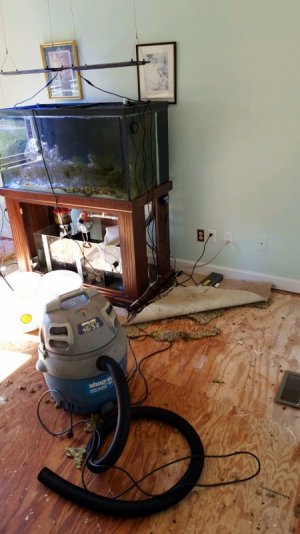
Full disclosure: I learn the hard way. I flooded my house 3 times. God bless my wife's patience.
Rule #1: no running water unless I am home and awake.
Rule #2: at least 1 water alarm on the floor anywhere there is water. This means if you have a basement sump then you have at least one in the basement and a second one underneath your display tank on the main floor.
Other tricks I learned to avoid disaster:
1. install a floor drain in your basement. It will cost a grand or two, but any floods get taken care of. Avoid one flood and its paid for itself. I did this after my third flood.
2. install a float sensor in your tank that is connected to your return pump. Eventually, inevitably, your tank drains will become clogged and if you don't catch it, your return pump keeps filling the tank, overflowing onto the floor. When the float sensor trips, it turns off the return pump.
3. Use a herbie or bean animal. Trust me, I'm an engineer. Please overdesign your system for safety. That extra drain line (or two) will save you someday.
4. Put redundant float switches in your sump for any auto-topoff system. Never rely on a single point of failure to keep your system working.
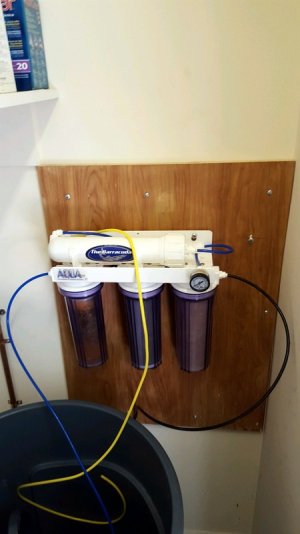
5. Put a water sensor on the floor that is connected upstream of your RO/DI. When it detects water it trips a solenoid that kills the water feed to your RO/DI.
6. See rule #1 above. I take the RO/DI filter wrench and put it on my pillow whenever I am filling anything. This reminds me not to go to sleep until I've turned off the RO/DI.
Aside: for the love of God, please replace your washer hoses every five years, and buy the metal braided hoses. It's an extra $20, but it is so worth it. I used to work for the world's largest appliance manufacturer in their laundry division. Every year we'd get sued by a few people whose washer hose broke and flooded their house. One guy was on vacation and came home to water lapping against the top step of his basement steps, no lie.