herring_fish
Crazy Designer
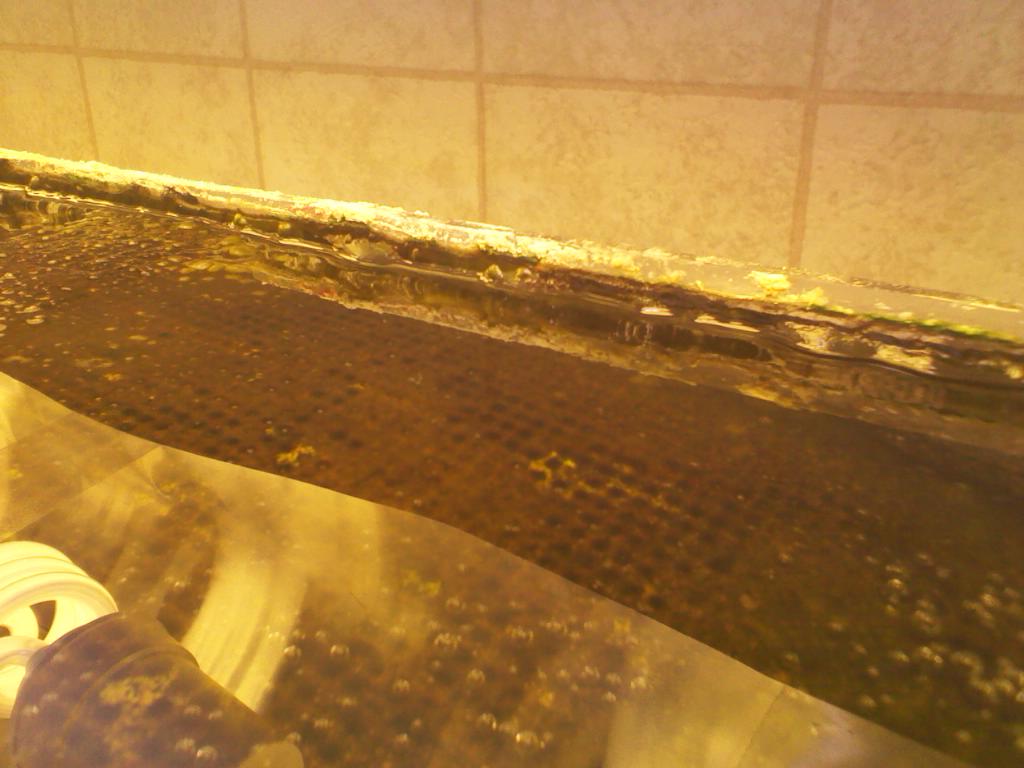
One month ago, I build version 3 of a light fixture for my very reliable 15 year old Algal Turf Scrubber (ATS) but this time, it has not begun to grow any filamentous algae at all. I did get a little green slim but I didn't even get much of that either. It use to grow lots of algae, no matter how long I went past when I should have replace the lamps.
I am looking at a few reasons why I am not getting any growth. I hope to narrow them down with your help. I guess that I will back up a little.
Background:
I have a 130 gallon display tank and a 55 gallon refugium tank in the garage. It has a deep sand bed of about 8 inches and the rest of it is full of very porous coral rubble, no lights. I only pump 2 gallons of water through that tank and back to the display tank per day. The only life that is in the refugium is bacteria but there must be a lot of it.
Nutrients:
While the dump bucket style ATS aerates the water quite well, it has not grown algae in it for about 3 years so the refugium is the only form of filtration that the system has, no skimmer or anything else. The scrubber stopped growing algae right after I hooked it the refugium. I think that the bacteria out competed for nutrients and starved out the scrubber.
Daily, I feed the display tank about two cubes of Cyclopes, about 3ml of phyto, a couple of pinches of powdered food and a pinch of flake food.
Lighting:
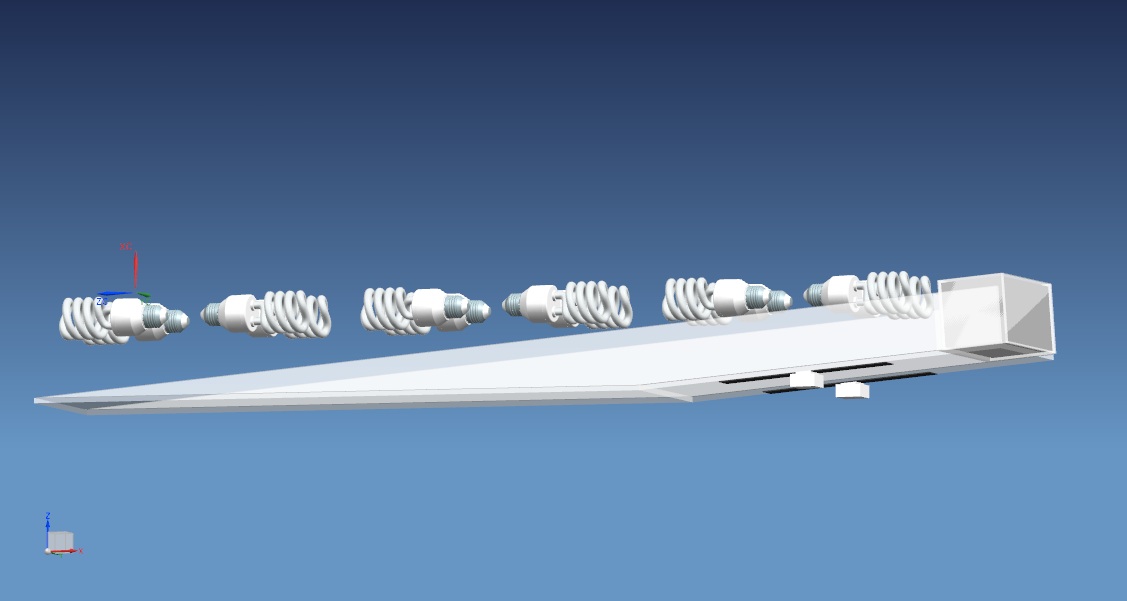
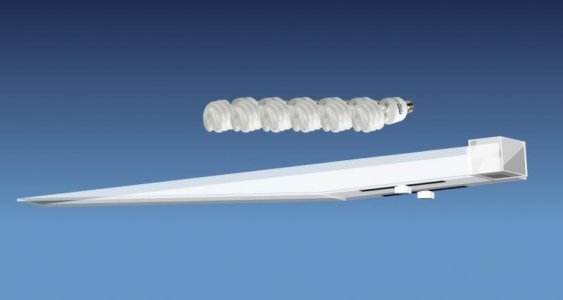
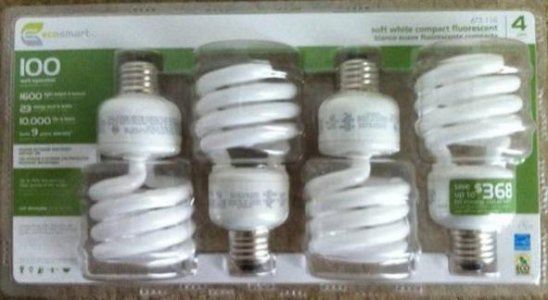
I have a 48 by 6 inch, single sided screen above the display tank. Perhaps there is too much light on the screen. The new fixture has 12 by 20 watt CFL bulbs for a total of 240 watts of CFL light which is roughly the same as 900 watts of regular lighting or about 14,400 lumens. The reflector is not shown above. I have been lighting the scrubber for 12 hours on per day. Version 1 of the fixture had 4 VHOs at 1,000 lumens each for a total of 4,000 and I got great growth. It very well might be that I have way too much light for version 3 but I don't get the regulate symptoms.
I thought that version 2 of the light fixture had good lighting but since the ATS wasn't growing anything, I thought that I would get rid of it go with a lot more light.
I built the newest fixture so that I can cut off 3, 6 or 9 of the lights and still get fairly even light coverage on the screen. My plan, if I decide to tackle the lighting first, is to cut the lighting back, a little at a time, until I get growth.
Minerals:
I was dosing iron and iodine before I recently did a very big water change. I haven't grown any algae since then to deplete what was there so I don't think that is it.
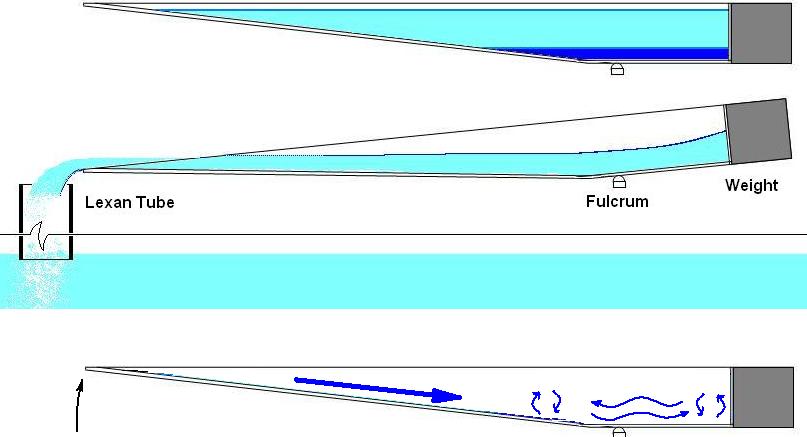
I know that the problem is not water flow turbulence. This is my custom designed and built dump bucket style ATS that is based on the patented true Algal Turf Scrubber ®. While it takes up more space than other styles of ATS's because it is only lit on one side, it is one of the most efficient designs per square inch of lighted screen around because of the turbulence that is generated as the tray dumps and rights itself.
Phosphate:
Another one of the potential problems is nitrate limitation (or too much phosphate). It has been suggested that algae takes up nitrate and phosphate in a particular ratio and if it gets too far out of whack, algal growth is depressed. I disconnected the refugium so the ATS is not competing with it.

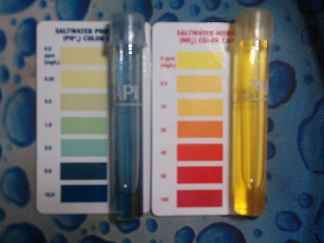
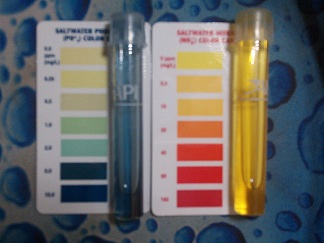
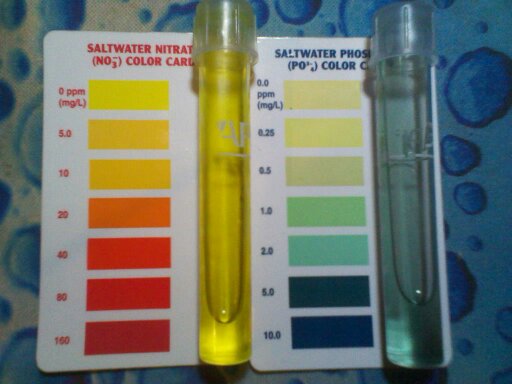
_________________Day 1___________________ ___________After 23 Days__________________
Here are the tests to help assess problem one:
I don't what it is that has stopped my scrubber so completely but I need to get it running. If anyone has a fifth or sixth possibility, please let me know.
I am looking at a few reasons why I am not getting any growth. I hope to narrow them down with your help. I guess that I will back up a little.
Background:
I have a 130 gallon display tank and a 55 gallon refugium tank in the garage. It has a deep sand bed of about 8 inches and the rest of it is full of very porous coral rubble, no lights. I only pump 2 gallons of water through that tank and back to the display tank per day. The only life that is in the refugium is bacteria but there must be a lot of it.
Nutrients:
While the dump bucket style ATS aerates the water quite well, it has not grown algae in it for about 3 years so the refugium is the only form of filtration that the system has, no skimmer or anything else. The scrubber stopped growing algae right after I hooked it the refugium. I think that the bacteria out competed for nutrients and starved out the scrubber.
Daily, I feed the display tank about two cubes of Cyclopes, about 3ml of phyto, a couple of pinches of powdered food and a pinch of flake food.
Lighting:
I have a 48 by 6 inch, single sided screen above the display tank. Perhaps there is too much light on the screen. The new fixture has 12 by 20 watt CFL bulbs for a total of 240 watts of CFL light which is roughly the same as 900 watts of regular lighting or about 14,400 lumens. The reflector is not shown above. I have been lighting the scrubber for 12 hours on per day. Version 1 of the fixture had 4 VHOs at 1,000 lumens each for a total of 4,000 and I got great growth. It very well might be that I have way too much light for version 3 but I don't get the regulate symptoms.
I thought that version 2 of the light fixture had good lighting but since the ATS wasn't growing anything, I thought that I would get rid of it go with a lot more light.
I built the newest fixture so that I can cut off 3, 6 or 9 of the lights and still get fairly even light coverage on the screen. My plan, if I decide to tackle the lighting first, is to cut the lighting back, a little at a time, until I get growth.
Minerals:
I was dosing iron and iodine before I recently did a very big water change. I haven't grown any algae since then to deplete what was there so I don't think that is it.
I know that the problem is not water flow turbulence. This is my custom designed and built dump bucket style ATS that is based on the patented true Algal Turf Scrubber ®. While it takes up more space than other styles of ATS's because it is only lit on one side, it is one of the most efficient designs per square inch of lighted screen around because of the turbulence that is generated as the tray dumps and rights itself.
Phosphate:
Another one of the potential problems is nitrate limitation (or too much phosphate). It has been suggested that algae takes up nitrate and phosphate in a particular ratio and if it gets too far out of whack, algal growth is depressed. I disconnected the refugium so the ATS is not competing with it.
_________________Day 1___________________ ___________After 23 Days__________________
Here are the tests to help assess problem one:
I don't what it is that has stopped my scrubber so completely but I need to get it running. If anyone has a fifth or sixth possibility, please let me know.
Last edited: