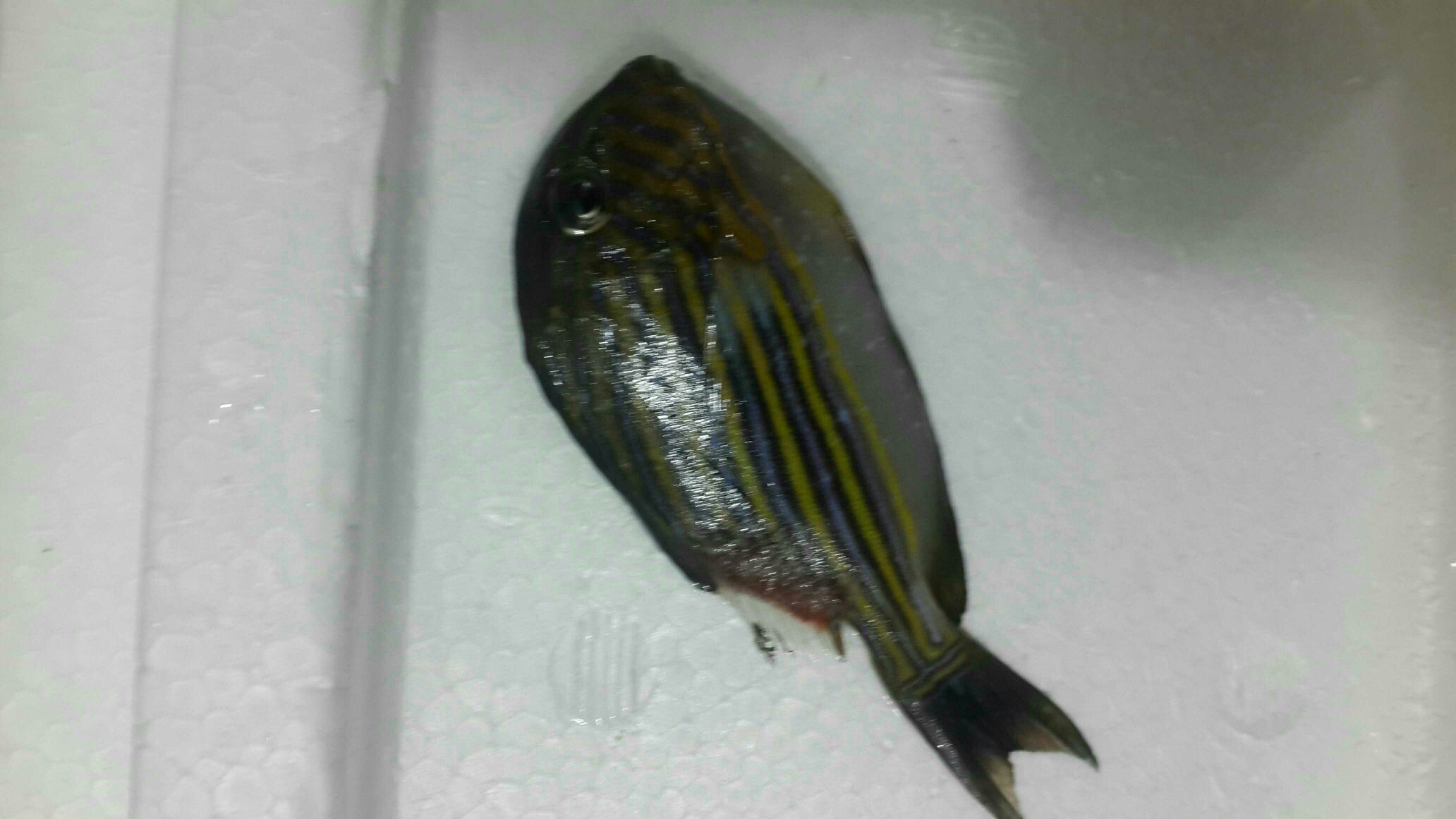
Clown tang with red ulcer(?)

ghostshrimp

New member
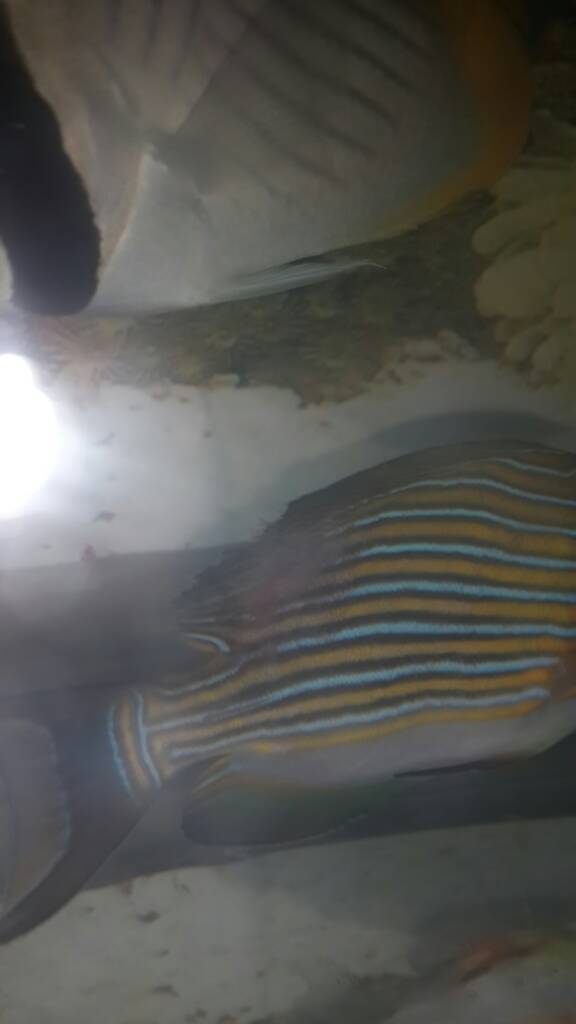
3167d8b3b2839665559b91281b73c3b1.jpg


Hello everyone! I have a 3 inch clown tang who has this red crater type thing on the back. It was discovered accidently although I think this area was already a little dark a few days ago.

My aquarium specs
75G.
1x clown tang
1x threadfin butterfly
4x clown fish oscillaris
1x saron shrimp
1x blue green chromis

The clown tang is not going to stay in this 75G though.
I have quarantined the fish with the threadfin since the threadfin was bought with the clown tang and exhibited signs of ich. After which it was taken out of the aquarium as well. The clown tang was also seen rubbing against the surfaces after it was bought.

Right now both of them are under treatment with
15-20 mg/L cholorquine phosphate
A dose of 20mg of Albendazole suspension (I don't know if that is appropriate though)

Please help. Thanks!
 
Cold be Uronema marinum or a bacterial infection or both.
Since the fish already has an open wound I wouldn't use formalin, which is usually the best to kill Uronema.

Chloroquine Phosphate has shown to kill Uronema at a dosage twice the standard dose. It is also anti inflammatory.

If it is Uronema it has likely already entered the fish's blood stream and in that case the outlook is rather grim.

At the same time you may also need to give antibiotics to fight the bacterial infection. Check the Choloquine Primer thread for the antibiotics that can be combined with CP.
 
Cold be Uronema marinum or a bacterial infection or both.
Since the fish already has an open wound I wouldn't use formalin, which is usually the best to kill Uronema.

Chloroquine Phosphate has shown to kill Uronema at a dosage twice the standard dose. It is also anti inflammatory.

If it is Uronema it has likely already entered the fish's blood stream and in that case the outlook is rather grim.

At the same time you may also need to give antibiotics to fight the bacterial infection. Check the Choloquine Primer thread for the antibiotics that can be combined with CP.
Thanks for the reply! I will double the dose and administer antibiotics as soon as possible.
 
Sorry for your loss.

In most cases, when you see a bloody ulcer like that and the fish shows serious signs of distress like yours, it's already too late.
I have made it my routine to give every new fish a formalin bath since Uronema, Amyloodinium and Brooklynella develop fast and by the time you see them it may already be too late.

That said, my Pseudochromis fridmani female developed a grey spot that turned into a large deep ulcer (not bloody though) and survived it without any intervention or even showing signs of discomfort. For a while it got bigger and deeper and I expected to find her dead any day, but every day she showed up for the feedings and after a couple of weeks the white hole in her side began to shrink and finally went away. Today you couldn't tell and she and the male are spawning every few days.
I still have not the slightest clue what may have caused this.
 
Sorry for your loss.

In most cases, when you see a bloody ulcer like that and the fish shows serious signs of distress like yours, it's already too late.
I have made it my routine to give every new fish a formalin bath since Uronema, Amyloodinium and Brooklynella develop fast and by the time you see them it may already be too late.

That said, my Pseudochromis fridmani female developed a grey spot that turned into a large deep ulcer (not bloody though) and survived it without any intervention or even showing signs of discomfort. For a while it got bigger and deeper and I expected to find her dead any day, but every day she showed up for the feedings and after a couple of weeks the white hole in her side began to shrink and finally went away. Today you couldn't tell and she and the male are spawning every few days.
I still have not the slightest clue what may have caused this.
Yeah I have to be really vigilant next time.
Woah that's amazing. Yeah some things are beyond our understanding because of our limited abilities to diagnose just on the basis of looking at the fish through glass. Who knows a perfectly healthy looking fish might be harboring a parasite in it's liver! and why a fish with a large lesion might heal on its own!

I don't know if there is any book I could read to understand more about fish disease and diagnosis. I might go as far is taking scrapings to view under the microscope with different stains if there is something to guide me!
 
I don't know if there is any book I could read to understand more about fish disease and diagnosis. I might go as far is taking scrapings to view under the microscope with different stains if there is something to guide me!

I have found Edward J. Noga's Fish Disease: Diagnosis and Treatment to be an invaluable resource.
 
I have found Edward J. Noga's Fish Disease: Diagnosis and Treatment to be an invaluable resource.

I found Noga to be good if you know what you are looking for but somewhat difficult to use for diagnosis.

I found Gerald Bassleer's Diseases in Marine Aquarium Fish a bit better on the diagnosing part. Unfortunately the treatment section is a bit outdated. Though it's cheap and a good reference for the most diseases.

There are also some great websites that are very good for identifying and treating diseases and parasites. (got to dig out the links when I get home)
 
Back
Top