Hello,
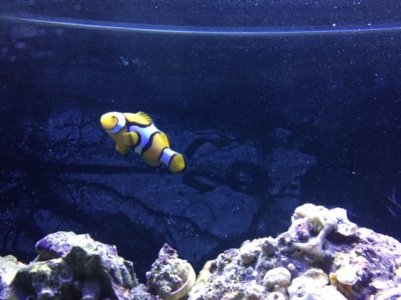
I've had this clownfish for a year or so now in a smaller tank and can't remember if it's a Ocellaris or a True Percula. Can someone confirm?
Also, I just put him in a 55g newly established tank where he is the only fish. I'm looking to add a few fish down the road and wondering what I should be considering as far as timing and selection. I'm open to suggestions on fish ideas for a reef safe 55g with this guy. I recall these can be territorial and I'm not sure if I'm better waiting or getting something in there sooner before he "œmarks his territory?" Thanks in advance!!
I've had this clownfish for a year or so now in a smaller tank and can't remember if it's a Ocellaris or a True Percula. Can someone confirm?
Also, I just put him in a 55g newly established tank where he is the only fish. I'm looking to add a few fish down the road and wondering what I should be considering as far as timing and selection. I'm open to suggestions on fish ideas for a reef safe 55g with this guy. I recall these can be territorial and I'm not sure if I'm better waiting or getting something in there sooner before he "œmarks his territory?" Thanks in advance!!