Clowns won't spawn

dela

Premium Member
Hi guys,

I bought some clownfish from someone this summer. Not sure how long they had them for, but they seem to be a pair.

Anyway, to my knowledge they have never spawned. Just wondering what I can do to encourage this. The only thing I can think of is to feed them better. (Currently feed them frozen formula 1, frozen mysis, and flake food). And not scare them too much when I clean the tank.

My concern is that the male is either deformed or has an injury on one of his gills, and that this might cause the female to not want to spawn. These clowns were previously housed in a small tank with a mated pair of spotted damsel fish, so I always figured the female damsel fish got him.

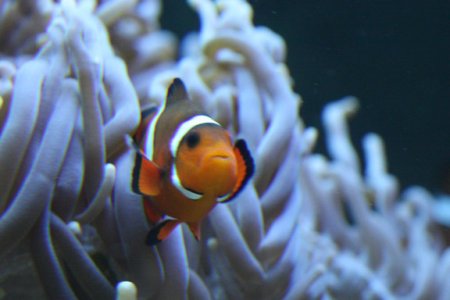
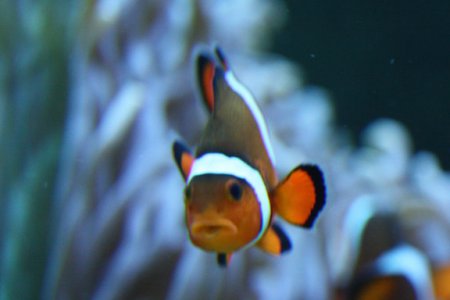
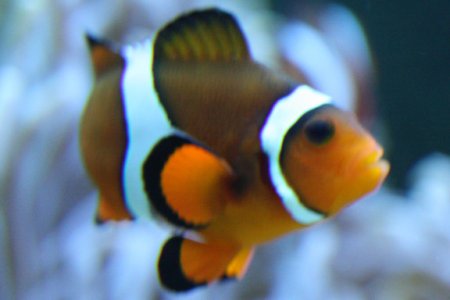
Here are a couple of pics.

picture.php


picture.php
 
Try feeding 4 times a day,( variety of foods) , 12 + hours of light so they think its summer time!! Do weekly water changes, barry white would help also! And lots of luck!!
 
from your pics it looks like, your he is a she.

the move this summer could throw them off up to a year if they were close to spawning. one of my pair quit spawning for 8 months for no reason. the best things you can do is give them a stable environment. reg light/food schedules, good water quality and no threats from tank mates.
 
Judging by their size they do not seem mature yet. I have a pair of adult ones for over two years and no sign of spawning.
 
They look pretty mature to me, and I would agree, your he looks like a she.

The problem with getting adult fish is you don't know how old they are. It's harder to get old fish to spawn than it is young fish. Your best bet to getting a spawning pair is to start with two juveniles and raise them yourself.

All you can do is feed them often, and with a varied, nutritious, diet. Keep their environment calm and clean, and hope mother nature takes her course. These two fish may never spawn though, no matter what you do.
 
There's no way to tell sexes of clownfish just by pictures of two of them at the same size. By behavior it is possible, though. Also, the Percula complex does not show significant size differences between the males and females.

It usually takes up to around a year before clownfish mature enough to think about spawning, and that's only if they remain in the same environment for that whole time. Make one little change and it could set them back. Even moving a rock could throw off their planned spawning.
 
There's no way to tell sexes of clownfish just by pictures of two of them at the same size. By behavior it is possible, though. Also, the Percula complex does not show significant size differences between the males and females.

It usually takes up to around a year before clownfish mature enough to think about spawning, and that's only if they remain in the same environment for that whole time. Make one little change and it could set them back. Even moving a rock could throw off their planned spawning.

The clowns pictured above do not look to be the same size to me.:confused:
Percula absolutely do show a size difference between male and female, just like most other clowns. I have had many percula pairs in the past, and two pairs now. All of them showed a size difference between male and female.
<iframe width="420" height="315" src="http://www.youtube.com/embed/ugVktUZV-bE" frameborder="0" allowfullscreen></iframe>
 
from your pics it looks like, your he is a she.

Say what? :lolspin:

I'm pretty sure he's a he. :D

I contacted the guy I bought them from and he indicated they spawned twice for him in the year and a half he had them. Also, the pics don't really show it, but the female is at least twice his size.

Anyway, attached are some pictures showing the male's injury or deformity. One side looks good while the other side is missing the gill cover.
 

Attachments

  • IMG_7429.jpg
    IMG_7429.jpg
    86.3 KB · Views: 8
  • IMG_7434.jpg
    IMG_7434.jpg
    73.8 KB · Views: 7
  • IMG_7436.jpg
    IMG_7436.jpg
    75.8 KB · Views: 9
Say what? :lolspin:

I'm pretty sure he's a he. :D

I contacted the guy I bought them from and he indicated they spawned twice for him in the year and a half he had them. Also, the pics don't really show it, but the female is at least twice his size.

Anyway, attached are some pictures showing the male's injury or deformity. One side looks good while the other side is missing the gill cover.

your first two pics show the left side of both fish. which made me think the feathered gills of the female, was what you were talking about. as the left side of the male looks fine. the move can throw them off for weeks,months,years or maybe forever. just give them a stabile living environmant

are you going to raise the fry?
 
Well I've turned part of my basement into a lab. Growing green water and copepods. I was curious to see how hard all of that was to do, before buying any picky eaters, and so far it has not been too bad. I've held off on rotifers since I think they would be easy to start and require a constant effort to keep, should they ever be needed. The biggest challenge seems to be figuring out how to clean the pod cultures with out loosing half the pods. So far I loose a lot of pods when I clean the cultures and would be interested in any pointers.

As far as raising fry, I was thinking of picking up some cardinals and seeing if I could raise the babies. From what I've read, those might be easier to raise than clowns. If the clowns ever decide to spawn, I will certainly give it a shot.
 
The clowns pictured above do not look to be the same size to me.:confused:
Percula absolutely do show a size difference between male and female, just like most other clowns. I have had many percula pairs in the past, and two pairs now. All of them showed a size difference between male and female.

I wouldn't call that a significant size difference. Sure, one will be bigger than the other. The pictures provided do not indicate to me much of a difference due to the proximity of the fish to each other. I suppose one is slightly larger on closer inspection.

Also, I said Perculas do not show significant size differences. If you compare them to other complexes this is absolutely true. Maroons, Tomatos, most Clarkiis, Saddlebacks... 99% of the time you will see a significant difference between the male and the female. The difference is far less pronounced in the Percula complex.
 
Try feeding 4 times a day,( variety of foods) , 12 + hours of light so they think its summer time!! Do weekly water changes, barry white would help also! And lots of luck!!

So how do you feed 4 times per day?

I usually feed at least once after I get home from work, and at least twice on the weekends.

My lights don't go on till noon, so that I can enjoy the tank in the evening. If I try and feed in the morning, it's dark and the fish are still asleep!
 
as long as the injury/deformity is healed and does not bother his breathing or eating, he should be fine. ignore them and they will spawn,lol. i use a auto feeder to feed mine 3x a day. so i only have to feed them frozen food myself.


I wouldn't call that a significant size difference. Sure, one will be bigger than the other. The pictures provided do not indicate to me much of a difference due to the proximity of the fish to each other. I suppose one is slightly larger on closer inspection.

Also, I said Perculas do not show significant size differences. If you compare them to other complexes this is absolutely true. Maroons, Tomatos, most Clarkiis, Saddlebacks... 99% of the time you will see a significant difference between the male and the female. The difference is far less pronounced in the Percula complex.

in the clownfish world 3/4"-1" is alot(significant). and with all the clowns i own and have raised. i hope i can tell the difference in a male and female from a pic of them side by side, nose to nose. and it is obvious that the female has 3/4" to a 1" on the male. who cares if the percula complex is not as significant as other fish, it's enough to tell the difference between the two without a doubt.
 
after getting in a previous pair of spawning clowns, the quickest i ever had them respawn for me was 1 month. most averaged 3 months and others longer. you need to either get them in a tank alone with a pot so you can get the temps up and feed them 4+ a day. i feed mine 6x or more a day and my temps are 84 and my salinity is 18ppm - 19ppm ( dont do this if your not careful and do it slowly over a week). i dont suggest doing this in a reef tank.
raising the temp and lowering the salinity will allow more O2 in the water and jump their metabolism so they can eat more and store essential omega and fatty acids to be able to produce eggs. you are not feeding enough
light should be atleast 10 hours per day and turn on and off the same time. clowns love structure.

as for the deformity, it might a gill flare which isnt hereditary so your offspring should be ok. i have a snowflake which has it ever so slightly.
 
Hey Whip, what's it say under "The Debt Star"?

And yeah, those fish are in a reef tank, so I won't be able to change the salinity. I can pick up an automatic feeder for when I'm at work. I guess dry food is better than no food.

I have memories of using an automatic feeder that kept molding up and flake food that kept clogging the unit.

What food do you use? Pellets? Flakes?
 
Hey Whip, what's it say under "The Debt Star"?

And yeah, those fish are in a reef tank, so I won't be able to change the salinity. I can pick up an automatic feeder for when I'm at work. I guess dry food is better than no food.

I have memories of using an automatic feeder that kept molding up and flake food that kept clogging the unit.

What food do you use? Pellets? Flakes?


i have 3 eheim auto feeders and they work great, not like the old auto feeders. i feed New Life Spectrum flakes, but pellets work too. if you use flake food, i would get a feeding station. which makes it so the food doesn't go straight to your overflow.


http://www.drsfostersmith.com/product/prod_display.cfm?pcatid=4460

http://www.aquaticpetssite.com/ocean-nutrition-feeding-frenzy-feeding-station-med/
 
Back
Top