
Dare I ask another DSB question?

wharfrat48

Premium Member
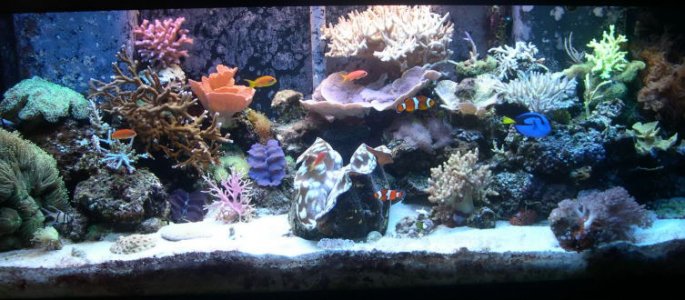
Been doing some research and is seems the "DSB or not" issue is as volatile as ever. Unfortunately I am having some issues with my 180g and I suspect it is due to my DSB. My mixed reef has been up for about 8 yrs (180g + 30g refugium w/DSB, 40g sump with LR) and I have been running a 5-6" DSB (Southdown) the whole time. I never have had any issues with nutrients or algae.
The last few months I have seen increased algae growth (hair and other algae) in the refugium and for the first time ever, in the main tank. I have to admit I have not done much in the way of DSB maintenance besides adding a few pounds of sand here and there over the years.
So my question is, what should I do?; is it worth trying to "refresh" the DSB with critter kits or "fresh" live sand? Should I try to remove it? Has anyone been successful removing a DSB slowly from an established tank? Thanks for your suggestions.
 

Attachments

  • tank1.jpg
    tank1.jpg
    100.3 KB · Views: 25
If it's been up for 8 years, I'd be afraid to add anything which will stir up the sandbed and possibly release toxins. I'm assuming you've tried running carbon and GFO?
 
are you testing nitrates and phosphates ? your dsb isnt just going to stop feeding for no reason. adding more live sand is not the answer. how is your clean up crew. what about flow, have you cleaned the power heads. is the return pump running at full speed, might need a good cleaning, same with skimmer. what about rodi unit, tds reading. please dont stir up the sand bed. some times old lights in combination with low nitrates will spark up some algea. let us know.
 
I run carbon and GFO occasionally and the flow has been the same for 8 years. Lights are pretty new. I think there has been a fundamental change to the tank, it has been gradual, but something is different. I'm sure my nitrates and phosphates are up, I'm assuming it has something to do with the DSB. Not sure I beleive in the dreaded DSB "crash" but I've read that some people think that DSB have a limited lifespan (in a closed system) and that there may be ways to extend it by adding more microfauna and other means.
 
Do you see activity in the sandbed still? Tunnels, worms, etc....

If not it may be a good idea to add some critters. Spegetti worms, and the like.

DSB RULE!
 
Your tank looks great! The two big concerns with stirring a dsb are sediments and H[sub]2[/sub]S. Sedimentation is less of a problem when you've got a spare canister filter or something that you can clip on and take it out of the water and H[sub]2[/sub]S is a semifictitious problem because the human nose is extremely good at detecting it at levels far below lethal.

Before you go changing what has worked so well you may try increasing the biodiversity with the aid of new critters, a detritus cuc pack or burrowing animals (not sand sifters) pack of some sort. Additionally if you have been neglecting it it is possible that it's just been playing the part of phosphate sink and you need to find some other way to bleed excess phosphate off your system.
 
Been doing some research and is seems the "DSB or not" issue is as volatile as ever. Unfortunately I am having some issues with my 180g and I suspect it is due to my DSB. My mixed reef has been up for about 8 yrs (180g + 30g refugium w/DSB, 40g sump with LR) and I have been running a 5-6" DSB (Southdown) the whole time. I never have had any issues with nutrients or algae.
The last few months I have seen increased algae growth (hair and other algae) in the refugium and for the first time ever, in the main tank. I have to admit I have not done much in the way of DSB maintenance besides adding a few pounds of sand here and there over the years.
So my question is, what should I do?; is it worth trying to "refresh" the DSB with critter kits or "fresh" live sand? Should I try to remove it? Has anyone been successful removing a DSB slowly from an established tank? Thanks for your suggestions.

I run carbon and GFO occasionally and the flow has been the same for 8 years. Lights are pretty new. I think there has been a fundamental change to the tank, it has been gradual, but something is different. I'm sure my nitrates and phosphates are up, I'm assuming it has something to do with the DSB. Not sure I beleive in the dreaded DSB "crash" but I've read that some people think that DSB have a limited lifespan (in a closed system) and that there may be ways to extend it by adding more microfauna and other means.

It sounds to me like you know what your problem is. Why not just remove the problem?
Adding more critters is not going to help. Think about it. Your system can only support X number of detritivores. Over time, the population of detritivores will become relatively stable, based on the conditions of your system. What's going to happen if you artificially increase this population above "X"? Well, some of the detritivores must now die, because your system can not support them. When they die, they rot, and release the nutrients they contain, like nitrate and phosphate, that goes on to fuel more algae growth. Which is what you're trying to control in the first place. Some people will tell you to add more critters, knowing they're going to die. When they do die, they'll suggest buying still more critters so they will die as well. They'll have you continually buying critters that are only going to die and add nutrients to the system. The logic here alludes me.

If it were my system, I'd start removing a small section of sand bed at each water change. I'd keep doing this until all the sand is gone. Southdown is so fine, it's nearly impossible to remove the rotting organic matter without removing the sand itself. Once all the sand and rotting organic matter is gone, and the system is clean, I'd replace it with two or three inches of a larger grain size. This will allow you to run a gravel vac through the sand, when you do water changes, to remove the rotting organic matter that settles in the sand. This will prevent you from running into this problem in the future.
 
EC, can you show me any tank that has a stable and sustainable population of nassarius snails? cerith snails? Conchs? Hermit crabs? Burrowing shrimp? While these animals doubtlessly produce gametes and larvae they are eaten by the animals we keep in our tanks or lost to skimmers (exporting nutrients from the system?) long before they can settle back down and become the cleanup crew that eventually does die of old age.
 
If you think your phosphates and nitrates are up, my first bit of advice would be to test them (though admittedly they may be hidden by algae growth). If there are standing pools of nitrates and phosphates in the water, they can both be reduced dramatically by running good-quality carbon (that doesn't release phosphate...some does) to reduce colored organics and something such as purigen (one of my favorite media to run, but I have only anecdote and personal opinion to back that up). Of course, having an effective and well-operating skimmer is always a good way to export excess organics (though remember it is possible to have so much export that your corals and clam might start losing some color through competitive pressure for nutrients). And of course, as EC predicted, I would suggest adding some new critters: some organisms such as Nassarius snails are good if there is sufficient feeding to support them (they do require detritus and some meatier foods to thrive). If you have algae growth, though, why not just start with adding another herbivore? A tank your size could easily support one (and their waste often feeds the sediment food network that leads to denitrification if there are enough organics).

It does look (as far as I can tell from the pic) that you do have an active sandbed. All you need is more export for the algae, in the form of more organisms that eat it. Algae grows naturally on the reef...that's what supports those huge schools of tangs we see on them! In your case, you're lucky enough to have space enough for at least a couple (with careful species choice); some reefers must go more small-scale and choose from more petite grazers. Other than that, though, your tank looks great, so I wouldn't say there's anything fundamentally wrong with it. You simply have an ecological niche ready to be filled as in nature. If that doesn't clean up some algae, then perhaps there are some deeper issues to address, but why take drastic initial steps with a working setup?

Keeping a sandbed is only one part of a healthy ecosystem; we can recreate the reef in a number of ways, and one of those is to simulate the cycling of biomass through the food chain (eventually being removed by filtration or denitrification in a healthy tank). If it were my tank (and I've done this, though on a 40 gal scale due to budget), I would simply add an herbivore to eat the algae I didn't want. It worked in my tank, to the point where I have to add plant matter (in various forms) to keep up its productivity.
 
Last edited:
If you think your phosphates and nitrates are up, my first bit of advice would be to test them (though admittedly they may be hidden by algae growth). If there are standing pools of nitrates and phosphates in the water, they can both be reduced dramatically by running good-quality carbon (that doesn't release phosphate...some does) to reduce colored organics and something such as purigen (one of my favorite media to run, but I have only anecdote and personal opinion to back that up). Of course, having an effective and well-operating skimmer is always a good way to export excess organics (though remember it is possible to have so much export that your corals and clam might start losing some color through competitive pressure for nutrients). And of course, as EC predicted, I would suggest adding some new critters: some organisms such as Nassarius snails are good if there is sufficient feeding to support them (they do require detritus and some meatier foods to thrive). If you have algae growth, though, why not just start with adding another herbivore? A tank your size could easily support one (and their waste often feeds the sediment food network that leads to denitrification if there are enough organics).

It does look (as far as I can tell from the pic) that you do have an active sandbed. All you need is more export for the algae, in the form of more organisms that eat it. Algae grows naturally on the reef...that's what supports those huge schools of tangs we see on them! In your case, you're lucky enough to have space enough for at least a couple (with careful species choice); some reefers must go more small-scale and choose from more petite grazers. Other than that, though, your tank looks great, so I wouldn't say there's anything fundamentally wrong with it. You simply have an ecological niche ready to be filled as in nature. If that doesn't clean up some algae, then perhaps there are some deeper issues to address, but why take drastic initial steps with a working setup?

Keeping a sandbed is only one part of a healthy ecosystem; we can recreate the reef in a number of ways, and one of those is to simulate the cycling of biomass through the food chain (eventually being removed by filtration or denitrification in a healthy tank). If it were my tank (and I've done this, though on a 40 gal scale due to budget), I would simply add an herbivore to eat the algae I didn't want. It worked in my tank, to the point where I have to add plant matter (in various forms) to keep up its productivity.

I like the way this guy thinks!
 
I run carbon and GFO occasionally and the flow has been the same for 8 years. Lights are pretty new. I think there has been a fundamental change to the tank, it has been gradual, but something is different. I'm sure my nitrates and phosphates are up, I'm assuming it has something to do with the DSB. Not sure I beleive in the dreaded DSB "crash" but I've read that some people think that DSB have a limited lifespan (in a closed system) and that there may be ways to extend it by adding more microfauna and other means.

The sand you're using is very fine grain. It takes a long time for those tiny gaps between the grains to fill with rotting organic matter. It does take place though. Slowly, more and more rotting organic matter is building within the sand. This is why you see a slow decline in the health of the system. You can do as others have suggested, and it will work, for now. You can invest in more carbon and GFO, upgrade your skimmer, buy more herbivores, change more water.............. All of these things will help combat the problems you see, that are associated with the build up of rot and decay in the sand bed. What are you going to do next year when you're right back to where you are today? The amount of rot and decay in the sand will be greater. You will need to invest in even more carbon, GFO, shimmer, water change, herbivores......... in an attempt to keep up with the growing pile of rotting organic matter in the sand. At some point, your ability to keep organisms that depend on calcification will suffer. Phosphate inhibits calcification. As the amount of phosphate, that's being released form the rotting organic matter in the sand increases, it will become progressively harder for your stony corals, clams, and coraline algae to grow and remain healthy. You will be forced to remove these organisms, or watch as they slowly stop growing. Then eventually wither away and die. You can keep doing this :headwalls: and fighting the symptoms of the problem, or you can remove the problem. You have seen the slow and steady decline. This isn't going to stop by fighting the symptoms. The only way to cure a problem is to fix what's causing it. It's your tank, so it's totally up to you.
Peace
EC
 
Although I use a REMOTE dsb in my tank and i have very good long term results as the sand bed has been in use for 8 years I would never recomend that any one attempt to maintain one in their main display. The dead spots from the wall of rock and the increased predation always seem to cause problem after several years. Its not the sand bad that is causing a problem. It is the ineffective deployment and maintenance that is causing your problem. In my experience, sand beds work very well long term if deployed and maintained effectively. There is no waste build up in a fully functional sandbed. If you are unwilling or unable to maintain that part of your system then you and your corals would be well served to find another method to replace the processes that occur within a properly funtional sand DSB. There is no debate. DSB is not for most people. (neither are sps but that too is another subject) There are other ways to accomplish the breakdown. Lots of people have issues trying to maintain those other methods as well. Just read 90 percent of the posts on this site.

IF or when you remove the sand bed expect to see algae increase significantly when you disturb the sand under and behind your wall. You might also see some sps losses. No matter how careful I have been in the past, I have always experienced losses when i disturb an old DSB. Based on previous experience with mine and many friends tanks as I have done it both ways, if it were my tank I would remove all of the rock and animals and place in holding containers. I would then remove all of the sand and add about 50 percent of system volume with old tank water. Replace you animals and top off the system with fresh mixed water, aged and aerated for 24 hours and turn on you lights and settle down. In my experience this way can be accomplished with little stress and less loss than a gradual approach. Whether you use the sand again in a properly set up and maintained remote DSB is a different debate entirely and depends more on your level of commitment to oversite and maintenance than whether of not the method is effective if done properly.
 
In the spirit of looking to see what it wrong rather than taking our word for it why not check your DSB to see if it is heavily sedimented with detritus? If it is then that will have to be fixed.
 
Opcn has a good idea. At your next water change, get two white buckets and a hose. Syphon water from the tank and fill one of the buckets. (bucket A) Then place a large gravel vac on the end of the hose and move it up and down, from place to place in the sand, as you fill the second bucket. (bucket B) When this bucket is full, compare the two buckets. In bucket "A" you should be able to see the bottom with no problem. If you can clearly see the bottom in bucket "B" then you don't have a problem build up of organic matter in the sand. If the water in bucket B is disgusting and you can't see two inches into it, you've found your problem.
 
Warfrat look at these people's tanks before you stir up your sand bed. You will loose corals if you do that. I could draw detritus from several areas in my system. So what, as you can see from pictures i have posted on this forum my corals are all hanging on by a thread. Water that isnt clear isnt disgusting. I can stir up the lime in the bottom of my top off and acheive a high turbidity factor and have no suspended organics at all. If you do find evidence of anarobic activity IE black stains and a sulfur smell and you will underneath your rock wall, you just poisoned your tank and guess what> RTN Baby. If you dont know how to look at people's posts then click on their name and follow it too see all post started by. See if they follow the advise they so freely give on this forum. See how it works for them. After you see their systems ask your self if that is what you are trying to do. Remember it doesnt make something true just because its repeated over and over.
 
No one said to get in there and stir your sand bed. The whole idea behind a gravel vac is to have the dirty water removed through the hose. Not spread all over the tank. If you're spreading a lot of detritus all over the tank, you're doing something wrong.

Looking at someones tank isn't always a good way to determine the hobbyists level of knowledge. There are very knowledgeable people in this subject that don't even own a tank. Some that just don't have the time and/or money to invest in a large elaborate tank that's dedicated to the most delicate and demanding critters. Then there are people that pay someone else to care for their tank, and they know absolutely nothing about it. With that said, I'm not ashamed of my tank. It's been running for a few months. I upgraded from a 120, to this 200DD. Just prior to shooting the video, I moved some stuff around. That's why you see the frags in the sand, and some particles in the water. The clowns started getting busy, so I figured I'd shoot a video. Camera skills stink, and it was shot with a simple point and shoot camera. It's the most recent video I have though.
<iframe width="425" height="349" src="http://www.youtube.com/embed/ugVktUZV-bE" frameborder="0" allowfullscreen></iframe>
 
Yeah, I should have been more explicit. Don't stir up the whole sand bed, if it's full of years of gunk you don't want that spread all over everything. My tank no longer has corals of any sort in it since I lost everything to a heater a few years ago, and right now I'm getting prepared to go coldwater, so I cannot hold mine up like EC.

Be gentle is the key that I should have mentioned.
 
Back
Top