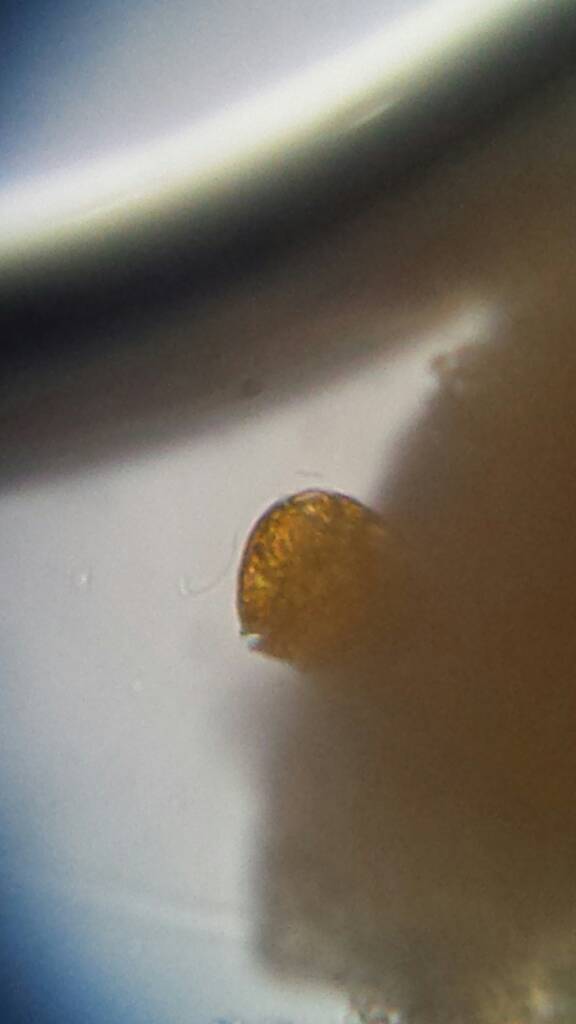
Really, really needed to take a couple weeks off to not think about dinos -- at this point, I'm half convinced dinoflagellates are the zombie plague organism in
The Walking Dead's universe, and Patient Zero was a reefer.
Back for Q&A time, but everybody remember that a lot of this is new to me, too, so I'm *not* the guy with all the answers. I'm nothing more than another hobbyist lost in the dark with everyone else. At best, I'm the guy with the flashlight. And if you've ever been in this situation IRL, you know the guy with the flashlight is always kind of a douche and won't shine the light where you want him to... Sorry about that. But the good news is that I'm handing out free flashlights, so if you want one, just ask.
And read. There's a lot of reading involved, and I'm not talking about my dismayingly lengthy posts.
karimwassef said:
The question is - what experiment can we run to see if this is the right link?
If I'm right about TDA-making, coral-friendly rosies in shed mucus getting skimmed off, then this is clearly a good idea...
01/11/2016, 09:08 AM #2618
seamonster124
6) Opened skimmer's collection cup drain to allow it to drain right back into the sump.
...but could be there's a better way. If a skimmer drained or overflowed into a bioreactor of some sort, perhaps we could culture coral-friendly bacteria before returning the skimmate to the system. Maybe the Montireef Protocol can be automated, enhanced, and made to work reliably.
Has anybody tried growing phyto with skimmate? The decaying organics should release nutrients. I doubt the culture would get very dense, but I'm thinking more about the possiblity that green algae has a hate on for dinos -- maybe some dinocidal bacteria from nannochloris will grow in the mix. There are seaweed-friendly TDA-making rosies that protect macro, and rosies tend to be dominant in the microbiome of phytoplankton, so there may be TDA-making rosies on phyto, too.
Also, it crosses my mind that if the decomposition of algae favors flavobacters, perhaps dosing
crashed phyto that's already full of flavos in addition to live culture would help flip the benthic bacteria population in tanks that are stuck with long-term dino problems. Increasing aeration to a crashed phyto culture and shaking to break up and suspend the clumps of dead phyto would probably be helpful to the flavos.
That calls to mind an old trick organic gardeners use when they get an insect outbreak: they collect a bunch of the bugs, whomp the bejeezus out of them in a blender, strain the lumps out, and spray a solution of the resulting liquid onto the bugs in the garden. The idea is that some of the bugs are always sick, and the pathogenic bacteria or viruses or fungi are in the bug goo and will infect other bugs if given the chance. By collecting some dinos in a jar, maybe we can culture the bacteria that grow as they die off.
Algicidial Bacteria from fish culture areas in Bolinao said:
One of the control techniques in HAB [Harmful Algal Blooms] is the application of biological agent such as algicidal bacteria. ... Genera of some algicidal bacteria have been assigned to Alteromonas, Bacillus, Cellulophaga, Cytophaga, Flavobacterium, Micrococcus, Planomicrobium, Pseudoalteromonas, Pseudomonas, Saprospira, Vibrio, and Zobelia.
If the dinos' "symbiotic" cytophaga bacteria turn on them when they weaken, you might be able to prevent a population crash and culture more of them by adding a source of cellulose, but even if this were successful, I really have no idea whether the resulting bacteria soup would be dino chow or dino death... This might breed a generation of cytophaga (or perhaps some other algicidal bacteria that isn't on our radar screen) predisposed to eat ostis' cellulose armor, or the cytophaga might go right back into servitude and turn a tank with a dino problem into a tank with a dino bloom that melts your macro, or maybe you'll knock back the dinos and melt your macro at the same time, or maybe you'll get a jar full of enough palytoxin to kill you and everything in your tank.
No joke. That's one of the reasons why ID'ing your dinos is a big deal, folks -- know what kind of bear you've got on your hands before you decide whether or not to poke it. And be aware that I'm just thinking out loud.
I expect a safer approach would be to take a water sample, or a sample of sand, or a sample of skimmate, give it a good long shake, pass the water through a 10uM filter sock, and see if you can culture bacteria from the filtered water with a source of cellulose. Those bacteria could then be tested on a jar of dinos and a sample of macro. They may not be effective by themselves, but a combination of TDA-making rosies and cellulose-eating bacteria that get along with each other might be what we're looking for (hence the suggestion to try culturing the latter from skimmate or live sand).
karimwassef said:
The next question is - what do we need to do more of to support the coral-friendly bacteria if they are the heroes we've been waiting for?
We need healthy, well-fed corals. I've suggested in the past that every system should contain a pod generator, whether it's a fuge, cryptic zone, waterfall algae scrubber, or whatever (...though I feel I should emphasize that because of the sponge loop, cryptic zones have suddenly become extremely promising candidates for that role). Corals will recruit coral-friendly bacteria into their mucus by themselves, and the more they eat, the more mucus they release -- which might have something to do with the success of the dirty method, come to think of it.
Incidentally, it appears that corals farm pods. In the wild, clumps of decaying coral mucus and detritus are pod nurseries, which explains why pods haven't evolved to avoid mucus and stop getting eaten by corals. Farming looks like it might be a common adaptation to oligotrophy: damsels do it, dinos do it, corals do it... Though I guess corals are actually ranchers, not farmers.
Increasing overall bacterial biodiversity within the system would presumably help, as well, as this would widen the selection of bacteria available in the water column for corals to recruit. I mentioned that silica sand and carbonate sand host different bacterial communities, so that's a potential route to foster biodiversity, but one thing I didn't bring up is that seasonal water temperature changes shift bacteria communities, and this may help maintain bacterial biodiversity not just in coral mucus, but on a reef-wide level. In fact, I would guess that the bacteria (among other things) on reefs are adapted to seasonal shifts on the basis of light and its effect on primary production, water temperature and its effect on dissolved O2 saturation levels, and other variables, and the kind of stability we maintain is actually a highly unnatural state. LED rigs have given us a lot more control over lighting than we used to have, but seasonal temperature changes aren't something we model in our tanks. Might be worth thinking about, as it would be easy for many of us to let the water temperature drop a bit during the winter, and we know from the literature that unusually high water temperatures favor an unhealthy dominance by potentially pathogenic vibrio in coral mucus -- is the reverse true, as well? Do winter water temperatures put pathogens at a competitive disadvantage and give a leg up to coral-friendly bacteria?
karimwassef said:
Carbon dosing is used by a lot of reef keepers but only a few develop dinos. Why don't they all develop dino plagues if those bacteria are dino allies?
Dosing labile carbon should tend to favor Proteobacteria, of which there are a great many different kinds. Some are friendly with dinos, some are friendly with corals, some are friendly with seaweed, some are friendly with cyano, some are friendly with fish, some are friendly with people -- all creatures great and small have friendly Proteobacteria.
But it's probably Proteobacteria associated with other primary producers that outcompete the dino-friendly bacteria for labile DOC in healthy systems. Nutrient-limited algae dump excess photosynthate into the water column when the lights are on, so I'd expect the bacterioplankton population in a closed, recirculating, oligotrophic system to be dominated by algae-friendly bacteria. That would explain the low level DDAM effects reported on Santa Monica's site a few years back and why many hobbyists have difficulty growing coralline and keeping it healthy.
Carbon dosers who want to play around with trying to feed coral-friendly bacteria may be interested in this paper on the mucus of the corals Galaxea fascicularis, Pavona cactus, and Turbinaria reniformis, which looked for the sugars fucose, galactose, glucose, mannose, and xylose as well as glucosamine and galactosamine...
Mucus composition and bacterial communities associated with the tissue and skeleton of three scleractinian corals maintained under culture conditions
https://www.researchgate.net/profil...conditions/links/02bfe50ebf99004f01000000.pdf
But be aware that this could kill your corals. As noted on page 101, corals become hypoxic at night when their zoox aren't photosynthesizing. The high flow levels we maintain are in part to
disrupt the boundary layer around our corals and mitigate this problem, but bacterial respiration in the coral microbiome (not just the mucus, but also bacteria living within and all around the polyps) becomes an issue at night when some of the bacteria run low on oxygen and have to start reducing sulfur to get by. As noted, corals may make DMSP for the same reason dinos do: to get rid of excess sulfide before it kills them. Well -- that, and luring pods to their doom.
Dosing the sugars found in coral mucus is very likely to stimulate bacterial growth in the mucus. This could literally smother coral polyps at night, and even if dosing was limited to "daytime", it could still prompt runaway bacteria growth that could upset the natural order of things maintained by the corals' obligate bacterial symbiotes and become pathogenic. It's important to recognize that just because we're talking about "coral-friendly bacteria", one cannot blithely assume that if some is good, more must be better.
But that said, maybe there's a sweet spot where the polyps are fat and happy and the coralline grows like gangbusters.
FWIW, I'd suggest staying away from dosing glucose and xylose. Those sugars are too common, and too many bacteria can eat them.
karimwassef said:
I skimmed very heavily and used UV and it worked - with the addition of phyto and pods. Why?
You more or less answered this already, yourself:
08/17/2015, 01:07 AM #1544
karimwassef
UV kills dinos and bacteria in the water column.
08/18/2015, 05:20 PM #1558
karimwassef
I wonder what adding a large volume of nitrifying bacteria would do. Something concentrated like TurboStart900 would create a significant rebalance of bacteria.
Meaning it looks like you knocked back your dino population with slow-flow UV and achieved a significant rebalance of bacteria by dosing pods and phyto. You may recall that I said I was looking for a bigger gun than just the nitrogen cycle bacteria...? Montireef and cal_stir found one. Pods and phyto. Boom.
Note that skimming leaves behind the sort of high molecular weight recalcitrant DOC derived from high-protein fish poo that was found to stimulate the growth of planktonic cytophaga in the wild, so UV may be lysing a reservoir of bacterioplankton that helps maintain ostreopsis blooms in skimmed systems. Just a thought.
--
jonwright said:
So while corals help build up the bacteriolandscape do they really combat the complimentary bacteria for Dino's? It certainly explains why corals suffer. So should you add MORE corals if you have a Dino problem?
The tale about the changing bacteria on the corals taken from the Red Sea, kept in fishbowls, and then put back where they came from was meant in part to address this. Corals will rebuild healthy and diverse bacteria populations all by themselves if they get the chance, so rather than adding new corals, we should be concentrating on saving and building up the ones we have.
Easier said than done, I know.
jonwright said:
Does it make sense that carbon dosing with ethanol/vinegar will fuel the correct bacteriolandscape or is it raw food for any bacteria - Dino complimentary too?
09/12/2015, 07:26 PM #1791
karimwassef
carbon dosing accelerates dinos too.
Broadly speaking, yes, labile DOC is food for any bacteria, including dino-friendly sorts. However, labile DOC is generally bad for coral-friendly bacteria, especially in a system that is already (I presume) dominated by algae-friendly bacteria. Dosage levels used by reefkeepers are too low to induce coral disease or mortality, obviously, but I doubt regular dosing is good for corals in the strict biological sense, though of course it's good for corals in the sense that carbon dosing is a useful tool for managing nutrient levels.
But since you brought up vodka and vinegar, recall that I pointed to the genus flavobacterium, which apparently specialize in the decomposition of phyto blooms and breaking down high molecular weight organics from primary producers, as a possible agent for rebalancing the benthic bacteria population away from dino-friendly Bacteroidetes. When I described them on page 101, I noted this:
34cygni said:
Saprophytes that can consume carbohydrates, amino acids, proteins, and polysaccharides, but cannot consume alcohols, organic acids, hydrocarbons, and aromatics.
That means flavos can't eat vodka or vinegar, so those sources of labile DOC might be counterproductive for phyto dosers who are looking to move back to their normal tank maintenance regimes and start carbon dosing again while maintaining a benthic bacteria population that's not accommodating to dinos.
jonwright said:
Well, what I DID do was add a couple of pieces of live rock from my "healthy" tank - no dinos/cyano on them. After 6 weeks of being in the tank - none on the new rocks. The other rocks have dinos receeding (slowly) but none showed up on the new rocks as one might expect.
Interesting. DNA tried seeding his system with LR several times, including a transplant from what he described a "unicorns and rainbows" tank that had high biodiversity and no visible dinos, and this achieved limited success at best and was a complete waste of time and money at worst... Perhaps the unicorns and rainbows tank doesn't have a dino problem because its microbiome is dominated by algae-friendly bacteria, and the LR transplant failed because of a lack of coral-friendly bacteria.
Have you tried the Montireef Protocol with skimmate from your healthy system, jonwright? That is, dosing the dino-infested tank with skimmate from the healthy tank?
--
jason2459 said:
So, what made the dinos disappear ?
Elevated iron levels are known to trigger phase shifts on wild reefs, transitioning iron-enriched areas around shipwrecks from coral-dominated to algae-dominated. This is from my "recommended reading" list:
Black reefs: iron-induced phase shifts on coral reefs
https://www.researchgate.net/profil...oral_reefs/links/02e7e516052f966444000000.pdf
It's a shot in the dark, but could be there's an iron-driven phase shift from dinos back to the ancient cyano/green algae duopoly, as both cyano and greens have high quotas for iron.
If you're looking for an explanation for the various "I did nothing, and my dinos went away" posts in this and other threads, this was on page 101:
34cygni said:
I've read about symbiotic bacteria turning on algae and actually releasing algicidal chemicals when they detect signs of weakness due to age or viral infection or lack of nutrients... Such highly opportunistic, "Curse your sudden but inevitable betrayal!" type partnerships may be common between algae and bacteria, and this could explain why dino blooms sometimes mysteriously go away when hobbyists decide to leave them alone and let nature take its course.
I also hypothesized last year that dinos could become victims of their own success and put themselves out of business by turning their environment eutrophic, leading to the invasion of their bacteria farms by undesirable bacteria and microorganisms. Sort of a microscopic version of the dirty method.
--
Billybatz9 said:
So what's the plan for attack now? Avoid dirty method and dose phyto?
Just in case anybody's reading the association between ostis and cytophaga, or perhaps more accurately the connection between cytophaga and proteinaceous waste, as an implied condemnation of the dirty method, I did not intend that at all. Keep in mind that cytophaga specialize in feeding on the leftovers from the banquet, but the banquet itself is feeding other bacteria.
In fact, I suspect that in a sense, all roads lead to the dirty method. That is, mixotrophy is an adaptation to oligotrophy, so we need a bit of eutrophy to beat mixotrophic dinos. Even the clean method adds a little "dirt" to seal the deal: phyto and pods.
Billybatz9 said:
which I think it the whole reason for the dirty method right? To increase pods.
The dirty method is all about eutrophy -- we're trying to trigger a phase shift in primary production from mixotrophic dinos to autotrophic algae and cyano. Decaying organic matter releases nutrients into the water and powers up the lowest levels of the food chain, which we're mostly aware of through the pod population. This puts both a "bottom-up" pressure on dinos, as the new nutrient regime should favor the growth of other primary producers along with the holobiont of bacteria, protists, and various and sundry microfauna associated with them, as well as a "top-down" pressure from increased grazing by pods and microfauna.
And, as noted, pods are an important source of nitrogen for corals. So, yes, we want pods -- aside from being coral chow, the scientific literature gives us reason to believe they're the heaviest predators on ostis (they're certainly the biggest predator threat for pelagic mixotrophic dinoflagellates, suggesting that they prey on benthic species during the nightly float), so it looks like blowing up the pod population is an important part of the dirty method's success. Or rather, its potential for success.
Billybatz9 said:
Guys I'm pretty bummed. I'm doing the dirty method and it seems like it's getting a lot worse. No red slime or anything. Any ideas on what I shold do?
You run a 29G biocube, yes? IIRC, Quiet_Ivy has an all-in-one, sumpless cube as well...
--
Quiet_Ivy said:
I'm also slightly confused by your use of 'copiotrophic'.. most authors seem to use it to mean an organism which likes eutrophic conditions. I infer from context that you are using copiotrophic to refer specifically to high-carbon but low N and P conditions created after a bacterial bloom reduces initially eutrophic waters?
I defined it simply as an environment that favors heterotrophic organisms (implying carbon enrichment), as opposed to a eutrophic environment which favors autotrophs (meaning nutrient enrichment), but yes, that's a more accurate description of how I'm using it: a low nutrient environment enriched in recalcitrant organic matter, as opposed to fresh detritus that would trigger rapid bacterial growth and the release of mineralized and organic nutrients as it decays (...or as we would call that in the context of this thread, the dirty method). One could argue that it's really hypereutrophy, but that's typically associated with elevated nutrient levels, a lot of vegetative detritus from collapsing algae blooms, low dissolved oxygen levels -- think Chesapeake Bay or Lake Erie in the Bad Ol' Days, or the dead zone in the Gulf of Mexico by the mouth of the Mississippi. "Oligotrophic eutrophy" seemed an apt description but inappropriately light in tone, so I went with copiotrophic.
If there's a better word I don't know about, somebody please LMK. Best to change it now, as I don't want to be responsible for generating another clash between the definitions scientists and hobbyists have for a word. "Substrate" really drives me crazy...
Quiet_Ivy said:
I was keeping NO3 at 5ppm, the spike to 15 was a mistake. Phos at about .05 I was dosing NaNo3 at about 3ppm *daily*, and a (land plant based) P fertilizer weekly. Currently nitrate is still about 15 which is very odd. P undetectable.
Have you tried playing the stoichiometry card to encourage your phyto? I don't have the numbers for nannochloris, but IIRC a "typical" N

ratio for green and red phyto is around 30:1 to 50:1, so holding your N
ratio in that range may be helpful when dosing. Note that Redfield stoichiometry = 1.53 x ( NO3 ppm / PO4 ppm ) --
it's explained here -- so a 50:1 N
ratio would not be 2.5 ppm NO3 and 0.05 ppm PO4, for example, but closer to 1.5 ppm NO3 and 0.05 ppm PO4, as 1.53 x ( 1.5 / 0.05 ) = 45.9, or a roughly 46:1 ratio, and a 30:1 ratio would be about 1 ppm NO3 to 0.05 ppm PO4, while 5 ppm NO3 is about 150:1.
Dinos suck at absorbing nitrogen directly from the water column, but that's not to say they can't do it if there's enough around. This probably also applies in the case of joti26's tank.
And have you looked at dosing iron? As noted above, iron-driven phase shifts have been observed on wild reefs from coral dominance to algae/cyano dominance. Green algae evolved in euxinic waters and thus has a high iron quota. Cyano likes iron, too, which could break either way here.
There's anecdotal evidence in this thread and elsewhere both for and against adding iron -- high iron levels have been implicated by some as a factor in dino outbreaks. But while iron has been dosed along with N, P, Si, and other stuff, I'm not aware of anyone specifically experimenting with iron dosing, either by itself or in combination with other methods, with the exception of jason2459...
jason2459 said:
Randy Holmes-Farley said:
Did you add any iron by dosing?
In the life of my tank I did once. And it was just after that second triton testing. I wanted to see if I could do two things. Increase the growth of my ATS growth or increase the dino growth. I noticed no extra growth in my ATS and the dino's started declining
Post 49 "I dosed a cap full of seachem flourish Iron supplement on 11/24."
Quite a coincidence. Greens and cyano may be iron-limited in some systems, or iron dosing may fire up iron reducing bacteria in anaerobic parts of the substrate community and liberate nutrients from buried detritus. Has anybody else tried supplemental iron to combat dinos or seen discussions about it elsewhere?