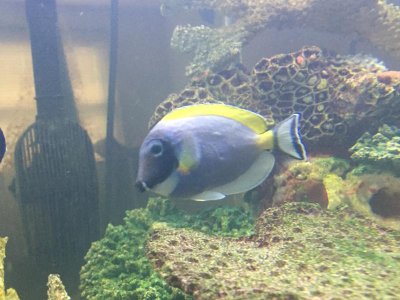
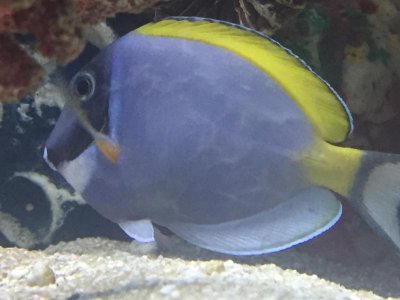
The described appearance would match Amyloodinium, Brooklynella, Trichodina or a bacterial skin infection.
Brooklynella, Trichodina and bacterial infections form more of a white layer that is kind of easy to spot. On clownfish and damsels Brooklynella or Trichodina would be my first guess.
Amyloodinium infections show at first more by a rusty to golden dusting on the fish that is kind of hard to see - the described requirement for the right light and angle goes along with that. Later stage infections (if the fish is hardy enough to survive that long) will cause increased slime production that will lead to a whitish, bumpy skin appearance.
Though the behavioral symptoms kind of speak against all. Those would be erratic swimming, heavy breathing, clamping fins, scratching and at later stages also not eating and reclusiveness - just to name the most common.