BeanAnimal
Premium Member
Pretty much, coupled with tuned sensitivity on the substrate its self.
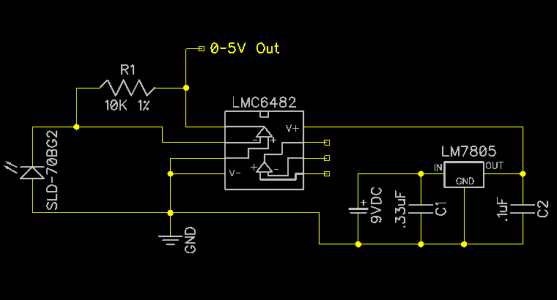
To the person building it, which part number diode did you use? Whats your amplification strategy?
I have an Apogee sensor here (not with the overpriced multimeter though), so we can do some comparison readings. I have some MH, LED and T5s amongst various setups.
The "overpriced" multimer has filtering and amplification circuits that correct the sensor readings and fit them to the PAR curve. That is, the op-amps transfer functions are tuned to profile of the sensor and its physical filters and designed to correct the non-linearities and weight the response according to the proper curve and the defects in the sensor and filter/optics. In theory it is a very simple device, in practice building it so that the results are accurate and meaningful is no as easy.
I have a lot of experience with tri-color devices (used for display calibration) and even though many use the SAME sensor, the supporting hardware (filters, amplificiation and/or software correct) make the difference between a useless toy and a precision instrument.
Also consider, that many of the sensor manufacturers will tweak the specs of the sensor based on the needs of an OEM