Fish Developing Resistance to Ich

michealprater

Angelfish Nerd
Premium Member
I have ich in my display. Primarily a result of poor past QT practices. My system is 250 gallon display/370 gallon total volume. All my fish have developed a resistance to the effects of ich. While I realize the ich will never leave my system, these fish no longer show ill effects from the ich, they are still indeed hosting it which keeps the ich alive and well in my system. I have only lost one fish due to ich, and it was a PBT, a fish I personally believe cannot develop a resistance to ich. I have had great luck with zebrasoma tangs and every angel I have added. They all developed a resistance.
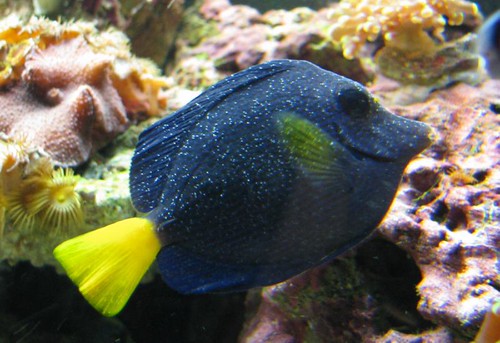
This includes the following fish, angels (majestic, regal, blueface, flame and flameback), tangs (yellow, purple, scopas, and sailfin). I have personally seen ich on all these fish after introduction to the system, and it went away on all of them, some of them have been in the display for 2 years! Now to my issue. I added an adult Emperor that came from a very established ich free system. He developed ich, as expected, but was not kicking it. After about 3 weeks, maybe a month, I thought it was a good idea to pull him and treat him. I am treating him with Cupramine, within 3 days he sprang right back, and looks ich free (I realize he is not, just no longer showing effects). My question is, is it possible for him to develop a resistance if he couldnt the first time? I plan on emptying the QT, and filling with display water to see what happens, but I am not sure if I am wasting my time. Am I better off to complete a full QT and sell him? Keep in mind, this fish is show size and the centerpiece of my aquarium. I really want to keep him. I have even debate adding a UV sterilizer, I know it cannot rid a tank of ich, but it will kill free floating ich and drastically slow the live cycle, possible increasing a fishes chance of developing resistance due to a decrease amount of exposure.

Hopefully this thread will provide some good information on ich. There is boatloads of misinformation on ich and it would be nice to see some good info put in one place. Also, I am very aware of the fallow method, I do not have the means to house my fish collection elsewhere and will not entertain this. My collection of angels mean to much to me.

Thanks in advance.
 
Michael,

I am by no means an authority, so take it FWIW. I have had my tank for going on 10 years, and too have battled ich, once quite a while ago, and once very recently. I have talked to a few folks personally that I feel are very authoritative on the subject. One individual is a regular advisor on a different forum, and I have found his information very reliable, and backed by both scientific quantifiable research, and years in the hobby.

Basically the scientific community believe that if ich is left untreated in a captive system, and NO new "wet introductions" / contamination is made within 11-12 months, that current strain / variant of MI parasite will "burn itself" out, or no longer be viable.

So, back to your question relative to your situation. When did your ich cycle start? I am assuming the 11-12 month cycle starts after the last "wet" introduction to your system, so that appears to be your show angel. Other than the Emp., do any of your other fish show spots from time to time?

I know personally, my Emp. took MI the hardest, and even went off food for a period of time. I utilized hyposalinity, which quickly / effectively turned things around for the angel. My other fish had spots prior to treatment, however they maintained activity, and feeding. I thought I was going to lose my angel.

These likely are not your only options, but to me it would appear you could do any of the following:

Keep your angel in QT until medicated treatment is over, then re-introduce into your DT, and see if he established an immunity. I am told that fish do develop a "temporary" immunity, and maybe in your case will be long enough for ich to wear itself out. The other option, is if you don't have corals / inverts in your DT, you could hypo there. It is not recommended in you main DT because you will have die off in your substrate / LR that will have to be re-seeded at a later date (after hypo). For many folks that have large tanks, with large fish, this may be the only option since QT would be virtually impossible for 8-10 fish in the 8"+ range. The hypo treatment is not easy in a main DT, but very effective. Or you could sell the fish, which I can tell in your post, you really don't want to do. Of course medicating your DT is never a good option, so that can be taken off the table all together.

Below you will find a very good write up "Marine Ich -- Myths and Facts"

1, The parasite has several ‘stages’ in its life cycle. Cyst in aquarium (usually on substrate, decoration, wall, equipment, or rock) ruptures into free-swimming parasites that burrow into fish, grow into a visible white nodule that is ‘pregnant’ with more parasites, that usually falls off the fish to form a cyst that starts the cycle over again.

2. Only time a human can see this parasite with the naked eye is when it is ‘pregnant’ on the fish and has formed a white nodule. (The white spot is about the size of a grain of table salt or sugar).

3. Parasites that have just burrowed into the fish are not visible until 2.

4. Cycle can be completed in less than 7 days, but usually within 24 days BUT can go as long as 72 days. Literature usually quotes ‘average’ number of days. 72 days is rare; 60 days usually encompasses more than 99.9% of the observations and research.

5. This is not the same as the freshwater disease, Ich (Ichthyophthirius multifilis) but it was named after it?! This leads freshwater aquarists to thinking the wrong things about Marine Ich, adding to the myths and rumors.

6. MI is not very sensitive to temperature changes. That is, increasing the temperature does not significantly decrease the life cycle time. This is not true with Freshwater Ich (which is where this rumor of raising the temperature on a marine aquarium with MI comes from).

7. MI can live and reproduce in temperatures as low as 50F and as high as 90F. Thus temperatures that would kill MI would first kill or severely stress most tropical marine fishes.

8. Spots appear then disappear as MI goes through its cycle. Remember 2. This 'disappearing act' is what leads uninformed aquarists to believe the fish are cured. This is the dumbest thing aquarists can possibly think about this parasite!

9. Parasite likes infecting the fish’s gills. The tissue there has more water passing by so there is an increase in chance the free-swimming parasite will get to the gill. This is one reason why fast breathing (over 80-90 swallows in one minute) is one of the symptoms of possible infection.

10. The parasite burrows into the fish, below the mucous layer and into the skin. (This is why cleaner fish/shrimp can’t get to it in order to remove them from the fish). The second dumbest thing an aquarist can think: I'll get some cleaner fish or cleaner shrimp to remove/eat the parasite. THESE MARINE LIFE DO NOT EAT THE PARASITE NOR WILL FISH OR SHRIMP REMOVE THE PARASITE FROM THE INFECTED FISHES.

11. Parasite is transmitted in water (free-swimming and cyst stages), or by falling off of an infected fish (even one that seems healthy because of 9.). This means that water OR fish from another aquarium can carry the disease to another aquarium.

12. The parasite can infect bony fishes, including eels, sharks, and rays, though many species of fish, like Mandarins, have a good resistance to MI, they can still be infected and can harbor or carry the parasite. Invertebrates, snails, crabs, corals, plants, etc. are not affected/infected by MI, but the MI can be in their water, shells, etc.

13. There is no such thing as a dormant stage for MI. The parasite can’t wait around for another host. It MUST go through its cycle. Dr. Burgess recorded that in the cyst stage, he found the longest existing cyst to last for 60 days before releasing the free-swimming parasites. This is rare but possible.

14. INTERESTING FIND: If no new MI is introduce into an infected aquarium, the MI already there continues to cycle through multiple generations until about 10 to 11 months when the MI has ‘worn itself out’ and becomes less infective. A tank can be free of an MI infestation if it is never exposed to new MI parasites for over 11 months.


Hope some of this helps, and if you have any questions please let me know.

SV
 
Last edited:
Michael,

I am by no means an authority, so take it FWIW. I have had my tank for going on 10 years, and too have battled ich, once quite a while ago, and once very recently. I have talked to a few folks personally that I feel are very authoritative on the subject. One individual is a regular advisor on a different forum, and I have found his information very reliable, and backed by both scientific quantifiable research, and years in the hobby.

Basically the scientific community believe that if ich is left untreated in a captive system, and NO new "wet introductions" / contamination is made within 11-12 months, that current strain / variant of MI parasite will "burn itself" out, or no longer be viable.

So, back to your question relative to your situation. When did your ich cycle start? I am assuming the 11-12 month cycle starts after the last "wet" introduction to your system, so that appears to be your show angel. Other than the Emp., do any of your other fish show spots from time to time?

I know personally, my Emp. took MI the hardest, and even went off food for a period of time. I utilized hyposalinity, which quickly / effectively turned things around for the angel. My other fish had spots prior to treatment, however they maintained activity, and feeding. I thought I was going to lose my angel.

These likely are not your only options, but to me it would appear you could do any of the following:

Keep your angel in QT until medicated treatment is over, then re-introduce into your DT, and see if he established an immunity. I am told that fish do develop a "temporary" immunity, and maybe in your case will be long enough for ich to wear itself out. The other option, is if you don't have corals / inverts in your DT, you could hypo there. It is not recommended in you main DT because you will have die off in your substrate / LR that will have to be re-seeded at a later date (after hypo). For many folks that have large tanks, with large fish, this may be the only option since QT would be virtually impossible for 8-10 fish in the 8"+ range. The hypo treatment is not easy in a main DT, but very effective. Or you could sell the fish, which I can tell in your post, you really don't want to do. Of course medicating your DT is never a good option, so that can be taken off the table all together.

I have heard about the 12 month no additions theory, to be honest, cant really see myself going a year with nothing new. LOL. I believe I would probably lose all interest in the aquarium.

I see ich spots on all the fish from time to time, none ever last more than a day in most cases.

Treatment in my display is not an option, I have inverts (nems, shrimp, corals, crabs, snails).

I am not worried about ridding the tank of ich, I am concerned that I may not be able to keep this fish, he is a stunner, I hate to see him go.
 
Michael,

Since your Emp. responded to medicated treatment well, it would likely do so again, so your originally stated option may be to re-introduce into your main DT, and hope for the best. If at some point, the angel gets re-infected to the point you need to remove, you can medicate again -- and when treatment if over sell the fish. I would guess you could also make the assumption that there are always "free swimming" stage parasites in your water, and take water from you DT, and fill your QT. Depending on how large of a population of MI you have, this may or may not be the case.

Good luck!

SV
 
Did your emperor develop a resistance to ich? If you had an ich outbreak, and you did not go fallow, then chances are, you still have ich. If your emp does not show signs, but did have a previous bout with ich, I am making the assumption he developed a resistance, correct?
 
No unfortunatley.

My Chevron is my magnet. Both times I had ich, it was the Chevron that came down with it first. I have two tanks, and one never has had ich, and my main 300g has had it twice. The first was almost at the onset of starting it up many years ago, and I did not yet have my angel yet. That time, the fish did fight it off with only one fish loss (Bi-color Fiji Foxface). The other fish all survied, and only showed spots, but never went off food, or acted very ill. In that case, once the last spot was gone, it never re-surfaced with occassional spots. I did (not on purpose) have a stint of a good 1 year+ with no new introductions, so I am assuming it finished its cycling and burned out. Since in this first case they seemed to develop a resistance, with NO re-occurring spots, I am sure it did burn itself out. In your case, the cycle is still active, since you still see spots from time to time.

The second round with MI I had already had the angel for several years. I had not added any new livestock in some time, and the only thing I can think of that could have brought in the MI was some Walt Smith LR that was not QT'd. Approximately 2 weeks after adding some fresh LR, my Chevron showed spots. I waited to see how bad it was going to be, and how many fish became infected. All fish seemed to tolerate well, although this was a much large outbreak (many more spots). Like I mentioned before, my Emp. did not tolerate it well at all, and would sulk in the corner, and went off food. When his eyes clouded up, I knew I needed to do something. I then quickly brought my salinity down to 1.008. Within 48 hours, my fish were clean, and no spots ever showed up again. After 24 hours, my Emp. began eating again. During the hypo, ALL fish grew, and I almost didn't want to bring my salinity back up since they never looked as healthy, or as vibrant.

So I am not sure since the hypo treatment effectively ended the MI cycle, whether or not my Emp. ever developed any resistance. I hope I don't ever have to find out. LOL

SV
 
Sorry to double post, but I wasn't clear in my last post. I did not go fallow in my DT because that is where I did the hyposaline treatment. I don't have any corals, or inverts. I do in the near future want to get a Anemone, but glad at the time I did not. I would consider my DT to not contain any MI following my hypo treatment.

SV
 
You only used hypo for a couple days? How is that enough time to kill off ich, their life cycle is much longer than that, correct?
 
No, no, no.....I used a specific protocol for hyposalinity treatment. My 48 hours statement, was that after reaching my taget set point, 48 hours later I had no visible spots on any fishes. The least amount of time recommended for hyposalinity treatment for MI is 4 weeks in hypo, AFTER no visible spots are seen on ANY fish. Most will opt for an additional 2 weeks, making it a total of 6 weeks after no visible spots. For some folks it takes longer than 48 hours for spots to go away.

Whatever the amount of time is for no visible spots, you add 4-6 more weeks at hypo. At that point, salinity can be gradually raised over 6-7 days or longer, then after 4 weeks at normal salinity, if no spots come back, you have effectively completed the process. If at any point you see spots in the treatment process, the clock re-starts, and typically something either re-contaminated the process, or possibly the salinity was not strictly kept within the prescribed range.

If you have the ability to relocate corals, and inverts, it may be an option for you.
 
Last edited:
Thanks for the info, I am very familiar with ich and it's treatments, but I am certain that will help others. Great additions to the thread!

Does anyone have specific information regarding resistance to ich. Why my other pomacanthus have no issues but the emperor does?
 
I think you are asking a loaded question.....I really don't think anyone is going to be able to firmly answer if your fish can develope a crypt immunity. If your fish are healthy from feeding a good diet and your water quality is good what more can you do? In my opinion I would say fish never develope an immunity they just live with it and unless something really stresses them out you should be fine. If I were you I would continue to treat the Emperor, get him back in the main tank and leave things go for as long as you can...several months at least and see what happens...
 
RBU1,
Loaded question is not my intent at all. Let me simplify it to a bar bones question.

Has anyone had a fish (preferably an Emperor) with ich, treated the fish (preferably an Emperor) , returned it to the system that has ich, and it did not show major signs of ich on its second go round in the aquarium?

Definition of a loaded question: A question that attempts to illicit a specific response through influential language. If that is the case, the specific response I am looking for is yes or no, but I am not trying to influence anyone in one direction or the other. My confusion is simply driven by the fact that the blueface and majestic, both pomacanthus have not had issues, but the emperor does.

All that being said, thanks for your recommendation, I do appreciate it.
 
Hey Michael,

In our several conversations together on this board, it is obvious you are well versed / knowledged about the hobby. Having said that, I know how it feels to have your prized (favorite) fish in trouble. I think the most likely answer to your specific question regarding your Emperor and possible immunity or ability to fight off ich, I think it boils down to each individual fish, even within specific genus. I am sure there are some within this board that will have experience with them living with it will no / little effects, and others that would not tolerate it at all.

I heard that Eels in general tolerate hyposaline conditions very well. I have however heard from folks that theirs had to be removed, while others of the exact same species did extremely well.

Thanks to you for starting this thread, as I believe many of us are faced with these types of situations. My sincere hope / wishes are that your Emp. is able to stave off this parasite.

SV
 
I will again give you my opinion.....There is always a chance that since you already had the emperor in your main tank that as soon as you place it back in the crypt will find the emperor. I think by you removing the emperor to treat it might work in your favor. If you can get it healthy. I think a healthy fish has a much better chance of fighting it off. However also as stated earlier "in my opinion" when a tank has crypt its just a matter of time before it pops back up again. Hopefully the fish are healthy enough to fight it off.
 
I have heard about the 12 month no additions theory, to be honest, cant really see myself going a year with nothing new. LOL. I believe I would probably lose all interest in the aquarium.

I see ich spots on all the fish from time to time, none ever last more than a day in most cases.

Treatment in my display is not an option, I have inverts (nems, shrimp, corals, crabs, snails).

I am not worried about ridding the tank of ich, I am concerned that I may not be able to keep this fish, he is a stunner, I hate to see him go.

If I understand it correctly, you can still add new fish, just no new strain of ick. So if you quarantine all new arrivals, you can add them (knowing they may get ich in your tank). Then after 11-12 months, your tank will be ich free.
 
If only it's true that fish can be immune to ich.. Ich is Death himself.. Good Luck!:beer:

This is patently NOT TRUE! Ich is NOT an automatic death sentence. Poor husbandry and bad water quality is however. My Purple Tang survived this serious infection about two years ago (no treatment other than UV) and is still doing quite well today. If any fish should have died from ich, this was it.


I did not QT this fish and no other fish came down with ich. Despite two tank upgrades and about 12 fish added since this pic, no others have yet to come down with it.
 
Last edited:
This is patently NOT TRUE! Ich is NOT an automatic death sentence. Poor husbandry and bad water quality is however. My Purple Tang survived this serious infection about two years ago (no treatment other than UV) and is still doing quite well today. If any fish should have died from ich, this was it.


I did not QT this fish and no other fish came down with ich. Despite two tank upgrades and about 12 fish added since this pic, no others have yet to come down with it.

You played Russian Roulette and so far have been lucky. I wish you continued luck.
 
Back
Top