Thanks Derrick for reminding me that I still have an RC account

Its been a while, good to see some "ole faces" are still here. I don't have much to add, been away too long and aging didn't help either. :headwallblue:
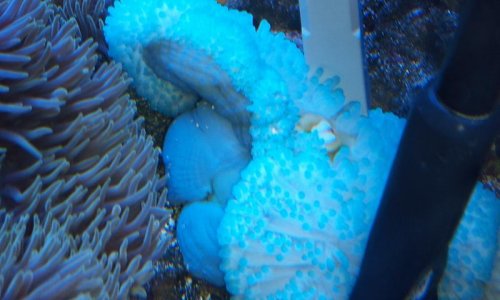
The anemones pictured above were not healthy, not sure how they will do in long term. But there is no question in my mind that these were manually divided. Their posture is very typical of a divided gigantea(by man). As far as the cutting of S. gigantea(and other sea anemones) goes, it has been done in seaside locations, in natural flow through sea water set ups but success and results are are hard to come by. I visited a large farm in Bali several years ago, and they seemed to be doing pretty good with their divisions at the time/on site. But, I think their long term survival rate was rather poor. Gigantea and other large sea anemones that are not naturally reproduce via asexual divisions have very slow healing rate. Some translated this into their slow reproduction rate as well. The future may be in isolating healing genes from E. qua and plant them in gigantea's RNA???
I had two (may be 3) manually divided halves, and none survived past 3 years if I remember correctly. They were in a mix tank and I wished that I had kept them in an isolated tank and they might have survived longer. I learned over the years that large anemones will try to kill or affect other anemones of the same or not. A stressed gigantea is rather deadly to its tank mates and a freshly divided (as pictured) is a stressed anemone in my view...together, they will affect each other's survival/healing.
If you must, may be use a large tank(250g or more)/ large volume and run activate cabon may help.
I haven't add any thing to my tanks for may 3-4 years now, and not thing has changed in my gigantea tank. Here are pictures from two year ago:
Cheers U all,