Gigantea question

colorfulreef

New member
I have a question in terms of lighting,


What is the optimal lighting for a gigantea? I have indirect sunglight and 6 t5 bulbs and prepping for a shipment in.

a few questions actually,

Do you need to photo-acclimate like fish/wrasse?
 
Last edited:
Gigs can take as much light as you can throw at them. Your lighting should be sufficient, but the gig may walk up the rocks to get the most light it can. No need to photo acclimate anemones IMO because they will move themselves where they need to be. If the nem shows signs of light-induced stress you can try to filter out some of the light.
 
For Gig, the more light the better. I don't photo-acclimate my coral or anemone. I just give them appropriate light level (for healthy corals or anemones of that species) They may bleach a little but will recover fine.
I don't put toadstool under 700 PAR. But I put my Bali slimmer under 700 PAR right away even if it was just under 300 PAR before. the Acro may bleach a little at first but will do just fine after a week or two. Same with anemones.
 
Yea I agree my Gigs seem to like direct bright light. For example my 120 gallon has a center brace. My gig use to stretch out over half my tank until he figured out that he could just stay on one side right under my 250 watt mh and get direct light. That's what he does now. You could probably put a 400 watt mh and it would be too much for your gig
 
Gigantea (trying something new)

Gigantea (trying something new)

I have gone through wholesalers and have imported "propagated" gigantea and pretty much gone through most reputable sources. All of which have yielded not so good success rates. Since I have had mixed success with quite a few gigantea exporters so I decided to commission my own diver. I taught him a basic protocol to try and see if I could improve the survival rates myself.


PROBLEMS that I have identified with wholesaler procedures:

There were a number of things that I felt was increasing the death rates. The biggest of which was,primarily, when they would receive them they would mix all gigantea in a bin and acclimate them for a few hours then they would proceed to put them all in the same bin. MY ASSUMPTION was that this simple process would most likely infect some of the healthy ones with the sick ones. (not to mention the near dead ones would also be in the same bin)
To counteract this problem what I did was I acclimated them all individually It did take quite a bit more time but I believe this would help for a better product to the end user which would be the customer. (increasing the rate of a healthy gigas coming to you)


Another issue I wanted to address was having a sick gigas shipped to me in the first place. I also wanted to avoid "cut gigantea" because I believe that this particular anemone can not be "propogated" in that manner. Although I have no process with which I am going by, no scientific method, I am however trying to find better success via trial and error.
To Address these issues, I found my own collector as to ensure that there were no "cut gigantea" sent to me. Also, they have been pretreated with cipro prior to shipping for 3 days.

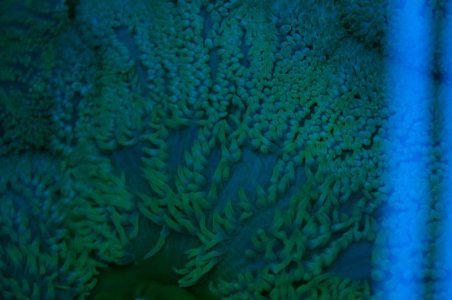
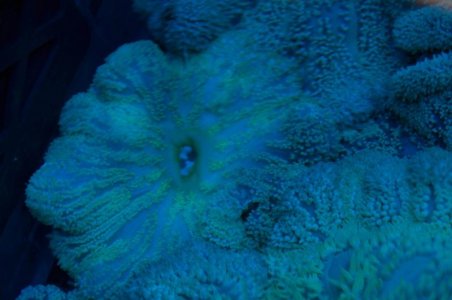
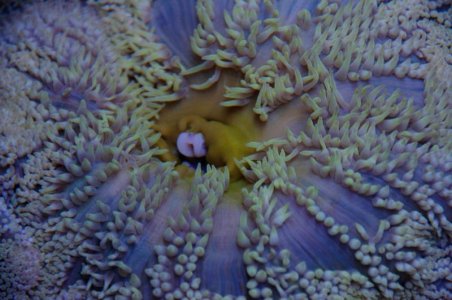
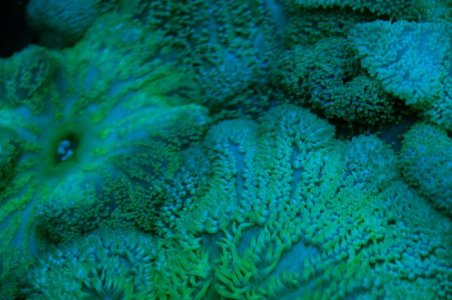
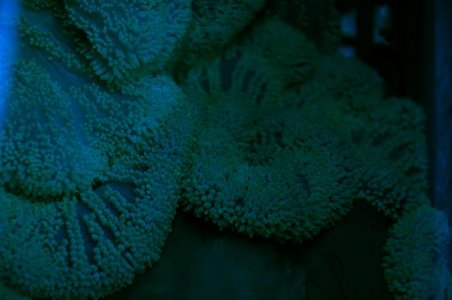
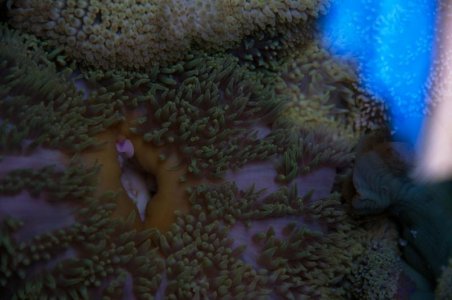
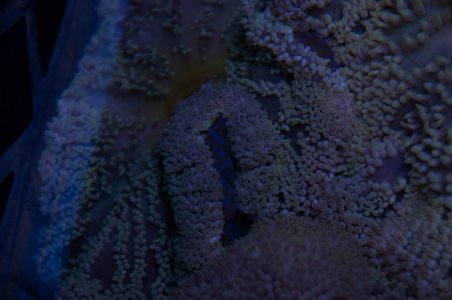
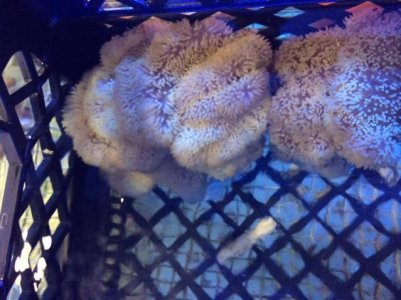
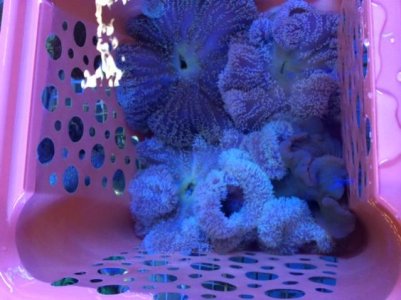
The following pictures are a result from this experiment.

This is within 30 minutes after a 30 minute acclimation of each gigas.
Out of 17 gigantea, 13 were received in a ball shaped fashion and in very good shape(in my opinion) but you can see for yourself and make your own assessment.


My assumptions as to why the success rate is so low is because of the combination of issues that I have highlighted among other things.
 

Attachments

  • 11.jpg
    11.jpg
    50.4 KB · Views: 15
  • 12.jpg
    12.jpg
    47.8 KB · Views: 22
  • 66.jpg
    66.jpg
    66.8 KB · Views: 21
  • 22.jpg
    22.jpg
    55.4 KB · Views: 27
  • 33.jpg
    33.jpg
    69.4 KB · Views: 19
pictures

pictures

Sorry! Pictures arent too great I didn't have much time as its near midnight here and Im quite tired.
 

Attachments

  • 44.jpg
    44.jpg
    43.4 KB · Views: 25
  • 55.jpg
    55.jpg
    49.5 KB · Views: 23
  • 66.jpg
    66.jpg
    45.9 KB · Views: 18
  • 77.jpg
    77.jpg
    58.4 KB · Views: 13
  • 88.jpg
    88.jpg
    49.3 KB · Views: 19
pix2

pix2

I will monitor them for a few days and I have not seen any black gunk so far! Nothing spewing from their mouths!!! AT all! I am happy about that.
 

Attachments

  • 99.jpg
    99.jpg
    30.7 KB · Views: 25
reply

reply

For Gig, the more light the better. I don't photo-acclimate my coral or anemone. I just give them appropriate light level (for healthy corals or anemones of that species) They may bleach a little but will recover fine.
I don't put toadstool under 700 PAR. But I put my Bali slimmer under 700 PAR right away even if it was just under 300 PAR before. the Acro may bleach a little at first but will do just fine after a week or two. Same with anemones.

I have been following your other post. Since you are one of the most knowledgeable individuals in regards to gigas do you have anything you would like me to try?
 
i will tag along for this info. i have been looking for my first gig. the local shops will order them, but "i have to pick them up the same day. no health guaranty." that is very reassuring. lol it would be great for collection and distribution tactics to improve, if possible.
 
I plan on holding these guys for a week unless I see any black gunk then I would prob keep them for longer. tag along! I'll be posting pictures anyways. SO FAR, cross fingers!

SO FAR:

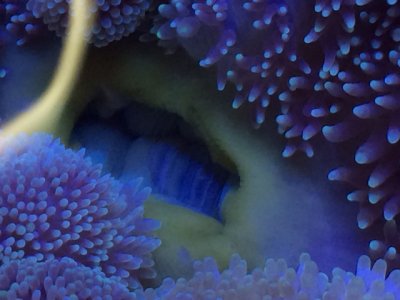
Mouths are shut tight and the "teeth" are not visible

no visible black gunk from the 13. I encourage that anyone that receives then from me to post them here so at least we can track the progress of all gigas.

tentacles are sticky to the gloves

no tears on foot

I will take pictures of oral disk soon.

I am a bit constricted on space but I will try to separate all of them soon just in case I miss any signs of a semisick gigas.
 
I plan on holding these guys for a week unless I see any black gunk then I would prob keep them for longer. tag along! I'll be posting pictures anyways. SO FAR, cross fingers!

SO FAR:

Mouths are shut tight and the "teeth" are not visible

no visible black gunk from the 13. I encourage that anyone that receives then from me to post them here so at least we can track the progress of all gigas.

tentacles are sticky to the gloves

no tears on foot

I will take pictures of oral disk soon.

I am a bit constricted on space but I will try to separate all of them soon just in case I miss any signs of a semisick gigas.


This is very interesting. Where are you based? Will you be selling them?
 
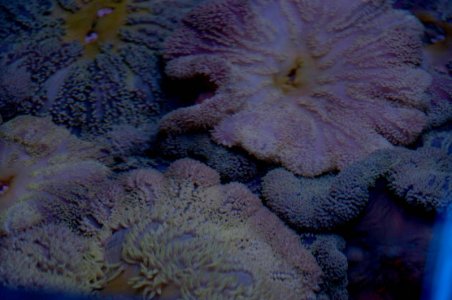
Would be able to take photos under natural light? or light that's not blue-heavy? The only reason I ask is because the gigs that appear to be purple already look bleached. How long were they with the exporter? Where are they now (if you can divulge that)? What type of lighting are they under? The reason I ask is because I think there is a direct correlation between zooxanthellae death and the infection that ultimately kills the gig. We'll need to know how quickly zoox dies to determine how long it can be held prior to export.

I've seen quite a few bleached gigs survive, and many gigs with what appear to be a healthy zoox population die. This leads me to think there are windows of time for export -- either when a gig has lived long enough to become extremely bleached, or right after collection. If a gig is allowed to sit too long under less than ideal conditons, the zoox begins to die. Compounded with the shipping process where the gig must hold onto the dead zoox, this is the time where I think the infection sets in. Only sick gigs expel pellets of dead zoox. This is NEVER seen with healthy gigs.

On a side note, to avoid general confusion, you may want to refer to gigantea as gigs, as gigas is the name most refer to Tridacna gigas (giant clam). Also, the "teeth" are called siphonoglyphs.

I'm glad someone has taken it upon themselves to find an export method more suitable for the gigs' survival. Have you considered treating prior to export with another antibiotic such as Nitrofurazone, which will allow the end user to begin treatment with Cipro/Septra without any risk of antibiotic-resistance?

 
If your anemone is not healthy, you may want to use lower light. Are you treating them at all right now?
What about the other 4. Are they doing OK or poorly?
Best of luck. Are you import them to sell? You wrote that if all goes well you keep them for 1 week, I guess you will be selling them.
 
wow nice collection you have there i can wait to get my tank up and running and stable so i can get one

Thank you, Hopefully, We can provide you a good gigantea in the future. But follow along! At least you can see our progress.

This is very interesting. Where are you based? Will you be selling them?

We are in fountain valley, CA. We will be selling but after this week is over. Not before.

Would be able to take photos under natural light? or light that's not blue-heavy? The only reason I ask is because the gigs that appear to be purple already look bleached. How long were they with the exporter? Where are they now (if you can divulge that)? What type of lighting are they under? The reason I ask is because I think there is a direct correlation between zooxanthellae death and the infection that ultimately kills the gig. We'll need to know how quickly zoox dies to determine how long it can be held prior to export.

Lights are roughly 50/50 blue and white. I will try to take some iphone pictures for you. UNEDITED.

They were with an exporter for 2 weeks prior to shipment roughly. They werent all collected 2 weeks ago but within those two weeks the diver accumulated my order.

They are under 6bulb t5. six inches deep to 1 foot deep.


I've seen quite a few bleached gigs survive, and many gigs with what appear to be a healthy zoox population die. This leads me to think there are windows of time for export -- either when a gig has lived long enough to become extremely bleached, or right after collection. If a gig is allowed to sit too long under less than ideal conditons, the zoox begins to die. Compounded with the shipping process where the gig must hold onto the dead zoox, this is the time where I think the infection sets in. Only sick gigs expel pellets of dead zoox. This is NEVER seen with healthy gigs.

Today I saw one expel super minute amounts of pellets. I seperated him if one more day goes by I will quarantine once again with cipro.

On a side note, to avoid general confusion, you may want to refer to gigantea as gigs, as gigas is the name most refer to Tridacna gigas (giant clam). Also, the "teeth" are called siphonoglyphs.

Thank you for the correction. I appreciate it

I'm glad someone has taken it upon themselves to find an export method more suitable for the gigs' survival. Have you considered treating prior to export with another antibiotic such as Nitrofurazone, which will allow the end user to begin treatment with Cipro/Septra without any risk of antibiotic-resistance?

Where can I get nitrofurazone?
Can it be sent anywhere in the world?


If your anemone is not healthy, you may want to use lower light. Are you treating them at all right now?
What about the other 4. Are they doing OK or poorly?
Best of luck. Are you import them to sell? You wrote that if all goes well you keep them for 1 week, I guess you will be selling them.

4 are dead due to heat issues in the box. The styrafoam was broken from this particular box and I am assuming this was the issue.

My intention is to hold them for one week and see or treat if necessary. The ones I feel comfortable with they will be up for sale. Voice your opinion! If there is even an inkling of an issue please don't hesitate to communicate via this thread.

ALSO, I wanted everyone that receives a gigantea from me to freely post all pictures here to help the community grow as a whole.
 
Would be able to take photos under natural light? or light that's not blue-heavy? The only reason I ask is because the gigs that appear to be purple already look bleached. How long were they with the exporter? Where are they now (if you can divulge that)? What type of lighting are they under? The reason I ask is because I think there is a direct correlation between zooxanthellae death and the infection that ultimately kills the gig. We'll need to know how quickly zoox dies to determine how long it can be held prior to export.

There is indirect sunglight here as well. I can try and shoot some under sunlight if you would like?
 
Iphone DNAK

Iphone DNAK

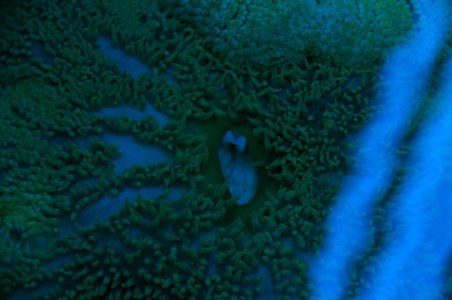
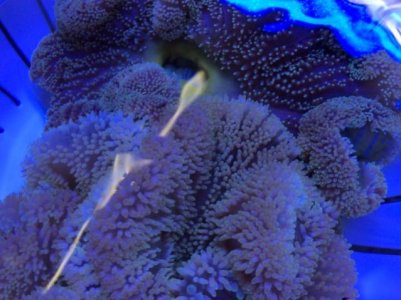
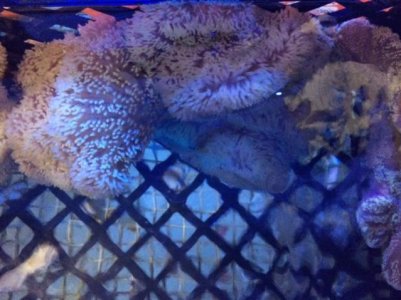
Here are iphone pictures and unedited 9-14-2014
 

Attachments

  • photo 1.JPG
    photo 1.JPG
    101.3 KB · Views: 21
  • photo 2.jpg
    photo 2.jpg
    48.8 KB · Views: 21
  • photo 3.jpg
    photo 3.jpg
    49.8 KB · Views: 23
  • photo 4.jpg
    photo 4.jpg
    50.9 KB · Views: 21
  • photo 5.jpg
    photo 5.jpg
    45.1 KB · Views: 15
Back
Top