Gl*******s

yes, a 1" bulkhead fits a 1" pipe.

you can decide if you want slipxslip or threadxthread or whatnot. that is kind of personal preference, and depends on how you plan on creating your downstream plumbing.

i usually do slip on the inside of the tank, and then thread on the other side. than i get a threaded adapter so i can screw/unscrew the fittings on the dry side of the bulkhead.

that's just my preference though. if you go with slip on the dry side, you will need to PVC cement the tail piece in place to seal it. not a big deal because then you can just put a union right after it in case you need to remove it.

yes, that does appear to be the correct hole saw for what you're doing.

all that stuff looks like schedule 40 bulk heads. i have personally gone to schedule 80 bulkheads whenever i drill something myself. they're easier to work with in my opinion and less prone to leaking. the down side is that you need different glass drilling bits, as they require larger holes, more room on the tank to drill, and they cost significantly more than schedule 40.
 
yes, a 1" bulkhead fits a 1" pipe.

you can decide if you want slipxslip or threadxthread or whatnot. that is kind of personal preference, and depends on how you plan on creating your downstream plumbing.

i usually do slip on the inside of the tank, and then thread on the other side. than i get a threaded adapter so i can screw/unscrew the fittings on the dry side of the bulkhead.

that's just my preference though. if you go with slip on the dry side, you will need to PVC cement the tail piece in place to seal it. not a big deal because then you can just put a union right after it in case you need to remove it.

yes, that does appear to be the correct hole saw for what you're doing.

all that stuff looks like schedule 40 bulk heads. i have personally gone to schedule 80 bulkheads whenever i drill something myself. they're easier to work with in my opinion and less prone to leaking. the down side is that you need different glass drilling bits, as they require larger holes, more room on the tank to drill, and they cost significantly more than schedule 40.

im new to this. Does Glass-HOles have schedule 80 on there?

does it matter that I am only planning to do about a 300gph pump?

Also I am thinking of DIY'ing my own Vertical Overflow box. How wide should th ebox be to acccomodate these 3 holes? im guessing 1 inch per hole plus 1" between = 6 inches + "2 for extra room so about 8 - 10 inches wide x 17" tall by 4" inches deep for a 40 breeder? that sound right? or will it ruing the Bean Animal design of 1/4 under the siphone tip?

and what sealant would i use to glue the acrylic to the glass?

Thanks!
 
You should check the dimensions for the flange on the bulkhead. BRS has diagrams if glass-holes doesn't. The flange is much larger than the hole. BRS's 1" bulkheads are 2.67" in diameter at the flange. That puts you at 10" minimum with 1" spacing. Definitely allow some slop.

I prefer the ASE RTV silicone adhesive for overflows.

Not sure on the specifics for Beananimal as I haven't set one up before.
 
i don't think they have schedule 80 drilling supplies up there, but check. they would be explicitly labeled as such.

the schedule 80 isn't a requirement by any means, most people run schedule 40, i just find the schedule 80 bulkheads easier to work with because i can tighten them harder without deforming the gasket to help reduce any leaks. just cuts down on the amount of fiddling i have to do to get the bulkhead to seal properly is all.

if you get the overflow box, most people just use an aquarium safe silicon bead to affix it.

as far as where to drill? that i can't answer. there is supposed to be a rough formula for it based off of glass thickness and hole size, but i have yet to find it. your measurements sound about right, but i would confirm with someone with more drilling experience. most of my drilling to date has been in acrylic, which is much more forgiving than glass.

my only concern with the estimates you gave would be the spacing in between the holes. you might need to leave a bit more than 1" between holes, and make sure they're sufficiently far from the edge of the glass. however exact distances, i'm not sure.
 
I would doa bunch more reading and asking questions before doing anything. I am also new to this and have been researching things for a couple months just to figure out how I am setting up my overflow and sump. I would say read the entire bean animal thread even though there is allot of the same questions it will help a bunch. I was going to use glass-holes but the are allot of reviews about the noise. I found a ghost style overflow on ebay and will do a bean using that. It will be here this week and I'll finally get my tank drilled. Again you should read, read, and read some more. Guys that can answer you might not read your thread.
 
I would doa bunch more reading and asking questions before doing anything. I am also new to this and have been researching things for a couple months just to figure out how I am setting up my overflow and sump. I would say read the entire bean animal thread even though there is allot of the same questions it will help a bunch. I was going to use glass-holes but the are allot of reviews about the noise. I found a ghost style overflow on ebay and will do a bean using that. It will be here this week and I'll finally get my tank drilled. Again you should read, read, and read some more. Guys that can answer you might not read your thread.


Thanks! Please let me know how it worked for you!! :D
 
:beer:
i don't think they have schedule 80 drilling supplies up there, but check. they would be explicitly labeled as such.

the schedule 80 isn't a requirement by any means, most people run schedule 40, i just find the schedule 80 bulkheads easier to work with because i can tighten them harder without deforming the gasket to help reduce any leaks. just cuts down on the amount of fiddling i have to do to get the bulkhead to seal properly is all.

if you get the overflow box, most people just use an aquarium safe silicon bead to affix it.

as far as where to drill? that i can't answer. there is supposed to be a rough formula for it based off of glass thickness and hole size, but i have yet to find it. your measurements sound about right, but i would confirm with someone with more drilling experience. most of my drilling to date has been in acrylic, which is much more forgiving than glass.

my only concern with the estimates you gave would be the spacing in between the holes. you might need to leave a bit more than 1" between holes, and make sure they're sufficiently far from the edge of the glass. however exact distances, i'm not sure.
thanks i will do much more research and yea i thinknitsxaafercwith more spacing! Much appreciated!
 
You can't fit an elbow in the glass-holes box. None of their boxes allow for any fittings within them. BRS has boxes that will work for the Bean drain. I think they're made by CPR.

Quoted from another source:

Here are the minimum requirements in regards to distance for drilling glass.

x = 1.5 t
y = 4 t
t = glass thickness

Measurements are taken from the outer most edge of the hole closest to the edge of the glass.

Single hole along side: x from edge
Single hole near corner: x from first edge, y from second edge
Holes next to each other: x from edge, 4t apart
Holes next to each other next to edge: x from first edge, 4t apart, y from second edge

Also, there is a calculator on the Reef Central home page to determine how many linear inches of overflow you need based on how many gallons per hour you intend on sending to the tank. Remember to calculate head loss on your pump and if you use an overflow with teeth, you'll need to cut its linear dimension in half as the teeth reduce the linear inches by half.
 
Last edited:
Also, as I read through more of this thread you mentioned you were going to do a vertical box. Does this mean you intend on drilling the bottom of the tank and using stand pipes? Most 40 Breeders have a tempered bottom. Do not drill tempered glass. It will shatter into a million pieces.

When it's all said and done, you would be better off with a horizontal box with your holes drilled through the back as high as possible. If a bulkhead were to ever leak and at the same time you didn't seal the box properly or it developed a leak you could drain your entire tank.

If you have no experience with fabricating acrylic, you should probably just buy a pre made box.
 
Also, as I read through more of this thread you mentioned you were going to do a vertical box. Does this mean you intend on drilling the bottom of the tank and using stand pipes? Most 40 Breeders have a tempered bottom. Do not drill tempered glass. It will shatter into a million pieces.

When it's all said and done, you would be better off with a horizontal box with your holes drilled through the back as high as possible. If a bulkhead were to ever leak and at the same time you didn't seal the box properly or it developed a leak you could drain your entire tank.

If you have no experience with fabricating acrylic, you should probably just buy a pre made box.


Thanks for all the info snd input!

The vertical idea was not for drilling the bottom, it was mainly for cosmetic and structursl reasons.

Im okay with full horizontal as well. I guess that would allow more open dpacing of the outlets. But wouldn't that be sorta weak hanging freely like that ?
 
You can't fit an elbow in the glass-holes box. None of their boxes allow for any fittings within them. BRS has boxes that will work for the Bean drain. I think they're made by CPR.

Quoted from another source:


Also, there is a calculator on the Reef Central home page to determine how many linear inches of overflow you need based on how many gallons per hour you intend on sending to the tank. Remember to calculate head loss on your pump and if you use an overflow with teeth, you'll need to cut its linear dimension in half as the teeth reduce the linear inches by half.

Is t the thickness of glass?

And my brain hurts lol
 
Is t the thickness of glass?

Yes.

You can silicone an open back box to the glass as mentioned or purchase a box that has a back and the bulkhead will clamp it down to the glass making it impossible for it to come loose unless the seams came apart or the bulk cracked which both are unlikely.
 
Last edited:
ghost

ghost

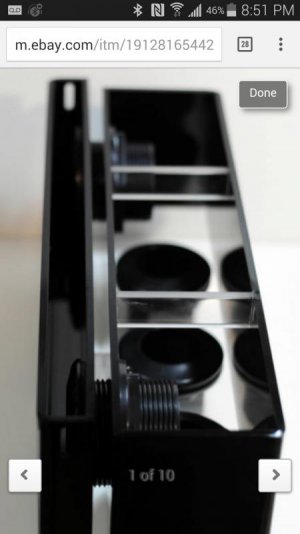
This is the type of overflow I am using. This is their big one mine is smaller. 2 holes in tank and 3 out bottom of overflow. He makes them to order so you can get however you want it. He also can make one if you want to silicone it on the inside. Everything is cnc machined. You can look up modular marine and should be able to find him. I've seen some guys on here buy his kits for building your sump.
 

Attachments

  • Screenshot_2014-12-15-20-51-04.jpg
    Screenshot_2014-12-15-20-51-04.jpg
    29.7 KB · Views: 3
This is the type of overflow I am using. This is their big one mine is smaller. 2 holes in tank and 3 out bottom of overflow. He makes them to order so you can get however you want it. He also can make one if you want to silicone it on the inside. Everything is cnc machined. You can look up modular marine and should be able to find him. I've seen some guys on here buy his kits for building your sump.


thats nice, thanks ! ill check him out soon!
 
Back
Top