Good water quality, is it more than the common parameters?

dazza007

New member
Hi!
I have been looking at an issue in my SPS reef and wanted to get a deeper understanding of what I have researched

In my tank I have had my water analysed by ICP and it transpires that the carbon content is high I have been using O3 dosing long term to keep the water sterile from pathogens.
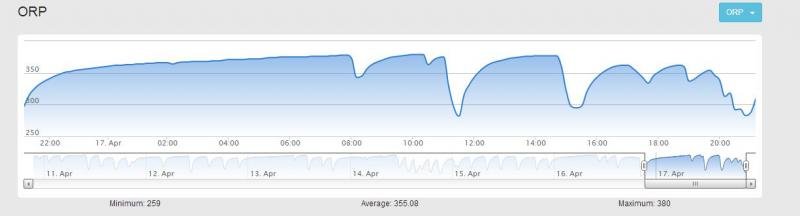
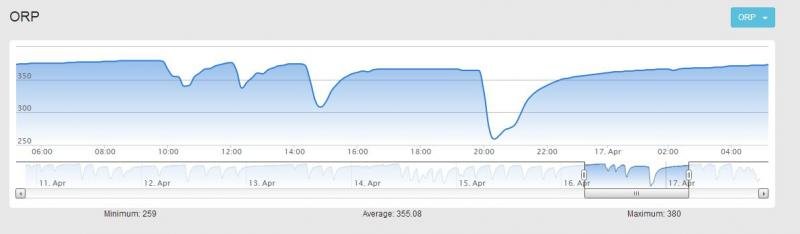
However I have switched off the O3 unit and for 3-4 months my ORP was reading very high, 400mv plus. It was only until mid-late Feb that the ORP came down in my tank and now is approximately 300mv.

I have read that the tanks with higher total organic carbon have lower orp levels. I am currently changing water to keep the ORP up (or the total organic carbon down)

I have been suffering from unexplained RTN on corals - cerealis, nasuta, hyacinthus and am putting it down the the imbalance of organic carbon in the tank causing an imbalance in the many bacteria associated in the coral tissue.

Coral mortality with high total organic carbon
http://scholar.google.co.uk/scholar...r&ei=DuI_U_mDCsrK0QWamYCABQ&ved=0CCsQgAMoADAA

http://www.whoi.edu/news-release/bacterialbuddies


(Ca,Mg, KH are perfect without swings/etc and holistically other micronutrients have been adjusted to nsw levels.)

How reliable is an ORP probe in measuring TOC? Can off the shelf out of bottle bacterial probiotic treatments aid the processing of organic carbon (and hopefully stabilise Orp levels).

Cheers,
Darren
 
There are many things worth measuring, and a few not.

Did you measure total carbon atoms, or total organic carbon? Unless you acidified and blew off the CO2 somehow, the ICP will detect lots of things with carbon, not just organic carbon.

What do you mean by it is too high? Higher than what? Natural seawater? Other reef aquariia that are, by definition, good comparisons?

Carbon will include carbon dioxide, carbonic acid, bicarbonate, carbonate, dissolved organics, particulate organics, and even whole bacteria and other organisms. Alkalinity being higher than NSW will result in TOC being higher than NSW. :)
 
Last edited:
How reliable is an ORP probe in measuring TOC? Can off the shelf out of bottle bacterial probiotic treatments aid the processing of organic carbon (and hopefully stabilise Orp levels).

Absolutely zero reliability if you use ozone. Raising the ORP with ozone does not remove much carbon, it just raises the redox potential of the water.

With the O3 off, there may be a rough correlation between organics and ORP, but I wouldn't rely on it for anything in particular.

If you want to remove organics, skimming, GAC, and certain polymer media are likely a lot better way to go than are water changes.

I discuss the ORP/ozone/water purity issue here:

from it:

ORP and the Reef Aquarium
http://reefkeeping.com/issues/2003-12/rhf/feature/index.htm


ORP and water quality

Many aquarists have been lead to believe that ORP is a measure of water quality or purity. Manufacturers selling ozonizers and other oxidizers (like permanganate) have been especially keen to present that idea. But is it really true? Is a higher redox indicative of "purer water" even when that redox is manipulated artificially by adding strong oxidizers? Or is such an addition analogous to an air freshener that masks odors? I don't know the answer, but I think that aquarists should ask the question, and hope to hear useful answers before adding such materials to their aquaria.

Obviously, one can decrease the yellowing of water fairly quickly with oxidizers. It turns out, however, than many organic functional groups that provide color are just the ones that are readily oxidized. It is a common trick for organic chemists that need organic compounds to lack colored impurities to add an oxidizer that "kills off" the color in certain impurities, but leaves nearly all of the primary organic compounds behind. I've done it myself when making dyes for photographic film. You don't want the film to be yellow, so an oxidizer is added to the dye, let it oxidize the color away, and then use the unaffected dye in the film.

Of course, that decolorizing itself can be viewed as beneficial, but it is not necessarily indicative of the load of organics that have been removed from the solution. It is also not necessarily indicative of an improvement for tank inhabitants. The oxidizer did something to the organics. Maybe they are less toxic in the oxidized forms. Or maybe they are more toxic. Or perhaps they are not toxic regardless of the form. Maybe they are more readily metabolized by bacteria. Is that a benefit? The point is that assuming that such a treatment is of significant benefit to the aquarium may be in error.

If an oxidizer is added and ORP goes up in 30 seconds, is the water purer? Not likely. More likely, that addition shifted many of the redox species to their more oxidizing forms. Is that beneficial? Maybe. Is it detrimental? Maybe. For example, the bioavailability of certain metals may depend on the form that those metals take. Is increasing bioavailability of them desirable? It all depends on the details. Details that are simply not known for aquaria.

Perhaps continual use of ozone does help clear some organics from the water, and there is a long term benefit that may or may not be related to actual ORP readings that one gets from an aquarium. Is there data showing that to be the case, and then coupling that with some objective measure of benefit to the aquarium? Does that outweigh the potential concerns about the toxicity of reactive oxidants in aquaria? Again, I do not know the answer. Only careful studies with clear endpoints can give such an answer.
 
Can off the shelf out of bottle bacterial probiotic treatments aid the processing of organic carbon (and hopefully stabilise Orp levels).

I don't know, but I'd guess it is almost as likely to raise TOC than to reduce it.
 
All the O3 will really do to your TOC is break up the large organics into smaller ones. Won't remove them. Like Randy said, carbon, skimming, and polymer media. I run sea water wells for a university wet lab. Organics are high fresh from the well. After treatment with ozone there is little to no measurable change in TOC, even with the ORP going up to the mid to high 300's. I use skimming along with lots of GAC along with the ozone to actually drop the TOC.

BTW, what sort of TOC are you seeing?
 
Alkalinity being higher than NSW will result in TOC being higher than NSW.

Sorry, I meant that to read:

Alkalinity being higher than NSW will result in total carbon being higher than NSW.
 
There are many things worth measuring, and a few not.

Did you measure total carbon atoms, or total organic carbon? Unless you acidified and blew off the CO2 somehow, the ICP will detect lots of things with carbon, not just organic carbon.

What do you mean by it is too high? Higher than what? Natural seawater? Other reef aquariia that are, by definition, good comparisons?

Carbon will include carbon dioxide, carbonic acid, bicarbonate, carbonate, dissolved organics, particulate organics, and even whole bacteria and other organisms. Alkalinity being higher than NSW will result in TOC being higher than NSW. :)

I am getting an answer from the lab about acidifying the sample water to remove carbonates and carbon dioxide. My sample was compared to a tank of the analyst who is running the same methodology.

With the O3 off, there may be a rough correlation between organics and ORP, but I wouldn't rely on it for anything in particular.

If you want to remove organics, skimming, GAC, and certain polymer media are likely a lot better way to go than are water changes.

Excellent this is what I wanted to hear. I have definately observed the tank "preserving" it's reductive potential through the winter and now orp has reduced.

I use GAC and need to employ its use in a reactor to be more efficient!


All the O3 will really do to your TOC is break up the large organics into smaller ones. Won't remove them. Like Randy said, carbon, skimming, and polymer media. I run sea water wells for a university wet lab. Organics are high fresh from the well. After treatment with ozone there is little to no measurable change in TOC, even with the ORP going up to the mid to high 300's. I use skimming along with lots of GAC along with the ozone to actually drop the TOC.

BTW, what sort of TOC are you seeing?

Thanks Bill. I have turned off o3 to use the orp probe to monitor any change. It is great to have you add your experience. I will get another GAC reactor in my tank and hopefully get TOC down. I would love to know what TOC I am seeing however at the moment it is just carbon in an ICP. The lab has a theory of the cause and is putting together an action plan.

I will get back to you regarding this once I have had discussions. I cannot thank you enough to you both for your contributions.
 
Sounds good.

I am getting an answer from the lab about acidifying the sample water to remove carbonates and carbon dioxide. My sample was compared to a tank of the analyst who is running the same methodology.

FWIW, I'd be wary of relying too much on a comparison of a nonstandard measurement to a single other tank which itself may not be optimal with respect to the parameter. :)
 
FWIW, the method used by the analyst and his ICP-OES is not actually part of a product sold, and is in experimental stages still. I believe the reading was taken and hinted upon as being higher than most samples that were recorded at that time from different aquariums. I'm pretty sure there was no hint as to it being a specific number of carbon atoms that were broken down into subjects. It was just noted during testing
 
Still awaiting confirmation of ICP method
Still loosing corals :(

Is there any method that I could test and rule out high organics in my tank? I tested using the salifert organics test kit and it was more qualitative than quantitative.

I attached are two days of orp readings
 

Attachments

  • orp.jpg
    orp.jpg
    18.2 KB · Views: 27
  • orp2.jpg
    orp2.jpg
    18.2 KB · Views: 18
Last edited:
Rule it out for what purpose?

You can send it out for total organic carbon (TOC), if that concerns you, but there is no data to suggest what is too much or too little for a reef tank. :)
 
Rule it out for what purpose?

You can send it out for total organic carbon (TOC), if that concerns you, but there is no data to suggest what is too much or too little for a reef tank. :)
I would love to send a sample for analysis. The lab I sent the original ICP to is getting set up for some sort of organic analysis via HPLC.
It has been hypothesised that pollen is causing an increased organic load for our tanks in the UK and causing loss of corals.
The corals that I have lost have come from the same source or lfs. In the article below it states "Healthy corals actively control the growth rate of their associated microbes (Ducklow & Mitchell 1979, Breitbart et al.
2005) and DOC additions may disrupt the normal mechanisms of control."
http://scholar.google.co.uk/scholar...r&ei=DuI_U_mDCsrK0QWamYCABQ&ved=0CCsQgAMoADAA

Why don't you just do a few water changes if you feel this is the problem??

My third water change tomorrow..........
As I am back from my holiday I am putting GAC in a reactor too tomorrow.
 
The following states a survey of TOC in Sanjay's reef tank.
http://www.advancedaquarist.com/2011/3/aafeature

I hear you saying that high organics in the reef do not effect corals? I have read articles stating that high organics are more potent than high po3 or no3. As overdosing glucose, vodka or acetic acid causes problems. So will contamination of our reef with biological matter such as pollen cause issues?
 
I hear you saying that high organics in the reef do not effect corals?

No, I'm saying that corals obviously thrive in the levels present in most tanks, which in many cases are higher than natural reefs. It may actually benefit some corals which feed on particulate organic matter. It might hurt others. it could do all kinds of things, but folks with agressive organic removal do not have tanks so clearly better that everyone wants heavy GAC, skimming, etc. :)

I'd be careful about confounding the effects of thousands of different chemicals under the umbrella of organics and assuming the effects are all similar. A refractory protein in the water is unlikely to have many effects in common with acetate from vinegar dosing.

As to pollen, I have no idea what positive or negative effects it might have. :)
 
I expect our DOC levels are far higher than the open ocean, yet most corals can thrive. :)

FWIW, I discuss organics here:

Organic Compounds in the Reef Aquarium
http://reefkeeping.com/issues/2004-10/rhf/index.htm

I would not bet against you :D

Darren,

Do you have the actual DOC numbers from that test?

Also keep in mind one carbon containing molecule does not equal the next one. Testing for DOC, TOC, and TIC will tell you how much C is there, but it tells you nothing of just what compounds that C might be part of. Some could simply be utilized as food, others simply color the water, and some could be toxic. Just can't tell from that type of testing.
 
Thanks guys

I have had confirmation that the result contains all carbon - to include inorganics. I don't have confirmation of numbers sorry.

The analyst raised a concern in particular with a build up of pyruvate in the tank. Although not confirmed in my tank this is suspected to cause stn/rtn during spring.
Do you know of any method to remove pyruvate that has built up from a tank?
 
What did he base this concern for pyruvate building up on, and where does think this pyruvate is coming from?
 
Back
Top