Okay! I wasn't sure what "high solar gain" meant in terms of frequencies transmitted (which is why I didn't comment on that). From what you've shown, it does appear low-E high solar gain would be the way to go - and you'd likely want to look for particular brands that do better on the infrared side, while allowing as much non-UV light at the high end as possible. Getting their specific spectra graphs might help for comparison's sake.
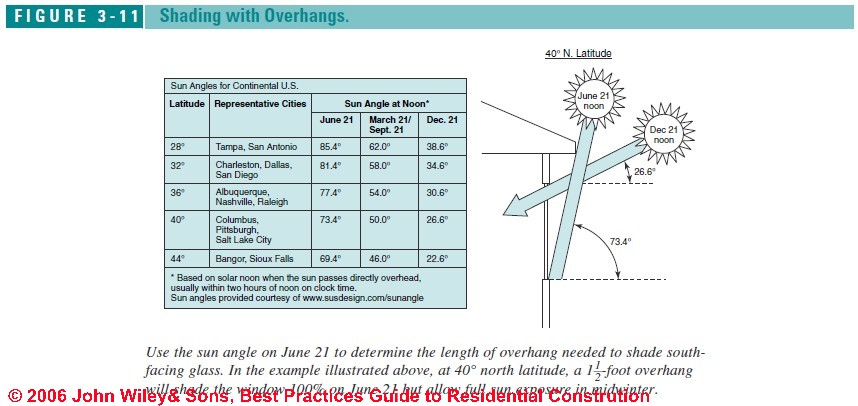
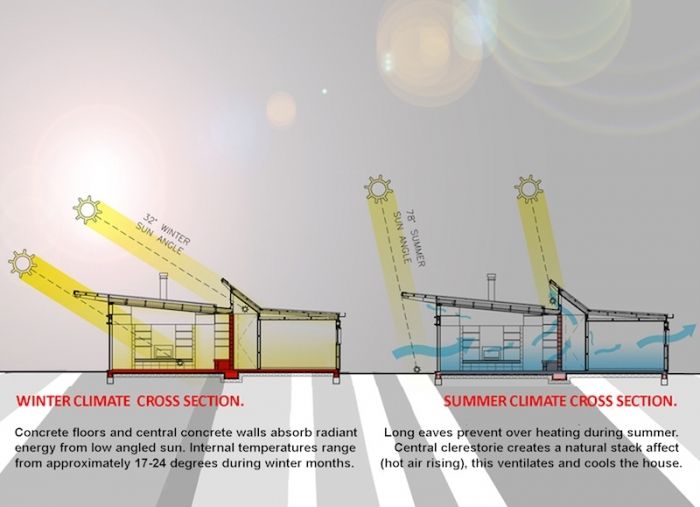
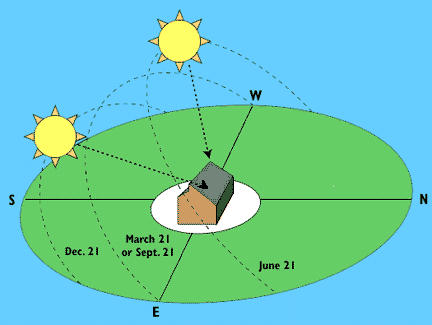
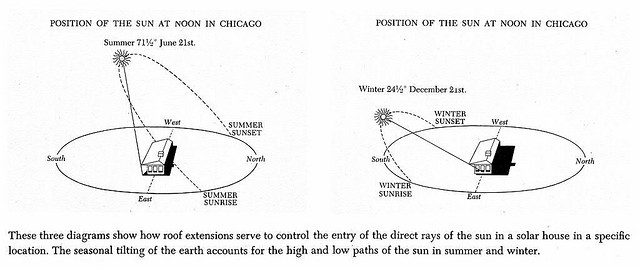
In terms of angles: Your design looks almost flat on top, which will allow a lot of light during the summer from the flat part of the roof. (Caveat: not sure about Dallas sun angles ... Obviously less so than here.) During the winter you may get most/a significant part of the light through the curved bit on the end, which could decrease the amount of light the tank gets during those months. Decreasing and increasing the amount of light, while quite natural, is going to have affects on the growth of algae and could make it difficult to achieve a good balance year round... Not impossible, but difficult. You won't get much light for the tanks through the vertical glass.
If could help to slope the roof part more, if that's possible, or to increase the slope halfway across in order to try to even out the amount of seasonal change from sun angles.
Other concerns:
- Many corals colors' pop under very blue light. (They naturally live deeper under water than your aquarium, and the water filters out the reds from the sunlight.) The sunlight is fine for good growth, but isn't going to be nicely blue. Your corals will likely look brownish/washed out in terms of color. How to get around that: supplement the sunlight with actinics.
- High solar gain, even with low-E, with all that glass, is going to make for a mighty warm room ... in Dallas... Be ready for high electric bills in order to keep that room comfortable. Also, that room will have a significantly different temperature profile from the rest of the house. In other words: If the thermostat is in that space, the rest of the house will be cold. If the thermostat isn't in that space, that space will be hot. You'll almost certainly want to supplement the cooling in that space in order to control the humidity and temperature properly. The few sunlit tanks I've seen have had the tank itself in a separate space from the house with fans used to pull outside air through that space so that it wouldn't need to be actively cooled to temperatures comfortable for us humans.