Your right
Your right
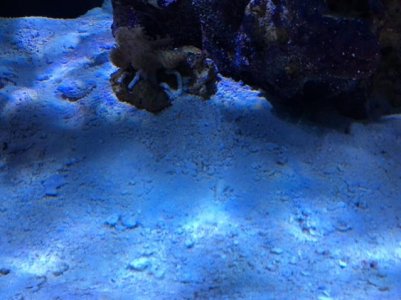
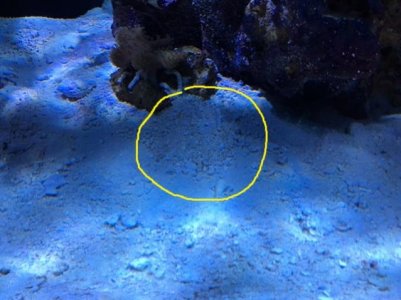
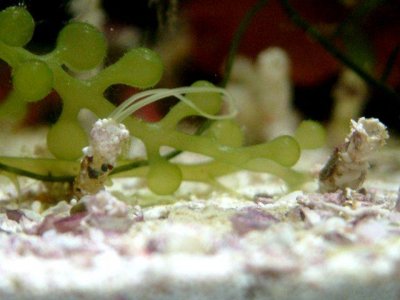
this is what I have...They have actually built tubes in the sand..
Before describing the worms themselves, I would like to discuss the role they play in the "natural history" of a reef aquarium. Most of these animals live within various components of the substrate, either the unconsolidated substrate such as sand or crushed coral, or the rocks. If they live in the rocks, they often live in holes or burrows generally excavated by some other organisms, although a few worms may be capable of excavating their own burrows. Those worms that live in the sediments may burrow through the sediments leaving no trace. Alternatively, they may exist in tubes or burrows that may be either permanent or quite temporary.
The vast majority of polychaete worms are tube-dwellers, living in some sort of burrow, and often that burrow is considerably longer than the worm itself. Generally, these tubes are at least stabilized by a mucous lining secreted by the worm. Such a lining is smooth and non-abrasive and allows the worm to move freely within the tube. Many tubes are strengthened even more fully by the presence of embedded sand grains or other particulate material. In some cases, the sand grains are cemented together into hard structures, and masses of these tubes may even form reefs. Sabellarid worm reefs in the Northeastern Pacific as well as in some tropical areas may be several hundred feet long, and over one hundred feet in height. The "ultimate" in "designer" tubes are secreted by some species of feather duster worms, in the group known as the Family Serpulidae. Serpulids secrete calcareous tubes that are typically white and quite rugged. In many cases, knowing the type of tube the worm secretes can be of assistance in its identification.