Hitch Hiker ID??

JBeursken

New member
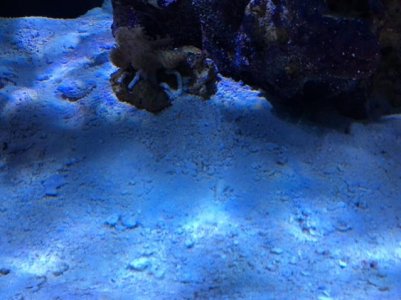
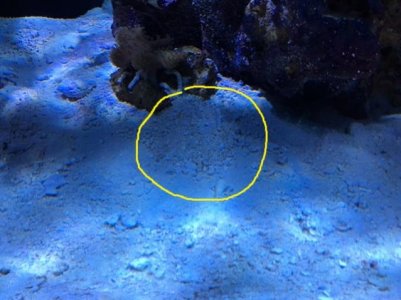
Anyone know what these are? I have like 5-6 tubes coming off my coral and once and a while I see what seems to be a very tiny worm coming out. If it is, what do I do about it and are they going to reproduce into more????

View attachment 335222
 
the tube worms or the big thing? big thing is either a Lobophytum coral or a sponge hard to tell. But the tubes of sand is definitely a type of harmless filter feeding worm.
 
Thanks

Thanks

appreciate the info,,,,i thought it was worms as well...Thanks for the info, glad to hear they are harmless....
 
Hard to see anything in the picture, but from your description it sounds like a tube worm. They are filter feeders, they have a hard brownish grey, or even white sometimes shell and are coiled like a snail shell but look more like a coiled snake. Does that sound right? If so, they are harmless but can look bad. A wrasse will eat them, I cleared them up with a 6-line wrasse.
 
perfect description

perfect description

A1t2o --- you described it perfectly....time to buy another fish...laughing....Thanks again
 
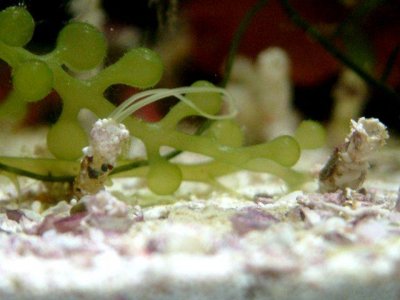
This is what I have...

The "ultimate" in "designer" tubes are secreted by some species of feather duster worms, in the group known as the Family Serpulidae. Serpulids secrete calcareous tubes that are typically white and quite rugged. In many cases, knowing the type of tube the worm secretes can be of assistance in its identification.

 
Serpulids are feather duster worms, they have fans. Yours is not a duster. Check the link I gave you above.
 
Your right

Your right

this is what I have...They have actually built tubes in the sand..

Before describing the worms themselves, I would like to discuss the role they play in the "natural history" of a reef aquarium. Most of these animals live within various components of the substrate, either the unconsolidated substrate such as sand or crushed coral, or the rocks. If they live in the rocks, they often live in holes or burrows generally excavated by some other organisms, although a few worms may be capable of excavating their own burrows. Those worms that live in the sediments may burrow through the sediments leaving no trace. Alternatively, they may exist in tubes or burrows that may be either permanent or quite temporary.

The vast majority of polychaete worms are tube-dwellers, living in some sort of burrow, and often that burrow is considerably longer than the worm itself. Generally, these tubes are at least stabilized by a mucous lining secreted by the worm. Such a lining is smooth and non-abrasive and allows the worm to move freely within the tube. Many tubes are strengthened even more fully by the presence of embedded sand grains or other particulate material. In some cases, the sand grains are cemented together into hard structures, and masses of these tubes may even form reefs. Sabellarid worm reefs in the Northeastern Pacific as well as in some tropical areas may be several hundred feet long, and over one hundred feet in height. The "ultimate" in "designer" tubes are secreted by some species of feather duster worms, in the group known as the Family Serpulidae. Serpulids secrete calcareous tubes that are typically white and quite rugged. In many cases, knowing the type of tube the worm secretes can be of assistance in its identification.
 
sounds and Looks

sounds and Looks

It sounds and looks like exactly what I have ..... could be wrong...I'm new to this..only had the tank 2 1/2 months so I'm learning...
 
spionid Worm

spionid Worm

After looking at the picture of this worm......they have actually built shoots under the sand as well. see picture of the sand around the area....after further review...I just got my magnifying glass out, this has 2 long antenna's that comes out of the tube, it was actually out of the tube almost 3-4 inches...it is a worker for sure....look at the sand base it has made...


Base.jpg
 
Sugar Magnolia.....

Sugar Magnolia.....

Sugar you are correct...see the picture,,,exactly what I have....Thanks...

spionid.jpg
 
Last edited:
yes they are

yes they are

they are hard workers,,,I get out my magnifying glass and they are pretty cool to watch...My tank is changing constantly...I have Feather Dusters now as well...I've been spending a lot of time researching all these little guys. I appreciate YOUR help....thanks again.
 
Back
Top