
You are using an out of date browser. It may not display this or other websites correctly.
You should upgrade or use an alternative browser.
You should upgrade or use an alternative browser.
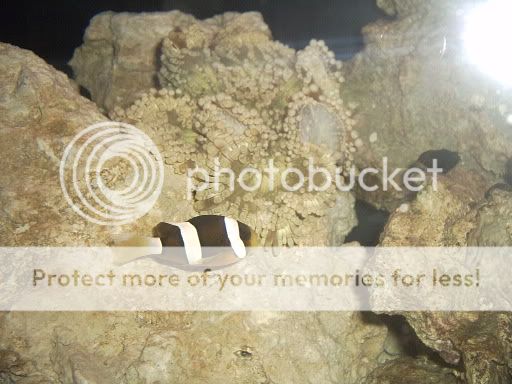
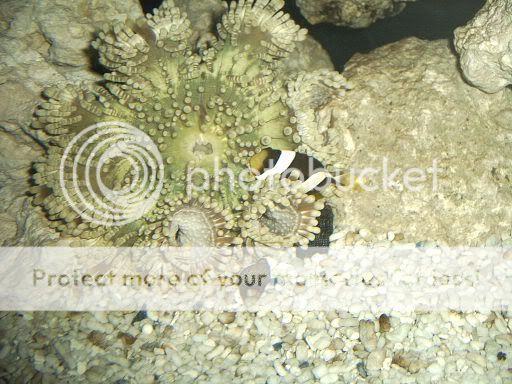
I got a new anemone today. Need an ID *pic*
- Thread starter xenon
- Start date

55semireef
Moved On
Why did you cook your liverock?
I would say you either have Heteractis aurora Beaded Anemone or Heteractis Crispa. Its hard to tell but if I had to pick I would go with the aurora. Crispa's usually don't fold like that.
I would say you either have Heteractis aurora Beaded Anemone or Heteractis Crispa. Its hard to tell but if I had to pick I would go with the aurora. Crispa's usually don't fold like that.
55semireef
Moved On
Check this thread out. It might help you identify your anemone. Maybe not though.
http://reefcentral.com/forums/showthread.php?s=&threadid=1007835
http://reefcentral.com/forums/showthread.php?s=&threadid=1007835

xenon
Owner of Canada Corals
<a href=showthread.php?s=&postid=9327879#post9327879 target=_blank>Originally posted</a> by 55semireef
Why did you cook your liverock?
I would say you either have Heteractis aurora Beaded Anemone or Heteractis Crispa. Its hard to tell but if I had to pick I would go with the aurora. Crispa's usually don't fold like that.
So far from what I have seen I agree. It folds even more than the pic I posted. Are the Aurora's rare or common?
I bought the liverock when i first started in the hobby on a 60g tank.
I had no clue what I was doing and was using tapwater on top of that and my rocks were COVERED in hair algee. I tore it all down, sold the tank, bought a new AGA 90 and decided to cook the rock to clean it up.
During that time I would read as much as possible and buy each piece of equipment after crazy researching.
xenon
Owner of Canada Corals
<a href=showthread.php?s=&postid=9327884#post9327884 target=_blank>Originally posted</a> by 55semireef
Check this thread out. It might help you identify your anemone. Maybe not though.
http://reefcentral.com/forums/showthread.php?s=&threadid=1007835
Cool, Thanks!
One thing that I did find on that thread is interesting.
"Confusion is possible with Heteractis aurora, Heteractis crispa, Macrodactyla doreensis. H. aurora has tentacles with swollen parts and H. crispa and M. doreensis have longer tentacles with a corkscrew affect at times. Is characterized with a brown creamy colour tentackes with purple tentacle tips. Whitish column with longitudinal rows of verrucae."
55semireef
Moved On
I still believe your tank is quite new even after all that "crazy" researching. 
I would have to say the beaded anemone is definately not a common one. I don't many that have them and have never seen one for sale. But I am not 100 percent sure you have one to begin with. Takeing some pictures under its or disc. would help.
I would have to say the beaded anemone is definately not a common one. I don't many that have them and have never seen one for sale. But I am not 100 percent sure you have one to begin with. Takeing some pictures under its or disc. would help.

WDLV
Skunk Hybrid Freak
Out of the Nems mentioned I'd lean toward H. aurora.
Whatever it is, I'd strongly recommend the following to give it the highest chance at survival. Don't change the flow, the aquascape, the lighting or try to force placement in any way. Allow it to take up residence wherever it wants. Again don't change anything that will change light or flow dynamics (including aquascaping.) It is bleached and living off it's own tissues. It will expend a great deal of energy finding a suitable place to settle into. Not interfering will go a long way toward minimizing that.
If you plan to feed it, give it small pieces in small quantities, as capturing, ingesting as well as probably egesting at this stage may use more energy than it will gain from the food.
JMO
Whatever it is, I'd strongly recommend the following to give it the highest chance at survival. Don't change the flow, the aquascape, the lighting or try to force placement in any way. Allow it to take up residence wherever it wants. Again don't change anything that will change light or flow dynamics (including aquascaping.) It is bleached and living off it's own tissues. It will expend a great deal of energy finding a suitable place to settle into. Not interfering will go a long way toward minimizing that.
If you plan to feed it, give it small pieces in small quantities, as capturing, ingesting as well as probably egesting at this stage may use more energy than it will gain from the food.
JMO


illcssd
New member
When you show us a pic of the underside of the anemone. But, fwiw i would put all the money on h. crispa. Honestly its not a aurora or a malu. Definitly not long tentacle. the one picture you posted leans heavily towards crispa. I would expect it to turn a brownish color w/a pink tinge to it maybe.



55semireef
Moved On
Its hard to tell with those actinics on.
xenon
Owner of Canada Corals
<a href=showthread.php?s=&postid=9331545#post9331545 target=_blank>Originally posted</a> by 55semireef
Its hard to tell with those actinics on.
Well the color of his foot is a light cream color.
Color of foot can be helpful, but I think what most people are looking for is the presence of verrucae - the bumps on the underside of the nem.
The different types of nems can have differing verrucae. Sometimes the patterns are different, some are stickier than others, and some nems have beautifully colored verrucae that sets them apart.
Using a turkey baster (or something similar) to gently move/lift the disk up to get a picture of the verrucae isn't very stressful (IME) and is your best bet for an ID.
FWIW - it's really tricky identifying a bleached and hungry anemone, and a lot of new ones seem to be that way. If I was guessing, I would reserve the right to change my mind after a few months, when, hopefully, it's healthier and takes on shape and color characteristics that are more natural for it
Good luck!
The different types of nems can have differing verrucae. Sometimes the patterns are different, some are stickier than others, and some nems have beautifully colored verrucae that sets them apart.
Using a turkey baster (or something similar) to gently move/lift the disk up to get a picture of the verrucae isn't very stressful (IME) and is your best bet for an ID.
FWIW - it's really tricky identifying a bleached and hungry anemone, and a lot of new ones seem to be that way. If I was guessing, I would reserve the right to change my mind after a few months, when, hopefully, it's healthier and takes on shape and color characteristics that are more natural for it
Good luck!
55semireef
Moved On
<a href=showthread.php?s=&postid=9331889#post9331889 target=_blank>Originally posted</a> by raoul
Color of foot can be helpful, but I think what most people are looking for is the presence of verrucae - the bumps on the underside of the nem.
The different types of nems can have differing verrucae. Sometimes the patterns are different, some are stickier than others, and some nems have beautifully colored verrucae that sets them apart.
Using a turkey baster (or something similar) to gently move/lift the disk up to get a picture of the verrucae isn't very stressful (IME) and is your best bet for an ID.
FWIW - it's really tricky identifying a bleached and hungry anemone, and a lot of new ones seem to be that way. If I was guessing, I would reserve the right to change my mind after a few months, when, hopefully, it's healthier and takes on shape and color characteristics that are more natural for it
Good luck!
Agreed.
WDLV
Skunk Hybrid Freak
I'm not really seeing much in the way of vurricae on this one.
I'm feeling comfortable going with H. aurora because this anemone has rings around many of it's tentacles that if healthy would likely cause it to have the "beaded" appearance. This is a very distinct feature among host anemones. Outside of that I really can't say. If it's a host, it would have to be H. aurora.
...unless of course someone can show me a picture of another host anemone that has rings around the circumferance of its tentacles.
Look closely and you should be able to see what i'm talking about. It's most apparent in the outer tentacles.
I'm feeling comfortable going with H. aurora because this anemone has rings around many of it's tentacles that if healthy would likely cause it to have the "beaded" appearance. This is a very distinct feature among host anemones. Outside of that I really can't say. If it's a host, it would have to be H. aurora.
...unless of course someone can show me a picture of another host anemone that has rings around the circumferance of its tentacles.
Look closely and you should be able to see what i'm talking about. It's most apparent in the outer tentacles.
xenon
Owner of Canada Corals
<a href=showthread.php?s=&postid=9332241#post9332241 target=_blank>Originally posted</a> by WetSleeves
I'm not really seeing much in the way of vurricae on this one.
I'm feeling comfortable going with H. aurora because this anemone has rings around many of it's tentacles that if healthy would likely cause it to have the "beaded" appearance. This is a very distinct feature among host anemones. Outside of that I really can't say. If it's a host, it would have to be H. aurora.
...unless of course someone can show me a picture of another host anemone that has rings around the circumferance of its tentacles.
Look closely and you should be able to see what i'm talking about. It's most apparent in the outer tentacles.
What do you mean about "host anemones" ?
I am 99.9% sure its an Aurora.
Here is a picture of the rings.


