
You are using an out of date browser. It may not display this or other websites correctly.
You should upgrade or use an alternative browser.
You should upgrade or use an alternative browser.
ID please?
- Thread starter Shila Marie
- Start date


Shila Marie
New member
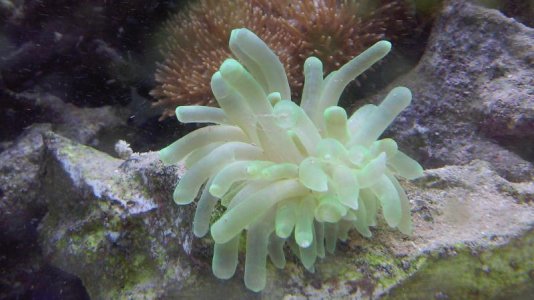
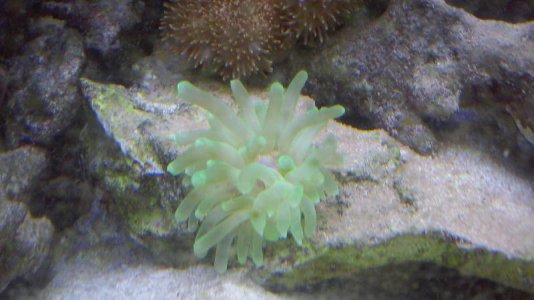
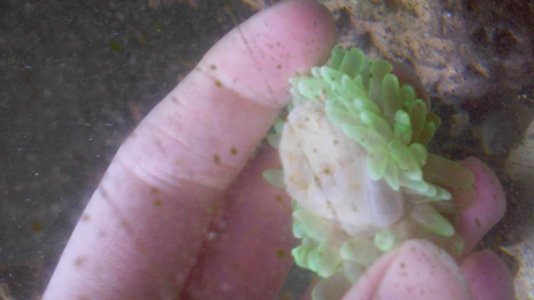
They said it was a zebra nem. Obviously not lol they said it was almost dead and didn't think it would make it. I got it for $13 even. Ill try to get a good pic of its foot and bottom hlf of it tomorrow. I have had people tell me its a condy or a long tentacle
Shila Marie
New member
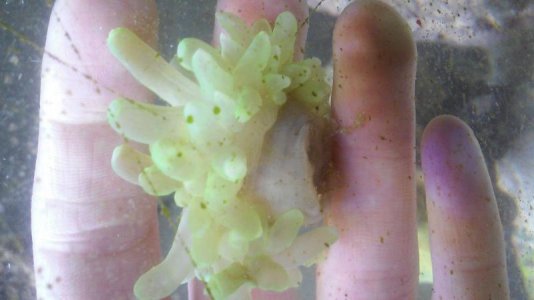
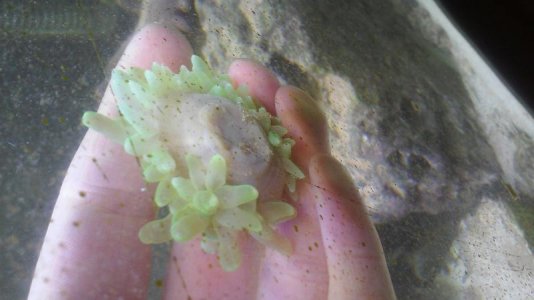
Got a few quick pics. It burys its foot in rock crevices or under another coral.... moves around alot still but it pretty much stays in the center/bottom of the tank on the rock. Never seen it in the sand yet
Attachments
Shila Marie
New member
I cant get a pic with its foot down and sitting somewhere. It always has to have its back against something

ocellaris123
Active member
A condylactus maybe

asudavew
Active member
Looks to me like a Heteractis Malu. If that's the case they tend to prefer sandy substrate, so try putting in in the sand.
I agree.

elegance coral
They call me EC
It's a very ill Condylactis.


Amoo
Member
My guess of Malu is based on this description:
Source: http://jjgeisler.com/reeftank/anemones/ch1.htm
Details Tentacles arise from brown or purplish (rarely bright green) oral disc as much as 200 mm in diameter that may have white radial markings; evenly tapered to point or slightly inflated in middle; lower part same colour as oral disc, but upper portion may have several white rings or green end. Column very thin in expansion; upper part violet-brown (due to zooxanthellae) with longitudinal rows of adhesive verrucae. Anemones can retract completely into sediment; most common in shallow, quiet waters.
Source: http://jjgeisler.com/reeftank/anemones/ch1.htm

shred5
Premium Member
Another condy vote.
Definitely not a malu.
Agreed...
Not a malu...
Looks like a small cody but that is hard to tell too..

ThRoewer
New member
It doesn't fit that description. The tentacles are too thick to begin with and then evenly thick and too long. A malu of that size would have proportionally shorter tentacles.My guess of Malu is based on this description:
"Details Tentacles arise from brown or purplish (rarely bright green) oral disc as much as 200 mm in diameter that may have white radial markings; evenly tapered to point or slightly inflated in middle; lower part same colour as oral disc, but upper portion may have several white rings or green end. Column very thin in expansion; upper part violet-brown (due to zooxanthellae) with longitudinal rows of adhesive verrucae. Anemones can retract completely into sediment; most common in shallow, quiet waters."
Source: http://jjgeisler.com/reeftank/anemones/ch1.htm
On top of that, a unhappy or sick malu retracts its tentacles.
Also this one seems to be very fragile. A malu has more the consistency of a crispa - very leathery.
Last edited:
Shila Marie
New member
Thanks everyone for the information and opinions. Very helpful 
Similar threads


- Replies
- 14
- Views
- 316

- Replies
- 8
- Views
- 376