<a href=showthread.php?s=&postid=15285271#post15285271 target=_blank>Originally posted</a> by blennymower
How does a two part compare to a kalkwasser and calcium reactor?
(I have just started a two part)
<a href=showthread.php?s=&postid=15285163#post15285163 target=_blank>Originally posted</a> by ReefWreak
Calcium reactor is supposed to be cheaper in the long run, but even with heavy dosing using 2 part, I'm figuring that it'll be a few years before the cost of 2 part overruns the cost of my calcium reactor. I'm in the first 3 days of going from calcium reactor to 2 part, and it's an interesting experience right now.
May be this information I posted in another thread can help clarify both questions.
Most times the decision to supplement with two part versus a calcium reactor is a matter of preference and some skills you feel more comfortable with.
In general DIY automated two part dosing vs a calcium reactor
1. DIY Two part automated dosing:
a) Initial lower investment
b) Cheaper operation than a calcium reactor for smaller systems or lower consumption.
c) Easy to set up and understand
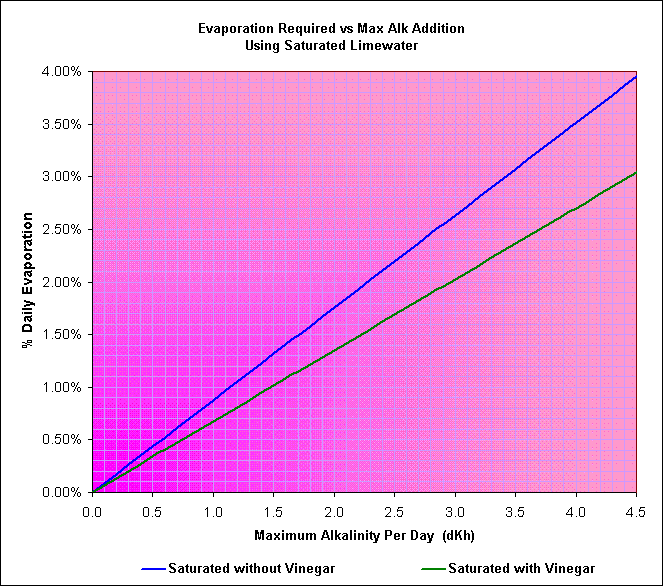
d) Good method to supply consumption over and above what can be dosed with dripping Kalk which is limited by concentration and evaporation rate (See chart below)
e) I have observed more incidents with precipitation events and frozen powerheads and submerged pumps than with a calcium reactor when using recipe 1 (High PH)
f) Easier to maintain higher PH
g) If higher volumes are needed there is a tendency to unbalance ions and tend to increase salinity if not frequent water changes are made.
h) Uncertified purity when using DIY products. The source of calcium chloride is a generic technical or industrial grades of products (Although food or high purity grades can be obtained)whose manufacturers do not recommend for aquarium use. Having said that, they have been used for supplementation purposes by many without an apparent detrimental effect.
i) Need for some regular time in preparation of the solutions
2. Calcium Reactor
a) Investment 1.5 to 2 times higher than two part dosing.
b) Lower operating cost than DIY two part dosing for higher volume systems and higher consumption that will pay back for the difference in initial cost over time.
c) Require more initial learning and skill but once understood and set up is almost set and forget for several months.
d) Less chance of carbonate precipitation and pump freezing.
e) Systems tend to run at a PH that is lower by about 0.05 to 0.1 PH units. In severe cases of reactor undersize running Limewater to compensate for the PH drop may be required.
f) Can be set up for continued addition via a controller or with a timer without controller.
g) Require the use of a high pressure CO2 cylinder that require some rules for safe handling.
h) Easier to achieve a balanced calcium/alkalinity addition as it is automatic.
i) In systems with high nutrients, residual CO2 may exacerbate the problem with nuisance algae although can also help the growth of macroalgae in a refugium.
j) Although some non commercial media may add contaminants or phosphates, it is the most contaminant free addition compared to DIY or Kalk addition.
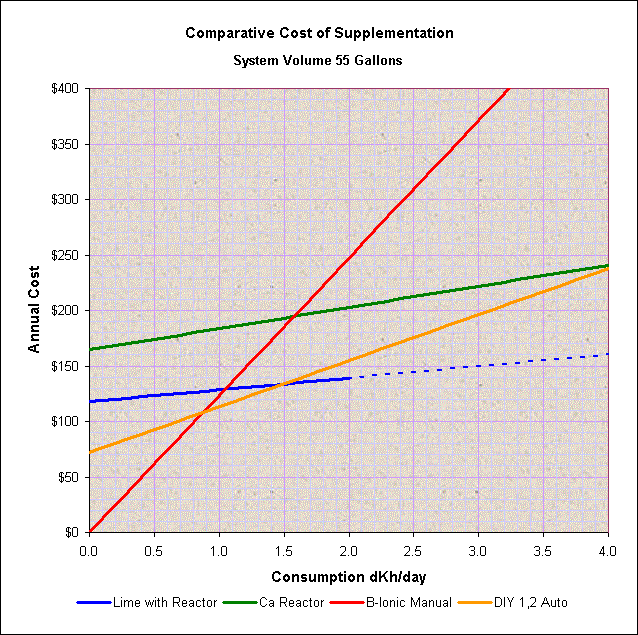
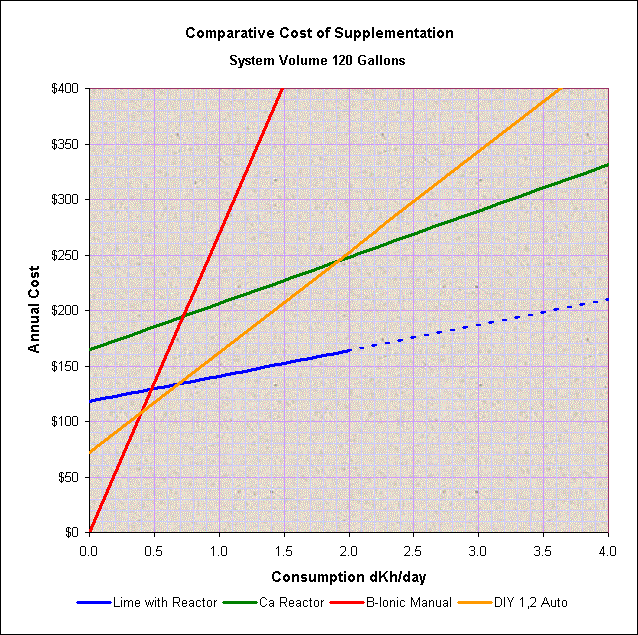
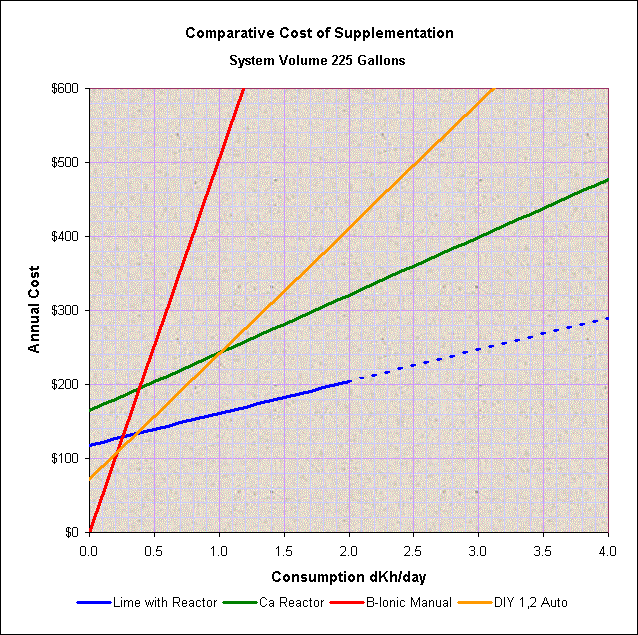
Based on cost alone and personal preferences aside, the charts below is a general comparison of cost versus alkalinity consumption for the three most popular automated methods of supplementation for 55 120 and 225 gal systems. The initial (Fixed cost at zero consumption) reflects the average initial cost of the system assuming a 5 year payback. Note that given the wide spread of options and sources for equipment and material costs the intersection of cost between two different systems can vary significantly.
Notice that in general Limewater addition is the cheapest method but will require a second method of supplementation if consumption is higher that what can be added by Kalk alone (Dotted Line shows the points above which Kalk alone may not meet the requirements).
From the 55 gal system chart, notice that it will be difficult to cost justify the use a calcium reactor for a system of this volume or less. Considering variability in sources and cost, it might be difficult to cost justify a reactor for systems with a volume lower than between 55 to 75 gallons.
At about 120 gal, a calcium reactor may or may not be cheaper than DIY depending on the alkalinity consumption
The large system chart (225 gal) shows that a calcium reactor may be the best option cost wise.
Last chart can be used to determine the maximum amount of alkalinity that can be dosed using saturated limewater depending on the amount of daily evaporation as a % of total system volume.
Enjoy!