Kessil AP 700 Owners Gather Here!

Would the AP700 be appropriate for a newbie that's getting back into the hobby after a 10 year hiatus? I mean in terms of usability. I know that it's an elite light, but I hope I wouldn't need elite know-how to run it and make it worth the money I paid for it.
 
It's been 2 weeks since running the ap700 on the new tank and my corals are bleaching. Photoperiod about 10 hrs with 3.5 hrs ramp up and down at max intensity of 35% for 3.5 hours...the fixture is mounted 16" above water. My montis and cyphastrea are bleaching even at sand bed


Sent from my iPhone using Tapatalk
 
It's been 2 weeks since running the ap700 on the new tank and my corals are bleaching. Photoperiod about 10 hrs with 3.5 hrs ramp up and down at max intensity of 35% for 3.5 hours...the fixture is mounted 16" above water. My montis and cyphastrea are bleaching even at sand bed


Sent from my iPhone using Tapatalk
What did u have before for lightning

Sent from my SM-G935T using Tapatalk
 
It's been 2 weeks since running the ap700 on the new tank and my corals are bleaching. Photoperiod about 10 hrs with 3.5 hrs ramp up and down at max intensity of 35% for 3.5 hours...the fixture is mounted 16" above water. My montis and cyphastrea are bleaching even at sand bed


Sent from my iPhone using Tapatalk


Increase your Nitrates to ~5ppm and phosphates no less than .02ppm. 35% still puts out enough light that if your nutrients are too low and/or ALK too high you can still see bleaching.


Sent from my iPhone using Tapatalk
 
i look on here from time to time , i see lots of light schedules but no pictures of the color wheels , id like to see some , thanks
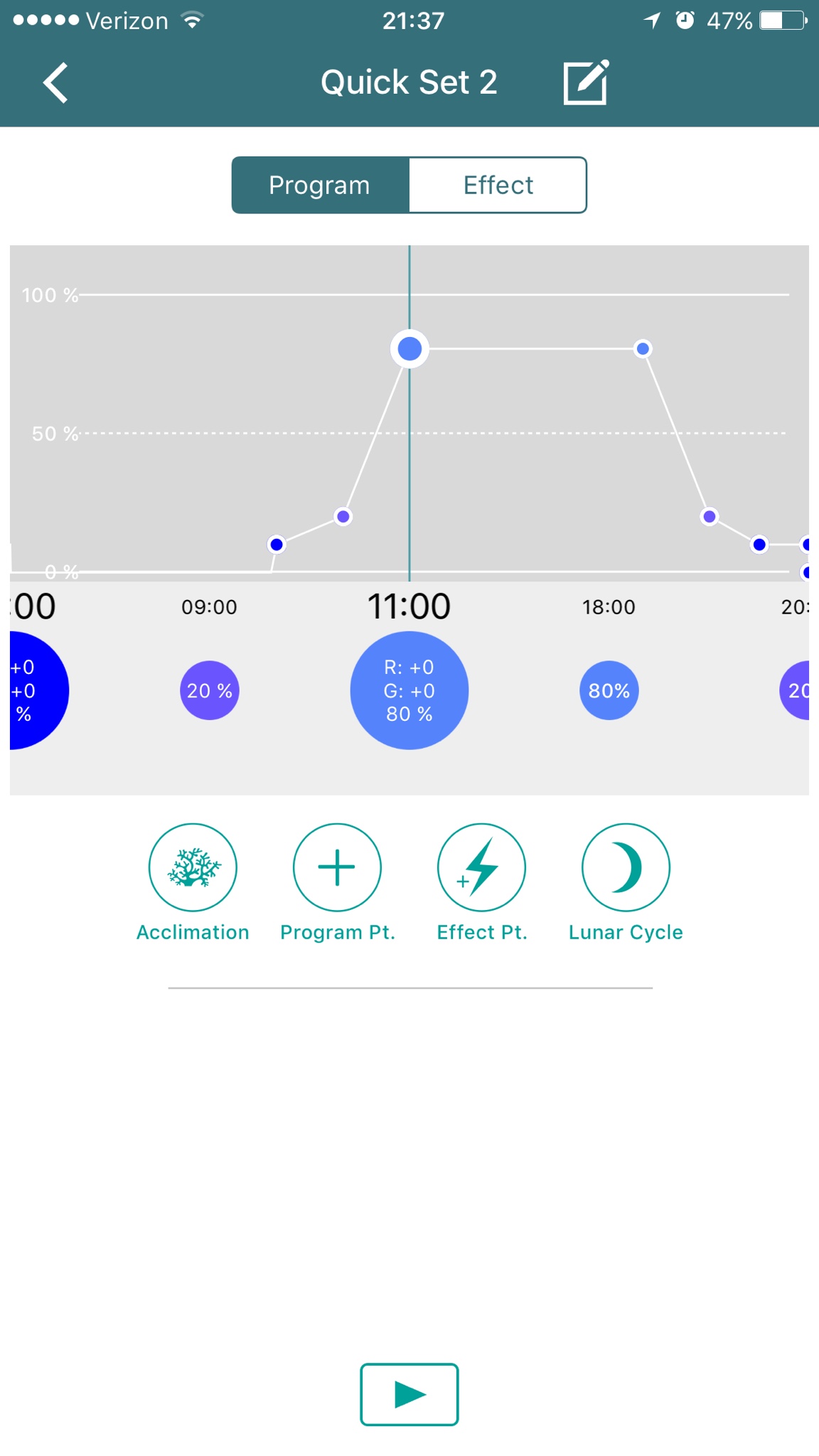

The schedules show each color used at each point, why do you need to see their color wheels also? A picture of the wheel won't indicate where that color point is on the schedule.

Here is my latest schedule
0981791c309261a78e6f50012a506b46.jpg


I feel I need to update everyone.

I have since increased my NO3 to 7-8ppm and PO4 to .02-.03. This has resulted and my colors more vibrant than ever and growth steady. Also note that I have increased the peak photoperiod to 80% for 7 hours. Very very happy with the results.


Sent from my iPhone using Tapatalk
 
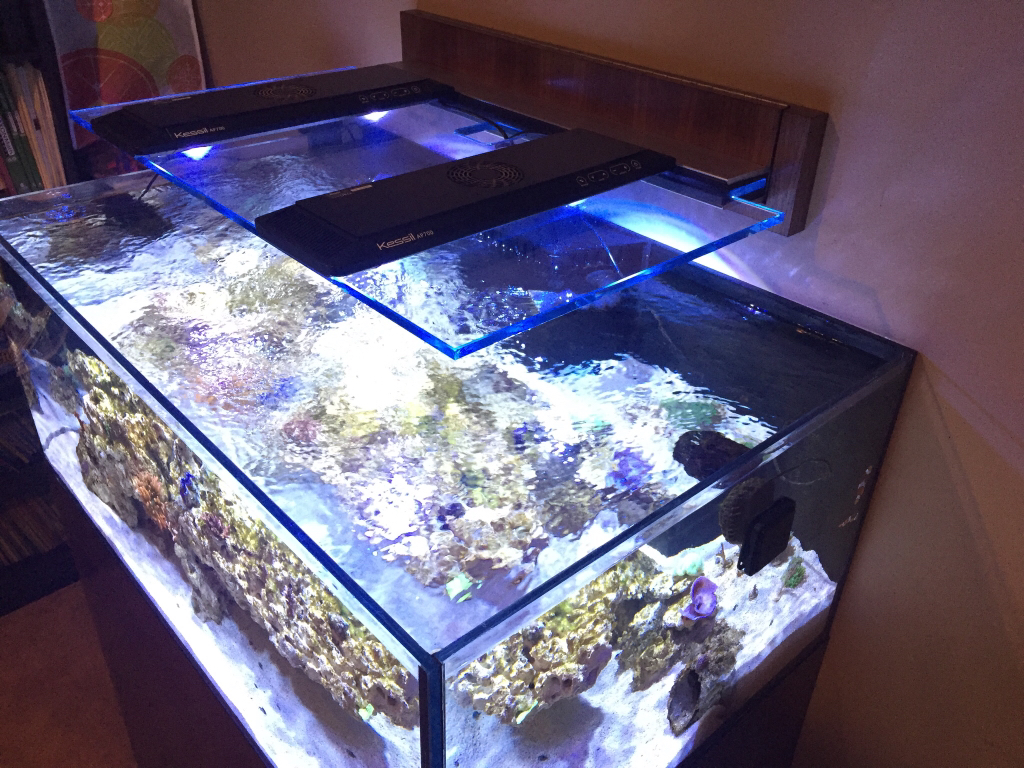
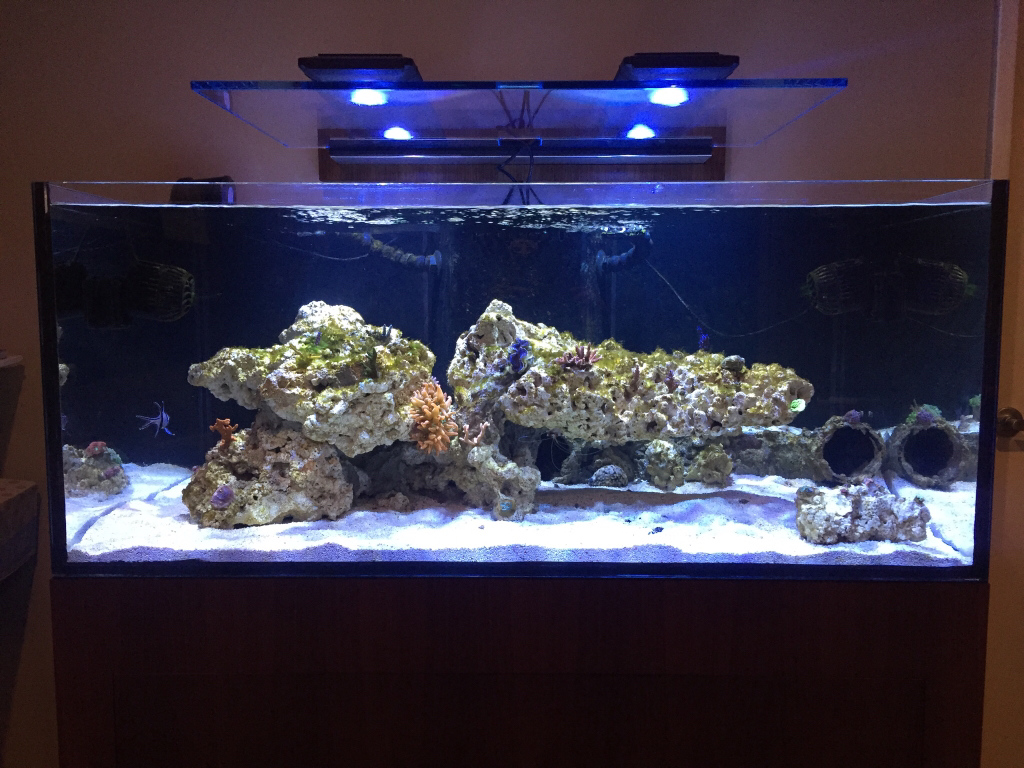
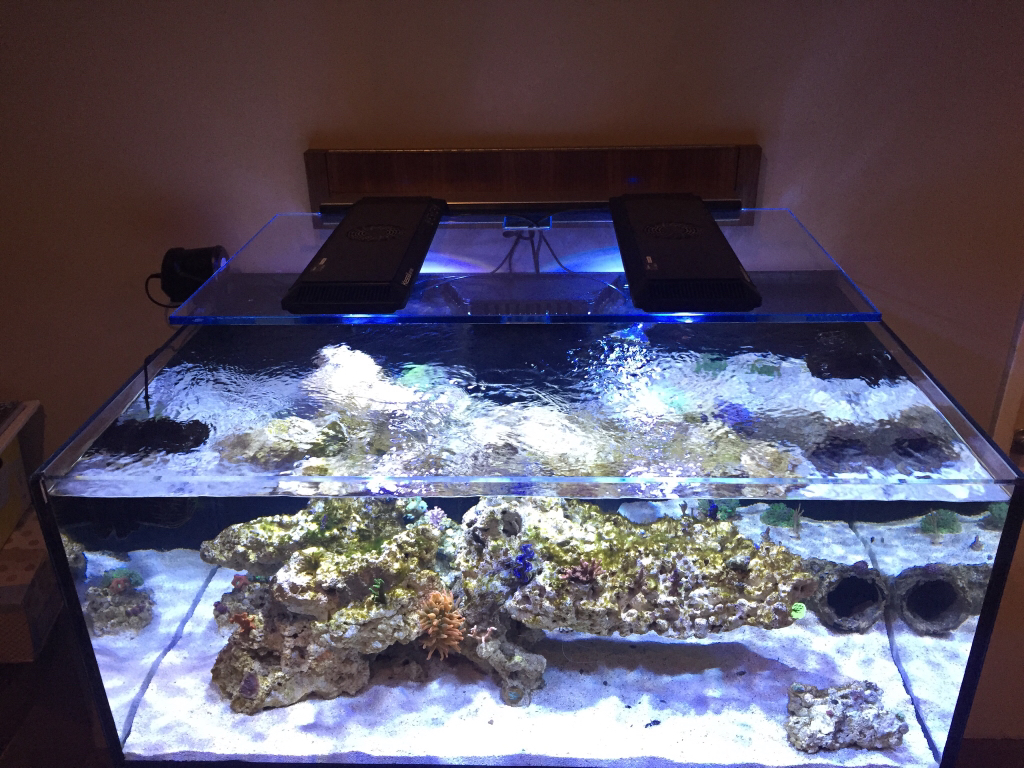
Here's my setup. My corals are starting to get some white tips and getting more pale in color. I started the tank out with a high of 40% for 5 hours but I'm thinking of bringing it down. I should be borrowing a par meter so I can get some actual measurements.

33e9e742a436568485f6c9705daeed80.jpg
2b0454163bd6e013e86fdae843f5f2ce.jpg
63802a1a4834836ab6d79d60bb0dad98.jpg


I've got to say I love these lights even if there are some deficiencies with the software.


Sent from my iPhone using Tapatalk
 
Here's my setup. My corals are starting to get some white tips and getting more pale in color. I started the tank out with a high of 40% for 5 hours but I'm thinking of bringing it down. I should be borrowing a par meter so I can get some actual measurements.

33e9e742a436568485f6c9705daeed80.jpg

I've got to say I love these lights even if there are some deficiencies with the software.


Sent from my iPhone using Tapatalk

That is a pretty slick setup! I really like how you did your aquascape and the lights on the glass shelf. I would sugget lowering the peak time from 5 hours to 4 hours. I think your 40% is just fine. The coloration change in your corals could be due to a lack of nutrients in the water since it looks like you have a relatively newly setup tank and very few fish. I have an AP700 setup over one tank and that peaks at 70% for 4 hours during a 12 hour photoperiod. I also see a bit of algae growing in there. Not sure what you have the color set to but reducing the white and shifting it a bit more to the blue will help slow the algae down.

Here is the light program I have setup.
IMG_3007_zps3xbeugiu.png
 
Last edited:
Increase your Nitrates to ~5ppm and phosphates no less than .02ppm. 35% still puts out enough light that if your nutrients are too low and/or ALK too high you can still see bleaching.


Sent from my iPhone using Tapatalk


You could have very well nailed it right on. I did a quick cycle of 2 weeks with dr tim's; fishless and did not ghost feed. I transferred all my live rock from old tank with new sand. I was also running gfo in a bag in the sump. Had a wild gha outbreak which probably sucked up whatever phosphates I had in the tank. I will keep photoperiod and intensity the same for another week or two while trying to raise nitrates. Thanks!
 
It's been 2 weeks since running the ap700 on the new tank and my corals are bleaching. Photoperiod about 10 hrs with 3.5 hrs ramp up and down at max intensity of 35% for 3.5 hours...the fixture is mounted 16" above water. My montis and cyphastrea are bleaching even at sand bed


Sent from my iPhone using Tapatalk

Weren't you having other issues with your tank last month? Issues with alk levels and issues with your sand where you had to remove all your sand? I'd be willing to bet your issue with the corals has nothing to do with the lighting but more to do with the stability of your tank and changes in it's chemistry. Especially if this tank is relatively new. It takes up to a year for a tank to mature during which time the tank will go through all kinds of changes. Stability is the key to the health of corals and those issues you have been dealing with coupled with the changes going on in the tank will cause issues with the health of the corals. These lights will grow coral just fine but if the stability isn't there and parameters aren't in check, then the coral won't thrive. Also, 35% peak at 16" above the water is going to produce pretty weak intensity for SPS and unless the tank is 8" deep, that won't cut it for growth.
 
Weren't you having other issues with your tank last month? Issues with alk levels and issues with your sand where you had to remove all your sand? I'd be willing to bet your issue with the corals has nothing to do with the lighting but more to do with the stability of your tank and changes in it's chemistry. Especially if this tank is relatively new. It takes up to a year for a tank to mature during which time the tank will go through all kinds of changes. Stability is the key to the health of corals and those issues you have been dealing with coupled with the changes going on in the tank will cause issues with the health of the corals. These lights will grow coral just fine but if the stability isn't there and parameters aren't in check, then the coral won't thrive. Also, 35% peak at 16" above the water is going to produce pretty weak intensity for SPS and unless the tank is 8" deep, that won't cut it for growth.


Yea I was having trouble with the sand sucking up my Alk; all that sand was removed followed but 2 large water changes. Then the 2 week cycle started after that was resolved. The big 3 parameters have been rock solid ever since and I just started dosing up to my desired levels over a span of a few days. Currently alk is at 9, ca -400, mag -1400. Nitrates and phosphates on the other hand is what I will be working on the weeks to come.

As far as height of fixture goes, the 16" above water level works for me for now as I don't have many sps. Of those that I do have, they are all in the top 6" of the tank on a rack. I'd rather them not get enough light for now rather than too much light. I want to give some time for the ones that are bleached to recovery before turning up the intensity.
 
Yea I was having trouble with the sand sucking up my Alk; all that sand was removed followed but 2 large water changes. Then the 2 week cycle started after that was resolved. The big 3 parameters have been rock solid ever since and I just started dosing up to my desired levels over a span of a few days. Currently alk is at 9, ca -400, mag -1400. Nitrates and phosphates on the other hand is what I will be working on the weeks to come.

As far as height of fixture goes, the 16" above water level works for me for now as I don't have many sps. Of those that I do have, they are all in the top 6" of the tank on a rack. I'd rather them not get enough light for now rather than too much light. I want to give some time for the ones that are bleached to recovery before turning up the intensity.
I have 2 AP700s on a 59x22x22. At 37% the PAR at 6" down was around 170 and sand was around 70. That's 8" off water. The lights aren't your issues with the corals.

Sent from my SM-G935T using Tapatalk
 
Yea I was having trouble with the sand sucking up my Alk; all that sand was removed followed but 2 large water changes. Then the 2 week cycle started after that was resolved. The big 3 parameters have been rock solid ever since and I just started dosing up to my desired levels over a span of a few days. Currently alk is at 9, ca -400, mag -1400. Nitrates and phosphates on the other hand is what I will be working on the weeks to come.

As far as height of fixture goes, the 16" above water level works for me for now as I don't have many sps. Of those that I do have, they are all in the top 6" of the tank on a rack. I'd rather them not get enough light for now rather than too much light. I want to give some time for the ones that are bleached to recovery before turning up the intensity.

All that in the span of about a month?? Alk problems, sand removal, 2 large water changes, 2 week cycle, alk all over the map up until recently? Correct me if I am wrong. If I am right, you are lucky to have any corals left. Those are MAJOR chemistry changes beyond the Ca, Alk, Mg. By the way, I am not faulting you. We've all been there at one point or another and it's a learning experience. Especially if you are new to this hobby.. SPS are very sensitive to changes in chemistry and even a 2 point shift in alk can kill the coral. You had some really low alk numbers a month ago and have raised your alk from the low 5's up to 9dkh over the span of a month. Not that the 3 dkh change in Alk over that period of time is bad from a speed standpoint but it's the extreme low and changes overall in chemistry that are the real issue. Your chemistry and has been all over the map. Not only that but there is much more to a healthy thriving reef than just the big 3. Like I said, the first year, the tank goes through all kinds of chemistry changes beyond Ca, Alk and Mg. Those changes, while subtle can have a big impact on the health of the corals and or initial success of a reef tank. You can't just expect to have good Ca, Alk and Mg levels and thriving corals. There is much more too it and the maturity of a system plays a huge role.
The best advice I can give you is to take it slow. Don't invest a bunch of money in coral just yet. Test every week and make sure things stay stable and consistent. I recently setup a 100 gallon tank here at my house seperate from my main system. I waited 4 months before putting the first coral into the tank. I did this because I know I would likely have had casualties if I rushed things. I wanted the tank to mature a bit and build stabily. It also allowed me time to monitor the water chemistry without the corals so I knew what my baseline truly was but ultimately I knew my tank wouldn't be near ready for success without a few or more months to establish itself despite me having a 700 gallon 29 year old reef in the next room that is healthy and thriving and plenty of water from that system to use for wate changes. .
 
Last edited:
All that in the span of about a month?? Alk problems, sand removal, 2 large water changes, 2 week cycle, alk all over the map up until recently? Correct me if I am wrong. If I am right, you are lucky to have any corals left. By the way, I am not faulting you. We've all been there at one point or another. SPS are very sensitive and even a 2 point shift in alk can kill the coral. You had some really low alk numbers a month ago and have raised your alk from the low 5's up to 9dkh over the span of a month. Your chemistry and has been all over the map. Not only that but there is much more to a healthy thriving reef than just the big 3. Like I said, the first year, the tank goes through all kinds of chemistry changes beyond Ca, Alk and Mg. Those changes, while subtle can have a big impact on the health of the corals and or initial success of a reef tank. You can't just expect to have good Ca, Alk and Mg levels and thriving corals. There is much more too it and the maturity of a system plays a huge role.


Right, which is why I said @bif24701 nailed it with low nitrates and phosphates. Nitrates at 2ppm and phosphates at .02ppm since all my gha has been resolved.

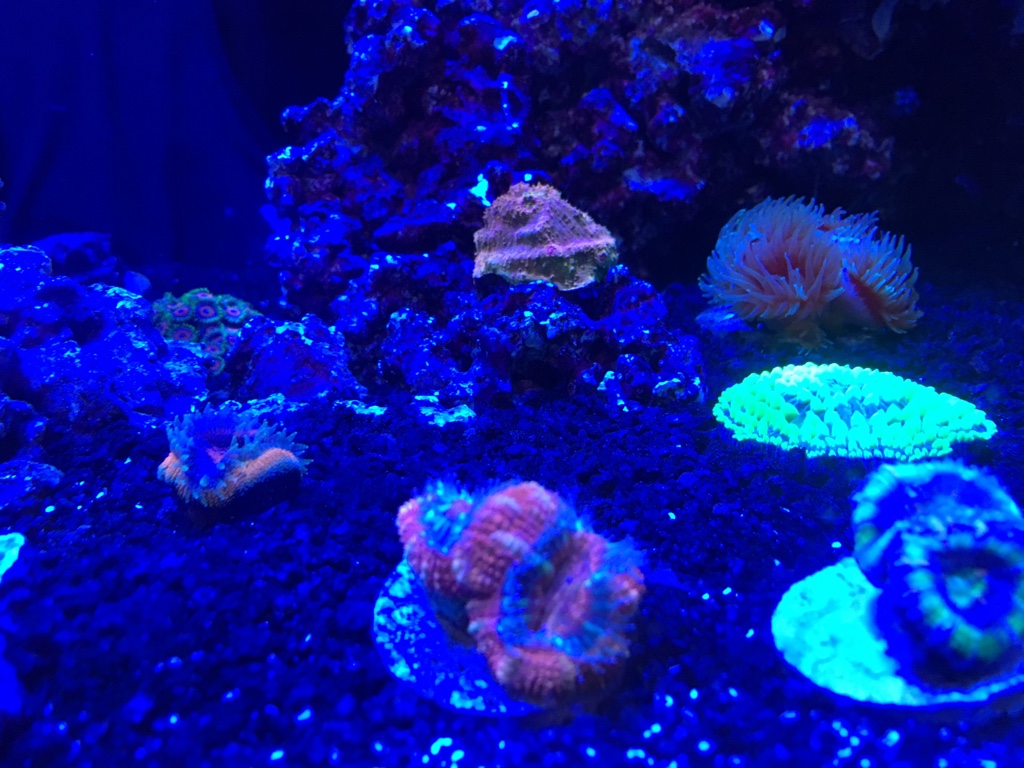
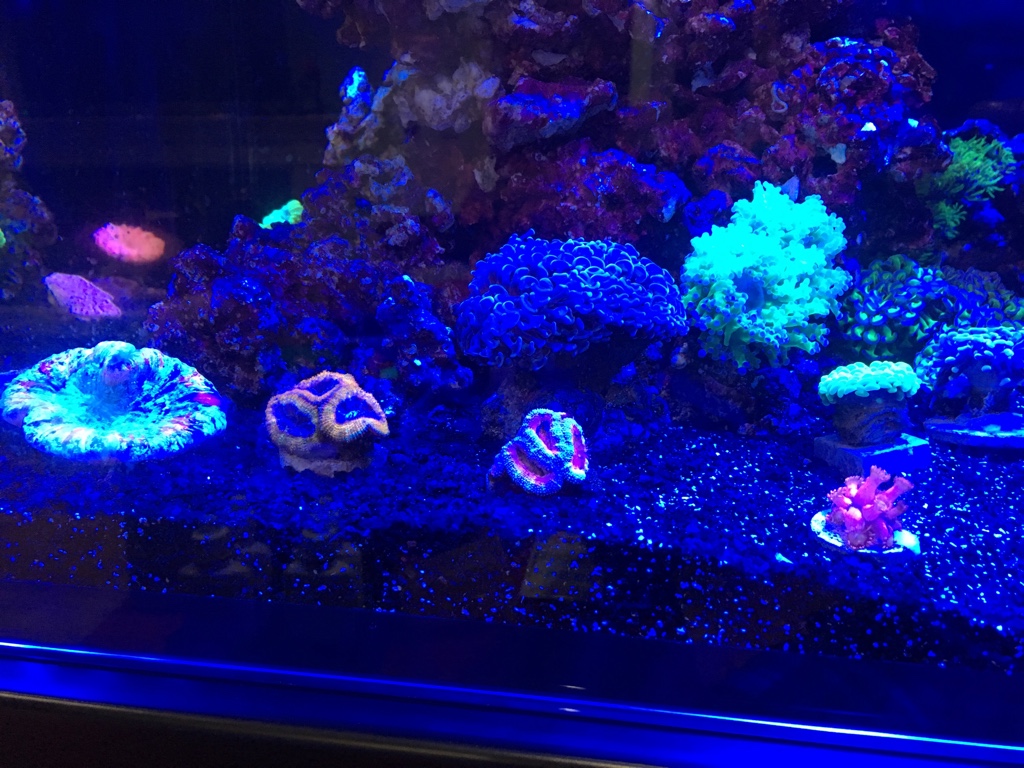
But please don't get it twisted, while it was going through all those major changes there were no corals in the tank lol. They were in my frag tank. Aside from my montis and cyphastrea bleaching everything else is doing fine in the tank.

6879c4fab4b03ce462f152c7e7726a1c.jpg
eee75b7b28e6290e7c7e4948bf0cd159.jpg


Forgive me for the iPhone pictures.


Sent from my iPhone using Tapatalk
 
Right, which is why I said @bif24701 nailed it with low nitrates and phosphates. Nitrates at 2ppm and phosphates at .02ppm since all my gha has been resolved.

But please don't get it twisted, while it was going through all those major changes there were no corals in the tank lol. They were in my frag tank. Aside from my montis and cyphastrea bleaching everything else is doing fine in the tank.

6879c4fab4b03ce462f152c7e7726a1c.jpg
eee75b7b28e6290e7c7e4948bf0cd159.jpg


Forgive me for the iPhone pictures.


Sent from my iPhone using Tapatalk

Understood. Despite your tank not having coral in it while those changes were going on, the chemistry in the tank has been all over the map. There is much more to a stable system than just the big 3. The fact that those parameters have been all over the map in the last 30 days is a clear sign that your tank hasn't been stable and a few days or a couple weeks of stable Ca, Alk and Mg doesn't mean your system is stable. When I setup a new tank, I always wait 3-4 months before putting any coral in it. I check the big 3 every week to make sure it's stable. I would never add coral to a tank that hasn't been stable for several weeks because I know there will be casualties. I always wait the 3-4 months because I know that the system will go through all kind of changes in chemistry during the first several months to a year but the first 3-4 months are when major changes occur that bring on all kinds of things such as GHA, diatoms and other nuisance issues. Those things are all signs that the water chemistry is changing and those changes can be very inhospitable to corals. As I have said, there is MUCH more to a stable system than just the big 3. Even a large water change in a small system can be detrimental because a large water change can change the water chemistry really fast. That is why many of use advocate smaller daily water changes vs larger weekly or monthly water changes.


As for GHA, you don't need much if any Po4 let alone nitrates to have a GHA outbreak in a new tank. In fact, it's to be expected. It's just one of the cycles that a new tank goes through which brings up another point. I am not sure how you are checking your Po4 but if you're not using a Hanna ULR Phosphor checker and are using a Hanna HI713 phosphate checker or an API test kit, I'd bet those numbers are off. If you are using the ULR, than your probably pretty accurate. As for nitrates, you don't need nitrates to have a healthy reef. You need nutrients such as fish and feeding which will provide a food source for the corals. My main reef system is 700 gallons and the display is 500 gallons. I have over 70 fish in it right now and feed 3x a day. I never hve detectable nitrates yet my corals all grow like weeds. Literally grow like weeds. The tank is inundated with corals. Things like live rock, sand, the surfaces of your tank all provide surfaces for bacteria that will consume the nitrates as well as excess nutrients before they can become nitrates. I just setup a 100 gallon reef here too and I waited 4 months before adding the first coral in that tank and during the first 4 months, I only did 1 5 gallon water change which was just to vacuum the tank which is bare bottom. I left the tank alone to mature on it's own without me meddling with it short of there being a couple fish in it for the 2nd two months before the corals went in.

Anyhow, just be patient and try to refrain from adding more corals until you see everything doing well. Rest assured, there is no one single thing causing your issues. Instead it's a combination of things that begins with stability or a lack of. Maintain the stability, insure there are nutrition sources and slowly increase your lights intensity.
 
Last edited:
Understood. Despite your tank not having coral in it while those changes were going on, the chemistry in the tank has been all over the map. There is much more to a stable system than just the big 3. The fact that those parameters have been all over the map in the last 30 days is a clear sign that your tank hasn't been stable and a few days or a couple weeks of stable Ca, Alk and Mg doesn't mean your system is stable. When I setup a new tank, I always wait 3-4 months before putting any coral in it. I check the big 3 every week to make sure it's stable. I would never add coral to a tank that hasn't been stable for several weeks because I know there will be casualties. I always wait the 3-4 months because I know that the system will go through all kind of changes in chemistry during the first several months to a year but the first 3-4 months are when major changes occur that bring on all kinds of things such as GHA, diatoms and other nuisance issues. Those things are all signs that the water chemistry is changing and those changes can be very inhospitable to corals. As I have said, there is MUCH more to a stable system than just the big 3. Even a large water change in a small system can be detrimental because a large water change can change the water chemistry really fast. That is why many of use advocate smaller daily water changes vs larger weekly or monthly water changes.


As for GHA, you don't need much if any Po4 let alone nitrates to have a GHA outbreak in a new tank. In fact, it's to be expected. It's just one of the cycles that a new tank goes through which brings up another point. I am not sure how you are checking your Po4 but if you're not using a Hanna ULR Phosphor checker and are using a Hanna HI713 phosphate checker or an API test kit, I'd bet those numbers are off. If you are using the ULR, than your probably pretty accurate. As for nitrates, you don't need nitrates to have a healthy reef. You need nutrients such as fish and feeding which will provide a food source for the corals. My main reef system is 700 gallons and the display is 500 gallons. I have over 70 fish in it right now and feed 3x a day. I never hve detectable nitrates yet my corals all grow like weeds. Literally grow like weeds. The tank is inundated with corals. Things like live rock, sand, the surfaces of your tank all provide surfaces for bacteria that will consume the nitrates as well as excess nutrients before they can become nitrates.

Anyhow, just be patient and try to refrain from adding more corals until you see everything doing well. Rest assured, there is no one single thing causing your issues. Instead it's a combination of things that begins with stability or a lack of. Maintain the stability, insure there are nutrition sources and slowly increase your lights intensity.


Note taken. Nitrates are checked using Red Sea kit. Po4 checked with Red Sea and Hanna ULR.


Sent from my iPhone using Tapatalk
 
@slief Also, I didn't have the luxury of letting the tank cycle for 3-4 month as this was a tank upgrade with the tank going in same place as the old one. I stalled out as long as possible but the transfer had to happen asap due to lack of space.


Sent from my iPhone using Tapatalk
 
Note taken. Nitrates are checked using Red Sea kit. Po4 checked with Red Sea and Hanna ULR.


Sent from my iPhone using Tapatalk

I am glad to see you are using good test methods! That is one thing that many seem to overlook and the test results are only as good as the test kits :beer:

FWIW, my main display/system has been up and running since 1997. It took years before it got to the point that anything and everything I put in there thrived. Literally years. Now it's at the point where I can't kill anything and actually have to kill some corals just to keep them under control or to free up space for other corals. Soft corals and some LPS are easy but SPS and certain LPS can be a major nightmare and the only things I could ever attribute my issues early on where a lack of patience and a lack of maturity of the system as well as doing too many large water changes. Sometimes when we chase numbers or try to do to much, we can be our own worse enemy because those constant changes can wreak havoc in the systems stability. Now I feed like crazy, I don't vacuum (I don't really have much sand to vacuum anyway), I change 5 gallons a day in a 700 gallon system and I don't dose anything. I do however run a very well tuned calcium reactor. My systems water quality never changes and all parameters are allows consistent. I attribute the consistency of my system to the health of my corals and livestock.
 
Back
Top