Mag Experts - Suggestions?

vertwake

New member
I purchased 2 mags online and they arrived Saturday morning. Both arrived in great shape, mouths were only open a little ways. And they were both attached to their shipping bags.

The larger one I placed in my 200 gallon DT. The other went in a 40 breeder. Tanks are completely separate systems.

They both did great for 4 days. Fully inflated, attached right away, mouths puckered up nice and tight. Then they began to deflate. By evening they were deflated, the next morning they were fully inflated again. They have been going through this cycle now for 2 days, where they'll be fully inflated and then by early afternoon and throughout the evening they deflate all the way.

Suggestions on what may be causing this? Is my photo period too long? Photo period on the 200 is: 11 a.m. - 10 p.m.


Parameters of my 200:
Sg: 1.025
80 degrees
PH: 8.16
Ammonia: 0
Nitrite: 0
Nitrate: 0
Phosphate: 1.0
KH: 7
Ca: 500
Mg: 1100

Parameters of my 40:
Sg: 1.026
Temp: 80
Nitrite: 0
Nitrates: 0
Ph: 8.4
Phosphate: 0
Ca: 520
Kh: 8
Mg: 1200

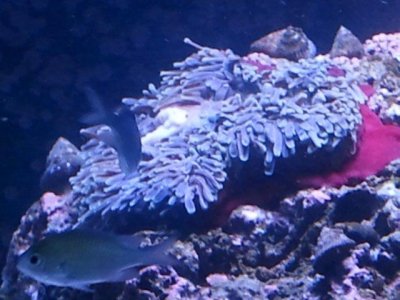
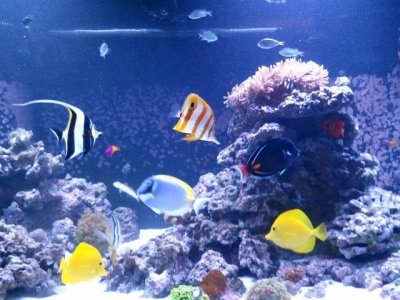
Attached is the larger one in my 200 DT before and after a deflation.
 

Attachments
  • Photo_1D53B6B1-4D00-B296-C3D9-B9F8CDD65F29.jpg
    Photo_1D53B6B1-4D00-B296-C3D9-B9F8CDD65F29.jpg
    65.4 KB · Views: 10
  • Photo_4120FCDA-14D4-620B-199B-B4E8192F16CF.jpg
    Photo_4120FCDA-14D4-620B-199B-B4E8192F16CF.jpg
    49.8 KB · Views: 8
Last edited:
Not sure on these but we used to have a bta that would deflate every night. Not always to flat but pretty sad looking. I would watch and make sure they don't start to melt, but I think they will be fine.
 
Awesome fish by the way!

Thanks!

Im not an expert but are you acclimating them to your lights?

No, not really. I've had 2 other mags, both ended in failure and they started out with similar symptoms. I think the first one arrived in bad shape, and never had a chance. The 2nd one was ok, but these seemed great when i received them. Obviously for this to happen on both mags I must be doing something wrong.

Recommendations for acclimating? Just reduce my photo period? I tried layering something over the tank on the 2nd one I purchased, and it seemed to really impact the heat in the tank and I eventually gave up on that method.
 
I would reduce the photo period ... a lot. IMO if they're deflating in early afternoon and staying that way then they've had enough light for the day.
 
Im going for light. Its not use to your light and it adjusting to it. The best way to do this is a window screens. I would place like 4 layers over it. Then once a week remove one of them. After the last one is removed it should be use to your lighting. Best of luck I know I miss having mine. But maybe someday soon I will get another one.
 
The phosphates being 1 is bad, reduce them. Light shock is not your issue, all you need to do is cut your photoperiod by a couple of hours. There is only so much the animal can photosynthesis in a day.
 
The phosphates being 1 is bad, reduce them. Light shock is not your issue, all you need to do is cut your photoperiod by a couple of hours. There is only so much the animal can photosynthesis in a day.

Only way to reduce them is GFO though, right? I don't really want to run GFO because won't it kill my Chateo? Also, my 40 gallon tank has 0 phosphates and I'm having the same problem...

Thanks for the info on light everyone, I'll see about reducing my photo period or screening them for awhile.
 
Like others have mentioned, acclimating to your light is important. If the deflation occurs after the anemones have been under the light a number of hours, take note how many hours that is. In other words, if they are inflated until the lights have been on 7 hours, then set the photoperiod for 7 hours and increase it slowly. I would go with a 15 minute increase every 3 days or so.

As far as phosphates, it would be preferable if they are lower, but I wouldn't assume that's the cause of the deflation. Regular water changes and GFO should go a long way toward improving your water quality.
 
Im going for light. Its not use to your light and it adjusting to it. The best way to do this is a window screens. I would place like 4 layers over it. Then once a week remove one of them. After the last one is removed it should be use to your lighting. Best of luck I know I miss having mine. But maybe someday soon I will get another one.

+1 This is the best method i have found. Reducing your photoperiod will only stress the anemone for a shorter amount of time. Its not going to fix the problem. Its like you being out in the sun for only 4 hours instead of 6, your still going to get a sunburn but if you use sunscreen (window screening) you wont get sunburnt. Hope this makes sense.
 
Like others have mentioned, acclimating to your light is important. If the deflation occurs after the anemones have been under the light a number of hours, take note how many hours that is. In other words, if they are inflated until the lights have been on 7 hours, then set the photoperiod for 7 hours and increase it slowly. I would go with a 15 minute increase every 3 days or so.

As far as phosphates, it would be preferable if they are lower, but I wouldn't assume that's the cause of the deflation. Regular water changes and GFO should go a long way toward improving your water quality.

Thanks for the info, I'll start here. I may break down and get a GFO then.

I turned my lights off as soon as I got home from work tonight, and they are both inflated back to normal now, 5 hours later. So that seems to align with the light suggestions.
 
I dont think its your phosphates and not necessarily your photoperiod either ( although its possible). If they arent gaping, and if it doesnt continue for more than 7-10 days in a row, I would guess its a simple cleansing/acclimation technique.
 
You know, the books all say to go for 1.022 to 1.026 for nems, but I've always had better luck with them at around 1.030. My ritteri is thriving under these conditions and I don't think it's ever deflated.

Also, some nems tend to deflate after eating.
 
Give them time to settle in. They need to adapt to lighting and environment. In the wild, H. magnifica is known for expanding/deflating behavior at dawn and dusk. As long as it continues to expand fully each day I would not worry about it - the contraction cycles should diminish over time.
 
Bonsai, Ive had my new mag since sunday and i know they usually deflate on and off for the first couple weeks.

He hasnt completely deflated once. Just sucked in one area of tentacles and then reinflates them.

Here is a real question, who said they are plankton eaters?


Its also has been eating each day.
 
You know, the books all say to go for 1.022 to 1.026 for nems, but I've always had better luck with them at around 1.030. My ritteri is thriving under these conditions and I don't think it's ever deflated.

Also, some nems tend to deflate after eating.

My salinity is also always high. The three that I kept rarely deflated.
 
If any of my anemones, magnifica or others, deflates, I go into panic mode. It's not normal for mags to deflate. They often ball up. Especially when lights start going out. If they are deflating, something is wrong.

It could be a combination of factors effecting your mag. Anemones will suffer severe stress when oxygen levels, within their tissues, are pushed to high by their zooxanthellae. This can happen when they are exposed to light that is brighter than they are adapted to, or the photo period is to long. Reducing either, or both, may help. Phosphate is also a very important contributing factor in all this. Zooxanthellae reproduction increases as phosphate levels climb. In order for an anemone to adapt to higher light exposure, it must reduce its population of zooxanthellae. It's kinda hard to do this when elevated phosphate has sped up zooxanthellae reproduction.
 
If any of my anemones, magnifica or others, deflates, I go into panic mode. It's not normal for mags to deflate. They often ball up. Especially when lights start going out. If they are deflating, something is wrong.

It could be a combination of factors effecting your mag. Anemones will suffer severe stress when oxygen levels, within their tissues, are pushed to high by their zooxanthellae. This can happen when they are exposed to light that is brighter than they are adapted to, or the photo period is to long. Reducing either, or both, may help. Phosphate is also a very important contributing factor in all this. Zooxanthellae reproduction increases as phosphate levels climb. In order for an anemone to adapt to higher light exposure, it must reduce its population of zooxanthellae. It's kinda hard to do this when elevated phosphate has sped up zooxanthellae reproduction.

I agree, a deflated anemone is never a good sign. It could just be doing a self water change, or part of the anemone could deflate, and then reinflate. The whole anemone just deflating though is a sign of bad things to come as far as I am concerened. Of the few anemones I have kept (Magnifica, Crispa, Quadricolor) only one of my two magnificas did what you described, and it eventually died. The other three anemones were always inflated, when lights went out and at night, always inflated.
 
Back
Top