
You are using an out of date browser. It may not display this or other websites correctly.
You should upgrade or use an alternative browser.
You should upgrade or use an alternative browser.
Mandarin Dragonet Nano Help
- Thread starter Johnb123
- Start date
ReefJunkie01
New member
Hey John, sorry to say but it is possible to keep a fish like this in a 30 gallon, but it is very, very difficult.
These fish primarily only eat copepods, they can be trained to eat other foods, but it's a time consuming process (months if not longer), and if you want to get there, it's a task to keep the fish alive until you get there. They can go through thousands of pods a day, so, just depending on the 30 gallon itself to produce pods won't be enough.
I do in fact have a mandarin in a 30 gallon nuvo. And have had it for almost 7 months, but, it was a hell of a time trying to keep it ok until one day it decided to start eating frozen.
Some things I've learnt:
There are primarily 2 types of Copepods used for these fish. Tisbe and tigger pods. Tisbe reproduce faster, but are smaller and less filling. In both cases the pods need places to hide from the mandarin and survive long enough to reproduce, which is why most will tell you the minimum for a mandarin is 90lb of live rock which has been sitting for a year so that there are enough pods to reproduce as quickly as the mandarin will eat them. People also use refugiums as a hiding spot for the pods. The key with pods is to keep some of them alive long enough to reproduce. If you don't have a setup which can sustain high pod numbers, you'll end up having to culture pods in a separate system or buy them, which isn't cheap. At one point I was spending $150 every two months in pods for this one fish.
The other thing to keep in mind is this fish has a short digestive system with a high metabolic rate, so it needs to graze throughout the day. I feed mine frozen 3 times a day, but on top of that I have a live feeder system which feeds it enriched adult brine about 6-7 times a day, and, while there's been days when I didn't run the live feeder system, the fish was pretty ****ed and looked skinny by the end of the day.
An alternative is to set up a baby brine shrimp feeder, which can be set up to feed the fish throughout the day. There are very few systems you can buy though, most of them are do it yourself projects, so it'll take some time and patience to build one. I had set one up in my tank, originally it was set up to feed live baby brine but I trained it to eat adult live brine (frankly I got lucky I think), so now it gets fed live adult brine from the system throughout the day.
Again, it is possible, but very, very difficult, however, with a very large tank, like a 200gal+ with100lb+ live rock, it's almost a place it and forget it fish because the pods self sustain.
These fish primarily only eat copepods, they can be trained to eat other foods, but it's a time consuming process (months if not longer), and if you want to get there, it's a task to keep the fish alive until you get there. They can go through thousands of pods a day, so, just depending on the 30 gallon itself to produce pods won't be enough.
I do in fact have a mandarin in a 30 gallon nuvo. And have had it for almost 7 months, but, it was a hell of a time trying to keep it ok until one day it decided to start eating frozen.
Some things I've learnt:
There are primarily 2 types of Copepods used for these fish. Tisbe and tigger pods. Tisbe reproduce faster, but are smaller and less filling. In both cases the pods need places to hide from the mandarin and survive long enough to reproduce, which is why most will tell you the minimum for a mandarin is 90lb of live rock which has been sitting for a year so that there are enough pods to reproduce as quickly as the mandarin will eat them. People also use refugiums as a hiding spot for the pods. The key with pods is to keep some of them alive long enough to reproduce. If you don't have a setup which can sustain high pod numbers, you'll end up having to culture pods in a separate system or buy them, which isn't cheap. At one point I was spending $150 every two months in pods for this one fish.
The other thing to keep in mind is this fish has a short digestive system with a high metabolic rate, so it needs to graze throughout the day. I feed mine frozen 3 times a day, but on top of that I have a live feeder system which feeds it enriched adult brine about 6-7 times a day, and, while there's been days when I didn't run the live feeder system, the fish was pretty ****ed and looked skinny by the end of the day.
An alternative is to set up a baby brine shrimp feeder, which can be set up to feed the fish throughout the day. There are very few systems you can buy though, most of them are do it yourself projects, so it'll take some time and patience to build one. I had set one up in my tank, originally it was set up to feed live baby brine but I trained it to eat adult live brine (frankly I got lucky I think), so now it gets fed live adult brine from the system throughout the day.
Again, it is possible, but very, very difficult, however, with a very large tank, like a 200gal+ with100lb+ live rock, it's almost a place it and forget it fish because the pods self sustain.

Hey John, sorry to say but it is possible to keep a fish like this in a 30 gallon, but it is very, very difficult.
These fish primarily only eat copepods, they can be trained to eat other foods, but it's a time consuming process (months if not longer), and if you want to get there, it's a task to keep the fish alive until you get there. They can go through thousands of pods a day, so, just depending on the 30 gallon itself to produce pods won't be enough.
I do in fact have a mandarin in a 30 gallon nuvo. And have had it for almost 7 months, but, it was a hell of a time trying to keep it ok until one day it decided to start eating frozen.
Some things I've learnt:
There are primarily 2 types of Copepods used for these fish. Tisbe and tigger pods. Tisbe reproduce faster, but are smaller and less filling. In both cases the pods need places to hide from the mandarin and survive long enough to reproduce, which is why most will tell you the minimum for a mandarin is 90lb of live rock which has been sitting for a year so that there are enough pods to reproduce as quickly as the mandarin will eat them. People also use refugiums as a hiding spot for the pods. The key with pods is to keep some of them alive long enough to reproduce. If you don't have a setup which can sustain high pod numbers, you'll end up having to culture pods in a separate system or buy them, which isn't cheap. At one point I was spending $150 every two months in pods for this one fish.
The other thing to keep in mind is this fish has a short digestive system with a high metabolic rate, so it needs to graze throughout the day. I feed mine frozen 3 times a day, but on top of that I have a live feeder system which feeds it enriched adult brine about 6-7 times a day, and, while there's been days when I didn't run the live feeder system, the fish was pretty ****ed and looked skinny by the end of the day.
An alternative is to set up a baby brine shrimp feeder, which can be set up to feed the fish throughout the day. There are very few systems you can buy though, most of them are do it yourself projects, so it'll take some time and patience to build one. I had set one up in my tank, originally it was set up to feed live baby brine but I trained it to eat adult live brine (frankly I got lucky I think), so now it gets fed live adult brine from the system throughout the day.
Again, it is possible, but very, very difficult, however, with a very large tank, like a 200gal+ with100lb+ live rock, it's almost a place it and forget it fish because the pods self sustain.
I agree with the above. While all mandarins will eat frozen, their ability to compete is very poor.

Alexraptor
New member
I'd like to kill the "they primarily only eat copepods" myth right there.
What is true for Mandarins is that they primarily feed on "live food". But their diet consists of much more than copepods, and includes other types of pods, small snails, worms and even fish eggs.
And this is factual information based on gut content analysis of wild specimens.
Now with that out of the way...
We move into territory based on my observations and personal experience.
Dragonets can actually quite "easily" be maintained in a 30 gallon tank, and even tanks as small as 10 gallons for individual specimens.
HOWEVER, the tank must be designed from the ground up to cater foremost to the Mandarin's dietary needs, and that actually means keeping a somewhat "dirtier" tank than normal, dominated by different kinds of macro algae and a fair amount of live rock.
You want high nutrient levels that will basically put the entire food chain in the tank into overdrive. This also pretty much means kissing anything but the hardiest of corals goodbye.
Extremely fine live sand in such a tank is also something that is essential in such a system IMO, as it creates a perfect medium for tiny invertebrates to live and reproduce in and an ideal hunting ground for dragonets, as they will actually flush sand and detritus through their gills, separating it from a tasty morsel which they "most likely" clamp in place with their pharyngeal jaws.
https://www.youtube.com/watch?v=1Ydk7avCyx4
Now I am also however a firm believer of "supplemental feeding" regardless of the tank size, as I believe it unethical to just simply let them fend for themselves and hope for the best.
And for ease of use I like using Frozen Lobster Eggs(though I hear you can't get them in North America, so something like Nutramar Ova is comparable)
Supplemental feeding accomplishes two goals I have.
1.) It helps offset any downturn in their success hunting for the day and ensures they get at least one or two solid meals that meets their nutritional needs every day.
2.) Any surplus food enters the food chain and directly feeds the living critters the mandarins feed on.
Now I'd also like to point out that proper husbandry and maintenance is key. Don't take "high nutrients" as an excuse to just let things lapse. Basically you want the system packed with macroalgae showing healthy growth, even a fair amount of microalgae is a good sign.
There should be just enough nutrients in the system to fuel explosive growth of the desired algae you cultivate, but no more. If you see nasties like Cyanobacteria and Hair algae show up then that means it's time to look over your maintenance routines.
Now I really hope I've managed to actually say something useful and cohesive here and that it does not all just come across as the ramblings of a mad-man. :spin2:
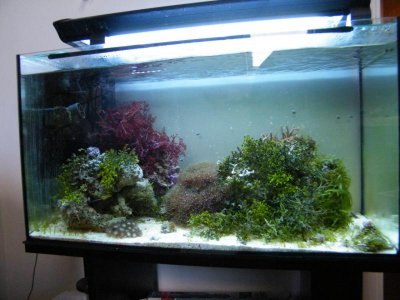
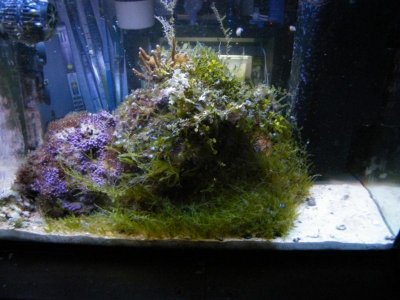
And here's also a little picture of my 29g Mandarin Tank and my original 10g Mandarin tank before the upgrade.
What is true for Mandarins is that they primarily feed on "live food". But their diet consists of much more than copepods, and includes other types of pods, small snails, worms and even fish eggs.
And this is factual information based on gut content analysis of wild specimens.
Now with that out of the way...
We move into territory based on my observations and personal experience.
Dragonets can actually quite "easily" be maintained in a 30 gallon tank, and even tanks as small as 10 gallons for individual specimens.
HOWEVER, the tank must be designed from the ground up to cater foremost to the Mandarin's dietary needs, and that actually means keeping a somewhat "dirtier" tank than normal, dominated by different kinds of macro algae and a fair amount of live rock.
You want high nutrient levels that will basically put the entire food chain in the tank into overdrive. This also pretty much means kissing anything but the hardiest of corals goodbye.
Extremely fine live sand in such a tank is also something that is essential in such a system IMO, as it creates a perfect medium for tiny invertebrates to live and reproduce in and an ideal hunting ground for dragonets, as they will actually flush sand and detritus through their gills, separating it from a tasty morsel which they "most likely" clamp in place with their pharyngeal jaws.
https://www.youtube.com/watch?v=1Ydk7avCyx4
Now I am also however a firm believer of "supplemental feeding" regardless of the tank size, as I believe it unethical to just simply let them fend for themselves and hope for the best.
And for ease of use I like using Frozen Lobster Eggs(though I hear you can't get them in North America, so something like Nutramar Ova is comparable)
Supplemental feeding accomplishes two goals I have.
1.) It helps offset any downturn in their success hunting for the day and ensures they get at least one or two solid meals that meets their nutritional needs every day.
2.) Any surplus food enters the food chain and directly feeds the living critters the mandarins feed on.
Now I'd also like to point out that proper husbandry and maintenance is key. Don't take "high nutrients" as an excuse to just let things lapse. Basically you want the system packed with macroalgae showing healthy growth, even a fair amount of microalgae is a good sign.
There should be just enough nutrients in the system to fuel explosive growth of the desired algae you cultivate, but no more. If you see nasties like Cyanobacteria and Hair algae show up then that means it's time to look over your maintenance routines.
Now I really hope I've managed to actually say something useful and cohesive here and that it does not all just come across as the ramblings of a mad-man. :spin2:
And here's also a little picture of my 29g Mandarin Tank and my original 10g Mandarin tank before the upgrade.
Attachments
ReefJunkie01
New member
I'd like to kill the "they primarily only eat copepods" myth right there.
What is true for Mandarins is that they primarily feed on "live food". But their diet consists of much more than copepods, and includes other types of pods, small snails, worms and even fish eggs.
And this is factual information based on gut content analysis of wild specimens.
Now with that out of the way...
We move into territory based on my observations and personal experience.
Dragonets can actually quite "easily" be maintained in a 30 gallon tank, and even tanks as small as 10 gallons for individual specimens.
HOWEVER, the tank must be designed from the ground up to cater foremost to the Mandarin's dietary needs, and that actually means keeping a somewhat "dirtier" tank than normal, dominated by different kinds of macro algae and a fair amount of live rock.
You want high nutrient levels that will basically put the entire food chain in the tank into overdrive. This also pretty much means kissing anything but the hardiest of corals goodbye.
Extremely fine live sand in such a tank is also something that is essential in such a system IMO, as it creates a perfect medium for tiny invertebrates to live and reproduce in and an ideal hunting ground for dragonets, as they will actually flush sand and detritus through their gills, separating it from a tasty morsel which they "most likely" clamp in place with their pharyngeal jaws.
https://www.youtube.com/watch?v=1Ydk7avCyx4
Now I am also however a firm believer of "supplemental feeding" regardless of the tank size, as I believe it unethical to just simply let them fend for themselves and hope for the best.
And for ease of use I like using Frozen Lobster Eggs(though I hear you can't get them in North America, so something like Nutramar Ova is comparable)
Supplemental feeding accomplishes two goals I have.
1.) It helps offset any downturn in their success hunting for the day and ensures they get at least one or two solid meals that meets their nutritional needs every day.
2.) Any surplus food enters the food chain and directly feeds the living critters the mandarins feed on.
Now I'd also like to point out that proper husbandry and maintenance is key. Don't take "high nutrients" as an excuse to just let things lapse. Basically you want the system packed with macroalgae showing healthy growth, even a fair amount of microalgae is a good sign.
There should be just enough nutrients in the system to fuel explosive growth of the desired algae you cultivate, but no more. If you see nasties like Cyanobacteria and Hair algae show up then that means it's time to look over your maintenance routines.
Now I really hope I've managed to actually say something useful and cohesive here and that it does not all just come across as the ramblings of a mad-man. :spin2:
And here's also a little picture of my 29g Mandarin Tank and my original 10g Mandarin tank before the upgrade.
John, Alex raises some very good points, however, there are a few things to clarify:
Wild caught mandarin have been found to eat things like small snails, amphipods, copepods, small worms, however, this is done with a much larger system than a household reef tank. Within the home aquarium, creatures such as copepods and amphipods are much more common, but not small worms or small snails that are self sustaining for a mandarin.
Most mandarin fish currently in the trade are wild caught (the exception to this are the ORA captive bred ones, which are more difficult to find), which means they are used to live food. As I said before, they can be converted to frozen, but not all mandarin will willingly convert to frozen very quickly, mine took months before it did. There are those that have been lucky in getting a mandarin that'll start eating frozen or pellet right away, but, don't walk into owning one assuming it'll start eating frozen right away, make sure you have a backup plan for some form of constant live food. My mandarin will no longer eat copepods as it seems to prefer the live brine and frozen I feed it, but, don't assume it'll start eating it right away. Many people have had these fish die of starvation because they assumed this.
Also, for the substrate, very fine sand is not required, but, with not using fine sand, there is a slightly higher risk of the fish chocking. I currently have crushed coral substrate and that has worked just fine for generating pods and my mandarin sifting through it.
For copepod reproduction, as Alex stated, a high nutrient system is better, but, what he means by a high nutrient system is that there is always something for the copepods to eat (left over food, phytoplankton, or fish poop). These things will result in higher nitrate and phosphate levels as the phyto, food, and poop break down, and it's the nitrate and phosphate levels you will need to watch (it's the nitrate and phosphate that leads to the algae blooms and fish stress). Macroalgae will help with this because the macroalgae consumes the nitrate and phosphate to live. In addition the macroalgae serves to be a hiding place for amphipods and copepods to live and reproduce, however, there are many fish which will skim the surface of the macroalgae and take the pods off the surface, and there are some fish which will plunge head first into the macro to get to the pods. I've had quite a few fish which did this regularly. Also, the added nutrients will not make each copepod reproduce faster, what it does it prevent more of the babies from starving to death before they become adults and reproduce themselves.
Additionally, in regard to copepod reproduction, as said, there are two primary copepods a mandarin will go after, tisbe and tigriopus californicus (tigger pods). It takes approximately 8-12 days for a tisbe to go from newborn to reproduction age, and it takes tigger pods about 21 days to go from newborn to reproduction age. Now, knowing that a mandarin can go through thousands of pods a day, you will need a substantial number of pods to begin with so they can grow and reproduce faster than the mandarin can eat them.
As a long term goal, supplemental feeding is a very good idea, and when the mandarin converts to frozen, I've seen people have luck with gut loaded frozen brine, bloodworms (my mandarin won't touch this though), mysis shrimp, fish eggs and prawn eggs. Nutramar Ova (which is prawn eggs) had been an almost magical food for a lot of people because it seemed many fish were easier to convert to frozen using this, but, there is now a worldwide shortage of prawn eggs, and, because of this, Nutramar Ova is not currently available. If you're lucky, you may be able to get some form someone who has some in their freezer.
The key here is to make sure the mandarin always has food in it's stomach. What I have observed with my own mandarin is if I feed it to the point of it's stomach being engorged and it stops eating (basically it's full), about 2 hours later, it's ready to eat again.
All of this is making it seem more complicated than it really is, but, I want you to be successful, so the best thing I can do is give you as much information as I can to make sure you're prepared. I'd really like to see more people have success with these little fish in smaller tanks, but, no matter what system you have you have to deal with the reality of what the fish is, something that either needs to graze on food all day (on things such as copepods/amphipods) or will need to be fed until full a few times a day (for it being healthy and fat, I'd say feed it until it's full no less than 3 times a day, but the more the better).
Good luck.
I agree with you Alex for the most part. But I never supplemented my Mandarin. It wasn't that I didn't want it to eat, it just never ate anything that I feed my tank. 2 years down the road it started to actually eat pellets. If you can supplement that's great, but don't count on it.
ReefJunkie01
New member
Reefjunkie, I thought ORA didn't captive breed Mandarins anymore?
Yeah, after the shortage of the Ova started, pretty much everything went out the window it seems. Really unfortunate, had seemed like a game changer for a little while. Hoping things will recover with the prawn reproduction, but probably going to be a while, not really sure.
I love mandarins. I have two in a 65 gallon red sea aquarium. The male is a green one and the female is spotted. The male started eating frozen foods on its own. And live black worms. I did not intend him to. He just did. I do add tigger pods occasionally. I have a pod hotel. They help. But I used Paul B's feeder plans and feed them newly hatched brine shrimp daily. They are fat and healthy. I really believe my success is due to the feeder. It was easy to make. And I bought two of the hatching dishes. They are wonderful. They each came with several months supply of eggs. Next week they will be moving to their new home. A 140 gallon aquarium. They will have a new feeder in their new home. I have had the female for over two years and the male close to that. I kept one in a 10 gallon for a year before moving it to the 65. And she would have died if not for her feeder. I agree with what the other folks have said about not counting on them eating frozen foods. My male will, but it is a bonus. His eating black worms was just exciting. He actually slurps them up like spaghetti! The female has shown interest in only pods and her feeder.
Shelley
Shelley

ThRoewer
New member
I have a pair of mandarins in a 25 gallon SPS tank and by now both go well after frozen food. The male is especially good at this and competes quite well with the other fish (Pygoplytes diacanthis, 2 Pseudochromis fridmani, 2 Stonogobiops nematodes and 2 Amphiprion percula).
He will swim straight into the food cloud and start picking. The female will also feed out of the water column but clearly prefers feeding of the ground.
Both stared with brine shrimp but later also found Mysis to be edible.
The problem with this tank is that it has gotten way too clean by now despite large feedings - even my turbo snails start starving to death, so little green algae are there. So right now the mandarins are just getting by but not enough to get fat.
He will swim straight into the food cloud and start picking. The female will also feed out of the water column but clearly prefers feeding of the ground.
Both stared with brine shrimp but later also found Mysis to be edible.
The problem with this tank is that it has gotten way too clean by now despite large feedings - even my turbo snails start starving to death, so little green algae are there. So right now the mandarins are just getting by but not enough to get fat.
Similar threads


- Replies
- 5
- Views
- 2K
