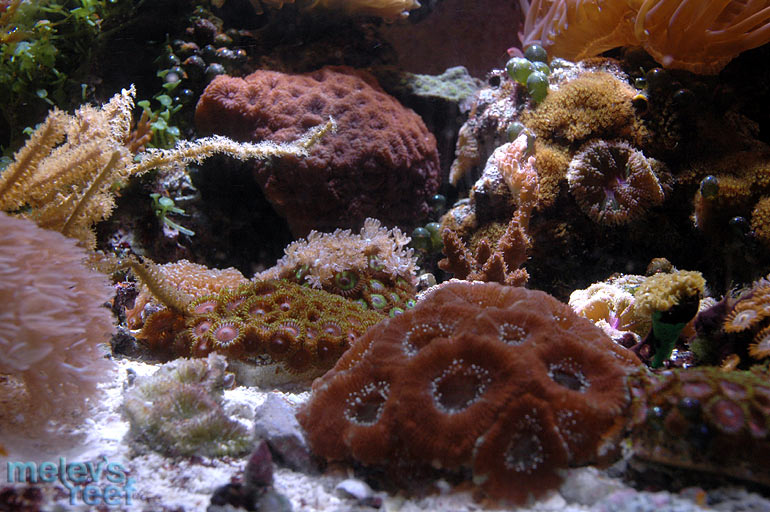
Melev's new Nano!

Status
Not open for further replies.
Malev, looking at your avatar it seems that you're into scuba diving. I'm a dive master but haven't been using tank for sometime now. I freedive. I really recommend you try. With a bit of training at home you can go to 50-60 feet no problem.
Plus the freedom you feel is amazing.
You should see faces of scuba divers when they hover at 60 feet turn around and see you only wearing the mask and waving hello..

Check deeperblue website if interested. If you train it will give you more underwater time as you'll breathe much more efficiently.

http://forums.deeperblue.com/beginner-freediving/64959-how-start-freediving.html

Here is amazing video from one of the top guys. The arch is at 58m or 190 feet! It is amazing!


http://www.youtube.com/watch?v=hrXQbucZUDA
 
Last edited:
ive kept hermit crabs before they rip off limbs when they need a bigger shell, or deasis. as for splitting ive seen people cut their aneome.
 
Hi Marc. I just purchased an Apogee PAR sensor. I was told that I can use it with a multimeter in the mV setting. Do you know anything about doing this? Someone has told me that I will need to convert the values to get PAR. Any thoughts?

Your nano is looking good. :thumbsup:
 
No, I've not heard about that. You only bought the sensor... never heard of anyone doing that either.
 
You'd be surprised. It is actually pretty tough to get a good angle on some livestock through the angled panel. Some things you would normally see along the upper back wall are invisible, unless you lean down and look upward slightly.
 
Marc, the Apogee website description actually says the sonsor can be used with a multimeter. The other guy I was emailing said the sensor will have instructions that describes its use with a voltmeter, so I will let you know.

If this works out, then it is a very inexpensive way to get PAR, as most people already own a multimeter. I'll let ya know.
Cheers
 
<a href=showthread.php?s=&postid=14909253#post14909253 target=_blank>Originally posted</a> by cerreta
Marc, the Apogee website description actually says the sonsor can be used with a multimeter. The other guy I was emailing said the sensor will have instructions that describes its use with a voltmeter, so I will let you know.

If this works out, then it is a very inexpensive way to get PAR, as most people already own a multimeter. I'll let ya know.
Cheers
I for one can't wait to hear how this works. What are the prices on them?
 
This link describes the sensor specs and states:
Output: Approx. 0.2 mV per µmol m-2 s-1 (A unique multiplier to convert the mV signal to desired units is provided with each sensor.

I read in another resource that the multiplie is 5. So, it would seem that you record the mV reading on the multimeter and multiply by 5 for a PAR value. The above suggests that each sensor has its own pre-determined uniue multiplier.

I will let you know when it arrives. Cost is $139
http://www.apogeeinstruments.com/qso_spec.htm

http://www.scottech.net/products/by_supplier/apogee/apogee_quantum_par_sensors/
 
I recieved this reply from Apogee:

The fluke meter will measure mV and all sensors have a standard calibration
factor of 5 so to convert mV to radiation multiply 5 by mV.

Best Regards,
Jessica Muir
APOGEE INSTRUMENTS, INC.
 
Full tank shot for May 09. This tank will be turning 2 years old in July.
nano_fts.jpg


Here are some close ups. Lots of life in this tank, some of which needs pruning or general clean up.

nano_reefshot4.jpg


nano_reefshot3.jpg


nano_reefshot2.jpg


And my favorite from today.

nano_reefshot1.jpg
 
Brown Jelly Disease

Brown Jelly Disease

I've had a very boring brown acan in this tank for a long time, and have had it in my possession for at least three years. It's just not a nice piece, and I was just recently trying to figure out where to move it to because it is eating up real estate and doesn't add to the tank.

I discovered that it was starting to be affected with Brown Jelly disease. This is a type of brown-to-clear gel that smothers the coral as it kills it. There usually isn't a lot you can do for a coral in this state other than to siphon off the badly affected area to avoid letting it land on other stuff. Here are some pictures.

brownjelly1.jpg


brownjelly2.jpg


brownjelly3.jpg


In the first picture, you can see how the left side is devoid of tissue. Hermits were already there to pick it clean.

The rusty brown area is what is breaking up; the opaque area is the newly infected area, and the furthest point is still alive but in distress. Those white patches are new.

So it looks like nature decided for me what to do with this coral. :rolleyes:
 
Oh no! I've always admired your Echinata in your nano tank. :(
I'm sorry, here's hoping it will fight this off.
Are some Acan E. able to fight and win this brown jelly disease?
 
It's been a while, but I'm relatively sure you can siphon out the bad stuff, possibly dip the coral in something to help it recover, and start fresh with what remains.
 
I'm not sure about brown jelly and what it affects, though. I hope it doesn't spread also.


Lovely pictures you have up above :cool:
 
Last edited:
Hi Marc. The apogee sensor arrived today. It works flawlessly with a multimeter in mV setting. The conversion factor is simple. Just multiply the mV value by 5, done.

Using a multimeter does make owning a PAR meter a reality for less than 150 bucks.

I will discuss more in my thread. Don;t need to take up any more real estate here. :)
 
I picked up a Mystery Wrasse today, and want to put it in this tank. The only thing is, there's a big RBTA in here, and a lot of the Mini Carpet Anemones. I hope the wrasse can tell what they are and doesn't get turned into chow. :(

It's in quarantine now.
 
<a href=showthread.php?s=&postid=15061118#post15061118 target=_blank>Originally posted</a> by melev
I picked up a Mystery Wrasse today, and want to put it in this tank. The only thing is, there's a big RBTA in here, and a lot of the Mini Carpet Anemones. I hope the wrasse can tell what they are and doesn't get turned into chow. :(

It's in quarantine now.
Neat fish! I don't think that you should have a problem. Both of mine have done well but are 3 - 4". How big is the one you picked up?
 
Status
Not open for further replies.
Back
Top