
pagoda questions?

kingfisher62

New member
I posted this on another forum but got no answers so I figured I would post it here.

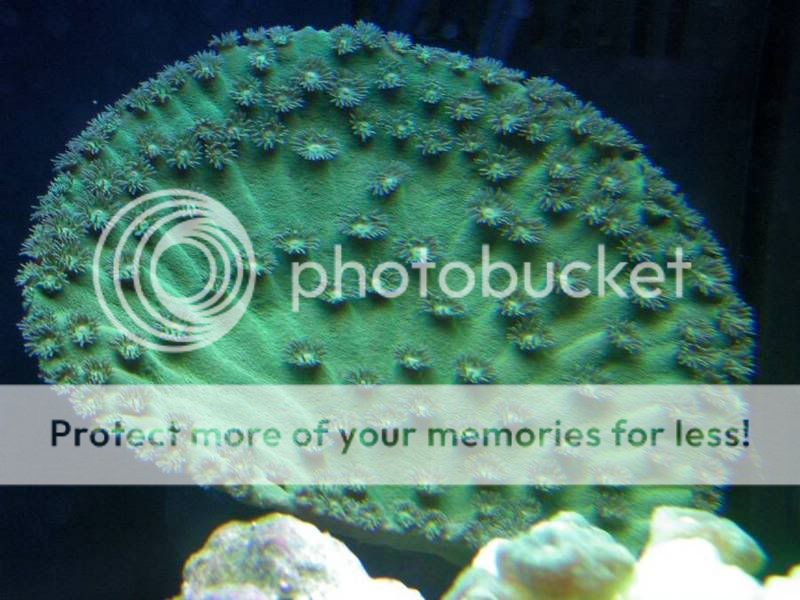
Just got a green pagoda cup . I was told they were not to difficult to keep . I should have done more research . It has been in the LFS for six weeks and looks great .

Does any one know any thing about it ?

here are some photos a few minutes in the tank and an hour and a half in the tank!
Polyps have been open for two day but the lat two days closed!
is this normal with this /coral

PICT0310.jpg

pagoda22.jpg


week5.jpg
 
Thanks for all the info people, I moved it a little lower in the tank an layed it more horizontal . hopefully the polyps will re open today!
 
A question for the people that already have a pagoda.
I noticed one polyp that did not open and I thought it might have gotten a piece of shrimp and was digesting it or something . tonight when I got home the green matting blistered up where the polyp was . I imagine now that some how that polyp died . When i dusted with a turkey baster (which I do if I see sediment on specimens) the "blister" popped and the matting seemed to back down.
Has any one witnessed this before ? should I concern my self? Will the coral heal itself?
 
Though this coral is probably found in a horizontal position in nature, I've had much more success (with much less effort) by orienting them more vertically as you originally did. When oriented vertically, sedimentation becomes much less of an issue and polyp extension is generally better.
I realize that this is not the "natural" way, but it actually works better IMHO.
That's a really nice piece, by the way.
 
The term you are looking for is "coenosteum" I believe. I think I also remember reading somewhere that some corals may be able to take up nutrients, etc in areas where there are not polyps.

Probably, it was just irritation due to sediment.
 
Thanks Conky, I did not know what the proper terminology was.
I just remembered people referring to the "matting" of green star polyps and they seemed similar in appearance (not color)
I'll have to write that word down. I'll never remember it, lol.
 
No problem. I can see where you were going with that...the area between polyps. Physiology of soft and hard corals are a lot different.
 
Back
Top