uncleof6
Active member
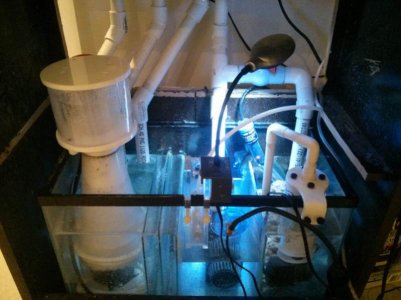
I was looking into reducing the flow rate by using the ball valve in my return line. This helped a little bit when I messed with it but it was still not enough to rid the bubbles from the DT. I also read that the back pressure, resulting from the use of the ball valve, can reduce the lifespan of the pump. Is this true? Also, do you suggest flipping the sump around to allow for more volume of water in the return section?
Depends on the pump, but *most* handle the restriction in the return line well, and since it is not doing as much work, the "watts" consumed lowers.
Yes you need enough volume in the return section to allow for a few days evaporation in case your ATO fails when you are not around. Since many hobby implementations are superfluous, rather than redundant, an ato failure could lead to pump failure, if the pump runs dry. Whatever it takes to accomplish that, and in small sumps, it usually means eliminating the "fuge."
The bubbles (which appear to me to be universally throughout the sump) are coming from the drain line. Obviously the sock is of little use, and most higher end systems eliminate them. Dealing with the bubbles starts with the drain line, not any where else: deal with the source. It is much like the common cold. There are so many home remedies, lots of talk, and a great deal of money to be made, concerning treating the symptoms. Yet no one bothers to find a cure for the disease...
The two things that will prevent bubbles from the drain line, with open channels, (Durso, Stockman, Gurgle Busters,) DIY PVC overflows, and just about anything that is commercially produced, is to increase the pipe size, and reduce the flow rate. Submerging the end of the drain line in the sump, can also help eliminate bubbles, by eliminating the splashing of turbulent water flow in the sump.
Using foam blocks is not a logical thing to do. It adds to the maintenance of the system for one, and two: it contributes to the "nitrate problems" because it is mechanical filtration. A carbon block, because it will mechanically filter the water as well, will need to be changed more often that one would like. Socks should be changed out every day, foam blacks are the same.
Bubble traps can help. But if you have a very dense bubble problem, the spacing needs to be rather wide, to slow the water velocity through the trap. In small sumps, this eats up room. It is better to stop them at the source, saving bubble traps for "occasional bubbles."
Keeping water fall heights from section to section < = 1", will also reduce bubbles in the sump.
Skimmers are another issue for bubbles. Generally however, if the skimmer is adjusted per instructions, rather than anecdote, bubbles are not a problem. Some skimmers are just junk and nothing seems to work out with them.
Other sources of bubbles: Air leaks in the plumbing. It may not leak water, but it will suck in air. Pump cavitation: which is not generally a problem with submersible pumps. But given the wide variety of "ways of doing things," I have seen it happen, fill the DT with bubbles, and destroy pumps.
Sump size: sumps should be short and wide, not tall and narrow. It is the same with DTs.