Strange parasite attached to firefish

Zepplin

Premium Member
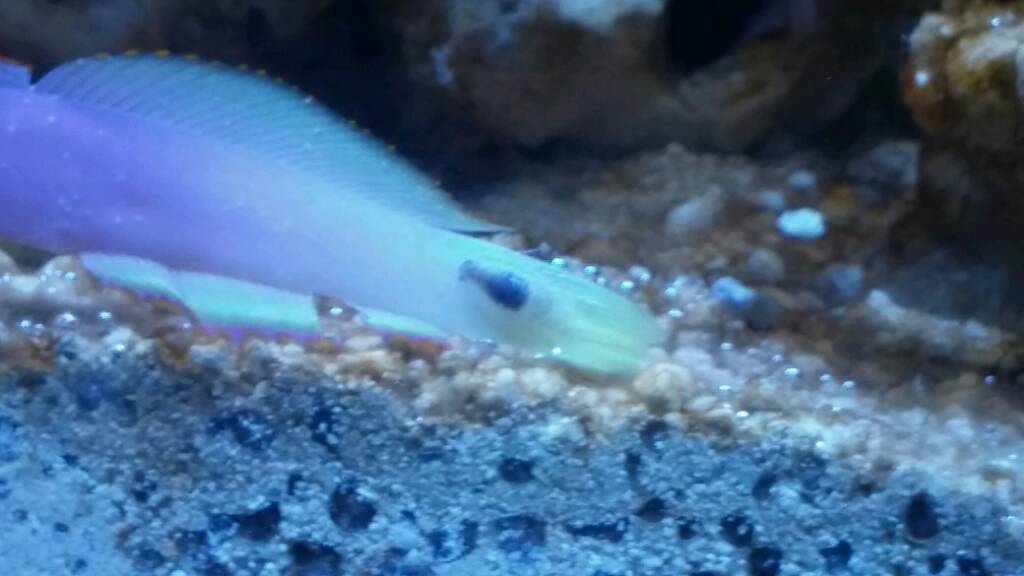
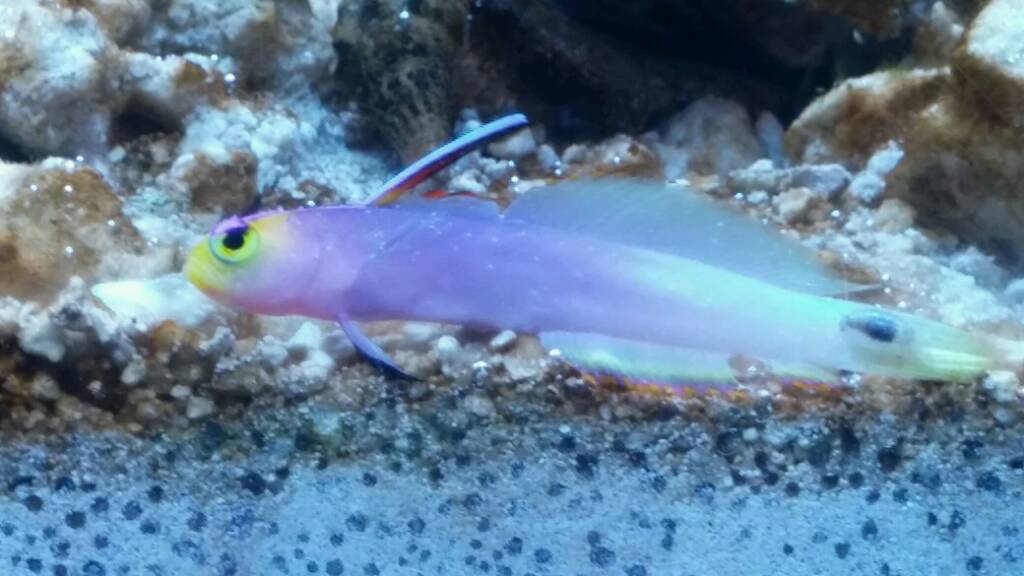
So a bit ago we bought 2 Helfrichi firefish. Both were doing fine but one morning the second one was missing. We thought he was dead but then this morning he reappeared! He looked very lethargic and was not moving much. I had to go to work but when Meg got home she found him laying on the sand bed with some strange looking thing on its side. She texted me pictures and we figured it was some parasite.

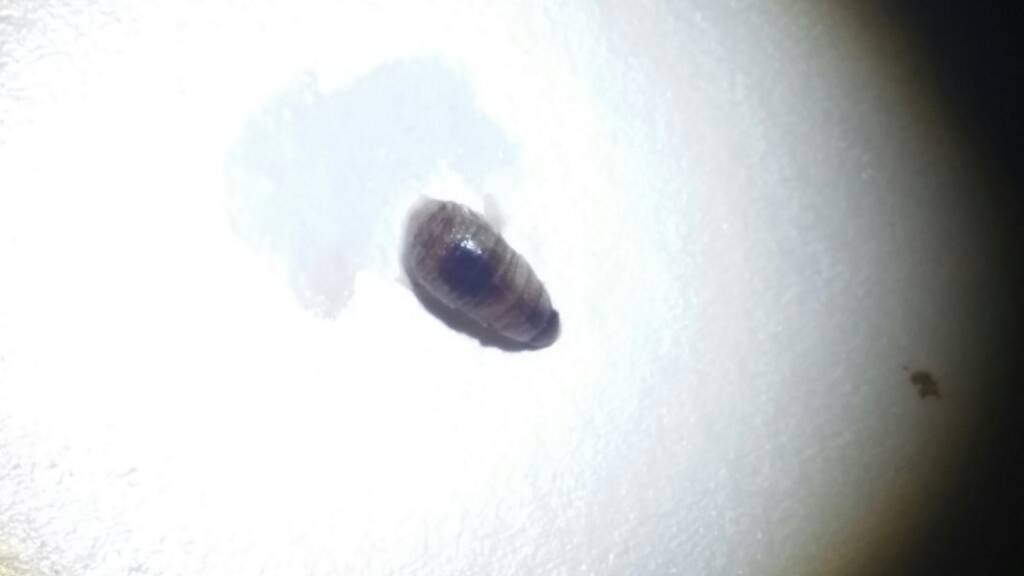
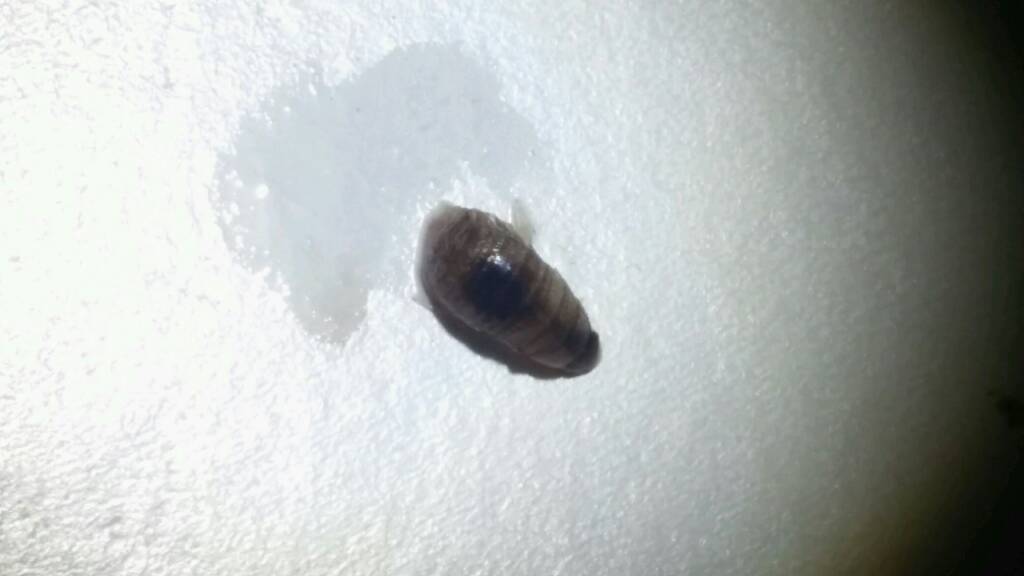
Meg caught him and we decided to try a freshwater bath. Immediately the parasite started to move. Meg took tweezers and tried to pluck it off but the darn thing was on pretty good. So after a few tries we decided to smash it with the tweezers. Very carefully Meg pinched the parasite and smashed it to death. We put the firefish into QT and he immediately looked somewhat better. Hopefully he will survive.

Pics for your enjoyment. If you happen to know what it is please pipe in.
ecb823e856b8a259add0c7f593b431eb.jpg
c7fda444a524af06a5e640a5529caffc.jpg
a03cfc7ef0ffd6f9224e2b374db13cfb.jpg
1d87f6c104eb696a2b41beaafb451d0c.jpg
 
This is Meg of Meg & Dan. I am sad to report the fish has expired. We did all we think we could. I've never seen a parasite quite like this one. Firstly, it was so large. All other parasites I'm familiar with are microscopic. It was mostly transparent, but about the size of an apple seed with segmented body plates. It was not terribly different looking than a common pill bug.

Dan and I did seed the tank with live rock among the dry rock. Some rock from Figi and some from Florida. No other sources of life have been introduced thus far, so this parasite invariably came with the rock.

I have never encountered this issue myself or among any other hobbyists I've known. This leads me to hope this is an unfortunate and unlucky situation, but you never can be sure.

My hope is that if someone can identify it, then when can learn more about it and predict the likelihood that there are identical parasites still lurking. In addition, it'd be nice to know what could eradicate it, whatever it is.

Sorry we don't have better news. :(
 
Yeah, I have only seen these in person at a lfs. Owner said "Oh it's a symbiotic relationship, cool"...

Needless to say, I do not buy livestock there..
 
Last edited:
Okay......I think it was some type of "agedis."

To quote the article...

"Tropical species show up somewhat frequently in reef tanks either riding on a fish or in a piece of live rock. Often the first the aquarist knows of them is when they see the isopod on a fish. Murphy's Law is active here; the bug will never be on a cheap or expendable fish. The problem is how to remove the isopod from the aquarium. If the bug stays on the fish, the fish needs to be captured. This happened to me several years ago, and the fish it was on was a Mandarin dragonet. Imagine trying to catch this fish in a fully set up 100 gallon aquarium! Of course, I couldn't catch the fish until the next day, and the isopod was still on him. There wasn't much left of the fish. Even I, with my notable lack of coordination and dexterity, can catch a fish that is half eaten.

If you can catch the fish, the isopod may be removed with a pair of forceps. Carefully!!! Upon removal, the fish should be isolated in a hospital tank, and treated with antibiotics until the wound heals. The bug may be disposed of. Carefully!!! About 15 years ago, I had a student who was holding in her clenched hand a 1.5 inch long Aegid. The bug cut through the flesh of her palm, dug in, and started to eat HER. Her vocal response was rather impressive. So was the tenacity of the isopod, it was HARD to remove!

If you notice one of these animals in your tank, and it leaves the fish, there is almost nothing that may be done to catch it. They are very fast and quite capable of avoiding a net. And if it is a pregnant female (and remember, all female isopods have brood pouches), and the brood hatches, you have REAL problems. There are only three courses of action in this situation; and I truly am not jesting about these responses. The first is to remove all the fish from the tank and wait the two or three months until you are certain that all the isopods have died from starvation. The second solution is to effectively nuke the tank. Remove all live rock and discard it as the isopods may hide in it and, as some of the isopods bury in the sand, you should also remove and discard the sand.

You may, of course, take the third option and do nothing. The most likely outcome in this situation will be that the isopods will kill your fish one by one. These isopods are masterfully designed predators. Hope fervently that you never have to deal with them.

Here are some more data on Aegids.

If you have any questions about this article, please visit my author forum on Reef Central."
 
Okay, I suppose the good news is that we have exactly one fish in the 240 gallon DT right now. We have time to wait this out and see what happens. Since these parasitic isopod species can only feed on fish, they will starve in a few months time. The remaining firefish is imperiled, which makes me feel guilty. Getting him out would not be easy.

I love the biodiversity of the maricultured liverock, but there will always be surprising downsides. Dan was excited to receive two mantis shrimp in the maricultured rock, relegated them to the sump and has been enthusiastically feeding them mysis out of a turkey baster.

This hobby man....
 
I don't think the isopod was the actual cause of death of your fish.

In the pictures of the fish you can see clearly that he was covered with Cryptocaryon irritans (Ich) nodules (little white dots). If not treated at that level it will sooner or later overwhelm and kill the fish.

BTW, usually there are two of these isopods, a big female and a much smaller male.
 
I don't think the isopod was the actual cause of death of your fish.

In the pictures of the fish you can see clearly that he was covered with Cryptocaryon irritans (Ich) nodules (little white dots). If not treated at that level it will sooner or later overwhelm and kill the fish.

BTW, usually there are two of these isopods, a big female and a much smaller male.

I agree, the picture clearly shows cryptocaryon irritans (ich) for which the fallow period is 72 days.
 
Well, just to follow-up, the other firefish seems to be doing well (i.e., eating well, swimming well, no visible disease, no f*cking isopods). Sad to see him alone. We'll wait and see.

-Meg
 
Sorry for yout loss. Isopods are nasty customers. I had two that revealed themselves over a week. Attached to my clownfish. Luckily when I netted and removed the fish the pods jumped off when exposed to the air. The fish both recovered. I put the pods in a small 2 ounce vial to id. Afterwards out of curiosity, I left them there. No food, no replacing the water, no nothing. They lived for over two freaking months by which point the water had nearly evaporated. Props for mad survival skills but hope I never run across them again. If you want to really be scarred for life Google giant Isopods and check out those nightmares! :)
 
Back
Top