
thriceanangel
Active member
I say use it that big- it looks really cool! I have been looking for salt with bigger chunks... The bigger the better, but mixed sizes are better some `1" chunks, and some 1/4" chunks.


<a href=showthread.php?s=&postid=9599888#post9599888 target=_blank>Originally posted</a> by Insane Reefer
Or maybe look around at the grocery stores or Walmart for Solar Crystals instead of wasting all this effort to crush the cubed salt. I asked a manager at Walmart, and he said as far as he knows, every Walmart in the country carries Mortons Solar Crystals.
<a href=showthread.php?s=&postid=9600134#post9600134 target=_blank>Originally posted</a> by goldmaniac
I'm using the Morton's blue bag water softener salt, crystalline(sp?) Is that what you mean?
I'm in the process of testing differentcombos with the salt I have; I'll see what looks good.
1st batch last night, just took a look, 18 hours later, it's soft and I can smush a small piece off. Normal? I'm gonna wait until tomorrow, Fri, late at night, minimum.

I actually grew a 5 o'clock shadow while reading that.<a href=showthread.php?s=&postid=9444776#post9444776 target=_blank>Originally posted</a> by Insane Reefer
WARNING - LONG POST!
Hey All,
I'm going to post my favorite tips and links every so often so new people can find it all pretty easy. It is a summation of the most commonly asked questions and things I have picked up through making my batches. Some I’ve gleaned from this thread, others I’ve learned from past mistakes and experiments. I've been making DIY man-made rock or aragocrete off and on for close to 8 years. Lately, I have even made some money on my rocks
I thought I’d pass this info on â€"œ maybe save someone some frustration or spark a new idea.
I will continue to refine and update this post as more info is added.
First, good info can be found at these two places - I think everyone who wants to make rock should read these in full. One of the articles gets pretty heavy handed with the science/chemistry aspect, the other babbles on tangents once in a while, but both are worth the read, IMO.
ARAGOCRETE RESEARCH BY TRACY GRAY
Reef Propagation Project:
And this link is for Cement Colorant â€"œ I’ve spoken with the vendor and am assured that, given our kure process, this stuff will be safe and colorfast in the aquarium. They sell it in small amounts in rainbow colors and are very cheap.
List of Aggregates
Sand - caribbean/aragonite is best, but very hard to find. Toys R Us carries a play sand that a lot of folks use and report no trouble with. Limestone sand has gotten good results as a DSB, so should also work.
Crushed Coral - AKA "CC". Makes nice, realistic rock, but expensive
Crushed Oyster Shell - AKA "OS". Any shell will work, but OS is very cheap at feed stores.
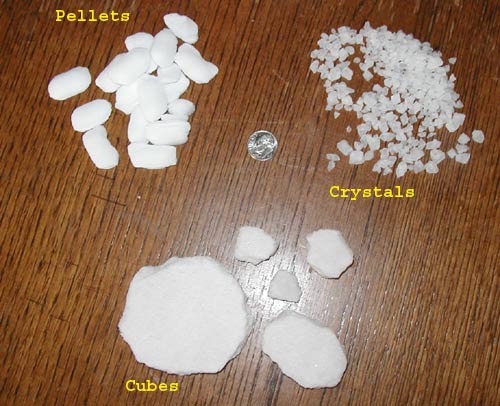
Salt - Many thanks to Travis Stevens for figuring this out! The salt of choice is "Solar Salt Crystals", typically found as a Water Softener Salt. 99% pure salt. Get the coarsest crystals you can find. Solar Cube can be used, but is sort of chunky - makes nice holes though. Boiling the "cubes" rounds off the edges and makes nicer holes. Solar Pellets can also be used, same as Cubes.
Rock Recipes
Ingredients are measured by volume, not weight!
Original Recipe: 4:1 - 3:1 / Salt:Cement
Improved Recipe: 3:1 - 2:1 / Salt:Cement
Ol' Skool Recipe + : 1: 1.5 : 1.5 :1 / Salt:Cement:CC&OS:Sand
Molding Material
Really, pretty much anything that is dry and crumbly will work. I've even used stuffing bread crumbles, but that draws bugs while it dries.
Soil
Salt
Sand
Clay
A certain portion of the molding material will remain on the rocks - this can usually be removed with a short acid bath, followed by a good scrubbing with a plastic or fine wire, bristle brush.
If you use Rubbermaid or Tupperware, you can reuse molding material over and over again. Line cardboard boxes with plastic to prevent moisture leak and wall collapse.
DO NOT Wet Salt, if it is used as a mold material - this means when working with salt, do not add water to the casting box as you would or might with say clay or sand.
----------------------------------------------------------------
Now, I will list my tips and tricks, in no particular order. Many will seem stupid or like common sense, but you don’t know about some people’s kids, lol…
Tips and tricks
1. Wear gloves when making rock. If possible, don’t let the cement get on your skin, especially the dry powder. If possible, wear a painter’s mask when measuring and mixing dry cement; this stuff can really burn the inside of your nose.
2. Setup your work area in advance; cover surfaces with plastic or old sheets if needed (like in your kitchen or living room). Fill casting containers with whatever mold material you are using, or have it standing by within easy reach. Give yourself walkways if you are making a lot of rock â€"œ nothing sucks as much as trying to create enough work space after the fact.
3. Think about the weather for not only the day you cast, but the next few days as well, if you plan on doing this outside. Rain can make a mess of things…
4. Use Portland Type I, II (I/II) or III â€"œ these are known to be safe for use and make rock with proper porosity.
5. Mix all aggregates excepting salt into the cement before adding water. Add salt after you have reached the right wet consistency, and mix it in lightly â€"œ the less salt is leeched off the grains of salt, the stronger your final rocks will be. Water softener salt of the type “Solar Salt Crystals†works wonderfully (Thank you Travis Stevens!).
6. I prefer to use crushed coral and sand in my rocks for long term strength, plus salt to add porosity. The aggregates also give realistic details to the rock. My preferred recipe is 1.5 part cement + 1.5 part sand + 1 part crushed coral/shell mix + 1 part salt, but this is expensive to make. You can also use a mix of 1-1.5 cement + 1-2 crushed oyster shells + 1-2 salt.
Mainly, a 1 part cement to 3-4 parts “other†is acceptable, whatever you want to mix together is up to you and you should be ok if you follow the 1:3-4 part rule.
7. Work in layers for added dimension. If you lay a layer of molding stuff in your container, make a few divots in this molding layer first, and add cement to these first to make lumps on the bottom, you can avoid flat bottomed rocks. Now lay the main part of your rock, adding molding material as needed.
8. You can make neat “cliff-face†striations if you take a handful of salt, and lay it just along the top edge of wet cement, forming a narrow line of salt along the edge, laying a thin layer of cement over the salt, and repeating this to form, on the outer edge of your rock, a sort of cliff that looks to be cut by water action.
9. Anything cast thinner than an inch is likely to break, unless you are careful with it.
10. Find a nice bit of stainless steel or aluminum wire â€"œ 2mm or so in width, and bend a handle for one end (remember you will probably be wearing gloves, so bend accordingly). As you cast your rock, use this wire to poke Lots of little tunnels all through the rock â€"œ all the way through if you can; this will make the rocks extra porous, and give bug life lots of places to hide and propagate in-tank, as well as allowing more water to move through the rock. Alternatively, you can cast the piece, and then poke as much of it as you can â€"œ though this way tends to look a bit contrived. I like the first way better.
11. Once your rock has cured and it has been curing for about a week and if you made it mixed with stuff like crushed coral or shells, mix up a weak acid mix and scrub the outside of your rocks with a stiff bristle brush. Be sure to take proper precautions when working with acid â€"œ not only from burns, but from fumes as well!!! If you only made your rock with salt and cement, ignore the acid wash, as your rocks will dissolve, but still give them a vigorous scrubbing - this will loosen the weakest stuff and get rid of it without shedding it all over your tank. If you have shells or coral, this can make the surface even more porous, and clean cement films from shells and the like that might be on the surface. I use a mixture of 1/2c muriatic acid added to 2c water.
12. You can make “lock together†pieces by wrapping a bit of PVC in something like tissue paper or plastic wrap, sticking it in the wet cement of “part aâ€Â, and then laying plastic wrap over and around the fresh cement/PVC, and then cast “part bâ€Â, making sure to get a good fit around the PVC join. I find this works, but I personally have an easier time if I cast “part a†with PVC set into it, let it cure, then wrap it well with whatever, and cast “part bâ€Â, and I can cast really large pieces this way.
13. “Cement Paintâ€Â. You can make up a slurry of cement and sand, say 1 part cement to 2 or 3 parts sand, made fairly thin and fairly wet and sloppy, and use it to decorate rock with “coralline algaeâ€Â. I use white Portland, but I don’t see why white grout or mortar wouldn’t work as well. You can use cement colorants to color the cement any shade you desire. Working with a paintbrush, you can easily replicate the swirling patterns of coralline. I’ve also used this mix to paint/dry brush grey Portland rocks to white.
14. Branching rock/Coral skeletons. Pick PVC pipe a bit thinner than what you want your final piece to be. Cut into appropriate lengths, cutting one end flat and the other at an angle. Drill plenty of holes in the PVC to help the cement stick on. Drill extra holes on the very end that will allow you to tie the pieces onto the “main branch†with zip ties. You can bend PVC into believable shapes using heat from either a propane torch or a heat gun, and a couple of pairs of pliers (use appropriate precautions). After you have your PVC framework, mix a thicker blend of Cement Paint (less water, more cement) and paint/dip the skeleton, covering completely. I recommend hanging to dry, and dipping several times, using a paintbrush to smooth it out and prevent weird drips. When done coating, tie a grocery bag around the hanging piece to preserve moisture and allow to cure 48 hours or more.
15. Think about how corals come to you, as frags and whole colonies, and think about how hard it can be to attach these in your typical rock pile. Flatter surfaces and shallow bowls in larger rock shapes can make latter placement easier.
16. You can make rock “shells†if you want to avoid the rock pile look altogether and these are only limited to your imagination and size constraints. You can stuff the cavity in the back of this hollow construction with cheap $1.99/lbs rock, or whatever you want. I DO NOT recommend making these with the cement and salt only recipe! Make a form of some sort (use your imagination), put it in a box that will fit into your tank (making a rock too big for the target tank blows), and secure it to one side, or more (for multi-part casts) with duct tape. Line rest of box with plastic. I made my form from plastic grocery bags stuffed into a garbage bag, with a little air added, and taped that into the target box. Slowly build the shell wall (adding details as you wish), filling the box with salt/molding material, until you have the form covered with a fairly uniform covering of cement. LEAVE ALONE FOR A WEEK! Cover with plastic if you can.
17. Frag Plugs. If you have extra cement at the end of the day, make frag plugs by using a mini muffin pan, and filling with ½in. of cement. Spray the pan with cooking spray for easier release. These can be put in a mesh bag and cured in the toilet tank.
18. Hate scraping the back wall of your tank? You can make thin wall covering sheets that can be glued with silicone to the back wall of your tank. Alternatively you could make shelves along those lines. I find casting on a sheet of glass covered in plastic works best for this. Also marking out the actual measurements of the back wall onto the glass helps to avoid sizing issues. I DO NOT recommend using the salt and cement only recipes for this application, nor the use of any salt at all! I also mix this just a little wetter than I normally use. Once you are setup, just drool the cement onto the covered glass. I tried doing large sheets, but these mostly were too weak to hold up. I find making smaller pieces (12inX12in or so) that abut like a puzzle work best, and sort of give the illusion of looking at a cracked and crevassed reef wall. After you cast these, they need to be kept moist and unmoved for 3 days. Believe me. They do. And you will need to mist them once a day. I just covered mine with a garbage bag and used a water bottle to mist it. I recommend an acid wash, as described above, once these have kured for a week.
19. If you make a rock or rocks you don't like, either use fresh cement mix to add some new bits, or break the rock up and use it as aggregate in your next batch - no waste is good
20. The moister you can keep the cement while it cures, the harder the final rock will be - try wrapping it in a bag, or misting it while it cures. Supposedly, if you can let it sit for two weeks before starting to kure, it will dramatically speed the kure time.
21. Dust your molding sand with oat flour for easy removal of surface sand. Thanks Rhody!
22. Mix molasses with your molding sand to give it more texture. Thanks Rhody!
Various things I have used and have worked for me for adding details:
1. Cemented Nylon String. Makes realistic tube worm/duster tubes. Make a thin paste of just cement, and dip small lengths of the sting in. Wipe excess off between fingers and lay onto the rock in desired figure.
2. Veggie Capsules. These can make little tunnels when laid end to end in the wet cement, and then covered with more cement. Or poke into outside edges to mimic polyp holes. Do NOT mix into the cement mix.
3. Nori Sheets. These can be wetted and formed into shapes or rolled into tunnels.
4. Balloons. Both the round and “animal†ones work. I find that filling them with water makes them stronger. Doubling them up works well too. Make sure that you can get the balloon out afterward - i.e. leave the knot sticking out.
5. Cardboard Rolls. Can be cut to form bracing, tunnels or for pillar shapes. Be sure to use it in such a way as will allow you to remove it after a few days of kuring. Hemostats work great for grabbing a-hold and pulling it out.
6. Tissue Paper. The white stuff you find in gift bags. Disintegrates quickly during kure. You can make little (or big) “salt bagsâ€Â, that you can lay into the middle of larger rocks to give more holes for ‘pods and the like. Can be used to make caves and tunnels. Just use a small bit of paper, lay some salt in it and twist or tuck the ends â€"œ a small bit of cotton thread could be used to secure the package too.
7. Pasta. Must be cooked “Al Dente†before use. Do not mix into cement, it only makes a mess and is a pain to get out of the rock as it gets really hard and crunchy when the rock dries (ever scraped 3 day old pasta off a plate?). Use to add spaces in the rock, or tunnels with spaghetti (at your own risk). Rigatoni adds a nice effect if placed just right.
Things that DO NOT work:
1. Vinegar/acid kuring. Waste of time. Lowers initial pH, but pH will then later spike.
2. Bio-degradable packing peanuts/Cheesy-poofs. I can find no way to really use these that is also safe for the tank.
3. Fish food pellets. That was really, really nasty. I don’t want to go there.
4. Uncooked Pasta. As pasta absorbs water, it expands, causing the cement to fracture and crack â€"œ cook it al dente if you really want to use it.
5. Alka-Seltzer . Doesn’t work. It dissolves to quickly.
6. Yeast. Doesn't work. pH kills the cells before they can respirate. Though during the Kure, this might be a speed option.
Rock Kuring
Kuring your rock is the next hurdle. It is really, really best to leave your rock alone for at least a week before starting this step. According to Quikcrete reps, it takes 7-14 days for the rock to stop curing/hardening (though this process is actually going on for a lot, lot longer) - even though it looks and feels done. By putting your rock in the kure bin too soon, you are wasting a lot of water and making weaker rock. Rocks during this 2 week period will naturally loose pH - from 12-13 at casting time down to 9-10, with NO WATER USED. I theorize that rock left longer, like 8 weeks, will only need a few weeks of kure time (and lots less water!).
Kuring is pretty straight forward. Lots of time, and lots of water changes with adequate water volume, unless you have access to a reasonably clean waterway. Powerheads help force water through the rock and help the insides kure out. Pumping air via a stone, or using a CO2 contraption (or sugar and yeast) supposedly makes the rock kure faster, harder and better. When your bucket kured rock quits leeching out white scum on the surface of the water, and stops leaving a white residue on the bottom of the bucket, you can start checking for pH. Rock has been known to kure in as little as 2 weeks, but most bucket kured rock takes 6-8 weeks to reach safe levels â€"œ some will take up to 3 months. Be prepared to wait.
To properly test for pH, change the water â€"œ either use RO/DI or aged saltwater. Let the rock sit in this for 4 days without air or powerheads â€"œ you want still, stagnant water for this. After the 4 days, give the water a bit of a stirring and check pH with appropriate test kit. If it is in the acceptable range of 8.0 to 8.6, it is probably safe to use. If not, continue to kure.
If adding your rock to a newly established tank, you can go ahead and put it all in at once. If the tank is older, with inhabitants, you may wish to only add a rock or two at a time, to allow the system to “settle†between each addition.
Expect an algae bloom. :eek1:
A few people, those who either have waterways to kure in, or those with really butch systems have reported no algae blooms, but I suspect they are the exception, not the rule. If your tank blooms, don’t panic. Most tanks bloom within the maturation period anyway. Double check your system for things like NO2 and NO3, and other algae causing symptoms and correct anything that isn’t up to snuff. Take all the normal steps to curtail the growth, but then just ride it out. If the bloom is caused by the rocks, the algae will soon deplete the readily available nutrients and starve itself out. If it doesn’t go away within a few months, then you should check into other reasons for the bloom.
Well, I think that about covers my repertoire. I apologize for the length of this post, but hopefully some of you will find something of use…
I encourage the rest of you to take some time to write up your experiences and tips and share them with us â€"œ by sharing our experiences, we all learn and get better and better at making our own rock.
Good Luck, and Rock On!
:rollface:


That's what I've been trying to convey all along<a href=showthread.php?s=&postid=9653313#post9653313 target=_blank>Originally posted</a> by mdms
hi ppls
just would like to say this is a great thread!
i while back there was discussion about the internal biological activity of these salt rocks.
well tonight , i snapt open a rock thats been curing for one month.
it appears internal salt partials have actually dissolved. Leaving voids of water.
this means the rock could be biologically active not only on the surface but also deep with-in. just like real live rock.
 Thanks for sharing your experiences with this. I plan on possibly breaking open one of my rocks that has been in my reef for about a year to see what real life is in there.
<a href=showthread.php?s=&postid=9653638#post9653638 target=_blank>Originally posted</a> by Travis L. Stevens
That's what I've been trying to convey all along


