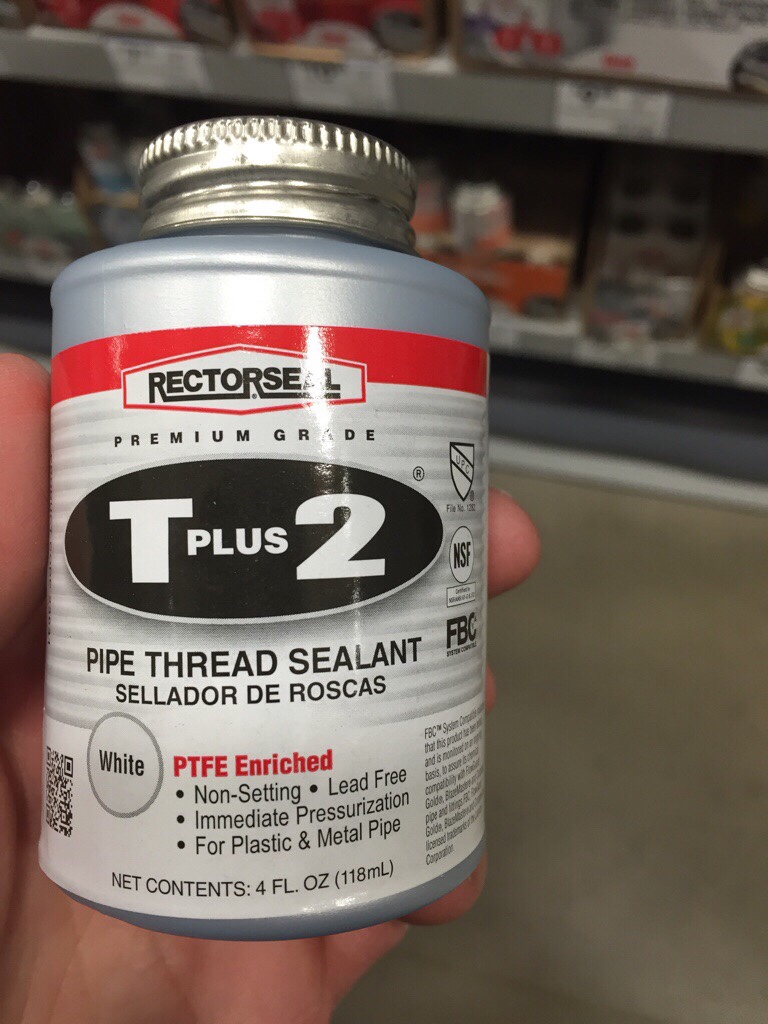
I've read a lot of posts saying that PVC connects "shouldn't need" tape or sealant, that it's better to smooth out any burrs in the threads, and set your (whatchamacallit, the rubber seal thingee) properly. That matches what I remember my grandpa saying: that they make the threads in a way that they get wider as you screw it on, to tighten the seal, and if you lubricate the fitting it will slip off easier. Like once you've screwed on the union or valve, the friction keeps it in place. His logic was that Teflon made it easier to screw a faulty valve way up the neck of the fitting, sometimes even too far and cracking it. As well as temporarily cancelling out any leaks that'd arise from a burr by cushioning around the fault. So he never used it on PVC.
Maybe he was more careful since it's real hard to dig up the line from a well, or trace a slow leak inside the wall. That'd be a good reason to get it right the first time, whereas in our tanks we can always screw down a joint that wiggles loose from the pump vibration.
Thoughts?