divebri69
New member
Well, I asked in an earlier thread for suggestions, experience from people who'd built their own sumps.
Now it's time to start mine.
My original wish was to build a sump 36" long, 14" wide, 16" high.
As soon as I opened a tape down by the tank I realized there was no way to fit a 36" long sump under my (already running for about 8-10 years now)
tank.
There's no way I'm taking it apart; and I have no stomach for creating a temp. brace and removing the center style, as you can see done on Melev's Reef.
So. I decided to look at a sump 30" long, 14" wide, 16" high.
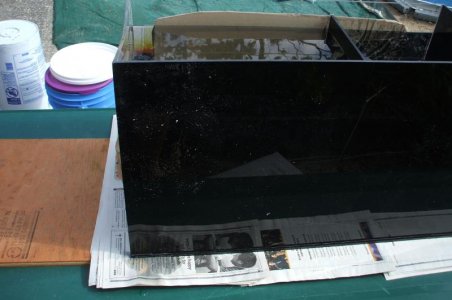
I wanted the back to be black so I could limit light spilling into the room at night. Found a full sheet of 1/4" black acrylic for $10 from a production company in Brooklyn. Scratched up- but, hey it's a sump- for $10, who cares.
The front and one side will be clear so I can see what's going on.... Had to buy the clear. I got half sheet of 1/4" clear from Fame Plastics- $50, about market rate.
Since I prefer not to build a sump and find out later it won't fit....
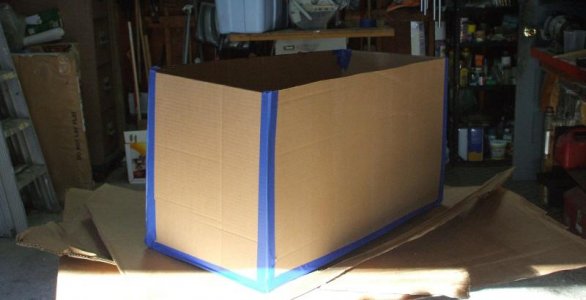
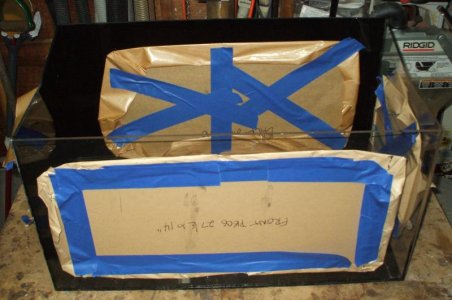
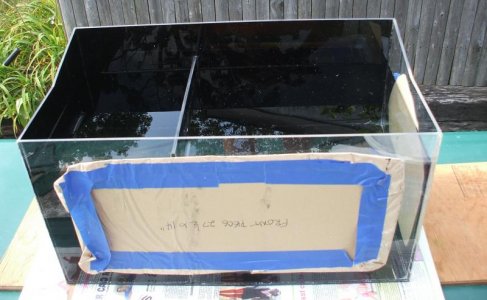
I went dumpster diving for some large cardboard pieces, and made a model 30"long, 14"wide, 16"high
Time to run it downstairs to find out....
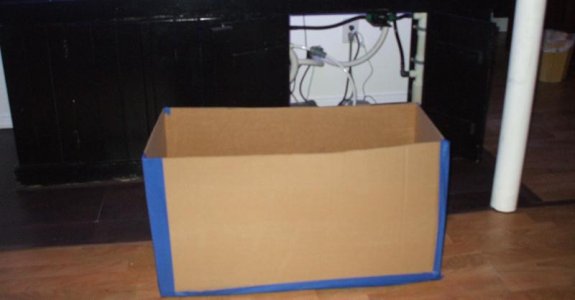
Will it fit?
Short answer.....
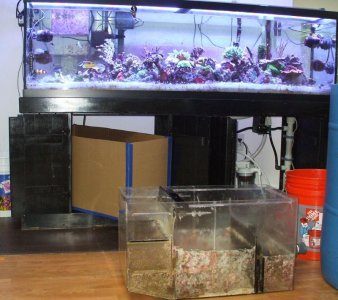
Nope
Cut the length down to 27" from 30 and tried again
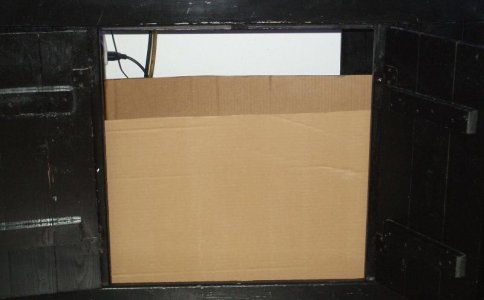
Now it does.... But, brother that looks mighty tall in there....
Let's see...
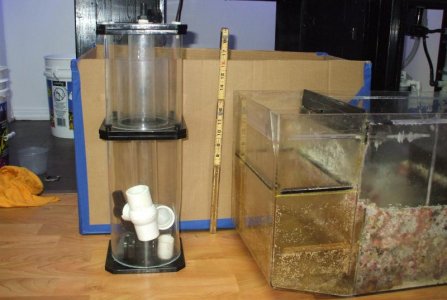
Yep. Put it next to the old sump (made from a "Amiracle" wet/dry trickle).
I believe there's a reason these filters were 14" high. I think I will be revising again to make this 14" high instead of 16".
Well, that's step one.
I learned a couple of things
Good:
- make a model to see if it fit's
- true union ball valves are worth every penny. EASY to pull the pump
out of the way
Bad-
-when you want to pour the little bit of water that's left in your pump
out: don't do it over the bucket full of saltwater from the sump.
Oh yes! I dropped my Iwaki pump into the bucket of saltwater. On the
other hand, I spoke to a great guy at Iwaki named Peter, and I learned
how to take apart an Iwaki pump!
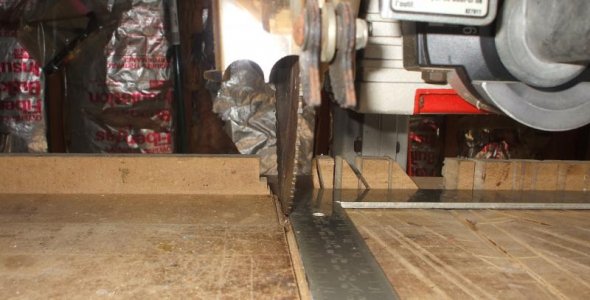
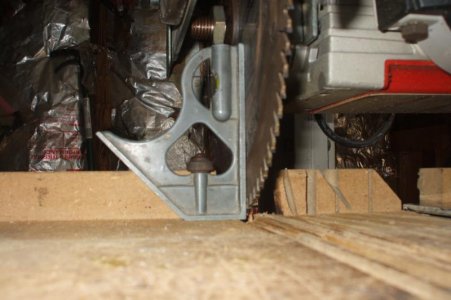
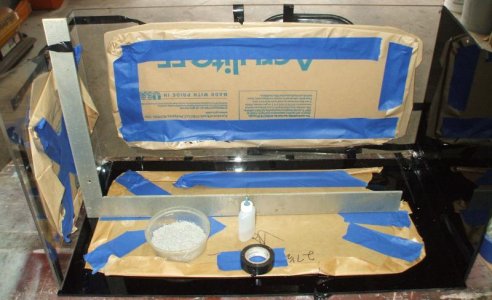
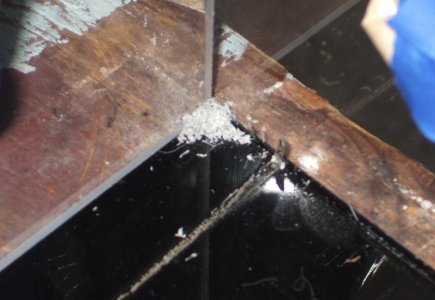
Next up will be cutting the pieces- with a totally inappropriate tool. The proper machine is a good quality table saw with a good quality fence. Unfortunately, I only own a radial arm saw. I've cut for fine work with it before and it is a great adventure!!! We'll see what happens.
'Til then-
Brian
Now it's time to start mine.
My original wish was to build a sump 36" long, 14" wide, 16" high.
As soon as I opened a tape down by the tank I realized there was no way to fit a 36" long sump under my (already running for about 8-10 years now)
tank.
There's no way I'm taking it apart; and I have no stomach for creating a temp. brace and removing the center style, as you can see done on Melev's Reef.
So. I decided to look at a sump 30" long, 14" wide, 16" high.
I wanted the back to be black so I could limit light spilling into the room at night. Found a full sheet of 1/4" black acrylic for $10 from a production company in Brooklyn. Scratched up- but, hey it's a sump- for $10, who cares.
The front and one side will be clear so I can see what's going on.... Had to buy the clear. I got half sheet of 1/4" clear from Fame Plastics- $50, about market rate.
Since I prefer not to build a sump and find out later it won't fit....
I went dumpster diving for some large cardboard pieces, and made a model 30"long, 14"wide, 16"high
Time to run it downstairs to find out....
Will it fit?
Short answer.....
Nope
Cut the length down to 27" from 30 and tried again
Now it does.... But, brother that looks mighty tall in there....
Let's see...
Yep. Put it next to the old sump (made from a "Amiracle" wet/dry trickle).
I believe there's a reason these filters were 14" high. I think I will be revising again to make this 14" high instead of 16".
Well, that's step one.
I learned a couple of things
Good:
- make a model to see if it fit's
- true union ball valves are worth every penny. EASY to pull the pump
out of the way
Bad-
-when you want to pour the little bit of water that's left in your pump
out: don't do it over the bucket full of saltwater from the sump.
Oh yes! I dropped my Iwaki pump into the bucket of saltwater. On the
other hand, I spoke to a great guy at Iwaki named Peter, and I learned
how to take apart an Iwaki pump!
Next up will be cutting the pieces- with a totally inappropriate tool. The proper machine is a good quality table saw with a good quality fence. Unfortunately, I only own a radial arm saw. I've cut for fine work with it before and it is a great adventure!!! We'll see what happens.
'Til then-
Brian