
Vodka Dosing Emergency (Decimal Error)

makers marc

New member
All,

I've had a 75g mixed reef for over a year and recently decided to dose vodka since my nitrates constantly hover around 24 - using Red Sea Pro Test kits. I read all the articles in depth for weeks to educate myself on how/why it works.

I calculated that I have about 75g net volume, so I gradually started adding vodka using the 0.1ml per 25 gallon chart, using the syringe that comes in the Red Sea Pro test kit.

The crazy thing is, I'm in week 3 and am supposed to be dosing 1.4ml daily, but have actually been dosing 14 ml daily! When I looked at the syringe, it's a 10ml one and the whole time I thought it was a 1ml.

Questions:

1. I have an oversized skimmer (Skimz SM 161) and haven't noticed any corals or fish issues yet. I did notice my filter sock filling up in 2 days and a slight white film on my glass that I scraped off. What the hell do I do now?

2. My nitrates show still 24ppm. Does that mean Im OK at this level? This seems too high for a 75g

3. Do I revert back or stop?

Any help is appreciated. Its ironic how you can do weeks of research and mess up on such a simple mistake:headwally:
 
I would say cut it back to about 4ml per day and continue going up .5ml per week till nitrates drop to 0. Keep watching for bacterial bloom or cyano. I started dosing about 3 weeks ago (75gal sys) and I am moving up to 2.7ml per day tomorrow (.2ml per 25 gal schedule) so you would be a bit more aggressive than that but having no ill effects so far (Knock Wood) I think you will be OK. have you read this thread? http://www.reefcentral.com/forums/showthread.php?t=2134105

Lou
 
It's high . Most settle in for a maintenance dose around 0.04 to 0.07ml of 80 proof/40 % ethanol vodka per gallon of aquarium water after amping up. I 'd cut back to 0.04ml per gallon(ie around 3ml for 75 gallons) and work that for a month or so. Check to be sure you are using 80 proof vodka.
Nitrates are often slow to respond to organic carbon dosing. The bacteria take ammonia preferentially and cut nitrate production at the front end ; the response for nitrate in the system at start up can take months. Personally, I like to reduce them to less than 5ppm before starting organic carbon.

This thread may be of interest:

http://www.reefcentral.com/forums/showthread.php?t=2134105&highlight=organic+carbon+dosing
 
Thanks and Yes I have. I just didn't know if there were gonn be any delayed side effects of my large over dosage. Also,need to know if f I needed to cutback to 1.4ml, or will that drastic drop cause more harm?
 
Listen to TMZ - I think he is the resident expert on carbon dosing.... but hey ... I was close :) at least I pointed you to the right thread...
 
It's high . Most settle in for a maintenance dose around 0.04 to 0.07ml of 80 proof/40 % ethanol vodka per gallon of aquarium water after amping up. I 'd cut back to 0.04ml per gallon(ie around 3ml for 75 gallons) and work that for a month or so. Check to be sure you are using 80 proof vodka.
Nitrates are often slow to respond to organic carbon dosing. The bacteria take ammonia preferentially and cut nitrate production at the front end ; the response for nitrate in the system at start up can take months. Personally, I like to reduce them to less than 5ppm before starting organic carbon.

This thread may be of interest:

http://www.reefcentral.com/forums/showthread.php?t=2134105&highlight=organic+carbon+dosing

Thanks TMZ. So it sounds like should cut back and just observe for now. I just didn't know if I needed to do a massive water change, or if a drop to 3ml from 14ml would shock it backward.

But i'll proceed with 3ml and monitor. You mention that nitrates falling are delayed, are blooms delayed also or would the worst have happened by now? And when is the white film on the glass considered dangerously too much? Its never on the rocks and I've only scraped once, which was 3 days ago.

Yes that thread definitely goes "into the weeds" which is great. Some of the science is over my head though lol
 
But i'll proceed with 3ml and monitor. You mention that nitrates falling are delayed, are blooms delayed also or would the worst have happened by now? And when is the white film on the glass considered dangerously too much? Its never on the rocks and I've only scraped once, which was 3 days ago.

You are probably OK. Heterotrophic bacterial blooms are generally very quick - within 24-48 hours. And generally, the tank-killing kind of carbon overdose with vodka is the "my dosing pump failed to cut off and put a liter of vodka in my tank" sort of thing.

That said, a water change is never a bad thing, and as TMZ notes, you've got enough nitrate that the addition of the carbon source could promote a bacterial bloom. Getting that nitrate down by a few large water changes would only help.
 
I think a few 15 to 25% water changes would be a good thing to do. That will remove some excess bacteria, (might want to clean up any obvious accessible masses), organic carbon and get a better baseline on nitrate

I don't think dropping the dose will "shock "it backward. Bacteria will wane some and some of the slime etc may abate.

Out of curiosity what's happening with PO4?
 
I think a few 15 to 25% water changes would be a good thing to do. That will remove some excess bacteria, (might want to clean up any obvious accessible masses), organic carbon and get a better baseline on nitrate

I don't think dropping the dose will "shock "it backward. Bacteria will wane some and some of the slime etc may abate.

Out of curiosity what's happening with PO4?

Thanks. I actually never measure phosphate as ive read that its hard to get a true reading of that parameter, since it only can measure what's in the water column. But I religiously have been using BRS HC GFO in a media bag, on top of my baffle sponge which has worked well. I change it monthly based on how quickly I have to scrape my glass.
 
You might want to consider getting a Hanna Checker phosphate tester, or simply discontinue the GFO for a while. Bacteria (and all other life forms) require some amount of phosphorus, though in amounts considerably less than carbon and nitrogen. Your tank probably has enough as evidenced by the appearance of a slime layer (bacteria), but if your nitrates don't come down significantly after a month or so of carbon dosing, it isn't impossible that your tank is phosphate-limited.
 
Well, you can get some useful information on PO4 by testing for it. With GFO and and high organic carbon dosing you could be stripping too much out too quickly. Which is one of the reasons I asked. The bacteria need some and won't grow and use use nitrogen or organic C without it.
 
Thanks both of yall. Perhaps you can elaborate on what helpful information i can find out, since I thought its likely you can show 0ppm in the water column, but if there may be a substantial amount leeched into the rock, etc.

I do feed pretty heavily, so by no means am I aiming for a ULNS, just trying to get N03 lower so I can phase into more SPS. Ive been using the same amount of BRS GFO for 6 months and been changing it monthly. So not sure if you thought I just started it, hence your concern about stripping it to quickly.

But im open to removing the GFO since yall know better. I just thought phosphate drops alot slower than nitrate from vodka dosing, so I thought itd be best if I kept using it for now.
 
PO4 doesn't drop more slowly than nitrate ,IME. There is a potnetial for proportionately more nmitropgen to be removed than phosphate relative to inpuuts when anaerobic denitrification occurs. More often than not the PO4 drops first though.

Knowing the approximate amount of PP4 in the water column is useful since it influences coral growth and health as well as bacteria and nitrogen( ammonia, nitrate etc) uptake. It also influences the amount of nuisance algae that will grow and PO4 leaching from rock as it equilibrates with teh level in the water.
 
Thanks for your help. Ill look into a Hanna Phosphate meter.

I guess last question I had, you may or not have experienced. Ut I tried my best google searching this to no avail.

Over the past 2 weeks Ive added several fish and the only ones that aren't surviving are clownfish, oddly enough. I deduced that the vodka dosing may be amplifying brookylena more than normal? Ive added 2 over that span, both ate for several days then one morning is wake up to find them with Brook sysmptoms only to die within 24 hrs. There arent spots like ich, but an even white haze over portions of the body.

Have you heard of vodka dosing (or overdosing) in my case directly influences bacteria related diseases? Or is the bacteria we are feeding different?
 
The hanah 713 or 736 are fine for testing PO4 with reasonable accuracy and consistency ;there are several threads on them in the Reef Chemistry forum. I've used my 713 full sized colorimeter for 7 years or so( this is the large model; it was out before the checkers)Manufacturer's specs are available by seraching for Hanah.

Broolynella hostilis is a cillated protozoan parasite; not bacterial.

As for other bacterial issues, I suppose the elevated organic carbon when overdosed could spur growth of certain strains that may be harmful or lead to strong competition for other nutrients(fixed nitrogen, phosphate, iron, patassium ,etc) , more likely associated with coral than fish though, as most bacterial infections for fish use the skin as home base.
The bacteria related to dosing vodka are heterotrophic; thus adding extra organic carbon supports them provided other nutrients they need like nitrogen and phosphate are available.

FWIW, I've been dosing vodka and vinegar ot my aquariums every dayfor over six years in moderate amounts. I've added a number of new fish over that span and keep over 50 of them inlcuding breeding seahorses, 6 pairs of amphiprion( clownsfish) .
I have never seen nor heard of any effect on brooklynella even on a few fish that had it on arrival and were treated in qt before going into the system.
 
Quick update to this post, 3 months later.

I followed your advice TMZ and decided on settling in a 3.0ml of vodka daily for a month, which I actually did for 45 days, until October 15th. Over that time, I noticed that my No3 dropped from 24ppm to around 16ppm, but as y'all know using the Red Sea Pro test kits there's some user error in identifying the exact color match.

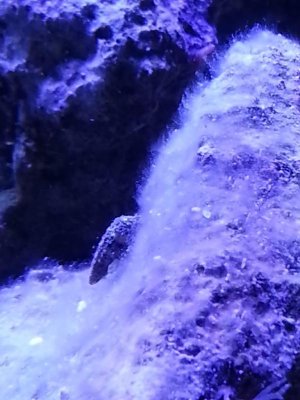
More importantly, dosing only 3ml over that time has resulted in my glass needing scraping (white haze) Live Rock being constantly covered in stringy white bacteria, but also white "peachfuzz" that even though I brush it off, it doesn't come off. No livestock has died, but it looks pretty ugly.

So I decided to cut down from 3ml to zero for 1 week, and the peachfuzz slowly disappeared, the glass stopped getting white, but there are still stringy bacteria I must scrub off every few days.

Then I decide, since my No3 still is at 16ppm, I would resume again at 1.5ml and move up from there. 3 days later the peachfuzz is appearing again?

Questions:

1. Evidently 1.5ml of vodka added to a total tank volume of ~75 gallons is not enough to cause all this fuzz everywhere. Is this still a side effect of when I overdosed vodka 3 months ago? If so, I'd like to know how long I should stop dosing till all that bacteria dies off, then I can start fresh again?

2. At first I dosed the vodka into the display, in front of the powerhead each morning. Then I tried the sump for a few weeks, and that still left fuzz. Now for the past week I've tried the overflow box, with hopes the bacteria forms on my filter sock or sump as opposed to the display. Any tips on how yall drip this in manually? I know bacteria is getting exported from the system since my filter socks clog in a few days, and I scrub my rocks so the flow lets it get skimmed.

3. Lastly, any other advice on how I can resume vodka dosing without having to scrub the rocks daily? Everyone on RC normally says that if they have a bacteria bloom, that they just stop for a few days and it goes away. But when I resume at lower levels it comes back immediately?
 
Maybe replacing some (or all) of the vodka with vinegar might do the trick. It might encourage a different strain if bacteria to grow that doesn't cling to surfaces as well.

FWIW, In my system, total about 100 Gallons, I add five 6 ml doses of VINEGAR with a syringe over about 3 hours in the early evening when the lights are fully on. I add it to a 10 gallon sump bay where the skimmer picks up water (for no particular reason other than that it the farthest area from the return pump). I think 30 ml of vinegar equates to a little over 3 ml of vodka. I don't get any clingy bacteria blooms or mulm in the DT though. Occasionally, I do notice a very slight clouding of the water a few hours after adding the last batch of vinegar. I attribute that to a bloom that is in the water column.
 
I don't know what the white fuzz is?
I've have none ;may have had a bit 6years ago ;not enough to recall as an issue though.
When folks talk about blooms they usually mean cloudy water.

Maybe it's related to a limiting nutrient, ie imbalanced nitrogen and phosphate. What is the PO4 level?

For claification: ehtanol / vodka and acetic acid / vinegar are very close. Ethanol oxidizes via bacterial activity to acetic acid. All of the bacteria involved are primarily surface colonizing as far as I know but do premeate the water column

FWIW I bolus ( all at once) dose 32 ml of 80 proof vodka and 80ml of 5% vinegar daily in a high flow area of the sump after lights on and another 6 ml of vodka at night. That equals about .06ml of vodka equivalents per gallon of system water daily. Most do well with around 0.04 to 0.08. Vinegar needs to be dosed slowly since it spikes pH down when dosed in volume. The 80 ml on a 650 system is ok in a single dose; though more than that could be a problem . PO4 ranges between 0.02ppm to 0.04ppm with NO3 around 0.2ppm.
 
Heres a picture i found online, of exactly what the peach fuzz looks like. If I scrub this vigoroursly with a toothbrush, it takes a minute till it all comes off a section. It looks like some spore growtg of bacteria. Keep in mind, I literally never have had a bloom in the water column.

Regarding phosphate, for the past 6 months I regularly change out 5 tbsps of BRS High capacity GFO every 21 days with GAC, , which is placed in a media bag over my sponge baffle. Phosphate tests have been the eye test, as I only scrape the glass once every 2-3 weeks if at all. Montis and acro frags are not brown, colored up. If I remove GFO completely, it has to be scraped every 3-4 days. I know some of you suggest testing phosphate, but the fact that the column can be 0ppm so id have to test it vs the skimmer export, seems obsessive?

So maybe I should do part vinegar and part vodka like yall do.. i just wanted to know if I need to stop dosing for a month to kill of bacteria strain, then restart?

And also TMZ, how imbalanced does phosphate:nitrate need to be to cause something like this?

And lastly, do yall think a fuzz film like this all over the rocks adds dicersity to the natural food, or suffocate things like Tisbe Pods that ive done a good job building for my Mandarin?
 

Attachments

  • 20130914_111413_zps9c29d1f1.jpg
    20130914_111413_zps9c29d1f1.jpg
    57.1 KB · Views: 7
Don't know if it's bacterial or something else algae, dinofalgellates ,etc) . High nitrate and low phosphate perhaps a PO4 deficiency with high organic carbon( perhaps left over acetate from the overdose ) could be giving whatever it is an edge over other competitors for nutrients. If you don't want to test phosphate that's up to you. I don't consider it at all obsessive but an informative data point.

Since I don't know what it is ; I don't know if it's useful to the food chain ,potentially alellopathic or just a benign mess.
 
Last edited:
Back
Top