What's the lifespan of GFO?

RussC

Active member
I have BRS High Capacity GFO. What is the average lifespan for that? I recall replacing it when algae returns. its coming back but its only been since 9-22-17. That's only 16 days. I had it in my mind it would likely last a month or more. Granted, my first attack of algae was extreme. So I guess its possible the gfo is saturated. Just expected more. I'm looking for some experience trial and error from those that have been down this road. I HATE ALGAE in every way possible and will do whatever it takes to keep it out of site.
 
Test the effluent of the reactor. Only way to truly tell.

Ive had it last a couple weeks, to a couple hours. It all depends on how high the phosphates are in the water to begin with.

EDIT:
You do realize that a healthy tank requires some algae?
 
^^^This^^^

I generally change it about monthly, but I try my best to limit any sources going in. Like Homer, however, I'vd had to change it before the day is out.

Beware that too rapid removal is very hard on the corals. Also remember that ALL the living things in our aquariums require at least a small amount of both Nitrate and Phosphate to survive
 
Looking to dig into this algae problem. Its not improving.

Okay, I've got opinions all over the board. Everything from "boo, already gfo" to don't remove it too fast. I was very successful removing the brown algae first go 'round using gfo and phosguard. But when it came back, it came back with a vengeance. Why? And it seems to be more stubborn this time.

McG, you say Boo, already to gfo. How in the world would I tackle an outbreak otherwise? Its covering everything. What are my suspects? Lights? Food from feeding fish (nutrients)? I feed the fish once a day with small pellet food. Those fish gobble it up in less than a minute. I also feed mysis to my Cardinal. Most of the fish also eat that. its gone quickly. And I feed that every other day right now. What about my skimmer? Should it be removing more suspects? I'm getting very little skim mate right now and when I do its very watery. Should I be getting a full cup of skim mate once a week or longer?

To reduce it last time I reduced the light and fed every other day. But its hard for me to believe only using a 50% intensity on my kessil ap700 will bring it back that quickly. I was looking at my return hose. Its clear vinyl. Its even in that. I really don't want to reduce the lights too much. I am trying to grow some corals. How do you guys (veterans) with established tanks keep this from happening?

I read a lot that folks don't use gfo anymore because their phosphates are not a problem. How? What are you doing to keep them down? when I noticed this returning I measured my phosphates with the Hanna ultra low phosphate checker and got a zero reading. The instructions on the gfo was to replace when phosphates start returning. If phosphates weren't returning, something was causing the outbreak. I need some input on this. This algae is very ugly.

Guys, help me out.
 
Need pictures to know if you have a real problem or just standard newbie panic..
A full tank shot and maybe a close up of one problem area..

Post nitrate and phosphate readings..
Remind me how long the tank has been setup for..
 
Parameters as of 10/5/17:
Calcium 430, Alkalinity 9.5, PH (APEX) average 7.64, Salinity (APEX) average 35.03, ORP (APEX) average 304, Temp (APEX) average 77.4, Nitrate 0 (Red Sea Marine Care), Phosphate 0 (Hanna Ultra Low Phosphate Checker)

Parameters have been consistent since the beginning with 20 gallon regular water changes every two weeks, no dosing. I change my socks every three days.

I figured if I removed the algae with GFO and Phosguard the first time, it would become more manageable, if not obsolete. So I was a surprised when it reappeared so rapidly.

When all this started, I began with a 12 hour light schedule. When the algae appeared the first go 'round, I reduced that to about 6 hours to help starve the algae, removed the algae and went back with a 10 hour light schedule. Now that the algae returned I'm assuming 10 hours is still too much light. I've reduced the light schedule to around 6 hours again in an attempt to inhibit the algae growth rate and get a handle on this outbreak and plan to go back to an 8hour schedule once I get this in check. The max intensity I'm using with my Kessil AP700 is 50%. With an 8 hour schedule, I think that intensity will only be 2-3 hours.

I feel like I'm missing something. Newbie or not, this algae is UGLY. It covers my rocks and substrate completely. The coralline algae becomes muted and the white substrate becomes brown. I understand a little comes with the territory. But I don't believe what I'm seeing now is normal. But normal or not, I don't want it.

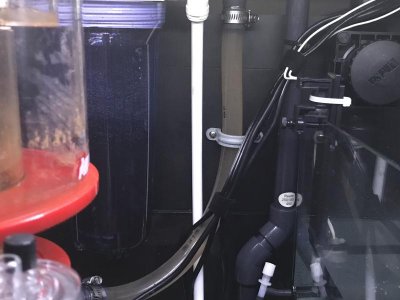
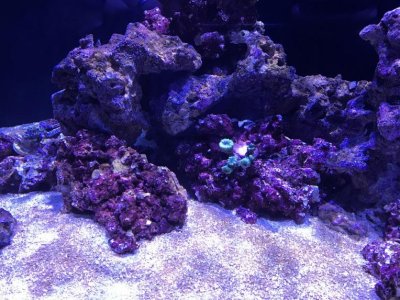
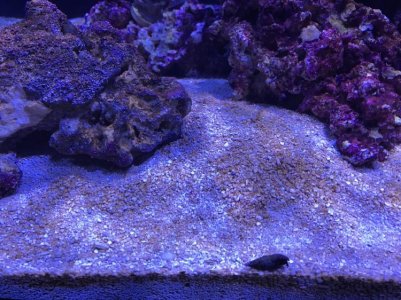
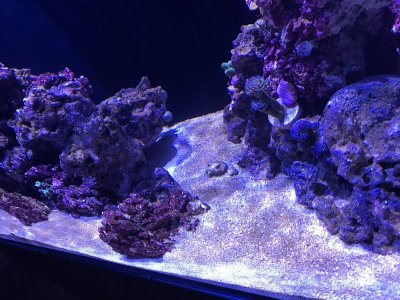
I've attached pictures. Hope you can make 'em out. The dark areas on the substrate is algae and you can tell the brown all over the rocks. That is normally bright purple coralline. I keep the glass cleaned regularly. But it grows there just as quick. The clear vinyl hose in the first image is my return hose. You can see the brown in it.
 

Attachments

  • Algae2.jpg
    Algae2.jpg
    47.5 KB · Views: 3
  • Algae1a.jpg
    Algae1a.jpg
    104.2 KB · Views: 3
  • Algae3a.jpg
    Algae3a.jpg
    105.5 KB · Views: 3
  • algae4a.jpg
    algae4a.jpg
    94.6 KB · Views: 3
You look to be going through the ugly stages. No need for GFO at this point IMO. At a quick glance just looks to be diatoms, you'll go through a lovely cyano stage as well. You're tank isn't going to be "pretty" until established, even then you'll likely have some algae in your DT. Nothing happens fast in this hobby, slow down, take the GFO offline and enjoy the current "ugliness".


Sent from my iPhone using Tapatalk
 
I forgot to mention that when posting pictures to show something off you need to turn the blue channels way down or off for proper color rendition..
That looks like diatoms (hard to see with all that purple coloration messing up the color rendition) and they are just using up the excess silicates in the tank..

What I see is 100% NORMAL :p (because I think your tank has only been up for a month or 2)
You attempted to trick mother nature with your premature use of products and hatred of algae and she said "who does this guy think he is... take that right back"..

You are going to need to seek counseling for a while to prevent the urge to tamper with nature doing its thing as it passes on its own..
No seriously..normal.. let it be.. don't make me reach through this screen and slap you again..
Snails will help too.

A tank without some algae is a tank in bad shape too IMO.. So you better learn to get used to MINOR issues like that.. The sand will clear..
If you are disturbing the sand (siphoning it,etc..) I would urge you to stop that too as that only prolongs the ugly..

Normal.. wait it out.. anything you attempt is really just potentially causing more problems.. patience.. NOTHING GOOD HAPPENS FAST in this hobby..
If this is going to be a show stopper then seriously get out now.. You have NOTHING there to be concerned about and better learn some patience.. :)
 
Okay, that reassurance does help. So if I'm understanding you guys correctly, this algae bloom will eventually die off on its on-parameters, etc remaining within normal operating parameters? Educate me a little on how that happens? What is actually ocurring in the tank that would naturally kill off this algae as I progress through the "ugly stages?"

Is there a risk of the bloom getting out of hand? I read of horror stories, especially the cyano. Base on what your saying, though, this is normal and a healthy tank will eventually right itself. I would say my tank is healthy, parameters speaking.

So in the meantime, what about my few corals I have in the tank? Will the algae be a negative impact on them in anyway? It seems to grow on every surface available. Will it grow on them? Its a leather, Trumpet, Branched Frogspawn (I think) and some zoas.

PS Look at image four and tell me what that branched coral is. I was told a couple things so I'm not certain.
 
If its diatoms (sure looks like it).. Then they feed off the excess silicates in the tank (sand,etc...) and as they remove (consume) those they will eat up their food source then starve and go away..

Image isn't really clear/close enough.. I think i see a hammer coral in the middle right.. then maybe a candy cane on the left side..

Did we say what you have is normal and will pass :p
Your parameters are great and your water change schedule is doing what it should be.. The ugly stages WILL pass..

It becomes problematic when people don't maintain the same level of water quality as you seems to be doing, they overfeed,etc.. ad nutrient levels rise and the algae,etc.. continues to be fed,etc..
But just like anything.. you can live for a little while without food but its only a matter of time before you wither away and say bye bye.. So keep doing what you are doing and all will be fine..
 
Okay, McG, that makes a ton more sense to me when you put it that way. I was aware that silicates were one of the food sources along with phosphates and light, but didn't consider it being part of the tank substrate, rock, etc and needing to be consumed in order for it to dissipate. This is one of those AH HA! moments. Thought I was the source through feeding or something else. I use 4 stage RO/DI water filter but have never measured silcates. I know that water can be a big source for silicates. I do have a TDS meter and it reads 0. Thanks. I was under the impression I had to fight that battle when algae started.

Now for the magic question....You ready? Here it comes!

How long before the "ugly stages" go away? What is a fair timeline on how a tank matures?
 
How long before the "ugly stages" go away? What is a fair timeline on how a tank matures?

My experience has shown that it can take a month or 2 to get through the ugly stages and after 8-10 months a tank becomes much easier to manage/stable..
 
Back
Top