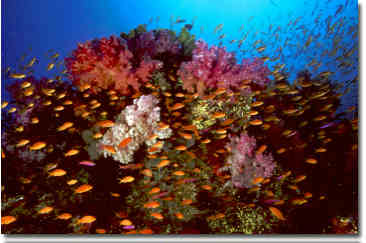
will they school?

sprintermike

New member
Some things you will never know until you try them...has anyone put firefish and purple firefish together? Will they school?
Although I know they will do ok singly, I don't want one to get lonely, and I'd like to have the opposite color if I get a 2nd, but also don't want to get into any problems.
 
I wish aquarists would learn the difference between school and shoal. You will NEVER see schooling behavior in an aquarium of the size we keep. If you add more than one, there will end up being only one once one has killed the other.
 
Re: will they school?

<a href=showthread.php?s=&postid=8029722#post8029722 target=_blank>Originally posted</a> by sprintermike
Some things you will never know until you try them...has anyone put firefish and purple firefish together? Will they school?
Although I know they will do ok singly, I don't want one to get lonely, and I'd like to have the opposite color if I get a 2nd, but also don't want to get into any problems.
<img src="/images/welcome.gif" width="500" height="62"><br><b><i><big><big>To Reef Central</b></i></big></big>

The general consensus for same species firefish is that while they may get along while young - once they reach sexual maturity, unless a mated pair, one will eliminate the others one by one. Part of the problem for the discrepancies in experiences you'll read about this is that it apparently make take , say, a year before one fish decides he must kill the other(s).

Obviously there are tank size issues... if your tank is 10 feet long, I imagine you might get away with trying a group...anyway some people have claimed long-term success, but I don't know that it would be the kind of thing a beginner would be recommended to do. Of course if removing the fish that get picked on isn't a problem...then it's a non-issue :D

Maybe someone else can comment on keeping a purple firefish with a red...I'm not sure if the same factors apply or not -- I know that the purples are said to be more aggressive. I wouldn't do it to give him "company" however - as keeping the two together is likely to be problematic - the only reason to do it would be for your viewing pleasure!

HTH
 
Re: Re: will they school?

Re: Re: will they school?

<a href=showthread.php?s=&postid=8036154#post8036154 target=_blank>Originally posted</a> by Angel*Fish
<img src="/images/welcome.gif" width="500" height="62"><br><b><i><big><big>To Reef Central</b></i></big></big>

The general consensus for same species firefish is that while they may get along while young - once they reach sexual maturity, unless a mated pair, one will eliminate the others one by one. Part of the problem for the discrepancies in experiences you'll read about this is that it apparently make take , say, a year before one fish decides he must kill the other(s).

Obviously there are tank size issues... if your tank is 10 feet long, I imagine you might get away with trying a group...anyway some people have claimed long-term success, but I don't know that it would be the kind of thing a beginner would be recommended to do. Of course if removing the fish that get picked on isn't a problem...then it's a non-issue :D

Maybe someone else can comment on keeping a purple firefish with a red...I'm not sure if the same factors apply or not -- I know that the purples are said to be more aggressive. I wouldn't do it to give him "company" however - as keeping the two together is likely to be problematic - the only reason to do it would be for your viewing pleasure!

HTH

Your are dead on, at least in my experiences. Firefishes practice monogamy, so you will end up with a pair that will fight the others to the point of death in an enclosed space. However, you will occasionally see a few individuals hiding together (though this is much more common in juveniles). Purple firefish tend to be even worse about this, IME, and is rarely found in anything more than a pair
 
<a href=showthread.php?s=&postid=8034872#post8034872 target=_blank>Originally posted</a> by snorvich
I wish aquarists would learn the difference between school and shoal. You will NEVER see schooling behavior in an aquarium of the size we keep. If you add more than one, there will end up being only one once one has killed the other.

OK, first of all, feel free to give your different definitions if you'd like us "to learn." As far as I can tell from a quick online search, shoaling and schooling mean the same thing. Are you refering to tighness of the school making a difference? Like a bait ball of sardines vs. a group of heniochus? Or the reason for the school ? Like a group of tangs schooling together so they can overrun other fish's territories looking for food vs. anthias schooling for protection?

Second of all, you can see this behavior in a tank, it really depends on the species we are talking about and the environment they are in. Believe me, your anthias will school, shoal, whatever you want to call it, a lot tighter with the presence of a predator or other aggressive fish in the tank.

As for firefish, yes, Angel*fish has it right, IMO/E.
 
Shoal (or school) is the collective noun for fish. Animal behaviourists use the term "shoal" for any group of fish, including mixed-species groups, reserving "school" for more closely knit groups of the same species swimming in a highly synchronized and polarized manner. Normally schooling fish will all swim in the same direction whereas shoaling fish will aggregate, sometimes moving, sometimes not but not necessarily directionally aligned. Anthias will definitely shoal in an aquarium especially under perceived duress. Anthias in the wild tend to shoal, riding against currents as they are planktivores. As such, because of the direction of the current, they are somewhat polarized, that is facing in the same direction. However, they do not MOVE as a group, dropping down on the reef under duress of possible predation or cessation of the current. Fish that school tend to move as a group which, by default causes them to be directionally polarized. In the wild, examples might be jacks, baracuda, etc. The reason I say that fish will not school in our size aquariums is that they do not have the lateral room to move as a school. They will, however, shoal, even in moderately sized aquaria. I hope this is helpful. I know it sounds pedantic for which I apologize.
 
My pleasure. The more we know about the natural behavior of our visitors, the more we can create an environment where they will live long. Interestingly enough, fish in our tanks, given proper environment and care, can live longer than those on the reef. What excites me is the number of species that are now bred in captivity. We have come a long way since I first started looking at marine aquaria.
 
Snorvich,

I agree that most fish only "shoal" and won´t "school" in our tanks, but I also believe there are exceptions.

Some Apogon (cardinal) species will actually "school" Not talking about the Bangaii Cardinal - these will pair up as adults - , but some (tiny) japanese cardinal species as well as the Threadfin or Ghost cardinals (Apogon Leptacanthus) are well known for their "schooling" habits, even in tanks.

I´ll personaly confirm this in a while (I hope), as my 11 Apogon Leptacanthus have arrived and are being quarantined.

If all goes well, in a near future, I´ll have my existing 4 Lyretail Anthias harem "shoaling" and the 11 Apogons "schooling". in my tank. Looking forward to it...
 
The problem is that Plotosids are very venomous and get quite large--120 gallons is not nearly large enough. Plus, they only school as juveniles. Adults are much less likely to be found in large groups and can be aggressive toward each other.
 
<a href=showthread.php?s=&postid=8041976#post8041976 target=_blank>Originally posted</a> by Joao Monteiro
Snorvich,

I agree that most fish only "shoal" and won´t "school" in our tanks, but I also believe there are exceptions.

Some Apogon (cardinal) species will actually "school" Not talking about the Bangaii Cardinal - these will pair up as adults - , but some (tiny) japanese cardinal species as well as the Threadfin or Ghost cardinals (Apogon Leptacanthus) are well known for their "schooling" habits, even in tanks.

I´ll personaly confirm this in a while (I hope), as my 11 Apogon Leptacanthus have arrived and are being quarantined.

If all goes well, in a near future, I´ll have my existing 4 Lyretail Anthias harem "shoaling" and the 11 Apogons "schooling". in my tank. Looking forward to it...

I have 4 threadfins (lost 5 initially) They hang out together & within that group they are paired off. But they just hang in the same place in the water all day long. It probably would make a nicer display to add more....

Until recently they thought they were in a 400g tank because that is what I told them, knowing they never explore. But when I had to catch one of the anthias, they found out it's only a 100g. Now they don't trust me ;)

Joao, it will be interesting to hear about your new cardinals. I would love about 20 of those teeny ones, but I'm afraid they'd get eaten. Not to mention that they are still really hard to get.
 
jmaneyapanda
Marine cats do school in the wild (I have pictures of this behavior) but I they would not be good aquarium inhabitants for a variety of reasons. I do not know if they would school in an aquarium.

Joao Monteiro
I do not know about Apogon Leptacanthus but would be most interested to hear of your experiences. Normally, aquaria we hobbyists keep are not long enough for true schooling behavior but if yours do, it would be interesting to hear.
 
Oh yes, in case you were going to ask. I was VERY careful shooting pictures of the marine cats. I do know they are venemous. It was a marvelous thing watching this school of fish slowing coming across the reef almost as if they had a collective life of their own.
 
oh yes, I agree about the marine cats- believe me, I have no interest in keeping them in any tank I own- ever!!! I used to work at a lfs, and I know the schooled )in snorvichs definition) as I watched a group of about 40 juveniles wander over the sand bed in unison sifting for food.

overall, i think it is possible for fish to school in the aquaria, especially as aquarium get more and more replicant of nature and the biotope aquariums I have seen have marvelled nature in their exactness.

nonetheless, i think we all can agree we know what people mean by schooling or shaoling, whetehr it is grammatically correct or not.
 
<a href=showthread.php?s=&postid=8042330#post8042330 target=_blank>Originally posted</a> by jmaneyapanda
oh yes, I agree about the marine cats- believe me, I have no interest in keeping them in any tank I own- ever!!! I used to work at a lfs, and I know the schooled )in snorvichs definition) as I watched a group of about 40 juveniles wander over the sand bed in unison sifting for food.

overall, I think it is possible for fish to school in the aquarium, especially as aquarium get more and more replicant of nature and the biotope aquariums I have seen have marvelled nature in their exactness.

nonetheless, I think we all can agree we know what people mean by schooling or shaoling, whether it is grammatically correct or not.

I too have seen juvi marine cats school in that tumbling ball fashion in captivity. It's a shame they were even at the LFS, knowing how big they get.

snorvich - What is your opinion on perhaps using these shoaling species such as anthias, chromis, maybe cardinals, as dither fish. Take anthias for example. Do you think they need some external aggression (ie aggressive tankmates) to act more naturally in captivity? True they may live longer in captivity without it, but is this better? They also seems to be more aggressive to each other without this external aggressive stimulus. Just some thoughts.
 
Marie
Not wanting to hi-jack this thread, your cardinals just hang out in the same place.. ? Out in the open or in a cave ?
I´ll post the info on my cardinals on my thread (see below in my signature) and here also if that´s ok with Sprintermike. But they´ll only enter the tank in 4-6 weeks time.

Snorvich,
I got interested in these cardinals after seeing Tanu´s TOTM (http://www.reefkeeping.com/issues/2005-02/totm/index.php) and did some research on them. All opinions I read were similar: with a good sized group (9+) they move around the tank in a synchronized manner, giving the "schooling effect". Furthermore, they keep they´re behavior in adulthood and don´t start kiling eachother like many other schoal/school fish do (chromis, etc.)
I agree that my tank is not long enough (6 feet) for TRUE schooling behaviour, specially for fast movers, but since these guys move really slowly... perhaps...
 
SDguy, I have observed marine behaviors for 20 years in the wild and for only 15 years in aquaria. What I see with Anthias in aquaria is that for the most part they are forced into too close proximity compared to the wild. They are also accustomed to nearly constant feeding in the wild while the current is running and no feeding when it is down. Those of us who keep them in aquaria feed two (in my case three) times per day. When you couple those two facts, I can see how they are aggressive compared to natural environments. The level of predation in natural environments is minimal at best. Anthia tend to however over the reef facing into the current. The predators also align into the current but not OVER a reef. Sort of like this:

101063scenic12.jpg


Note the alignment and level of dispersion.
 
<a href=showthread.php?s=&postid=8042489#post8042489 target=_blank>Originally posted</a> by Joao Monteiro
Marie
Not wanting to hi-jack this thread, your cardinals just hang out in the same place.. ? Out in the open or in a cave ?
I´ll post the info on my cardinals on my thread (see below in my signature) and here also if that´s ok with Sprintermike. But they´ll only enter the tank in 4-6 weeks time.


1) If there is a ruckus of some sort in the tank eg "the hand" moving rocks around they will all hang in a tight group of 4.

2) generally during the day they hang out in 2 pairs, but in close proximity to the other pair, sometimes 5 inches apart other times 10-11 inches apart - but semi-separated by an out jutting rock that has 2 large holes (like 2"x2") to swim thru- pretty much out in front and certainly not in a cave

I am without a camera right now but here's a picture of my tank - the yellow dots are where they stay all day l-o-n-g :sleep: The outline of the rock is an attempt to show that even though they are seprated by the rock, they can still see each other - only the fish themselves could comment on whether or not they care about that & so far they've not been forthcoming ;)
5247125tankcardinals.jpg
 
Thanks Marie

At least they stay out in the open.
Maybe you can tell me how to "designate an area" for my cardinals fish once they get in the thank.

Since the lyretail anthias spend 99% of their time on the left and centre, I could place (even glue, eheh) the cardinals in the right side for a better distribution.... (here´s a pic)

2006-08-20_010.jpg
 
Back
Top