Blue Carpet Splitting......

Status
Not open for further replies.

Taipan

Member
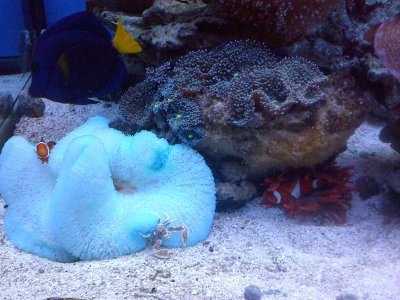
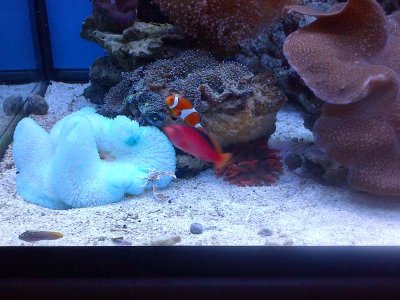
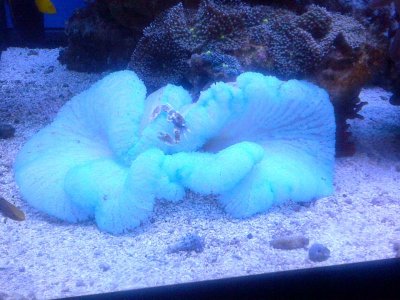
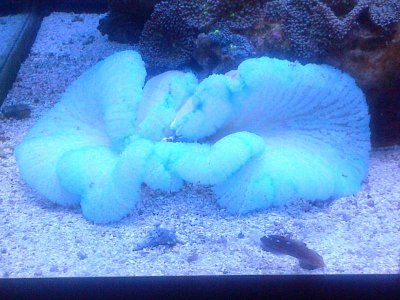
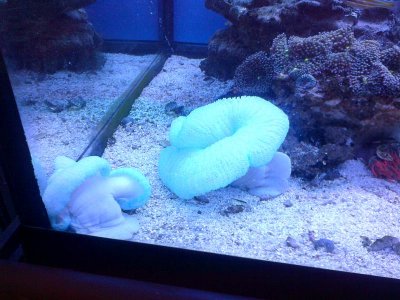
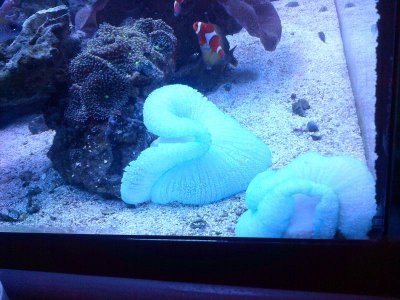
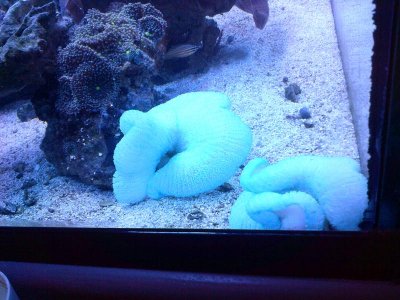
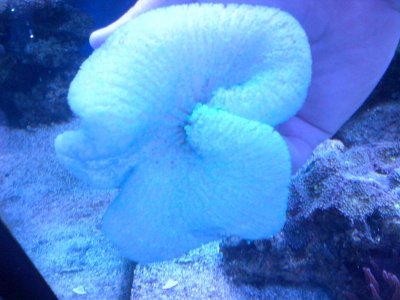
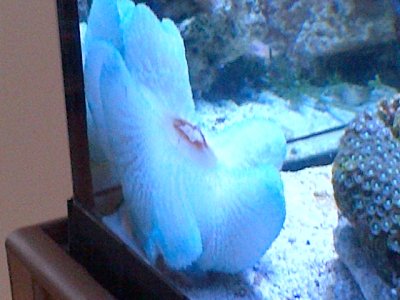
This is in response to another member's inquiry regarding the documentation of my Blue Carpet Anemone splitting. Perhaps a statistical anamoly; I've been fortunate enough to have several Carpet Anemones split in my displays in the past. This is the most recent; however this is the FIRST time where I've seen such a dramatic change/morph in colour of ONE of the post-split anemones while the original/mother anemone remained the same colour.

I had this specimen for about 3 months before I noticed it was getting ready to split. After the first split; one post split anemone split again several weeks later.

Before anyone asks.....I currently do not know what my specific water parameters are. Right or wrong.....I am about the laziest reefer you will meet. This current display system has been running for several years.
 

Attachments

  • Blue Carpet Day 1.jpg
    Blue Carpet Day 1.jpg
    81.8 KB · Views: 1
  • BC Acclimating.jpg
    BC Acclimating.jpg
    93 KB · Views: 1
  • BC Acclimating 2.jpg
    BC Acclimating 2.jpg
    84.9 KB · Views: 1
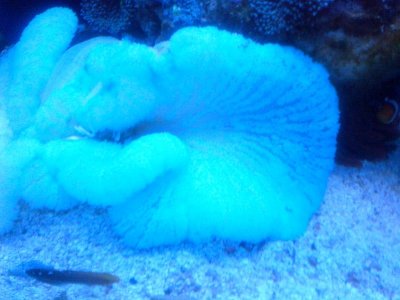
I woke up one morning and noticed the beginning of the anemone in the process of pinching and preparing to split.....
 

Attachments

  • BC Pinching.jpg
    BC Pinching.jpg
    57.1 KB · Views: 1
  • BC Pinching1.jpg
    BC Pinching1.jpg
    60.6 KB · Views: 1
  • BC Pinching 2.jpg
    BC Pinching 2.jpg
    83.7 KB · Views: 1
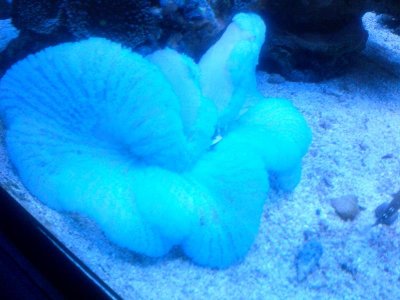
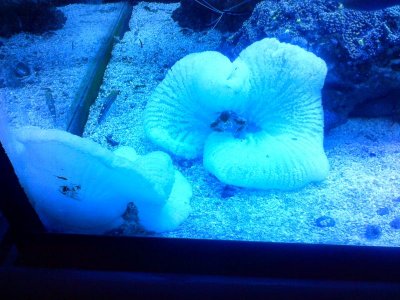
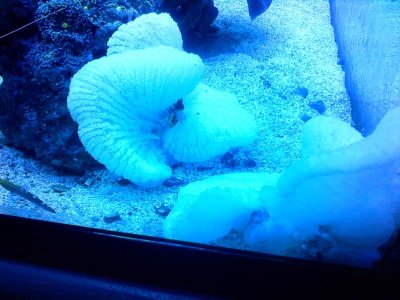
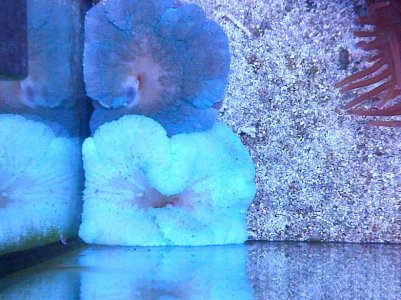
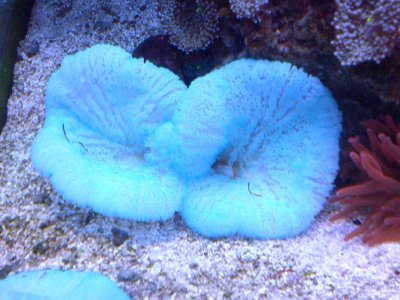
Over the course of approx 36 hours; I woke up to find 2 Post Split anemones.....
 

Attachments

  • BC PreSplit.jpg
    BC PreSplit.jpg
    85.5 KB · Views: 1
  • BC Post Split.jpg
    BC Post Split.jpg
    82.1 KB · Views: 1
  • BC Post Split 2.jpg
    BC Post Split 2.jpg
    80 KB · Views: 1
  • BC Post Split 3.jpg
    BC Post Split 3.jpg
    85.3 KB · Views: 1
  • BC Post Split 4.jpg
    BC Post Split 4.jpg
    86.9 KB · Views: 1
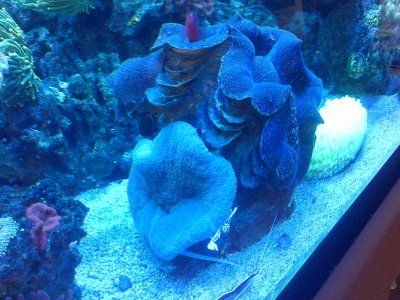
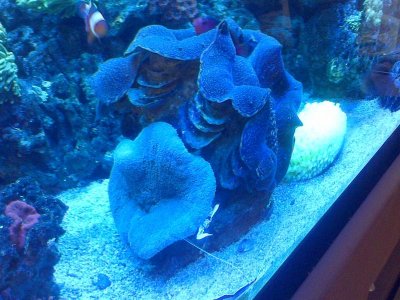
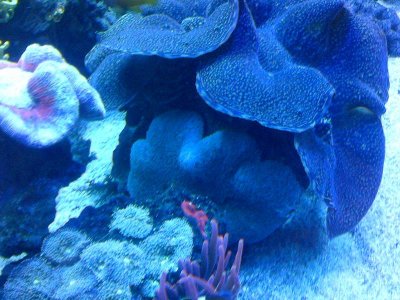
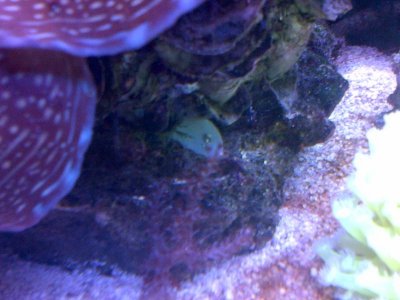
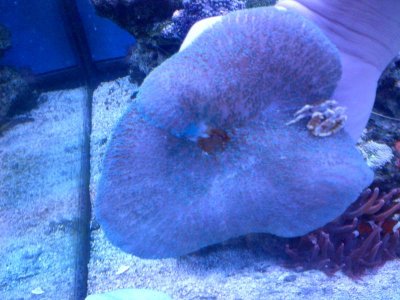
Background for the colour change/morph: I woke up one morning and discovered that one post split anemone had 'disappeared'. Upon a hard and thorough search; I found that it made a new home and planted itself on the side of my Maxima Clam. Fortunately the folds of the clam mantle and the stinging tentacles of the carpet never touched. I left the anemone and clam for a few days to observe and afterwards decided to physically remove the anemone before things got out of control. The clam is 8+ years old now and I didn't want it to suffer injury.

NOTE: the colour darkened of the carpet during this process. The colour has darkened further and remained so ever since.It appears to almost be a Purple Carpet Anemone now as opposed to the original Light Neon Blue.
 

Attachments

  • BC Post Split 5.jpg
    BC Post Split 5.jpg
    85.4 KB · Views: 1
  • Clam and Carpet.jpg
    Clam and Carpet.jpg
    96.1 KB · Views: 1
  • Clam and Carpet 1.jpg
    Clam and Carpet 1.jpg
    92.1 KB · Views: 1
  • Clam and Carpet 2.jpg
    Clam and Carpet 2.jpg
    93.9 KB · Views: 1
  • Clam and Carpet 3.jpg
    Clam and Carpet 3.jpg
    61.4 KB · Views: 1
Last edited:
Pics of the change in colour/morph after I removed the anemone from the side of the clam......
 

Attachments

  • IMG-20120717-00355.jpg
    IMG-20120717-00355.jpg
    102.9 KB · Views: 1
  • IMG-20120717-00357.jpg
    IMG-20120717-00357.jpg
    59.6 KB · Views: 1
  • IMG-20120717-00358.jpg
    IMG-20120717-00358.jpg
    73.7 KB · Views: 1
  • IMG-20120719-00369.jpg
    IMG-20120719-00369.jpg
    103 KB · Views: 1
I'm just trying to make sure I understand what you're saying, so please correct me if I'm wrong.
You're saying that you've had "several" haddonis split, on their own, in your care. Despite the fact that this behavior has never been documented in the countless individuals that have been imported for the hobby, or in individuals in the wild. Somehow you've had, not one, but "several" do this in your care.
On top of that miraculous information, You're telling us that you had one half of a very bleached anemone completely regain its zooxanthellae in "a few days". I have brought many large corals and anemones through such extreme bleaching, but I've never seen such a recovery in "a few days" time. A few weeks or months maybe, but never a few days.
Again, just trying to clarify what you're saying so everyone's on the same page.
Peace
EC
 
Hi there. Here are the answers to your questions:

1.) Over the course of approx. 20 years of keeping marine systems (starting out with FOWLR); I've had approx. 4 (including this one) split on me. The others weren't Blue but Green. Either dark Green or light Green Carpet Anemones.

2.) The colouration and contrast in the pics make the Original Anemone appear bleached (perhaps it is). The pictures were taken with a 5MP camera phone (Blackberry). The colour looks 'washed out' in the pictures. In reality; the tips of the tentacles are a light Neon Blue. Light, but vibrant (if that makes any sense); the stalks or column of the anemone is lighter and whiter.

3.) The colour change occurred in the Post Split anemone over the course of a few days; almost a week. Only AFTER it attached itself to the side of the clam. It's foot was partially lodged against the side of the clam and part of it made it's way underneath the clam between the clam and the rock was resting on. Now note; I have had the Orginal Pre-Split Anemone for several months before any split/pinching or colour change.
 
Last edited:
Thanks. Like I said; a statistical anomoly perhaps? I've always had a sweet spot for carpets. The one anemone that I've never had any success in keeping is the Sebae Anemone. I didn't know that this topic would generate that much interest. I feel a snowball/tsunami effect coming......

I have asked a couple of wholesalers here in Toronto and throughout Canada in the past and they have heard of instances and IF memory serves; some have seen or had it occur. There are also documented cases where individuals purposely cut and segment anemones (I think I've seen it on You Tube). Again; I'm an admitted lazy reefer. That requires effort and it's a mental block for me - I don't think I could do that. As crazy as it sounds; I have no issues cutting/propagating the tissue of a coral (such as leather, colt). Cutting into an anemone seems 'cruel' to me.
 
That's so awesome! I want to get a carpet anemone and see if that happens to me. Too freaken cool man :thumbsup:

As Taipan said, this is an anomaly, assuming it actually did occur (I want to believe you Taipan, but since this has NEVER been documented before, I can't help but be skeptical.) Don't expect a haddoni to split, ever. BTAs and other anemone species split all the time, no so with carpet anemones (haddoni, gigantea, etc.).

There are also documented cases where individuals purposely cut and segment anemones (I think I've seen it on You Tube). Again; I'm an admitted lazy reefer. That requires effort and it's a mental block for me - I don't think I could do that. As crazy as it sounds; I have no issues cutting/propagating the tissue of a coral (such as leather, colt). Cutting into an anemone seems 'cruel' to me.

It's easy to cut an anemone, simply take a knife and hack away. That's what the person did in the YouTube video (assuming you're talking about the one where he cut apart his haddoni). All I see documented is his stupidity. I didn't see any follow-up videos of his anemone(s) surviving the butchery. There hasn't been a single case of a person forcibly splitting a carpet anemone and it -- one side or the other, or both -- surviving long term. If it could be done, even with a small amount of success, we'd see folks doing it all of the time.
 
Being skeptical is healthy. I understand your concern.

As for 'hacking' away - the thought of that makes me squeamish.
 
do you have any pictures showing the tissue ripping?

Both of them look like the result of a manual cut, very perfect even halfs. As DNAK said its never been documented so pictures showing ripping tissue between the two half would prove it for me.

Also i have seen plenty of haddons look exactly like that while digging under rocks.
 
I'm afraid I don't. I saw them in the post split state when I woke up in the morning to make breakfast. They were already tunneled and buried in the substrate. There were some milky strands floating nearby (as if something expelled from the oral disc after eating - ie. discharging waste).
 
I'm afraid I don't. I saw them in the post split state when I woke up in the morning to make breakfast. They were already tunneled and buried in the substrate. There were some milky strands floating nearby (as if something expelled from the oral disc after eating - ie. discharging waste).

I too am a little skeptical. Post #4 was the reason why. I would expect the anemone to have to have a grip on something to pull itself apart, but in the pictures they are clearly not buried and in at least one picture are clearly not even attached to anything. Now you say in the above post that the anemones were already buried the next morning so you couldn't get any good pics, but clearly they were not.
I would like to believe this, but with your statement not matching the pictures and a very bleached anemone regaining all of its zooxanthellae in a few days after the split, I am having a very difficult time not thinking this is a hoax.
Could you give us a little more?
You said that one of the anemones split again after this. Could you show us the pics of all three anemones and pics of the recovered portions of the anemones? How long ago did these splits occur?
 
Let me clarify a couple of points. In reference to the post where the anemones not being attached to anything (free floating). The pictures were not taken immediately after the split. I've taken pictures when time permits and when the phone/camera is readily within reach. The 'post split' pictures were taken shortly after (when? - perhaps a day or more). The anemones were most likely looking for a 'happy' spot to re-plant itself (whether it be lighting, flow, or other irritant issues).

I didn't say that I couldn't get any good pictures the morning after. I just didn't. My recollection is that they anemones were already buried into the substrate under the ricordea rock.

As for the issue of matching pictures issue. The only pictures I have are what has been posted (side of the clam). It had darkened when it attached itself. Prior to the clam attachment; that anemone showed some brown colouration/pigmentation within the tentacles surrounding the oral disc. That's all I noticed.

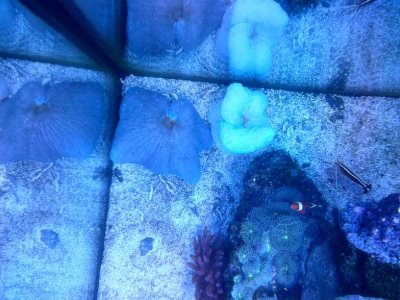
The issue of the second splitting - Occurred approx. 3 weeks after the 1st split. It did not occur to me to document this. The only picture that I've managed to find in my archives is the one attached below. You will note that the carpet in the foreground appears to be pinching and the foot of the other carpet is in the bottom left hand corner. Yes, to some it will look like it's just burying/wedging itself in a comfortable spot. Perhaps it is. Of the 3; I have kept the darker one to see what/if it turns into. 1 has been sold to an individual and the other given to a relative. Of those 2; 1 survives to the best of my knowledge.

Finally; I understand the need for skepticism and that we are all here to learn from one another and share experiences. I am more than willing to accept that without time/dated/stamped documentation, video, stop-motion photography, or a journal from an accredited institution of higher learning - this issue will never be put to rest. I've shared what I can for now. I understand others' needs for justification and clarification. I get it. But for now; to be blunt - I just don't have it. Perception is reality. If this is a hoax to some; that's fine. I can sleep soundly knowing that the split occurred in my display system. No worries. No stress. To end on a positive note: One thing I've learned is to perhaps not change the date stamps on my pictures by giving the pictures names when I archive them.

I've been a member of RC for years; always reading and for a lack of better words lurking. For one of my first posts; I did not expect the volume of responses for this topic. If the moderators see fit; I have no issues with this thread being closed or have this thread continue with others participating in the discussion. I think I will step away for a bit. Cheers.
 

Attachments

  • BC 2nd Pinching.jpg
    BC 2nd Pinching.jpg
    79 KB · Views: 1
Last edited:
The EXIF data on the pictures shouldn't change just from renaming the file. You could put the pics in order of timestamp by viewing that info.
 
It's unfortunate that you're stepping away. You said that "we are all here to learn from one another and share experiences" so I'm hoping you'll stick around, despite the skepticism, to answer a few more questions others may have.

Let's be honest here -- you mentioned that you've been "lurking" on the boards for some time, so one would expect that you'd know that this is a highly debated topic. Yet we are still left without the "smoking gun" which are what Reefvette eluded to -- photos of the split actually occurring.

Are you saying the split happened over night? In other words, you didn't notice any physical change before lights out, but when you woke up you saw two anemones? You mentioned it happened over the course of 36 hours, and you have photos of the pre-split and post-split, but none of it actually occurring? It made sense at the time to take these photos, but it never occurred to you to take photos of the actual splitting event? With the understanding that this is such an anomoly, I would think you'd want to document the splitting actually occurring.

I'm really hoping that you could tough this out -- we're all extremely interested in this and hope to gain insight -- we just need to understand the story before understanding how the story happened. I hope that makes sense.
 
Status
Not open for further replies.
Back
Top