Carpet Anemone Troubles

Mikoruni

New member
I have been a member of RC for a couple of years, don't post a lot, but I do read a lot. It is great to have access to such a rich and diverse set of knowledge that are eager to share their experiences, including successes and disappointments.

On to what my troubles are. I purchased a purple tip carpet anemone from a reputable lfs down here in south florida about one to two weeks ago. The anemone has settled in and was doing well up to a couple of days ago where he started to shrivle and close up once the lights were off. I tried feeding him when he was inflated and the lights were on, but he did not take to the food. The mouth is somewhat loose and not as tight as I would like.

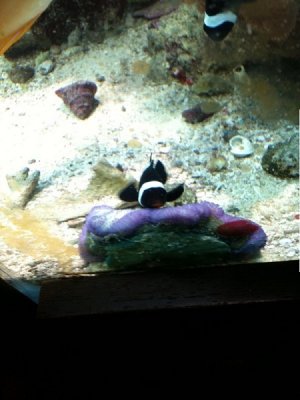
From what I have read here so far, it seems that the purple tips and the white body is an indication that the anemone is bleached and distressed. Of course it was purchased this way and we are not entrusted with the battle of bringing him back to normal. We have a pair of black clowns that have hosted the anemone and when the lights are on everyone seems happy.

I am not sure if this is a regular routine for the anemone and part of his acclimation or if it is a sign that he is heading in the right direction. Anything that you guy can recommend will be greatly appreciated.

Thanks
Leo
 
Nems may not take food when they are newly added to a tank. If it is inflating and looks healthy when lights are on, just give it time. Nems tend to deflate or shrivel when lights are off. Keep trying to feed it every 3 or 4 days, it may take awhile for it to get used to the tank

Some things that you could answer while we wait for a pic:
are your params stable? what are your params?
what lighting and equipment do you have? what lighting was it under in the LFS?
How long did the LFS have the nem before you took it home?
 
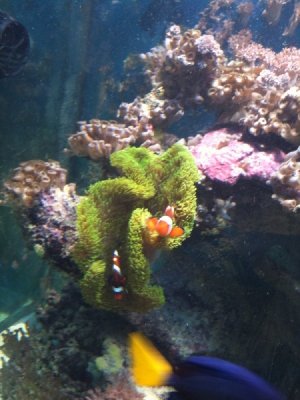
smgreencarpet1.jpg
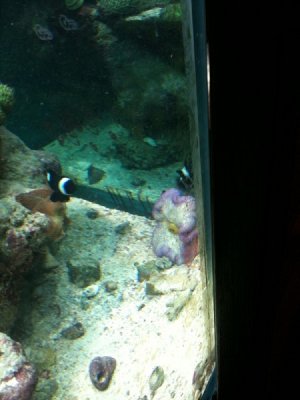
The purple anemone looks like this one

smpurpleanemone2.jpg

smpurpleanemone1.jpg
 
Nems may not take food when they are newly added to a tank. If it is inflating and looks healthy when lights are on, just give it time. Nems tend to deflate or shrivel when lights are off. Keep trying to feed it every 3 or 4 days, it may take awhile for it to get used to the tank

Some things that you could answer while we wait for a pic:
are your params stable? what are your params?
what lighting and equipment do you have? what lighting was it under in the LFS?
How long did the LFS have the nem before you took it home?

alk is about 10, calcium about 480, ph was about 8.2 with lights on. nitrates have been reduced and phosphates are about .5 (trying to get that down). I have (3) 250 watt m/h with 96 watt atinics for supplemental blues. LFS had it under m/h but not sure how many watts. not sure how long the store had it but if i had to guess probably less than a week.

Thanks for the help

Leo
 
based on your pictures

based on your pictures

and descriptions (is the green anemone yours as well?) the purple tip anemone appears to be Stichodactyla gigantea.

This species is probably the most difficult to maintain of all great host anemones- but that doesn't mean it's impossible.

Ca, alk and pH appear just fine. I would not concern yourself with lowering PO4 and nitrates at this point because water stability is most important during gigantea acclimation IMO/IME.

What is important at this time is good basic water conditions:

S.G. 1.025
temp 80F

and (very important!) water motion above and around (not directly at) this new anemone.


attachment.php


additionally: IME S. gigantea doesn't like to touch sand. If you have a nice size rock with a smooth side you might be able to get the anemone to crawl onto it by sliding it next to the anemone but (very important!) I wouldn't force the anemone to move- let it move on it's own.
 
Thank you for the reply.

the anemone appears to be attached to the back of the glass. it really has not moved "too" much around the tank. water temp is at 78 and salinity is at 1.025.

The yellow/green anemone is in the same tank as well but on the opposite side.

Any idea as to when we will be out of the woods?

Thanks

Leo
 
how long have you had the other anemone?

(if you've had it for months it's a good sign your aquarium environment is well enough to support a new healthy gigantea)

did the green anemone go through similar acclimation woes?
 
We have had the green anemone for over two years, but we have also tried to keep other anemones without success.

I don't believe the green carpet was ever bleached. When we bought the purple we thought it was a white anemone with purple tips. After reading on this forum, i realize it was not a healthy anemone and needed care.

i'll keep you guys posted and will try to put up pics later today when it is fully open.

Thanks

Leo
 
With all that light I would bet the bleached anemone can't handle it. Try placing 3 or 4 layers of window screening over that area of the tank, creating a "shadow" for him to sit in. If his mouth closes after a day or 2 that would be the problem.
 
With all that light I would bet the bleached anemone can't handle it. Try placing 3 or 4 layers of window screening over that area of the tank, creating a "shadow" for him to sit in. If his mouth closes after a day or 2 that would be the problem.
I totally disagree with this advice.

What is the lighting over this aquarium?
 
I totally disagree with this advice.

What is the lighting over this aquarium?

And I am going to totally disagree with your post.

The anemone pictured appears to be bleached and fairly stressed. Adding layers of screening to allow the anemone to get used to the lights is, IMO/E, the best course of action at this point.
 
anemones can shield themselves from "too much" lighting many ways.

Gigantea require much more light than Haddon's. Personally, I would not screen the lighting reaching this anemone. Gigantea can handle 250w and much more- indeed, the species probably requires more.
 
Gary has every right to his opinion, and I can't say the light is FOR SURE the problem, but IMO, putting a bleached anemone straight under the proper lighting for a healthy anemone is like moving a guy from the north pole to south america. Yes, he can take it and yes he may want it. But not when he first gets there. This idea is simple, and universal. It applies to all bleached anemones because the lack of color also means less abilty to process light.
 
I don't like the idea of jumping to generalizations regarding anemones- we should stay on the topic of acclimating Stichodactyla gigantea.

However, if one wants to make generalized comments I can do that too.
 
Back
Top