
You are using an out of date browser. It may not display this or other websites correctly.
You should upgrade or use an alternative browser.
You should upgrade or use an alternative browser.
Deep Sand Bed -- Anatomy & Terminology
- Thread starter Whys
- Start date

Bugcrusher
New member
Well, I don't think I'm delusional, but you never know.
I don't believe you know bacterial reproduction rates for denitrifying bacteria. Do you;or are you just assuming enough will reproduce to make up for what the cucumber eats? I think that's a reach particularly given the time it takes for denitrification cycles and anaerobic digestion to get in gear as well as a myriad of variables from tank to tank.
I'd like to see your evidence on reproductive rates for denitrifying bacteria. All in all ,I still think the fact that sea cucumbers consume beneficial bacteria is a consideration worth noting. Leaving the choice on wether or not to use one to the informed aquarist based on individual preference and the style of the particular aquarium one wishes to keep.
Bugcrusher
New member
Well, I don't think I'm delusional, but you never know.
I don't believe you know bacterial reproduction rates for denitrifying bacteria. Do you;or are you just assuming enough will reproduce to make up for what the cucumber eats? I think that's a reach particularly given the time it takes for denitrification cycles and anaerobic digestion to get in gear as well as a myriad of variables from tank to tank.
I'd like to see your evidence on reproductive rates for denitrifying bacteria. All in all ,I still think the fact that sea cucumbers consume beneficial bacteria is a consideration worth noting. Leaving the choice on wether or not to use one to the informed aquarist based on individual preference and the style of the particular aquarium one wishes to keep.
See this link: http://partsregistry.org/Help:Bacillus_subtilis/Growth. This bug is extremely prevelant, in the soil around the planet >80% isolatable. Does it denitrifying work under anaerobic conditions and is not a people, plant, or fish pathogen.
Paul and I have a problem, as our tanks are so old, we need Trilobites
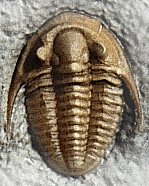
to seed ours sand beds and they are really hard to find.
Adrienne,
Do you think that is one of the exotic vacations Travelocity has in mind?
WaterKeeper, it's not just you and Paul any longer. My aquarium software says it requires 1 trilobyte for installation.
______________________
How to download wii games
How to burn Wii games
 . Now on to my second serious aquarium.... come on Craigslist!
Hi guys,
very interesting read to say the least. I am planing on having one of those 1000L IBC plastic tanks as my sump for my 900+ gal reef tank. Im just curious if any of you have tried using something like the image above as a RDSB? Its essentially a glass jar 10" high by 8" in diameter. I want to fill it with the appropriate grade of sand (C + D) upto about 6" high (since this seems the safest hight from what I've read). I could go higher though. C would be a more coarser substrate maybe an inch deep to allow water to be forced out of B.
Now from what I've read its all about faster, horizontal flow over the surface of the DSB. But since my surface area is limited here (neck of the jar is about 4" in diameter), I thought having pipes into and out of the jar like in the above image would draw-in the water (A) and sort of 'encourage' it towards the 1" surface layer. I hope im making sense so far.
'A' could be fed from a low-powered pump. I wish to have about 5 of these jars - maybe even fed through a manifold from this low-powered pump that is submerged inside the sump bath. I want them to be glass because I want to see the entire eco-system from top to bottom that establishes within.
Its almost like a reversed fluidized bed filter.
I could even experiment with different substrate in each jar down the line.
What are your thoughts?
Many thanks - neo!

Paul B
Premium Member
Paul only runs a DSB for when his "Bent Nose" friends need to "Sleep with the Fishes".
My Friends are reading this now, watch out. :lol::dance:

I don't think the deeper sand ( beyond an inch or two) of the sand in the jars will do much if any dentirification. The sand grains although small will opbstuct some flow at the surface and thus will create some advective flow up from and consequently down into the sand but not very deeply in my opinion. Consequently, without nutrieints organic carbon , nitrate, phosphate) flowing into the hypoxic /anoxic areas few if any denitrifying bacteria will live there.

EdKruzel
Premium Member
My Friends are reading this now, watch out. :lol::dance:
Paul,
I've spent my time in the owl bar and I worked around Lufthansa...
EdKruzel
Premium Member
Neodama,
An interesting thought but I don't think it would work well. In an ideal situation you want more surface area in a remote DSB than the main tank. A natural reef may look like a huge and vast area, but when you compare it to the sand mass and water around it, well then it doesn't even equate to the proverbial drop in a bucket.
Some of the most successful tanks I've seen (home or commercial) have been very simple but requiring ample space.
1. Good alternating current.
2. Over sized skimmer.
3. Sump with remote DSB larger in volume than the main system.
4. Regular water changes.
5. Evaporative replacement water with Kalkwasser.
No supplements/additives or any other fancy equipment necessary and in most cases far less maintenance.
An interesting thought but I don't think it would work well. In an ideal situation you want more surface area in a remote DSB than the main tank. A natural reef may look like a huge and vast area, but when you compare it to the sand mass and water around it, well then it doesn't even equate to the proverbial drop in a bucket.
Some of the most successful tanks I've seen (home or commercial) have been very simple but requiring ample space.
1. Good alternating current.
2. Over sized skimmer.
3. Sump with remote DSB larger in volume than the main system.
4. Regular water changes.
5. Evaporative replacement water with Kalkwasser.
No supplements/additives or any other fancy equipment necessary and in most cases far less maintenance.
Thanks Tmz and EdKruzel for the constructive reply. Tmz, I just thought that if i was to 'force' the pre-filtered water towards the DSB then it would create better chances for dentirification...compared to just an open top relying on gravity.
Ed, you are right about the surface area of the DSB surface. In point [3] you mentioned the RDSB being larger in volume than the main system. What do you mean by this?
I've been told by another reefer on an Australian forum that I should just use a plastic food-grade bucket with a 10" DSB and advective flow over the surface of the bucket.
Since I have a large 40" X 40" X 40" plastic IBC tank to use as my sump, I might just throw in 2 RDSB buckets and a couple of these RDSB jars, just for experimental purposes.
We'll see how that goes I s'pose.
Thanks again!!!
Ed, you are right about the surface area of the DSB surface. In point [3] you mentioned the RDSB being larger in volume than the main system. What do you mean by this?
I've been told by another reefer on an Australian forum that I should just use a plastic food-grade bucket with a 10" DSB and advective flow over the surface of the bucket.
Since I have a large 40" X 40" X 40" plastic IBC tank to use as my sump, I might just throw in 2 RDSB buckets and a couple of these RDSB jars, just for experimental purposes.
We'll see how that goes I s'pose.
Thanks again!!!
Forcing the water into the sand might help, if you can do that without actually fluidizing the sand which would provide an oxic environment without nitrate reduction.
The advection results from the water flow hitting an obstruction. As it does a drop in water pressure occurs under the footprint of the obstruction. This causes an upwelling and a consequent downward flow into the void left by the upwelling water. Natural reefs work this way as ocean currents slam into them and cause an upwelling of nutrient bearing water through them. The amount of advective flow generated relates to the height and size of the obstruction and the speed of the current. So just sand grains will produce much less than live rock over the sand ,for example. A sand bed with a large area exposed to horizontal flow relies less on flow penetrating the bed deeply the than does a vertical set up(deep bed).
Absent live sand channeled by fuana and minimal advective flow as in a deep bucket of sand it is hard to see how the heterotrophic bacteria's necessary nutrients( CNP) would get into the deeper sand in sufficient quantity to promote much denitrification in the deep sand . Diffusion ,molecular movement through the water would pentrates the substrate but slowly and would bring some N an P and perhaps s\dissoved organic carbon (C)but only in small amounts.
The advection results from the water flow hitting an obstruction. As it does a drop in water pressure occurs under the footprint of the obstruction. This causes an upwelling and a consequent downward flow into the void left by the upwelling water. Natural reefs work this way as ocean currents slam into them and cause an upwelling of nutrient bearing water through them. The amount of advective flow generated relates to the height and size of the obstruction and the speed of the current. So just sand grains will produce much less than live rock over the sand ,for example. A sand bed with a large area exposed to horizontal flow relies less on flow penetrating the bed deeply the than does a vertical set up(deep bed).
Absent live sand channeled by fuana and minimal advective flow as in a deep bucket of sand it is hard to see how the heterotrophic bacteria's necessary nutrients( CNP) would get into the deeper sand in sufficient quantity to promote much denitrification in the deep sand . Diffusion ,molecular movement through the water would pentrates the substrate but slowly and would bring some N an P and perhaps s\dissoved organic carbon (C)but only in small amounts.
EdKruzel
Premium Member
[3] you mentioned the RDSB being larger in volume than the main system. What do you mean by this?
Larger in volume by sand surface and possibly water volume as well. If you had a common 120gal tank the dimension would be 4'x2'x2'. The most important of that dimension is the foot print of 4'x2'; when reducing that by the amount of rock on the sand surface, another 4'x2' container as the RDSB would be slightly larger. Through my travels I've had the opportunity to observe numerous tanks of 180gals or less that used a 300gal rubbermaid trough w/6-8''s of sand. Again the majority of these systems really didn't run anything more than a good and large skimmer and rely on water changes for balance. The most notable thing about these simple systems were remarkable corals and mature healthy fish.
I've been told by another reefer on an Australian forum that I should just use a plastic food-grade bucket with a 10" DSB and advective flow over the surface of the bucket.
A friend in El Paso has a huge 1100gal system with the main display around 600gals. He had done exactly what you've wrote above and after taking them off line he didn't see any changes in water quality or nutrient reduction (or lack there of).

elegance coral
They call me EC
Fauna and micro fauna are the life lines to a successful DSB and these creatures (Gobies, Wrasse & Hermits etc...) will wipe them out in even the largest home aquariums in a relatively short amount of time.
What benefit does "fauna" have for a sand bed, or tank in general, other than providing recycled food for pets like gobies, wrasses, and hermits? The "micro fauna" is self explanatory. We couldn't realistically get by without micro fauna like nitrobacter. Larger organisms like pods and worms simply add load to the tank like any other pet we add. I guess you could say, pods that eat algae can be beneficial by converting benthic algae into free floating fecal pellets that can then be removed by filtration. The net benefit from such a process is arguable at best though. Within a sand bed, where there is no light, and no algae, I see very little benefit to having large populations of fauna. In fact, IMHO, the presents of large populations of detritivores is evidence of large amounts of detritus. In other words, the system is becoming a compost pile, or sewer system, and is in desperate need of a good spring cleaning.
Last edited:
EdKruzel
Premium Member
EC,
I'm sorry but you couldn't be more wrong. I will agree that if you have plague like proportion of critters, than you certainly have too much food in the system.
Other than that, there must be pods, worms and other fauna in the system to make the DSB function and remain maintenance free.
Here is a portion of information from Dr Ron Shimek's website on a DSB:
Rapid bacterial growth rates only occur without competition for space or nutrients. As the bacterial populations fill in all the open spaces growth slows and may stop altogether. Some bacteria also secrete a exterior covering called a "glycocalyx." These glycocalices are made of a hard sugar-like material similar in consistency to rock candy. Rapid bacterial growth may produce so enough of this material to glue sediments together. These sediment lumps may be glued so tightly together that hammering is needed to break them apart. In much reef literature, these lumps are said to be caused by calcium carbonate or calcium phosphate precipitation. Such mineral precipitation is rare; if a small sediment lump is placed in a weak solution of household chlorine bleach, it breaks down to the component sediment grains in a short time. If the lumps were formed from the calcium salts, they would not dissociate in the bleach.
Lump formation is a disaster for the biological filter. The lumps restrict water flow and trap organic material where it can rot. Additionally, lump formation shuts down the biological filter by covering the bacteria and preventing them from metabolizing nutrients. This, in turn, causes the tank nutrient levels to skyrocket.
Fortunately, prevention of sediment clumping and the simultaneous maintenance of optimal biological filter operation is easily done by the establishment of a healthy and diverse sediment dwelling fauna, or "infauna." The infauna, so-called as the FAUNA lives IN the sediments, is a very diverse array group of wonder-working organisms. Unfortunately, they are small, and are not particularly attractive. Like Rodney Dangerfield, "They don't get no respect." And, that is a pity, as they do most of the work in keeping any reef tank functional.
The infauna are "the clean-up crew" and the "reef-janitorial" staff, and the array found in a successful tank may be DIVERSE! More than 200 different species commonly are found living in a mature sand bed. These include many types of flatworms, round worms, dozens of species of bristle worms, small snails, brittle stars, small sea cucumbers, protozoans, and many types of small crustaceans. The total populations may be immense. I have done sampling to measure the abundances found in the 45 gallon tank I mentioned earlier, and the number of animals larger than half a mm, or about one fiftieth of inch, in that tank ranges from 90,000 to 150,000 depending on what part of their population cycle the various species are in.
What does this diverse and abundant array of critters do for and in the sand bed? Well, some will eat excess food, detritus, or algae. In doing so, they utilize it, and excrete part of it as waste. In turn, bacteria utilize that, and thus the infauna help keep the biological filter going. Additionally, many infaunal animals burrow ingesting some sediments as they go. They digest the microorganisms off of them, opening space for bacteria to grow.
By moving through sediments, the animals jostle and move the particles. Not much, just a little tiny bit. It has been estimated that each day each small organism moves about 10 to 100 cubic millimeter of sediment. Multiplying this tiny average amount of jostling by the number of animals in the tank gives the total amount of disturbance. In my 45 gallon tank, with an average population of about 100,000 small animals, from one to ten million cubic millimeters of sediment is moved each day! Or phrased another way, the entire tank's sediment volume could be completely turned over at least once every three to thirty days. With this amount of jostling and sediment eating, sediment clumping the sediments will simply not occur.
Consequently, excess food is eaten and disposed of or recycled as animal or algal flesh, and that the biological filter is maintained in the best of condition. And, best of all you, as the aquarist, didn't have to do anything. The animals did it all for you. All you had to do was to sit back, and enjoy a healthy tank. And, yes, I know it was a dirty job, but somebody had to do it...
Here is a link to the full article and the rest of his site:
http://www.ronshimek.com/deep_sand_beds.html
I'm sorry but you couldn't be more wrong. I will agree that if you have plague like proportion of critters, than you certainly have too much food in the system.
Other than that, there must be pods, worms and other fauna in the system to make the DSB function and remain maintenance free.
Here is a portion of information from Dr Ron Shimek's website on a DSB:
Rapid bacterial growth rates only occur without competition for space or nutrients. As the bacterial populations fill in all the open spaces growth slows and may stop altogether. Some bacteria also secrete a exterior covering called a "glycocalyx." These glycocalices are made of a hard sugar-like material similar in consistency to rock candy. Rapid bacterial growth may produce so enough of this material to glue sediments together. These sediment lumps may be glued so tightly together that hammering is needed to break them apart. In much reef literature, these lumps are said to be caused by calcium carbonate or calcium phosphate precipitation. Such mineral precipitation is rare; if a small sediment lump is placed in a weak solution of household chlorine bleach, it breaks down to the component sediment grains in a short time. If the lumps were formed from the calcium salts, they would not dissociate in the bleach.
Lump formation is a disaster for the biological filter. The lumps restrict water flow and trap organic material where it can rot. Additionally, lump formation shuts down the biological filter by covering the bacteria and preventing them from metabolizing nutrients. This, in turn, causes the tank nutrient levels to skyrocket.
Fortunately, prevention of sediment clumping and the simultaneous maintenance of optimal biological filter operation is easily done by the establishment of a healthy and diverse sediment dwelling fauna, or "infauna." The infauna, so-called as the FAUNA lives IN the sediments, is a very diverse array group of wonder-working organisms. Unfortunately, they are small, and are not particularly attractive. Like Rodney Dangerfield, "They don't get no respect." And, that is a pity, as they do most of the work in keeping any reef tank functional.
The infauna are "the clean-up crew" and the "reef-janitorial" staff, and the array found in a successful tank may be DIVERSE! More than 200 different species commonly are found living in a mature sand bed. These include many types of flatworms, round worms, dozens of species of bristle worms, small snails, brittle stars, small sea cucumbers, protozoans, and many types of small crustaceans. The total populations may be immense. I have done sampling to measure the abundances found in the 45 gallon tank I mentioned earlier, and the number of animals larger than half a mm, or about one fiftieth of inch, in that tank ranges from 90,000 to 150,000 depending on what part of their population cycle the various species are in.
What does this diverse and abundant array of critters do for and in the sand bed? Well, some will eat excess food, detritus, or algae. In doing so, they utilize it, and excrete part of it as waste. In turn, bacteria utilize that, and thus the infauna help keep the biological filter going. Additionally, many infaunal animals burrow ingesting some sediments as they go. They digest the microorganisms off of them, opening space for bacteria to grow.
By moving through sediments, the animals jostle and move the particles. Not much, just a little tiny bit. It has been estimated that each day each small organism moves about 10 to 100 cubic millimeter of sediment. Multiplying this tiny average amount of jostling by the number of animals in the tank gives the total amount of disturbance. In my 45 gallon tank, with an average population of about 100,000 small animals, from one to ten million cubic millimeters of sediment is moved each day! Or phrased another way, the entire tank's sediment volume could be completely turned over at least once every three to thirty days. With this amount of jostling and sediment eating, sediment clumping the sediments will simply not occur.
Consequently, excess food is eaten and disposed of or recycled as animal or algal flesh, and that the biological filter is maintained in the best of condition. And, best of all you, as the aquarist, didn't have to do anything. The animals did it all for you. All you had to do was to sit back, and enjoy a healthy tank. And, yes, I know it was a dirty job, but somebody had to do it...
Here is a link to the full article and the rest of his site:
http://www.ronshimek.com/deep_sand_beds.html
Paul B
Premium Member
In fact, IMHO, the presents of large populations of detritivores is evidence of large amounts of detritus. In other words, the system is becoming a compost pile, or sewer system, and is in desperate need of a good spring cleaning.
OMG, I better start cleaning out my 40 year old gravel, I have herds of things running around in there, some of them are probably older than many members here. Maybe I will use my shop Vac :worried:
elegance coral
They call me EC
EC,
I'm sorry but you couldn't be more wrong. I will agree that if you have plague like proportion of critters, than you certainly have too much food in the system.
What would it take for a population to be considered "plaque"? The quote you posted below describes over 200 different species and 90 to 150 thousand individual animals in the sand of a 45 gallon tank. It takes an awful lot of rot and filth to support such huge numbers.
Here is a portion of information from Dr Ron Shimek's website on a DSB:
Shemik's methods defy logic, nature, and physics. The world around us simply does not function the way he would have us believe. Unfortunately, life below the waves is so alien to us that it's easy for authors. like Shemik, to convince hobbyists, that the laws of nature, simply don't apply under water. This is simply wrong. The fundamental laws of nature that we deal with here on land, are the same fundamental laws that life must abide by in our oceans. I know of no other article for the marine aquarium that is as grossly flawed as Shemik's DSB article.
The infauna are "the clean-up crew" and the "reef-janitorial" staff,
Hotels have "clean-up crews" and "janitorial staff". Their job is not complete until they take out the trash. If they don't remove the garbage, they are simply moving it around within the hotel, and the hotel remains filthy. The "infauna" never leave the tank. It is impossible for them to take out the trash, if they never leave. All they can do is move the trash around. (simple physics) If you add something, like food, to a container, it will always be in that container until it is removed. In the case of food, it may be divided into its individual components, these components may bind and react with other components, but the food will always be in the system, in one form or another, until it is removed. These critters do not clean sand beds. They poo in it.
Consequently, excess food is eaten and disposed of
Where? They live and feed in the sand. Where do they go to "dispose" of this excess food? The truth is, they don't "dispose" of it. They simply poo it right back into the sand where they got it from.
elegance coral
They call me EC
OMG, I better start cleaning out my 40 year old gravel, I have herds of things running around in there, some of them are probably older than many members here. Maybe I will use my shop Vac :worried:
Paul, I love your tank. It is as unique and interesting as your style of writing. Would I consider it an accurate representation of a pristine tropical coral reef? No. I don't believe that is what you were shooting for in the first place though. We can run many different, and very interesting, systems under the title of "reef tank". Most hobbyists, especially here in the new to the hobby forum, strive to avoid algae. It is welcome in your tank. One of the largest sources of algae nutrients is detritus. Where there are large numbers of detritivores, there must be large amounts of detritus. For those attempting to support delicate stony corals, coraline algae, and very little algae of other kinds, nutrient control is very important. "Herds of things running around in there", especially with a healthy populations of predators like fish, is a very clear sign that nutrient levels are likely to interfere with such a goal.
Similar threads


- Replies
- 4
- Views
- 638
