
You are using an out of date browser. It may not display this or other websites correctly.
You should upgrade or use an alternative browser.
You should upgrade or use an alternative browser.
Dinoflagellates.
- Thread starter DNA
- Start date
There are many species of dinos and all of them have to be set into the aquarium. Some are almost "natural" and can coexist, while there are other that can play havoc if present (such as ostreopsis, gambierdiscus...). Some can develop toxic substances and many others are just banal.
I agree with Amohiprium: algal growth discourages most dinoflagellate species. That's a fact I am very accustomed to with my ostreopsis and amphidinum issues.
But now I think I am close to an ultimate solution: I found a natural parasite that is cleaning my tanks and my buddies ones flawlessly.
But now I think I am close to an ultimate solution: I found a natural parasite that is cleaning my tanks and my buddies ones flawlessly.
Please shareI agree with Amohiprium: algal growth discourages most dinoflagellate species. That's a fact I am very accustomed to with my ostreopsis and amphidinum issues.
But now I think I am close to an ultimate solution: I found a natural parasite that is cleaning my tanks and my buddies ones flawlessly.
How did you obtain parvilucifer?I would but I live in Madrid, Spain. The parasite is parvilucifera, and can rid a lot of dino species in about two weeks.

DNA
New member
Even if there would be a complete suceess with parvilucifera we would have to wait at least 3 months to see if cysts will recontaminate the tank.
At that point the parasite could be extinct and dinos free again to rule the tank.
I've got hopes for this parasite, it's the best new method I've seen in a long time.
Perhaps it's the absence of it that causes dino blooms.
If I speculate a bit further, we have still not found out what causes blooms in our tanks and don't know what the favorable conditions are so even if 99.99% of them die the conditions remain favorable.
Since there are millions of dinos in an infested tank a parasite would have a hard time finding them all.
---
Budman, identify your dinos and go from there.
Your new live rock plan could be helpful.
At that point the parasite could be extinct and dinos free again to rule the tank.
I've got hopes for this parasite, it's the best new method I've seen in a long time.
Perhaps it's the absence of it that causes dino blooms.
If I speculate a bit further, we have still not found out what causes blooms in our tanks and don't know what the favorable conditions are so even if 99.99% of them die the conditions remain favorable.
Since there are millions of dinos in an infested tank a parasite would have a hard time finding them all.
---
Budman, identify your dinos and go from there.
Your new live rock plan could be helpful.
DNA
New member
I could not replace my carbon after 4 weeks as usual and my SPS corals took the fast route south with tissue necrosis in week 6, just like last year.
As soon as I could do the maintenance it stopped.
I'd think this is an indicator to the tolerance levels of my corals to the palytoxins.
As soon as I could do the maintenance it stopped.
I'd think this is an indicator to the tolerance levels of my corals to the palytoxins.
https://vimeo.com/119978348
Can someone help identify if these are Dino's?
They are strands coming off of the zoas, a little difficult to see but they are redish/brownish in color.
Can someone help identify if these are Dino's?
They are strands coming off of the zoas, a little difficult to see but they are redish/brownish in color.
Montireef, It is interesting that you have been able to put a name to the protozoa. How were you able to identify the parasite to this genus?
Any negative effects on your corals? I am just curious if the parasite poses any risks to the symbionts in the coral tissue.
Dennis
I didn't have to id this little 2um critter, as it was given to me by a specialized lab in Spain. Ostreopsis and other dinoflagellates have been playing havoc since the last two decades, and thus we have many investments in this area.
Ostreopsis completely gone in less than two weeks, no effect on fishes or inverts (and I have about 400 SPSs corals)

karimwassef
Active member
Who is "we" and which lab is this?
I would say, they are. Your zoos are puking a kind of dinoflagellate called zooxanthela.
Maybe because they are getting a strong light.
I know what you're talking about but I don't think that's the case as I have a few strands here and there else where in the tank. It's nothing you would notice unless you looked extremely closely but it worries me now.
It happens in healthy tanks like when you rub against corals and such.
Don't worry about it unless it gets obvious, with brown mats or lots of strings.
Well that's part of it is that I did get obvious. I blacked out for 72 hours (this must have been 3 weeks ago) then went just actinics for a week and now full lighting. As soon as I originally turned the lights back on I started getting turf or hair algae. And now I'm starting to notice some of this.
Even if there would be a complete suceess with parvilucifera we would have to wait at least 3 months to see if cysts will recontaminate the tank.
At that point the parasite could be extinct and dinos free again to rule the tank.
I've got hopes for this parasite, it's the best new method I've seen in a long time.
Perhaps it's the absence of it that causes dino blooms.
If I speculate a bit further, we have still not found out what causes blooms in our tanks and don't know what the favorable conditions are so even if 99.99% of them die the conditions remain favorable.
Since there are millions of dinos in an infested tank a parasite would have a hard time finding them all.
---
Budman, identify your dinos and go from there.
Your new live rock plan could be helpful.
I agree. We have to be cautious.
The good news is that this parasite also kills the thecate and non thecate cysts (pellicles). Taken from our scientists studies:
"Pellicle (asexual )cysts,were not long term resistant to parasite infection,since their presence was not observed in the infected cultures after all mobile stages had been killed (5"“7days after infection)."
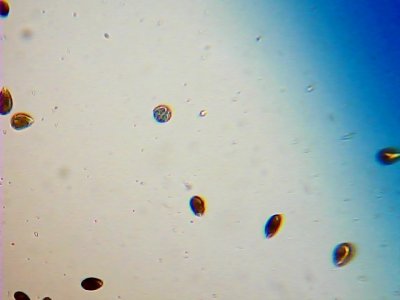
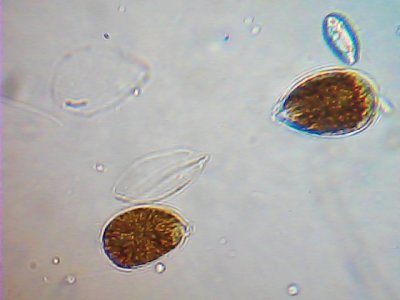
In the pictures you can see an infected round cell amongst many healthy ostreopsis cells and two ostreopsis cells that have lost their theca.
Attachments
Similar threads

- Replies
- 74
- Views
- 857


