I was where you are, lose the sand bed, it's helping the dinos hold on. IMO and IMEI know how you feel BillyBatz. Nothing more frustrating than this!!
Thankfully as hoped my cyano has started to tail off. Right now I'm seeing a really cool green algae grow in my tank, not take over. Im assuming this green algae is helping keep the tank in balance?
Here you can see both the cyano and green algae in one shot. I think this is all part of the process to establish and healthy balance of life in my tank:


You are using an out of date browser. It may not display this or other websites correctly.
You should upgrade or use an alternative browser.
You should upgrade or use an alternative browser.
Dinoflagellates.
- Thread starter DNA
- Start date


jason2459
Well-known member
Looks like that to me to or at least a combo with cyano in there.Looks more like cyano? Did you look through a microscope?
I'm almost tempted to blow this off and see if it comes back. It's looking very pathetic. But I think I'll let it sit longer and consume what ever its taking in and die off. It's looking extremely pathetic now.

jason2459
Well-known member
Dinos are looking to be on their way out.
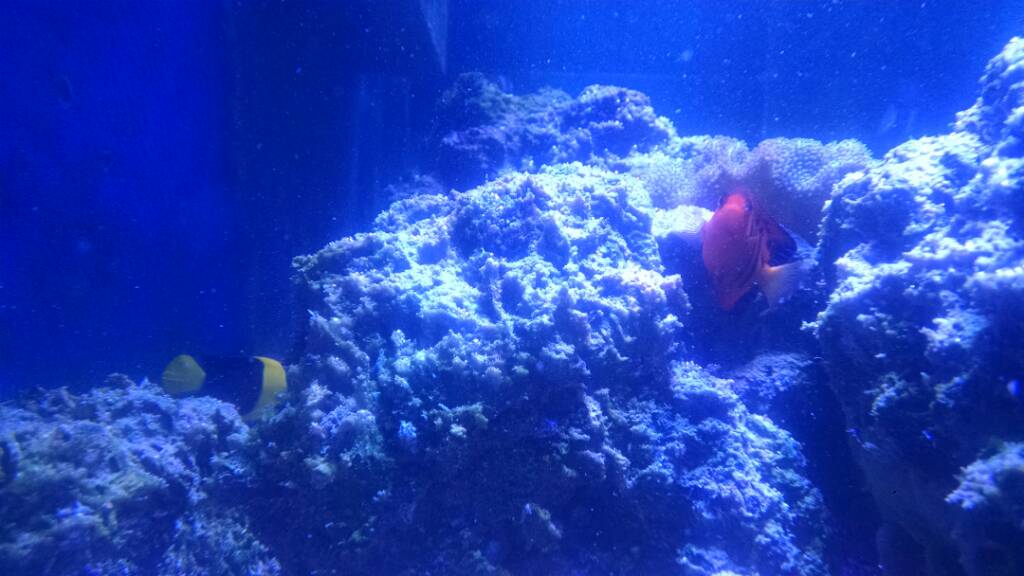
Latest parameters taken here
http://www.reefcentral.com/forums/showthread.php?t=2541190
Latest parameters taken here
http://www.reefcentral.com/forums/showthread.php?t=2541190

Quiet_Ivy
New member
Cyanobacteria building up on rock work (probably from over feeding). Did water change because of nitrates, and boom! Dino explosion all on sandbed. Any recommendations?
The dino explosion's not surprising. Feel free to blame me. (I figured the high ammonia with no obvious source might get worse and is a problem to all your critters while your dinos aren't immediately toxic as you've had ongoing issues with them.) Did your ammonia drop? I don't change my filter socks at all, but mine aren't 10 micron.
I'm not making fun of you; my tank's N and P crashed and I'm back at the beginning with a lot of dinos. It is crazy-making to not have an enjoyable tank when one is trying to do things right.
Re the dirty method, you're already doing it if your nitrates were that high. What's your phosphate? I have mostly lps and they actually look better after a few weeks of measurable nitrate. Monti caps and my 2 unknowns too.
@bheron Your tank continues to rebalance, I'm glad to see it.
@jason that stuff is definitely dying off!
ivy

Jewilson83
New member
Can someone help please. I wasn't sure if I had Dino or not. It only grows on my rocks and coral plugs. I've had some SPS frags die from it over growing on their plugs and causing them to recede. It doesn't have the bubbles on the plugs. More like brown fuzz. Here's some pics:


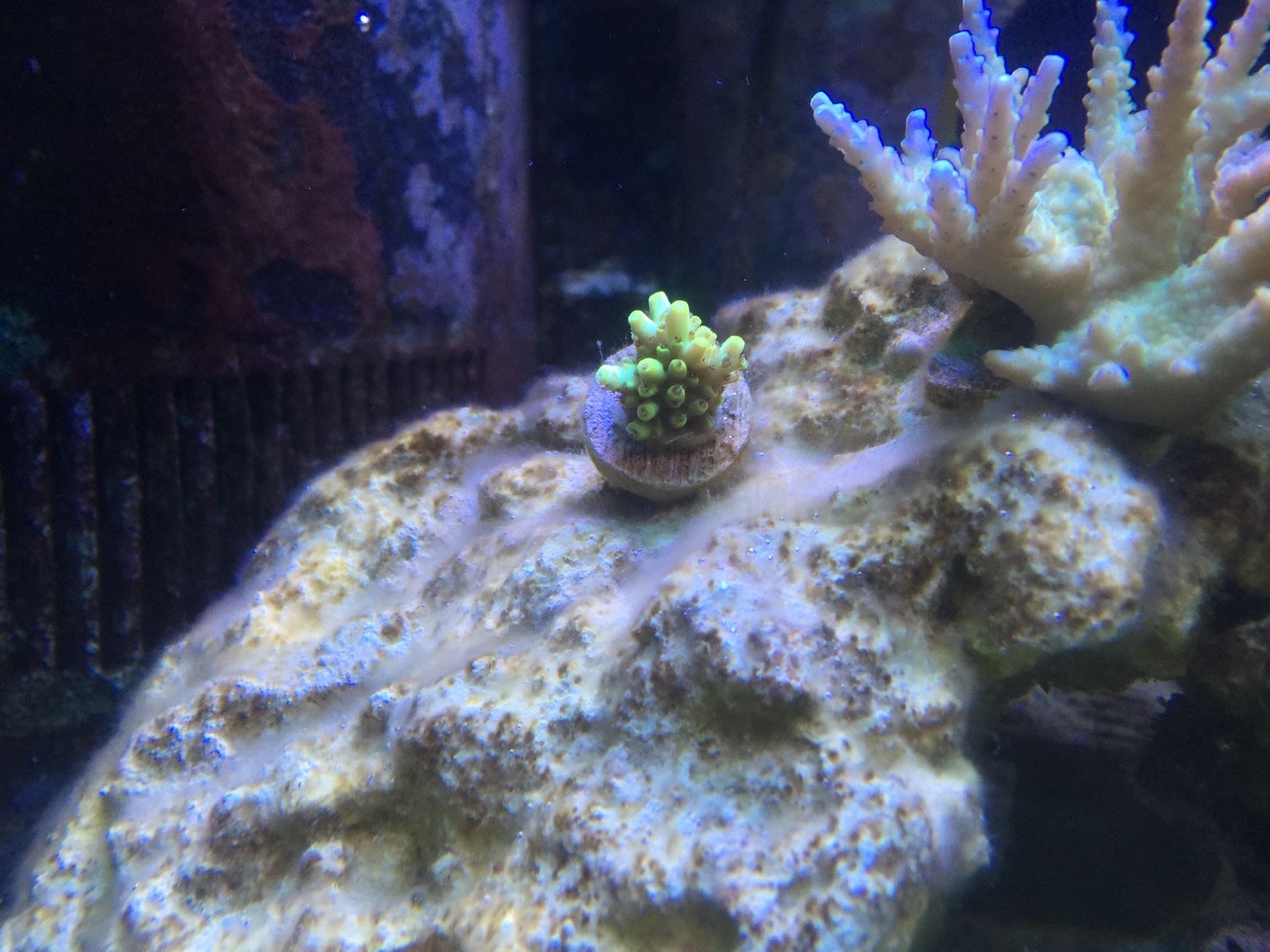


I've tried lights out for 72 hours and it stopped the growth, only to come right back. I've try peroxide 1ml per 10 gallons 2xdaily for the past week. I'm not sure what it could be. I greatly appreciate your help.
I've tried lights out for 72 hours and it stopped the growth, only to come right back. I've try peroxide 1ml per 10 gallons 2xdaily for the past week. I'm not sure what it could be. I greatly appreciate your help.

karimwassef
Active member
does it blow off or does it take a little rubbing?
Jewilson83
New member
does it blow off or does it take a little rubbing?
It takes rubbing. I have to use a toothbrush. Some areas I can blow off with a turkey baster.
karimwassef
Active member
if it blows off, then it's dinos or cyano.
If you can to rub it off with a toothbrush, it's probably brown hair algae?
If you can to rub it off with a toothbrush, it's probably brown hair algae?
Billybatz9
New member
I was going to do water change anyways. Didn't ant ammonia killing everyhing. Nitrates were high too. My hands were tied. But the dinos are crazy of how much these water changes affect them. It sucks. I wish my cyan would grow on sand, not rocks. But oh well. I'll continue with dirty methodThe dino explosion's not surprising. Feel free to blame me. (I figured the high ammonia with no obvious source might get worse and is a problem to all your critters while your dinos aren't immediately toxic as you've had ongoing issues with them.) Did your ammonia drop? I don't change my filter socks at all, but mine aren't 10 micron.
I'm not making fun of you; my tank's N and P crashed and I'm back at the beginning with a lot of dinos. It is crazy-making to not have an enjoyable tank when one is trying to do things right.
Re the dirty method, you're already doing it if your nitrates were that high. What's your phosphate? I have mostly lps and they actually look better after a few weeks of measurable nitrate. Monti caps and my 2 unknowns too.
@bheron Your tank continues to rebalance, I'm glad to see it.
@jason that stuff is definitely dying off!
ivy
Hello dear fellows, small update from me: I'm continuing with the dirty method. I'm feeding unwashed frozen artemia twice a day. Never did a water change since the outbreak (month ago).
There are now "nice" amounts of green algae on the tank glass. Microfauna has recovered so far, there are lots of bristle worms (even small ones), Gammarus and isopods. All these little buggers are feeding on the green algae and accidentally feeding on the there growing dinos too. Snails beginning to breed again there are snail eggs on the glass. The dinos have been influenced by all this, they have completely disappeared from the live rocks. The overall amounts of dinos are not increasing, surfaces that has been cleaned, stay clean. There are dinos on the water surface and on the powerheads.
Did someone else noticed that anemones like RBTA and Condylactis gigantea are shrinking due the outbreak and dirty treatment? Especially the condy doesn't looks good, tentacles are very short and it looks whitish . All over corals are expanded and are looking quite healthy.
Sincerely, Dennis
There are now "nice" amounts of green algae on the tank glass. Microfauna has recovered so far, there are lots of bristle worms (even small ones), Gammarus and isopods. All these little buggers are feeding on the green algae and accidentally feeding on the there growing dinos too. Snails beginning to breed again there are snail eggs on the glass. The dinos have been influenced by all this, they have completely disappeared from the live rocks. The overall amounts of dinos are not increasing, surfaces that has been cleaned, stay clean. There are dinos on the water surface and on the powerheads.
Did someone else noticed that anemones like RBTA and Condylactis gigantea are shrinking due the outbreak and dirty treatment? Especially the condy doesn't looks good, tentacles are very short and it looks whitish
. All over corals are expanded and are looking quite healthy.Sincerely, Dennis
Billybatz9
New member
Any recommendations

Billybatz9
New member
Anyone ever use cuprisorb for dinoflagellate problem
karimwassef
Active member
why would copper have a role here?
Billybatz9
New member
why would copper have a role here?
Just researched and came across this thread
http://166.78.194.236/forums/showthread.php?t=2395870
jason2459
Well-known member
Just researched and came across this thread
http://166.78.194.236/forums/showthread.php?t=2395870
All I got out of that was the potential to use other methods and it wont hurt to try. Which, it would not hurt to try. Polyfilter then should work as well. However, if it was coper or iron I have my doubts that cuprisorb, polyfilter, or any media that absorbs heavy metals would work especially in the long run.
That is if we can trust Tritons results which detected no heavy metals with in their limits of detection in my system at the same time I was experiencing the dinos blooming. I'll have a second round of triton test results back again soon at the same time the dinos were in full bloom.
So, if they need a very small trace amount under what Triton could detect and if cuprisorb could possibly remove that very small trace amount of what ever heavy metal the dinos consume like iron then you would be fighting a loosing battle. As all saltmixes, including ocean saltwater, and the food you feed has very small trace amounts of those heavy metals. In fact that's a good thing as they are necessary. Even copper is used but only at very small trace amounts.
Also, I just started dosing iron about a week ago to help feed my turf scrubber. The past week my dinos have been dying back. If they really wanted Iron they should be getting strong now that I'm dosing it.
karimwassef
Active member
Sounds like coincidence more than causation on the cuprisorb... IMO
mathman7728
New member
use chemiclean first (wonder if the stuff on the sand is cyno), then go with dirty method as described in this thread

DNA
New member
We agree on that dinos can be brought in by treatments, events and mistakes.
At first glance it seems like we are removing something that suppresses dinos, but what is it?
Microfauna, bacteria, plankton, chemical or nutrient balance or something else?
In a closed system like our tanks a decimated organism is simply gone for good while in the ocean the currents keep the organic soup mixed.
None of us has gone all the way in replacing the microfauna and small changes do only good temporarily.
Someone with a small tank is an excellent candidate for this. New live sand and live rock and water from the ocean is what I have in mind.
.
It is close to half a year since I added 80 pounds of live rock and now I'm seeing a decline in my SPS corals, just like I predicted.
I've seen it so many times it was simply inevitable. Only this time it took a bit longer than usual.
During this period I saw corals that were long dead come back to live and it only took a week for things to improve from when the rock was added.
About half of corals, this condition brings down, escape with a few polylps and a small hope for a recovery.
.
Since I restarted the tank around two years ago my SPS are dead or doing really poorly while a single head of hammer coral has grown to the size of a basketball.
Another strange thing is that Turbinaria and Acroporas take turn in growing well. While one grows the other declines.
Peace - DNA
At first glance it seems like we are removing something that suppresses dinos, but what is it?
Microfauna, bacteria, plankton, chemical or nutrient balance or something else?
In a closed system like our tanks a decimated organism is simply gone for good while in the ocean the currents keep the organic soup mixed.
None of us has gone all the way in replacing the microfauna and small changes do only good temporarily.
Someone with a small tank is an excellent candidate for this. New live sand and live rock and water from the ocean is what I have in mind.
.
It is close to half a year since I added 80 pounds of live rock and now I'm seeing a decline in my SPS corals, just like I predicted.
I've seen it so many times it was simply inevitable. Only this time it took a bit longer than usual.
During this period I saw corals that were long dead come back to live and it only took a week for things to improve from when the rock was added.
About half of corals, this condition brings down, escape with a few polylps and a small hope for a recovery.
.
Since I restarted the tank around two years ago my SPS are dead or doing really poorly while a single head of hammer coral has grown to the size of a basketball.
Another strange thing is that Turbinaria and Acroporas take turn in growing well. While one grows the other declines.
Peace - DNA
karimwassef
Active member
I think we also connected the dinos to bacteria.
So, depending on who's winning the bacterial war, that may influence the ability of dinos to gain ground.
I don't know if there's a bacterial strain that stacks the odds in our favor.
Have we tried nuking with antibacterial (erythromycin) and/or antiseptics (hydrogen peroxide) and then adding a heavy cocktail of bacteria from known sources (Fritz TurboStart 900, Safestart, MicroBacter, Cycle, BioSpira, Colony, Stability, TSS, etc...)?
It would certainly take out the red slime, but the unknown consequences (side effects) could (& probably would) wreck the tank. The biggest hit would be to non-nitrifying coral-biome bacteria that wouldn't come from a bottle.
If it's do or die...
So, depending on who's winning the bacterial war, that may influence the ability of dinos to gain ground.
I don't know if there's a bacterial strain that stacks the odds in our favor.
Have we tried nuking with antibacterial (erythromycin) and/or antiseptics (hydrogen peroxide) and then adding a heavy cocktail of bacteria from known sources (Fritz TurboStart 900, Safestart, MicroBacter, Cycle, BioSpira, Colony, Stability, TSS, etc...)?
It would certainly take out the red slime, but the unknown consequences (side effects) could (& probably would) wreck the tank. The biggest hit would be to non-nitrifying coral-biome bacteria that wouldn't come from a bottle.
If it's do or die...
Last edited:
Similar threads

- Replies
- 61
- Views
- 671


