
You are using an out of date browser. It may not display this or other websites correctly.
You should upgrade or use an alternative browser.
You should upgrade or use an alternative browser.
Dinoflagellates.
- Thread starter DNA
- Start date


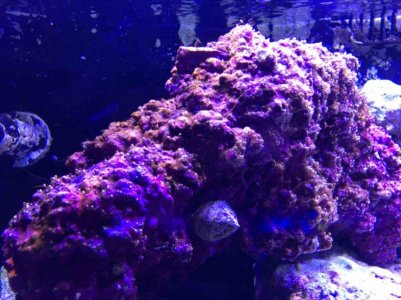
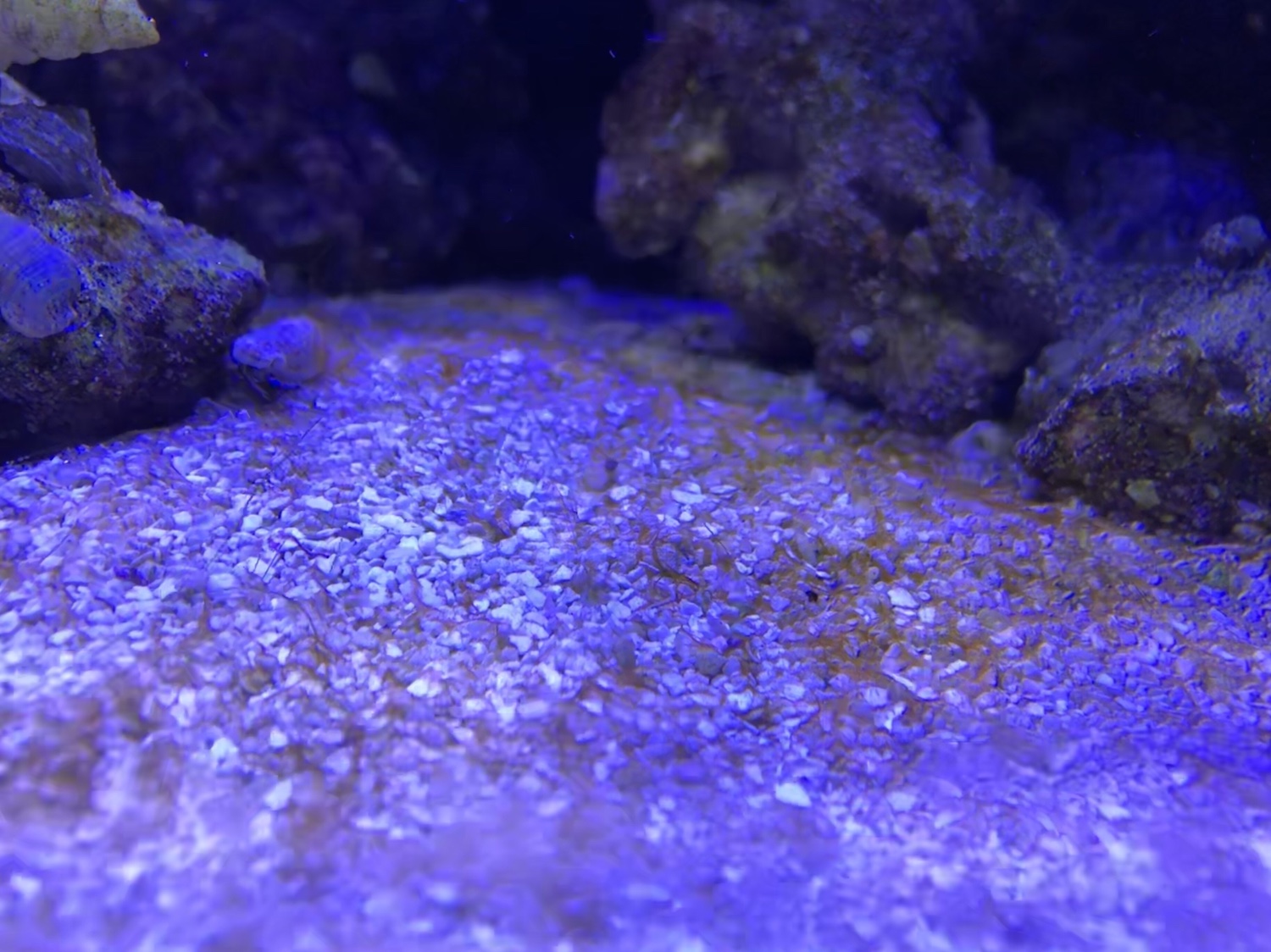
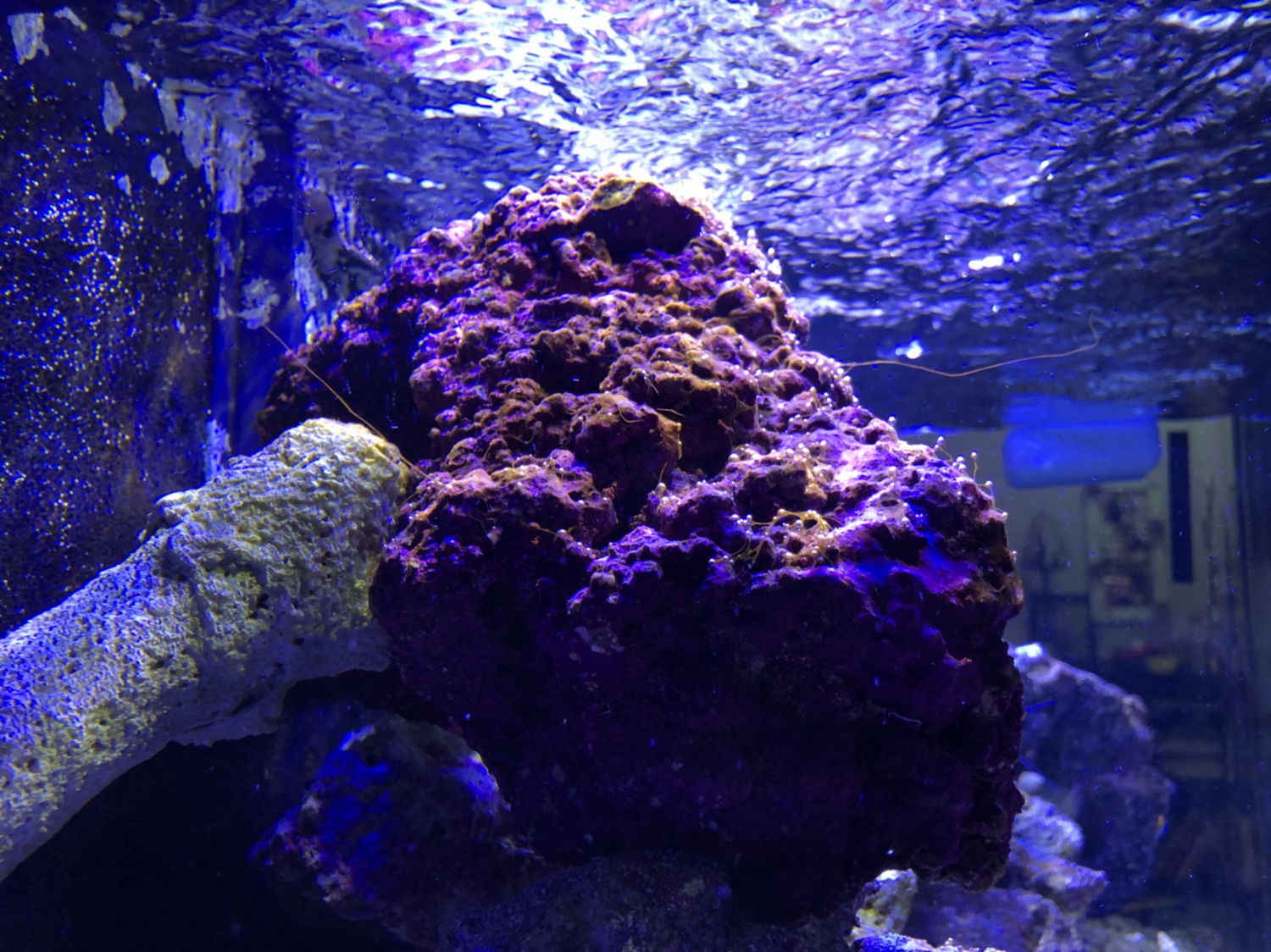
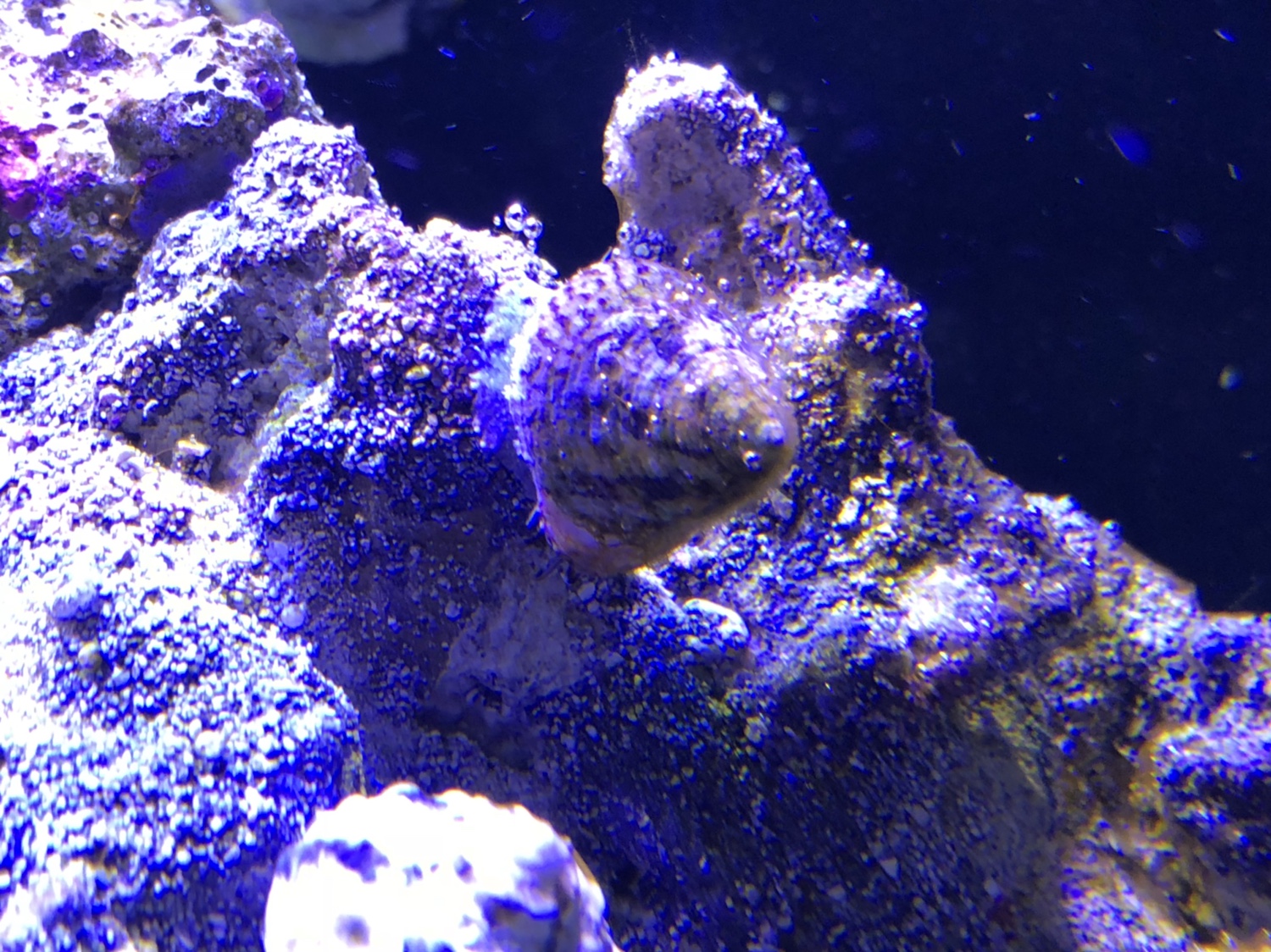

Are these pictures showing dinoflagellates?
Are these pictures showing dinoflagellates?
CLJ94104:
The picture of the rock does look like dinoflagellates. To be sure, you might want to go ahead and treat the tank for cyanobacteria. I prefer using chemiclean and you can even use it at less than full strength with good results in a reef tank. I have used it at half the normal dosage but in this case I would use 75% the normal dosage for 1 week, then hit the protein skimmer to get it all out. Make sure you treat the tank with the UV and skimmer off for 1 week. After a few days, a strong skimmer should have removed most of the chemiclean. It really makes the skimmer foam up when you first turn it back on so your skimmer will overflow if not dialed back down.
Also I have a friend who had rock very similar in appearance to yours in his 600 gallon reef. He went out and bought a bunch of turbo snails. He bought various kinds and they really did the trick in mowing the stuff down.
Good luck!
Are these pictures showing dinoflagellates?
CLJ94104:
The picture of the rock does look like dinoflagellates. To be sure, you might want to go ahead and treat the tank for cyanobacteria. I prefer using chemiclean and you can even use it at less than full strength with good results in a reef tank. I have used it at half the normal dosage but in this case I would use 75% the normal dosage for 1 week, then hit the protein skimmer to get it all out. Make sure you treat the tank with the UV and skimmer off for 1 week. After a few days, a strong skimmer should have removed most of the chemiclean. It really makes the skimmer foam up when you first turn it back on so your skimmer will overflow if not dialed back down.
Also I have a friend who had rock very similar in appearance to yours in his 600 gallon reef. He went out and bought a bunch of turbo snails. He bought various kinds and they really did the trick in mowing the stuff down.
Good luck!

xabo
Premium Member
Contacted a LFS to see if they had Dino X and of course they didn't. The owner recommended I try https://www.payless-petproducts.com/fluconazole200.html. I've read that it's good for Bryopsis and Hair Algae. any one have any experience using on Dinos?

five.five-six
Well-known member
I’m just here to share a really effective tool at least for my strain of Dino’s. Give it a try
If those are indeed Dino's which they appear to be -- it is a long tough battle. No chemicals on the market will treat it. Chemicals only make the situation worse causing so many other issues throwing the eco system out of balance. The only treatment that seems to make a dent is elevating N03 & P04 levels along with pulling out your sand bed. A UV works depending on which strain of dino you have.
If your N & P levels are zero i would start by boosting up those levels. Avoid chemicals if at all possible. Just my $0.02
If your N & P levels are zero i would start by boosting up those levels. Avoid chemicals if at all possible. Just my $0.02
If i were a betting man....and i am....the dinos will be back. Especially if you have a sand bed. Dinos have a way of forming a protective barrier and hiding to wait out the bad times (chemicals) and come out a visit when the time is right.
Ive had the dinos receed for several months after chemical treatments and then out of nowhere the dinos blow up once the N & P levels bottom out.
If you beat it with dino x....thats great and your the first person ive met who beat dinos with this product.
Ive had the dinos receed for several months after chemical treatments and then out of nowhere the dinos blow up once the N & P levels bottom out.
If you beat it with dino x....thats great and your the first person ive met who beat dinos with this product.
five.five-six
Well-known member
If those are indeed Dino's which they appear to be -- it is a long tough battle. No chemicals on the market will treat it. Chemicals only make the situation worse causing so many other issues throwing the eco system out of balance. The only treatment that seems to make a dent is elevating N03 & P04 levels along with pulling out your sand bed. A UV works depending on which strain of dino you have.
If your N & P levels are zero i would start by boosting up those levels. Avoid chemicals if at all possible. Just my $0.02
Imo, that's absolutly true except i kept my sandbed.
Added O3 2 hrs a night
Started feeding a LOT MORE
Exported tons of those buggers siphoning those little buggers into the dino trap in my video above
Gone in about 2 weeks.
five.five-six
Well-known member
If i were a betting man....and i am....the dinos will be back. Especially if you have a sand bed. Dinos have a way of forming a protective barrier and hiding to wait out the bad times (chemicals) and come out a visit when the time is right.
Ive had the dinos receed for several months after chemical treatments and then out of nowhere the dinos blow up once the N & P levels bottom out.
If you beat it with dino x....thats great and your the first person ive met who beat dinos with this product.
DinoX seems to be hit n miss depending on strain.
Guys I need some advise; I'm thinking about adding more cuc like some snails. I have a lot of denitrus buil-up every couple of days on my rocks that I think maybe adding fuel for the dino"s. But after fighting almost a year with dino's my water has seen dinoX, phycoEx, dinoxal, H2O2 and I didn't do a water change for months, I'm afraid this wil fuel more dino's. Has my water become dangerous to snails or other micro-fauna? I have GFO bags in the water for a couple of weeks now, does this remove al the toxins from the dino's and dino-treatments? Thanks for the help!
GFO will remove phosphate and silicate, but it won't remove much in the way of organics. Some fresh carbon will help remove organics. You might need several batches, if there's a lot of organic content in the water. Unfortunately, we have no practical way to measure that parameter.
When you say "detritus" do you mean leftover food and the like, or some sort of microbial growth?
I'd probably do a few water changes, although they might fuel a bit of growth, to keep the ionic balance in line.
When you say "detritus" do you mean leftover food and the like, or some sort of microbial growth?
I'd probably do a few water changes, although they might fuel a bit of growth, to keep the ionic balance in line.

rjjr1963
New member
I believe I have ostreopsis dinos. They are primarily on the sand bed but I've lost two acropora. I started running carbon and vacuumed the sand every night. Po3 was 10 and Po4 was .1 They kept coming back every day for about a week. I bought a UV Sterilizer and it had an immediate impact. It didn't get rid of the problem but slowed it down so I only have to siphon about every third day. Not sure where to go from here but I might try adjusting the flow rate on the UV sterilizer then give it some time to see where the tank goes.
https://www.youtube.com/watch?v=1o2alraNmsY
https://www.youtube.com/watch?v=1o2alraNmsY


I'm guessing ostreopsis, they look similar to mine. Do they move around a center point?
Yes, they do. Do you know how can I control them ?
rjjr1963
New member
Yes, they do. Do you know how can I control them ?
I'm using a UV sterilizer right now which is somewhat effective but hasn't eliminated the problem yet. I've only been running it about a week.
Similar threads


- Replies
- 66
- Views
- 737


