First salt water tank. First disaster. Ich?

Alive55

New member
View pictures at the bottom of the post.

One year ago, almost to the day, I inherited a 55 gallon with a Valentini Puffer, 2 clowns, and 2 green chromis. This is the first saltwater tank I ever attempted. Over the last year, it evolved into the description below. I was so proud that in my first attempt at a saltwater tank, that in one year, I only lost a green chromis and a clown. The clown died on the second day I had him and the LFS gladly replaced him.

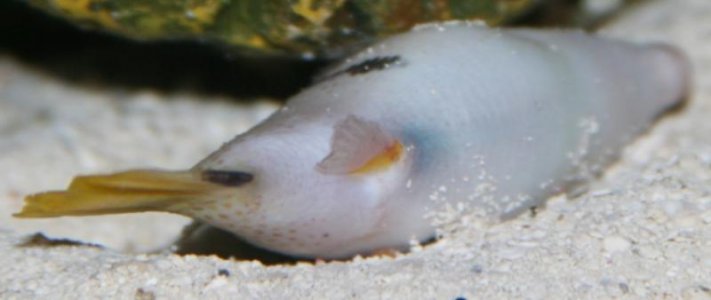
Saturday 2/13/2016, I noticed the creatures in the goby picture growing on the puffer and the goby. I thought is was ich pretty much due to me being a rookie, it's the only disease i had heard up to that day. I decided to use levamisole hydrochloride labeled "œProhibit" from AgriLabs due to many other chemicals not being compatible with the starfish. I dosed one eighth of a teaspoon. The creatures almost immediately fell off the puffer, and most fell off the goby.

Sunday, did a 20 gallon water change. (All water is RO/DI via a SpectraPure MaxCap MC-RODI-90.) The goby continued to get worse. The puffer stays in his sleeping position in a place he usually does not visit.

Monday the goby died along with the green chromis and yellow tail. I did not see anything on the chromis or the yellow tail. I realize not seeing anything does not mean they were healthy.

On Monday, i did another 20 gallon water change and dosed another one eighth of a teaspoon.

Wednesday, a clown and the puffer died. I dosed one quarter teaspoon. This was the last dose.

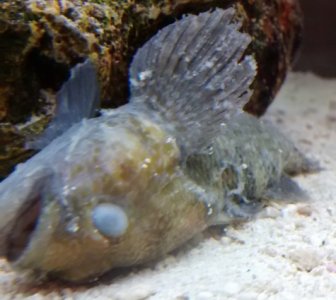
The worm-like creatures never returned to the outside of the puffer, but he was very bloated as seen in the picture. Perhaps there were worms in the gut. When he was by the glass, i looked at him with a magnifying glass. I could see what looked like extremely fine grains of sugar or sand around the eyes and beak. Was this possibly scare tissue from the creatures being attached?

Fast forward to Thursday, in 5 days, the only remaining fish are the 2 Blue Gudgeon Dartfish, the blue damsel, and the starfish. Plus i did another 20 gallon water change.

The creatures looked like tiny white worms. This is the first salt water disease I have seen, thus not familiar with any, and obviously totally unprepared to deal with it. It is an extremely expensive lesson, but i did learn something.

Now that the levamisole did not do much, i am wondering if it was ich?


55 Gallon
4 Green Chromis "“ all dead
2 Firefish "“ dead
2 Ocellaris Clownfish "“ both dead
1 Valentini Puffer - dead
2 Blue Gudgeon Dartfish "“ both still alive.
1 Blue Damselfish - alive
1 Yellowtail Damselfish - dead
1 Goby (type is unknown) - dead
1 Chocolate Chip Starfish "“ alive

No rock, no corals.

pH 8.0 - API
Ammonia 0 - API
Nitrite 0 - API
Nitrate 20 - API
Phosphorus(ppb) 50 "“ Hanna Phosphorus ULR
Phosphate 0.15
Alkalinity 9.41 dkH "“ LaMotte 4491
Calcium 330 ppm "“ LaMotte 3609

Salinity 1.023 "“ Milwaukee MA887
76 degrees "“ cheap floater
 

Attachments

  • Bruce Lee ich.jpg
    Bruce Lee ich.jpg
    71.8 KB · Views: 4
  • Puffer small.jpg
    Puffer small.jpg
    24.7 KB · Views: 5
With that pictures, I don't think it is ICH but it may velvet. I never deal with velvet so I don't know what is look like. Any way, your tank need to be treat completely. No live rock and no coral so it is easy to treat fish and tank at the same time. You need research in the forum to find which way is the best for you. Cupramine or cooper may treat that kind of issue.
IMO, I will give all fishes left to LFS for free, then clean your tank and all filter or sump whatever real good then start again. Save your money to buy all kind of medicine and 8 long weeks for treatment. Good Luck
Note: you have 2 option to buy fish:
Option 1: Buy fishes at LFS then treat them in quarantine tank for at-least 1 month with medicine before put them in the display tank.
Option 2: Wait and look every day at forum live stock buy and sell section then you may skip QT treatment.
 
Last edited:
With that pictures, I don't think it is ICH but it may velvet. I never deal with velvet so I don't know what is look like. Any way, your tank need to be treat completely. No live rock and no coral so it is easy to treat fish and tank at the same time. You need research in the forum to find which way is the best for you. Cupramine or cooper may treat that kind of issue.
IMO, I will give all fishes left to LFS for free, then clean your tank and all filter or sump whatever real good then start again. Save your money to buy all kind of medicine and 8 long weeks for treatment. Good Luck
Note: you have 2 option to buy fish:
Option 1: Buy fishes at LFS then treat them in quarantine tank for at-least 1 month with medicine before put them in the display tank.
Option 2: Wait and look every day at forum live stock buy and sell section then you may skip QT treatment.

I would still QT for option 2. Also 1 month of option 1 of QT is not long enough.
 
Last edited:
[FONT=&quot]I can guarantee I will be tightening up the process of how things get into my tank. This is way too painful to repeat again. [/FONT]

[FONT=&quot]The picture of the goby is from my phone with a terrible camera. The coating that might look like a dusting similar to velvet is actually the excessive mucus coming off. Some of the white "œspots" actually looked like worms, with some approaching to 2 mm in length. I got a good look at both of the fish with a magnifying glass when they laid up against the tank glass. [/FONT]

[FONT=&quot]The puffer is a better photo from my Canon. The skin is clear of any sign of disease except for the fine sugar-like particles on his eyes and beak. The particles on him in the photo are sand. The puffer showed significant bloating while the goby did not. This could also be do to the fact that the goby's anatomy as a bottom dweller is different than the puffer's anatomy as a free swimmer. So although the two fish had the same symptoms in the begging of the disease, it appeared to progress with different symptoms.[/FONT]

[FONT=&quot]What absolutely blew me away was the speed of how quick it killed the fish. As I read through the forum, it sounded like most people had some time to take action. From the onset of visible symptoms, it was only a matter of hours before the fish was dead. Would ich and/or velvet be that aggressive? [/FONT]
 
That was most likely velvet, not ich. Velvet fallow time is 6 weeks, longer is always better. I would recommend reading some disease literature and always QT
 
I just ordered these. It looks like I will have few months to do some reading. :reading:

<style> <!-- /* Font Definitions */ @font-face {font-family:Arial; panose-1:2 11 6 4 2 2 2 2 2 4; mso-font-charset:0; mso-generic-font-family:auto; mso-font-pitch:variable; mso-font-signature:-536859905 -1073711037 9 0 511 0;} @font-face {font-family:"MS 明朝"; mso-font-charset:78; mso-generic-font-family:auto; mso-font-pitch:variable; mso-font-signature:1 134676480 16 0 131072 0;} @font-face {font-family:"MS 明朝"; mso-font-charset:78; mso-generic-font-family:auto; mso-font-pitch:variable; mso-font-signature:1 134676480 16 0 131072 0;} @font-face {font-family:Cambria; panose-1:2 4 5 3 5 4 6 3 2 4; mso-font-charset:0; mso-generic-font-family:auto; mso-font-pitch:variable; mso-font-signature:-536870145 1073743103 0 0 415 0;} /* Style Definitions */ p.MsoNormal, li.MsoNormal, div.MsoNormal {mso-style-unhide:no; mso-style-qformat:yes; mso-style-parent:""; margin:0in; margin-bottom:.0001pt; mso-pagination:widow-orphan; font-size:12.0pt; font-family:Cambria; mso-ascii-font-family:Cambria; mso-ascii-theme-font:minor-latin; mso-fareast-font-family:"MS 明朝"; mso-fareast-theme-font:minor-fareast; mso-hansi-font-family:Cambria; mso-hansi-theme-font:minor-latin; mso-bidi-font-family:"Times New Roman"; mso-bidi-theme-font:minor-bidi;} .MsoChpDefault {mso-style-type:export-only; mso-default-props:yes; font-family:Cambria; mso-ascii-font-family:Cambria; mso-ascii-theme-font:minor-latin; mso-fareast-font-family:"MS 明朝"; mso-fareast-theme-font:minor-fareast; mso-hansi-font-family:Cambria; mso-hansi-theme-font:minor-latin; mso-bidi-font-family:"Times New Roman"; mso-bidi-theme-font:minor-bidi;} @page WordSection1 {size:8.5in 11.0in; margin:1.0in 1.25in 1.0in 1.25in; mso-header-margin:.5in; mso-footer-margin:.5in; mso-paper-source:0;} div.WordSection1 {page:WordSection1;} --> </style> The Manual of Fish Health

by Andrews, Carrington, Exell


The Marine Fish Health & Feeding Handbook: The Essential Guide to Keeping Saltwater Species Alive and Thriving
by Goemans , Ichinotsubo, Highter

<style><!-- /* Font Definitions */ @font-face {font-family:Arial; panose-1:2 11 6 4 2 2 2 2 2 4; mso-font-charset:0; mso-generic-font-family:auto; mso-font-pitch:variable; mso-font-signature:-536859905 -1073711037 9 0 511 0;} @font-face {font-family:"MS 明朝"; mso-font-charset:78; mso-generic-font-family:auto; mso-font-pitch:variable; mso-font-signature:1 134676480 16 0 131072 0;} @font-face {font-family:"MS 明朝"; mso-font-charset:78; mso-generic-font-family:auto; mso-font-pitch:variable; mso-font-signature:1 134676480 16 0 131072 0;} @font-face {font-family:Cambria; panose-1:2 4 5 3 5 4 6 3 2 4; mso-font-charset:0; mso-generic-font-family:auto; mso-font-pitch:variable; mso-font-signature:-536870145 1073743103 0 0 415 0;} /* Style Definitions */ p.MsoNormal, li.MsoNormal, div.MsoNormal {mso-style-unhide:no; mso-style-qformat:yes; mso-style-parent:""; margin:0in; margin-bottom:.0001pt; mso-pagination:widow-orphan; font-size:12.0pt; font-family:Cambria; mso-ascii-font-family:Cambria; mso-ascii-theme-font:minor-latin; mso-fareast-font-family:"MS 明朝"; mso-fareast-theme-font:minor-fareast; mso-hansi-font-family:Cambria; mso-hansi-theme-font:minor-latin; mso-bidi-font-family:"Times New Roman"; mso-bidi-theme-font:minor-bidi;} .MsoChpDefault {mso-style-type:export-only; mso-default-props:yes; font-family:Cambria; mso-ascii-font-family:Cambria; mso-ascii-theme-font:minor-latin; mso-fareast-font-family:"MS 明朝"; mso-fareast-theme-font:minor-fareast; mso-hansi-font-family:Cambria; mso-hansi-theme-font:minor-latin; mso-bidi-font-family:"Times New Roman"; mso-bidi-theme-font:minor-bidi;} @page WordSection1 {size:8.5in 11.0in; margin:1.0in 1.25in 1.0in 1.25in; mso-header-margin:.5in; mso-footer-margin:.5in; mso-paper-source:0;} div.WordSection1 {page:WordSection1;} --> </style>
 
This looks more like Brooklynella than Amyloodinium (velvet) to me. The frayed fins and "worm creatures" (mucous strings?) and excess mucus all over the body would fit Brook better than velvet.

Brook also moves faster as it multiplies on the fish by simple division instead of going through a multiplying cyst stage like velvet (and ich).

What was the last wet thing added to the tank? How long before this started?
 
This looks more like Brooklynella than Amyloodinium (velvet) to me. The frayed fins and "worm creatures" (mucous strings?) and excess mucus all over the body would fit Brook better than velvet.

Brook also moves faster as it multiplies on the fish by simple division instead of going through a multiplying cyst stage like velvet (and ich).

What was the last wet thing added to the tank? How long before this started?

<style> <!-- /* Font Definitions */ @font-face {font-family:Arial; panose-1:2 11 6 4 2 2 2 2 2 4; mso-font-charset:0; mso-generic-font-family:auto; mso-font-pitch:variable; mso-font-signature:-536859905 -1073711037 9 0 511 0;} @font-face {font-family:"MS 明朝"; mso-font-charset:78; mso-generic-font-family:auto; mso-font-pitch:variable; mso-font-signature:1 134676480 16 0 131072 0;} @font-face {font-family:"Cambria Math"; panose-1:2 4 5 3 5 4 6 3 2 4; mso-font-charset:0; mso-generic-font-family:auto; mso-font-pitch:variable; mso-font-signature:3 0 0 0 1 0;} @font-face {font-family:Cambria; panose-1:2 4 5 3 5 4 6 3 2 4; mso-font-charset:0; mso-generic-font-family:auto; mso-font-pitch:variable; mso-font-signature:-536870145 1073743103 0 0 415 0;} /* Style Definitions */ p.MsoNormal, li.MsoNormal, div.MsoNormal {mso-style-unhide:no; mso-style-qformat:yes; mso-style-parent:""; margin:0in; margin-bottom:.0001pt; mso-pagination:widow-orphan; font-size:12.0pt; font-family:Cambria; mso-ascii-font-family:Cambria; mso-ascii-theme-font:minor-latin; mso-fareast-font-family:"MS 明朝"; mso-fareast-theme-font:minor-fareast; mso-hansi-font-family:Cambria; mso-hansi-theme-font:minor-latin; mso-bidi-font-family:"Times New Roman"; mso-bidi-theme-font:minor-bidi;} .MsoChpDefault {mso-style-type:export-only; mso-default-props:yes; font-family:Cambria; mso-ascii-font-family:Cambria; mso-ascii-theme-font:minor-latin; mso-fareast-font-family:"MS 明朝"; mso-fareast-theme-font:minor-fareast; mso-hansi-font-family:Cambria; mso-hansi-theme-font:minor-latin; mso-bidi-font-family:"Times New Roman"; mso-bidi-theme-font:minor-bidi;} @page WordSection1 {size:8.5in 11.0in; margin:1.0in 1.25in 1.0in 1.25in; mso-header-margin:.5in; mso-footer-margin:.5in; mso-paper-source:0;} div.WordSection1 {page:WordSection1;} --></style> <style> <!-- /* Font Definitions */ @font-face {font-family:"MS 明朝"; mso-font-charset:78; mso-generic-font-family:auto; mso-font-pitch:variable; mso-font-signature:1 134676480 16 0 131072 0;} @font-face {font-family:"Cambria Math"; panose-1:2 4 5 3 5 4 6 3 2 4; mso-font-charset:0; mso-generic-font-family:auto; mso-font-pitch:variable; mso-font-signature:3 0 0 0 1 0;} @font-face {font-family:Cambria; panose-1:2 4 5 3 5 4 6 3 2 4; mso-font-charset:0; mso-generic-font-family:auto; mso-font-pitch:variable; mso-font-signature:-536870145 1073743103 0 0 415 0;} /* Style Definitions */ p.MsoNormal, li.MsoNormal, div.MsoNormal {mso-style-unhide:no; mso-style-qformat:yes; mso-style-parent:""; margin:0in; margin-bottom:.0001pt; mso-pagination:widow-orphan; font-size:12.0pt; font-family:Cambria; mso-ascii-font-family:Cambria; mso-ascii-theme-font:minor-latin; mso-fareast-font-family:"MS 明朝"; mso-fareast-theme-font:minor-fareast; mso-hansi-font-family:Cambria; mso-hansi-theme-font:minor-latin; mso-bidi-font-family:"Times New Roman"; mso-bidi-theme-font:minor-bidi;} .MsoChpDefault {mso-style-type:export-only; mso-default-props:yes; font-family:Cambria; mso-ascii-font-family:Cambria; mso-ascii-theme-font:minor-latin; mso-fareast-font-family:"MS 明朝"; mso-fareast-theme-font:minor-fareast; mso-hansi-font-family:Cambria; mso-hansi-theme-font:minor-latin; mso-bidi-font-family:"Times New Roman"; mso-bidi-theme-font:minor-bidi;} @page WordSection1 {size:8.5in 11.0in; margin:1.0in 1.25in 1.0in 1.25in; mso-header-margin:.5in; mso-footer-margin:.5in; mso-paper-source:0;} div.WordSection1 {page:WordSection1;} --> </style> [FONT=&quot]I know I am going to catch a beating for this, but the goby was the last thing. That was 3 weeks before the diaster. Before that, the last wet thing was the 2 Blue Gudgeon Dartfish over 4 months ago. A friend decided to go all inverts and dished out his fish to friends. He had the goby for almost 4 years. It was even named "Bruce Lee".[/FONT]

[FONT=&quot]Yes, I committed a cardinal sin of this hobby but I never expected the outcome to so disastrous. I thought diseases were cured by throwing in some pills off the LFS shelf and poof, no more disease. Ignorance of a rookie is expensive. :headwally: My friend still has some fish left and has not had a visible outbreak with emphasis on “visible”. Who knows what is lurking undetected that has already started its seek and destroy mission.[/FONT]

[FONT=&quot]I was hoping to get a definitive identification of the disease so I can help him prepare for what is most likely to come in the near future. That way he might stand a fighting chance of not losing his entire population. If it moves as fast as it did in my tank, he will only get one shot at a treatment.

[FONT=&quot][FONT=&quot]The wo[FONT=&quot]rm [FONT=&quot]things lo[FONT=&quot]oked like [FONT=&quot]very tiny pieces [FONT=&quot]white rice about 2 mm or less in leng[FONT=&quot]th[/FONT]. Some were large eno[FONT=&quot]ugh to sway ba[FONT=&quot]ck and forth in the water. The [/FONT][/FONT][/FONT][/FONT][/FONT][/FONT][/FONT][/FONT][/FONT][/FONT][FONT=&quot][FONT=&quot][FONT=&quot][FONT=&quot][FONT=&quot][FONT=&quot][FONT=&quot][FONT=&quot][FONT=&quot][FONT=&quot]levamisole [FONT=&quot]ma[FONT=&quot]de them leave t[FONT=&quot]he puffer but not[FONT=&quot] t[FONT=&quot]he goby. [/FONT][/FONT][/FONT][/FONT][/FONT][/FONT][/FONT] [/FONT][/FONT][/FONT][/FONT][/FONT][/FONT][/FONT][/FONT]
 
Last edited:
Some Brooklynella pictures I could find:

400px-Brooklynella_1.jpg


klovnsyke%203.jpg


It is kind of unlikely that the goby was living with a disease for years and then is the first to die of it - most of the time the fish that are partially immune carriers are not the first to get it, if they ever get sick at all.

It either came with another new item or the goby got infected just prior to coming to your tank.

So what did your friend added last to his tank?
 
<style> <!-- /* Font Definitions */ @font-face {font-family:"MS 明朝"; panose-1:0 0 0 0 0 0 0 0 0 0; mso-font-charset:128; mso-generic-font-family:roman; mso-font-format:other; mso-font-pitch:fixed; mso-font-signature:1 134676480 16 0 131072 0;} @font-face {font-family:"MS 明朝"; panose-1:0 0 0 0 0 0 0 0 0 0; mso-font-charset:128; mso-generic-font-family:roman; mso-font-format:other; mso-font-pitch:fixed; mso-font-signature:1 134676480 16 0 131072 0;} @font-face {font-family:Cambria; panose-1:2 4 5 3 5 4 6 3 2 4; mso-font-charset:0; mso-generic-font-family:auto; mso-font-pitch:variable; mso-font-signature:3 0 0 0 1 0;} /* Style Definitions */ p.MsoNormal, li.MsoNormal, div.MsoNormal {mso-style-unhide:no; mso-style-qformat:yes; mso-style-parent:""; margin:0in; margin-bottom:.0001pt; mso-pagination:widow-orphan; font-size:12.0pt; font-family:Cambria; mso-ascii-font-family:Cambria; mso-ascii-theme-font:minor-latin; mso-fareast-font-family:"MS 明朝"; mso-fareast-theme-font:minor-fareast; mso-hansi-font-family:Cambria; mso-hansi-theme-font:minor-latin; mso-bidi-font-family:"Times New Roman"; mso-bidi-theme-font:minor-bidi;} .MsoChpDefault {mso-style-type:export-only; mso-default-props:yes; font-family:Cambria; mso-ascii-font-family:Cambria; mso-ascii-theme-font:minor-latin; mso-fareast-font-family:"MS 明朝"; mso-fareast-theme-font:minor-fareast; mso-hansi-font-family:Cambria; mso-hansi-theme-font:minor-latin; mso-bidi-font-family:"Times New Roman"; mso-bidi-theme-font:minor-bidi;} @page WordSection1 {size:8.5in 11.0in; margin:1.0in 1.25in 1.0in 1.25in; mso-header-margin:.5in; mso-footer-margin:.5in; mso-paper-source:0;} div.WordSection1 {page:WordSection1;} --> </style> Agreed that the goby would not carry the disease that long. What i poorly communicated was that the goby was around for years and was part of my friend’s family. It was hard loss for my friend.

The bottom clown pic looks exactly like my clowns did. The goby obviously had something similar. I also now remember I did a fresh water dip with the puffer and something similar was on top of his head. The last dart fish to die also had a coating on it, but it was not so obvious until I put him in fresh water and it became easier to see.

The last thing my friend added to his tank was a few inverts. He has not added a new fish for close to 6 months because he decided to go all inverts. The inverts might not be carriers, but the water on the inverts could definitely carry parasites. The interesting thing is that his tank has not had a out break of any diseases. I know his take must be infected because he used my pump to do a water change the day after I used it for a water change. The day he did his change was the day i first saw visual evidence of my outbreak. Sharing equipment was yet another rookie mistake. I will no longer share equipment with others.
 

With all this trouble, do I have to change my user name from "Alive55" to "Dead55"? :lolspin: Sorry, but i just couldn't resist.

 
Inverts can quite well carry fish diseases from one tank to another if there are (or were) sick fish in the origin tank.
 
I hit the mother load of information about marine fish. The book below was recommended in this forum. Whoever recommended it, thank you! I think is well worth mentioning again. The book cost me less than a dollar on Amazon plus $4 shipping.
The Marine Fish Health & Feeding Handbook: The Essential Guide To Keeping Saltwater Species Alive and Thriving
bt Goemans, Ichinotsubo; T.F.H Publications 2008.
· ISBN-10: 1890087955
· ISBN-13: 978-1890087951
The above book is written at a level rookies can understand, yet not dummied down to the point of making it useless. I read it for hours. I hit the disease chapters first because without knowing it, I was playing Russian roulette with my tank and I lost. In just a matter of days, I just lost 13 of my 15 fish. Amongst a bunch of other great material, the book documents:
1. diseases.
2. how to treat the diseases.
3. specific doses for each type of medicine and the pros and cons of each.
4. unbelievable high quality detailed pictures.
5. treatments the are still being debated within the marine fish industry.
If you are the of person who likes doing post mortem investigation, it gives descriptions and pictures of the of the diseases as they look under a microscope.

The below is from http://www.saltcorner.com/Books/Showbook.php?pagename=FishHealth

Book Description:

This book brings forth and discusses all aspects necessary for maintaining healthy aquarium fishes! It also discusses a chemical compound that is 'extremely' effective on maladies such as Marine Ich (Cryptocaryon irritans); Velvet (Amyloodinium ocellatum); and, Clownfish disease (Brooklynella). It appears this compound, Chloroquine phosphate, if used properly as discussed, can also safely treat animals that are in reef aquaria without harming the systems nitrification bacteria, something copper treatments cannot accomplish! Go to Amazon.com from reviews of this book.

Table Of Contents:

Introduction

PART 1 - The Healthy Marine Aquarium

Chapter 1: Secrets of Helping Fish Thrive

Chapter 2: Water: The Font of Good Health

Chapter 3: Acquiring & Acclimating Fishes

PART 2 Foods & Feeding

Chapter 4: The Well-Fed Aquarium

Chapter 5: Fish Foods & Feeding

PART 3 Diseases & Conditions

Chapter 6: You're the Vet

Chapter 7: First Lines of Defense

Chapter 8: Parasitic Infestations

Chapter 9: Bacteria, Fungal Diseases, & Viruses

Chapter 10: Non-Pathogenic Diseases
 
Back
Top