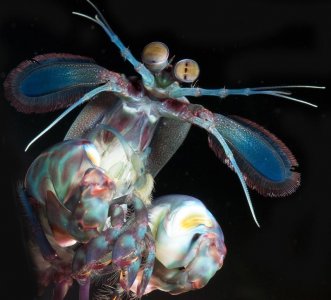
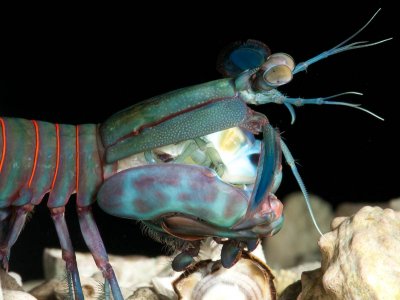
Gonodactylaceus ternatensis threat

Gonodactylus

Premium Member
A large G. ternatensis male that I have had for a few months has suddenly become very aggressive (read threats whenever I approach the aquarium and one cracked photographic tank from a strike while I was cleaning the outside of the glass). I did get a few decent shots.

Roy
 

Attachments

  • G ternatensis male threat 2 Nov 10 small.jpg
    G ternatensis male threat 2 Nov 10 small.jpg
    101.1 KB · Views: 8
  • G ternatensis male threat 3 Nov 10 small.jpg
    G ternatensis male threat 3 Nov 10 small.jpg
    86 KB · Views: 7
Last edited:
Dr. Roy, congrats on being featured in Coral magazine. Your contributions are greatly appreciated. You mentioned in the article that you have noticed a dramatic decline in the number of mantids in some areas. Can you tell if this is from over-harvesting for trade or consumption, pollution, or rising sea temp and decreasing sea water pH?
 
Scott,

It appears to me that O. scyllarus are being impacted by collectors in some areas. Try to find a large green male. The animals being shipped are smaller and less brightly colored. This happened in the Philippines several years ago and now seems to be happening in areas of Indonesia.

On the other hand, some of the decline is due to habitat loss and degradation, particularly in off shore species that require pristine water. However, these do not show up often in the trade. Species that are found in shore are generally more resistant to anthropogenic impacts and seem to be even more common in shipments. This is true of G. chiragra, G. viridis, and P. ciliata from the Indo-Pacific and N. wennerae from the Caribbean.

There are also cases where stomatopods are fished and are starting to be impacted. For example, 20 years ago Lysiosquillina were common in Tahiti and were commonly eaten. Now it is hard to find one.

Roy

 
I had a tern. for a while and i think they are my favorite mantis so far. Mine was always agreesive ready to hit something.
 
Back
Top