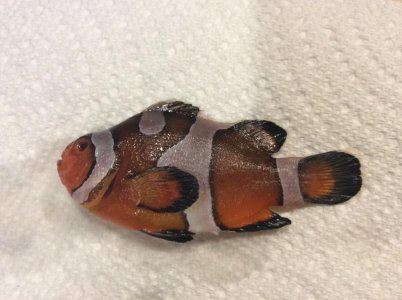
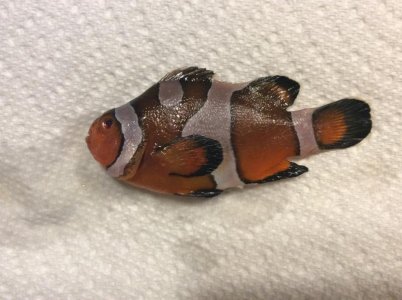
Like there is an audience for pedophilia. The existence of a market doesn't justify unethical action - and I consider the targeted breeding for deformities equally unethical.
Like there is an audience for pedophilia. The existence of a market doesn't justify unethical action - and I consider the targeted breeding for deformities equally unethical.
To us it's a deformity to others it's an artificially made variation of clownfish. To us it's a shame to others it's a profit. I wouldn't call it unethical though. It may be fair for some to call it irresponsible breeding but even that might be taking it a little too far.
There are purists like you. Then there are semi-purists like me who prefer wild caught clowns but are tolerant of designers in our own systems. Then there are people who downright think that regular clowns are boring. The market is wide open and there appears to be a large(r) demand for artificial variations.
I've spoken to a large aquaculture facility who bred Leucokranos clowns. They said these weren't popular at all beyond collector segment of the market.
What I mean is that someone makes another feeling creature suffer to satisfy a personal desire or for profit.
I've seen "designer" goldfish that could hardly swim and would be blown away in the slightest flow. No one can tell me that that's OK for them because they don't know any better.
Deformities are not just something external. They may cause problems with internal organs or physiological functions.
There is a reason why fish are able to close their gill covers. If they are deformed and can't form a complete seal, the fish will have impaired breathing capabilities - it's somewhat an analogy to a hole in the heart.
Breeding for color patterns is one thing (I don't like too much either) but but breeding for deformities is plain and simple unethical.
This site uses cookies to help personalise content, tailor your experience and to keep you logged in if you register.
By continuing to use this site, you are consenting to our use of cookies.