how do I make a sump

hotelbravo

Active member
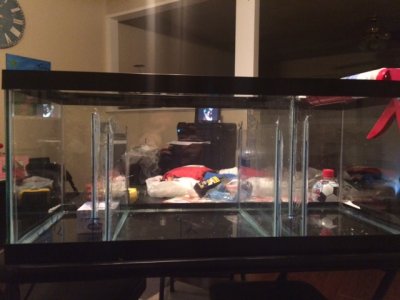
Ive been running my tanks on hang on back filters and canister filters but after alot of reading have determined that a sunp would be more beneficial. I have an extra 29 gallon that is 30x12x18 and im wondering if this will work for my 75 gallon since its the only thing that will fit for the way I have my stand setup. But I am clueless as how to even start. I have extra plexiglass laying around and some silicone. My tank is not drilled and I do not have an overflow but I heard there is a hob overflow box that I could use to run a line into the sump. I would like to upgrade my skimmer if this all works out. So that I can have a skimmer go inside my sump. Any ideas or advice??
 
A 29 should work for you, a good resource to learn about sumps is melevsreef website. There is a lot of good info on sumps on his site.
 
check glass-hole overflow, you have to drill the back of your tank. The sump have to have dividers but use glass panels not acrylic. measure skimmer size and melev's site is good info about sump
 
Well, you could drill it. I drained about 2/3 of the water from mine, pulled it out from the wall, then drilled it. I taped some paper towels to the inside ofthe tank under the hole so it would catch anything that dripped. It's not as easy as tipping the tank on the side and drilling down, but it is still possible.
 
I tried looking at the website listed above. But I was kind of hoping someone would dumbify the whole sump building part to me
 
I tried looking at the website listed above. But I was kind of hoping someone would dumbify the whole sump building part to me

Dumbify?

Sounds like you are talking about my sump! :)

They can be very complicated to very simple. I went for simple. I have two compartments, the big one gets the overflow, skimmer and heaters. Then there is a bubble trap, which is an over-under-over set of baffles. This creates the second compartment, the return. I made my baffles out of acrylic because that's what I had. I cut an old tank apart to get the materials. If you use acrylic leave extra room side to side so it can expand as it absorbs water.

With only one set of baffles the height of the first baffle sets the water depth in the sump. This is important for the skimmer. Most skimmers have a preferred water depth. You want to make sure your sump water is at least that deep.
 
This is all still confusing. I volunteer at a lfs on my days off work and I was looking at their display tank that they have tons of huge pieces of coral and that tank had a sump under it that consisted of a large tank with a plastic bin in it that had holes drilled in it with their heaters and skimmer in there. No live rock or other biological filtration and they said that tank has been setup with that for over 15 years. Sooo honestly I dont know what im going to do with the sump im making. I dont necessarily want it to be so cheap looking but I want a basic sump.
 
Your basic sump would just be a one or two chamber sump to hold all of the equipment you want to hide from view. You can add a third chamber for a refugium if you want.

A sump that has one chamber will include your skimmer, heater, and return pump basically. The risk you run there is microbubbles from the skimmer going through the return and into your DT. If you don't mind the microbubble then that is all you need.

If you don't like micorbubbles you may want to go with a two-chamber sump with baffles separating the chambers. The baffles will act as a barrier for bubbles and keep them in the first chamber. This is usually what you see with basic sumps on this forum.

In the end it comes down to what you prefer and your equipment needs as far as space. I just built mine as a three-chamber sump because I wanted to incorporate a refugium for extra nutrient export. I included a picture. From right to left I have the three chambers. First chamber is for my skimmer with the baffles to stop bubbles from migrating. The second chamber will be my refugium for LR rubble and chaeto. The last chamber is my return chamber. This is a 20L tank that fits perfectly under my 40G breeder tank.
 

Attachments

  • sump.JPG
    sump.JPG
    91.2 KB · Views: 2
Your basic sump would just be a one or two chamber sump to hold all of the equipment you want to hide from view. You can add a third chamber for a refugium if you want.

That's basically my sump. I don't have the left side baffles.

@the OP. No need to stress over this. It's a sump, not rocket science! Basic sump is just there to hold equipment you want to hide and increase water volume some.
 
Or you could pimp it out with a 4K TV so you can watch reef shows while you reef. jk...sort of. It is just that though, a container to remove equipment from the display, and also increased water volume (increased stability) of the system. I'll probably go simple with my sump when I get one, with maybe a section for a refugum.
 
If you go with a regular hang on the back overflow box, there are risks. Primarily, if the power goes out briefly and your return pump stops which then causes the overflow box to drain out into the sump and break it's siphon.

Then when the power comes back on, the siphon that carries water over the rim of your tank is broken and you wind up with a flood when your return pump empties the sump into your display tank with nothing going back down.

They make more complex hang on the back overflows to help with that concern. I use the Tom's Aquatic overflow. It uses the pressure from the return flow from the sump to create the siphon that drains the display tank. When the return pump stops, the box stops draining to the sump. When the return pump resumes it flow, the box resumes draining to the sump.

It costs a bit more but is worth it for the piece of mind to me.

http://www.amazon.com/Aquarium-Overflow-Start-Hosing-incl/dp/B002LYTE4Q/ref=pd_sim_sbs_petsupplies_1?ie=UTF8&refRID=11NCP9KTFZRP3HGPZ7RK
 
If you go with a regular hang on the back overflow box, there are risks. Primarily, if the power goes out briefly and your return pump stops which then causes the overflow box to drain out into the sump and break it's siphon.

Then when the power comes back on, the siphon that carries water over the rim of your tank is broken and you wind up with a flood when your return pump empties the sump into your display tank with nothing going back down.

They make more complex hang on the back overflows to help with that concern. I use the Tom's Aquatic overflow. It uses the pressure from the return flow from the sump to create the siphon that drains the display tank. When the return pump stops, the box stops draining to the sump. When the return pump resumes it flow, the box resumes draining to the sump.

It costs a bit more but is worth it for the piece of mind to me.

http://www.amazon.com/Aquarium-Overflow-Start-Hosing-incl/dp/B002LYTE4Q/ref=pd_sim_sbs_petsupplies_1?ie=UTF8&refRID=11NCP9KTFZRP3HGPZ7RK

Eshopps and many others don't do this. Most hang on back overflows will not lose siphon if the power goes out.
 
I've read of too many cases of siphon being lost on regular overflow units that I'm not willing to gamble with 30 gallons of saltwater on the living room floor. The piece of mind in having a unit that is designed to recreate a siphon upon power start up is well worth it to me.

An additional advantage of the Tom's aquatic unit is that the return is built in. You don't have to plumb an over the top return and nozzle separately.

Eshopps and many others don't do this. Most hang on back overflows will not lose siphon if the power goes out.
 
Only worry I have ever had with my Eshopps is if bubbles get in the U-tube. The build up can eventually lead to a siphon break. I have enough flow in the tank that it will push the bubble down though so I have never had an issue. I've tested it many times turning the power to the return on and off. The siphon stops and starts as expected!
 
I've read of too many cases of siphon being lost on regular overflow units that I'm not willing to gamble with 30 gallons of saltwater on the living room floor. The piece of mind in having a unit that is designed to recreate a siphon upon power start up is well worth it to me.

An additional advantage of the Tom's aquatic unit is that the return is built in. You don't have to plumb an over the top return and nozzle separately.

"30 gallons of saltwater on the living room floor"? How much experience do you have with sumps?

A properly designed sump will never flood regardless of the siphon status. My old eshopps was only capable of breaking siphon due to bubble buildup in the siphon, but, in the unlikely event of a siphon break, the sump was designed to only pump up a volume of water not able to overflow the tank. If the return pump failed, the sump was also capable of holding the volume that would drain down from the tank.

This is not rocket science. If you are worried about a flood due to a poorly designed sump filtration system, you should run without a sump.

added: I don't know a lot about your "Toms" overflow, but just looking at the design, it appears to me that it is one of the very few overflows that actually COULD cause a flood if (WHEN) it fails. It looks like with the input as low as it is in the water, it would allow a fairly large volume of water to flow down to the sump. If this is the case, and I am not sure if it is as I am just looking at the picture, I'd say this is one of the worst designs for an overflow that you could have.
 
A properly designed sump will never flood regardless of the siphon status. My old eshopps was only capable of breaking siphon due to bubble buildup in the siphon, but, in the unlikely event of a siphon break, the sump was designed to only pump up a volume of water not able to overflow the tank.

Great point! This is where multiple chambers are needed. I didn't realize it until now but keep the 3rd chamber (return chamber) small allows for error if my siphon does break (which is again unlikely)! It will only pump out the volume in that chamber and run the risk of burning the pump out, but that's better than a flooded floor.

I would recommend at least a two-chamber sump then, with the return chamber small enough for you DT to hold in the event of a siphon failure.
 
Back
Top