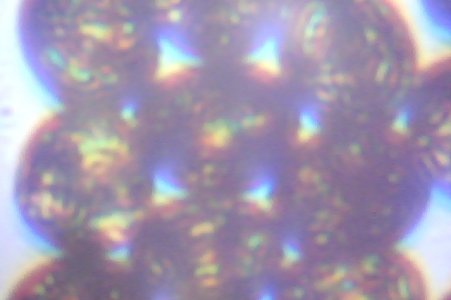
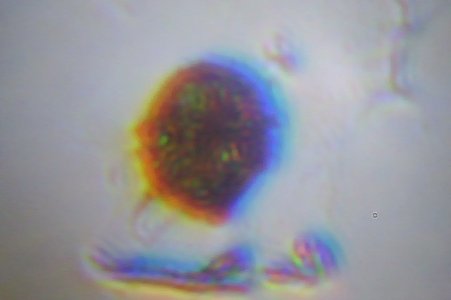
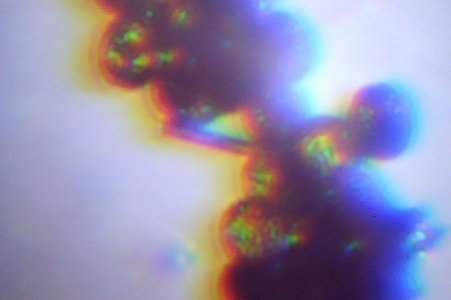
I wish I could give you a simple answer. I can ID them pretty easily down to genus just from photos, and can go to species if you send me a sample. But telling you how to kill them without killing everything in your tank... no easy answers yet.
Which dino from my videos did yours look more like? The way they move will probably be the easiest way to distinguish. Are they spinning like a tether ball or scooting along the bottom of your petri dish / slide? Amphidinium sp. scoots while Ostreopsis sp. spins. I have found two other genera so if you don't think either looks like yours I could make some other guesses. Both of these are toxic but Ostreopsis makes the more dangerous toxin, palytoxin. Research it. It can kill not just everything in your tank but you too. Once you start killing them the toxin will be released. Much like when killing an infestation of flatworms, having carbon ready might be a good idea.
Knowing which genus you are working with will give you size info. Ostreopsis and Gambierdiscus are big (40-60 microns). Amphidnium is smaller (~20 microns). The biggest pore size filter sock that will still capture your dino should be used.
These benthic dinos that are aquarium pests migrate up into the water column when the lights go out. That is when a filter sock, wet skimming, UZ or ozone might be useful. You can also take advantage of this if you do an extended lights out period. They move toward light so a light trap at night or during a lights out will also be an easy way to physically remove some.
They lyse when exposed to a sudden salinity change. So fresh water dips will be very effective at killing them. This gets hard though when dealing with a sand bed.
Things like hydrogen peroxide dosing and raising pH seem to work for some people and not others. I'd hoped to connect these successes and failures to specific genera but I don't have much data and so I can't advise when those techniques will work.
They need nitrates and phosphates just like any other photosynthetic organism, but at higher nutrient levels they get outcompeted by other types of algae. This results in the frustrating situation you are in where your nutrient levels are low and yet you are getting dinos. If you raise your nutrient levels cyano and green algae will wipe out your dinos. If you add silica diatoms will outcompete them. You probably won't have luck trying to lower your nutrient levels enough to kill off the dinos, but theoretically it could be done.
Some people have had luck with algae killer products like Algae X, while for others it hasn't helped. I have no idea what is in those products (and wouldn't be surprised to find out they are just bottling peroxide).