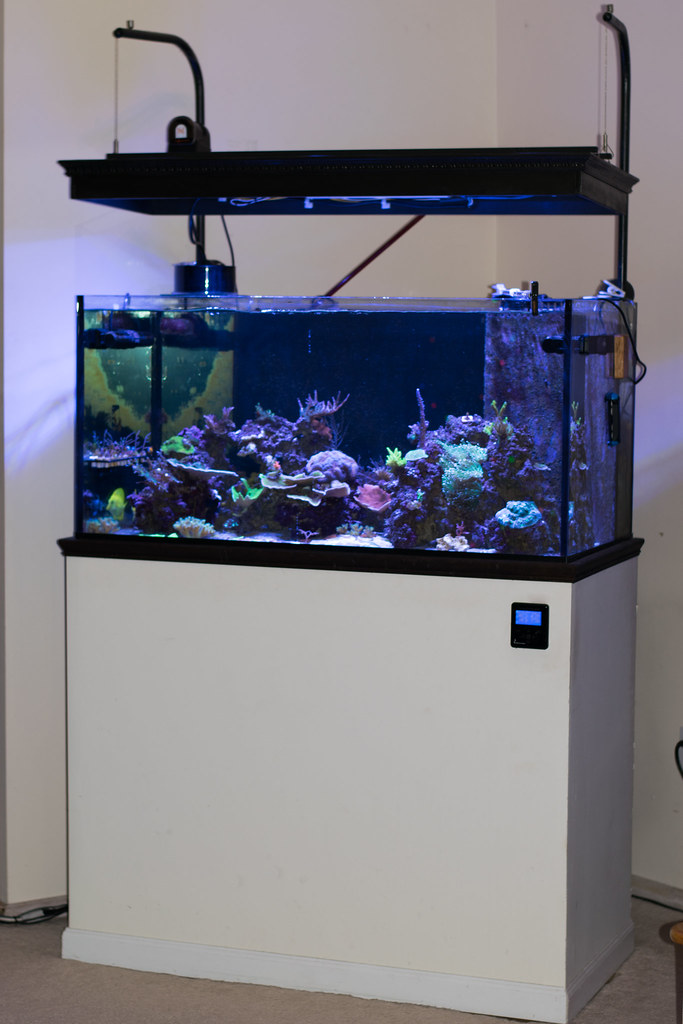
My 120G SPS System

SoloGarth

Active member
Hi everyone. This forum has been an incredible source of knowledge to me over the 8 or so years I have been in the hobby. I wanted to create a thread detailing my current system's build and operation. The tank has been up for almost 5 years now. I "restarted" about a year and a half ago due to several mistakes that had sort of carried over from previous tanks. The restart enabled me to quarantine and control everything introduced to the system and I have had a lot of success so far. But I will start at the beginning of this setup.

In April of 2010 I bought my first house after moving home following 6 years spent in the Navy as a nuclear operator. As soon as I had a closing date I went ahead with ordering a new tank. I decided to order from Miracles in Glass in Toronto. I ordered a custom Starphire 120 (standard dimensions) that was euro braced with two overflows and a return cut into it.

Here is the picture Miracles sent me:
24173015555_1ed36c20b5_z.jpg


The tank was completed and shipped freight to a depot where I went to pick it up. It had to be loaded into my fathers pickup with a forklift as it was in a giant wooden crate. Getting it home and opening up the crate I found that they had built me a 120G Rimless!

Well it is a beautiful tank anyway so I decided that my new system would be rimless. I am glad this mistake was made.
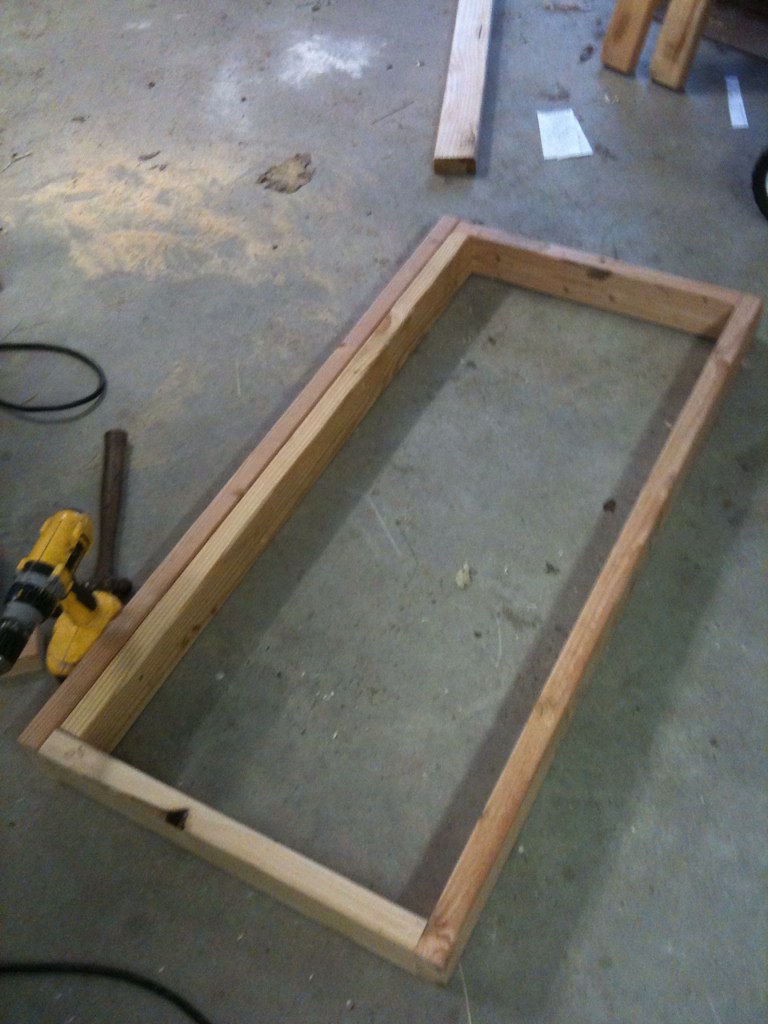
 
This was part of another thread I created but is important to the build so I will add it here as well.

I love in wall tanks. My house, however doesn't have anywhere that would work for an in wall system. Also the ceilings are 15' high so building a section of wall was impractical. This lead me to decide to build a stand that would be covered in sheet rock that could be painted to match the walls. I decided on a place for the tank that would allow for an area behind the system for access to the sump and controls.

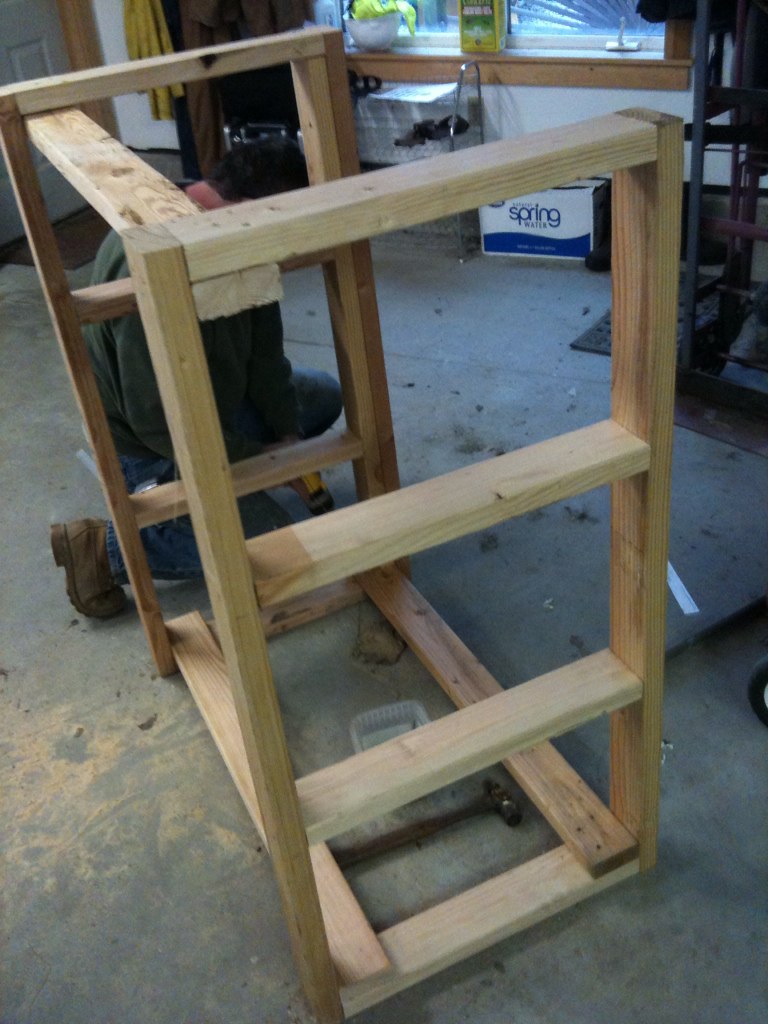
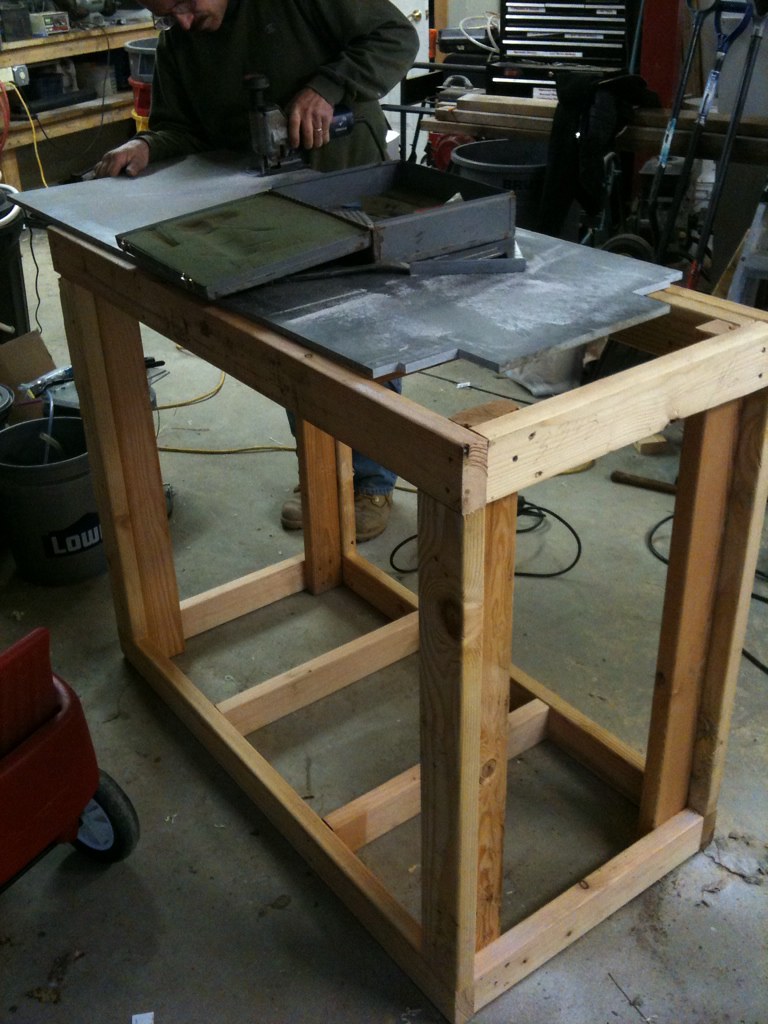
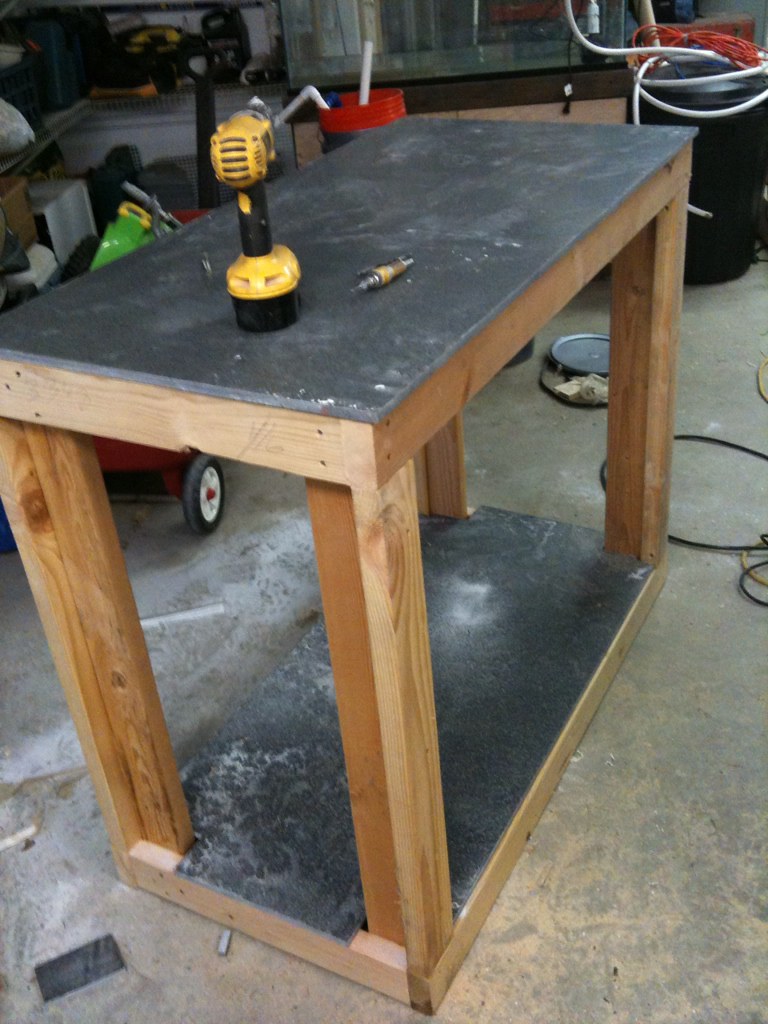
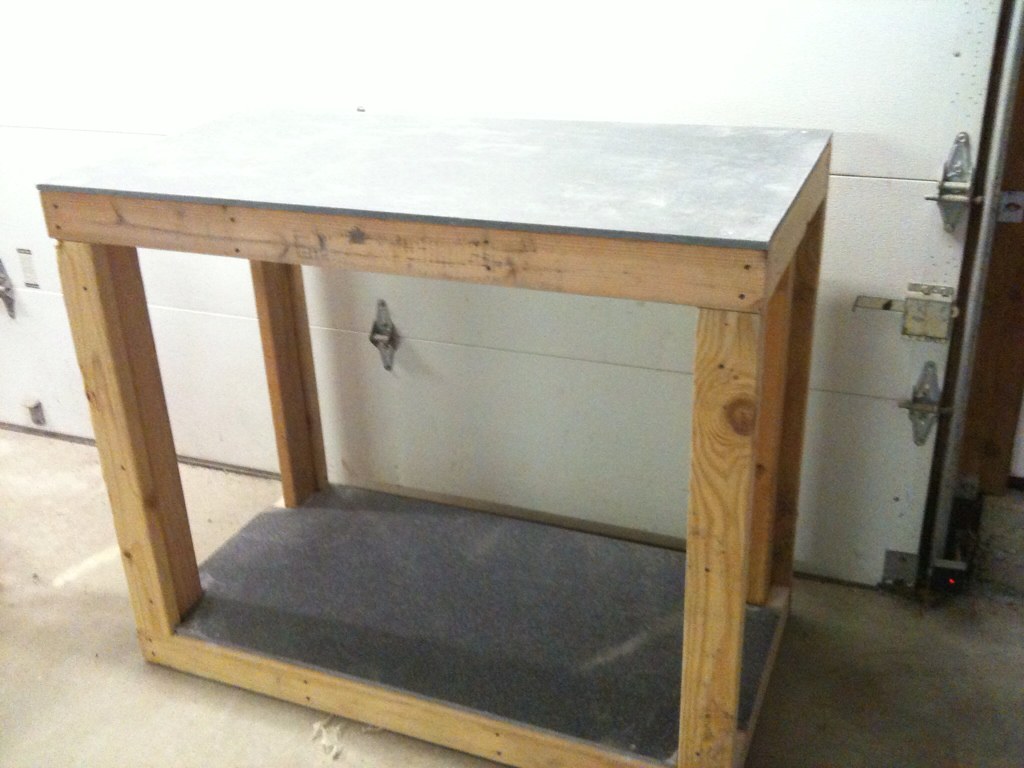
My father is an incredible woodworker and general contractor and helped me with many aspects of this build. He put together a very sturdy stand made from 2X4s that met my goal of having full access without bracing in the middle. The stand top and sump area were covered in some leftover counter top material he had been "storing" since the early 90s (haha).

23505415644_ced53d90c9_b.jpg


24133646295_62473bb3d5_b.jpg


23505416994_5f21b0522b_b.jpg


24051032981_a4f8efbd33_b.jpg


24051028741_681b86b400_b.jpg


Stand as it appears now:
24133694335_5f7f9cbc39_b.jpg
 
So having set up the tank and stand, and hooked up the sump and plumbing I built the rockscape. I now have a more minimalist rock setup and often miss the look of this first one.

23545800654_47aa127748_b.jpg


23878374520_25a3ee399f_b.jpg


Some Full tank shots as corals grew out:
24091392021_750750c1a4_b.jpg


24091570241_890f34aaff_b.jpg


24091558031_c0e0958e1f_b.jpg


23545872424_68015b0c55_b.jpg
 
Last edited:
So looking at these pictures again makes it even more clear to me what initiated the downfall and crash of this system:

The last two pictures, while most corals look very healthy and are growing, shows that several corals have bleached out. One in the very center (Pocillopora Damicornis) is bleached in both the main colony (center) and the frag on the bottom right.

The other change that can be seen is that the rats nest of wires connecting my lighting hood to the power center is gone. It was replaced by 2 wires because I upgraded my lighting to the current Ecotech Radion XR30 Gen 2s.

The important disclaimer here is that the Radions do a great job. However due to the optics I feel that they are a bit too directional. My previous lighting had been LED/T5. The LEDs did not have optics. Adjusting the Radions to appear the same brightness as the previous lighting resulted in scorching nearly every coral colony in my tank to death.

There were a few survivors and I still have all them now and they are healthy and growing again. This ends that particular chapter in my reefing history.
 
Last edited:
So onto filtration:

I admit a large part of what I enjoy about this hobby is the technology and equipment. I am an electronics engineer and enjoy tinkering. I often jump on new technology (LEDs, biopelles ect) before it has really had time to prove itself, which I admit doesn't always have the best results.

I do have my system down now though and haven't changed it for years. The filtration and water quality equipment I currently use are the following:

Large Neptune Apex system (replaced DA Reefkeeper elite and Archon)

Skimz SM203 (replaced my Deltec AP600 that had run noisily for around 7 years).

Reef Octopus BR110 Biopellet Rx (modified to be recirculating rather than single pass)

MTC miniCal Calcium Rx (refitted with push connect fittings and with an added pH probe)

Two little fishies Kalk stirrer (modified to stir using a small DC motor)

Carbon run in filter bag.

Tunze ATO (modified to interface with APEX and control both FW and SW for water change automation)

23548324393_48c30b5c93_b.jpg


24092558321_1264fe71a4_b.jpg
 
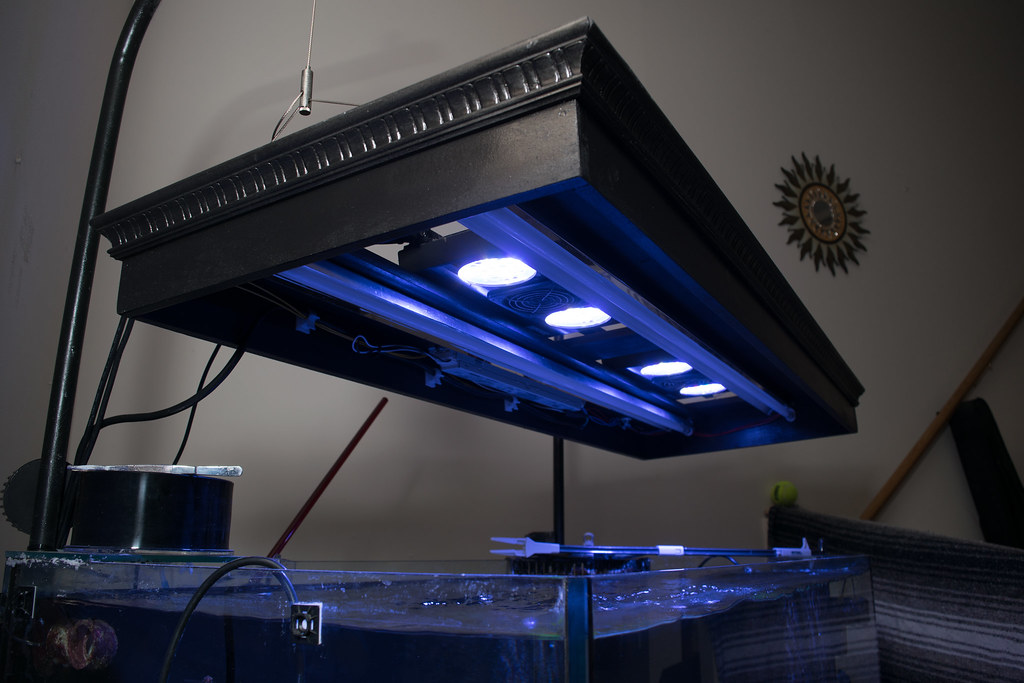
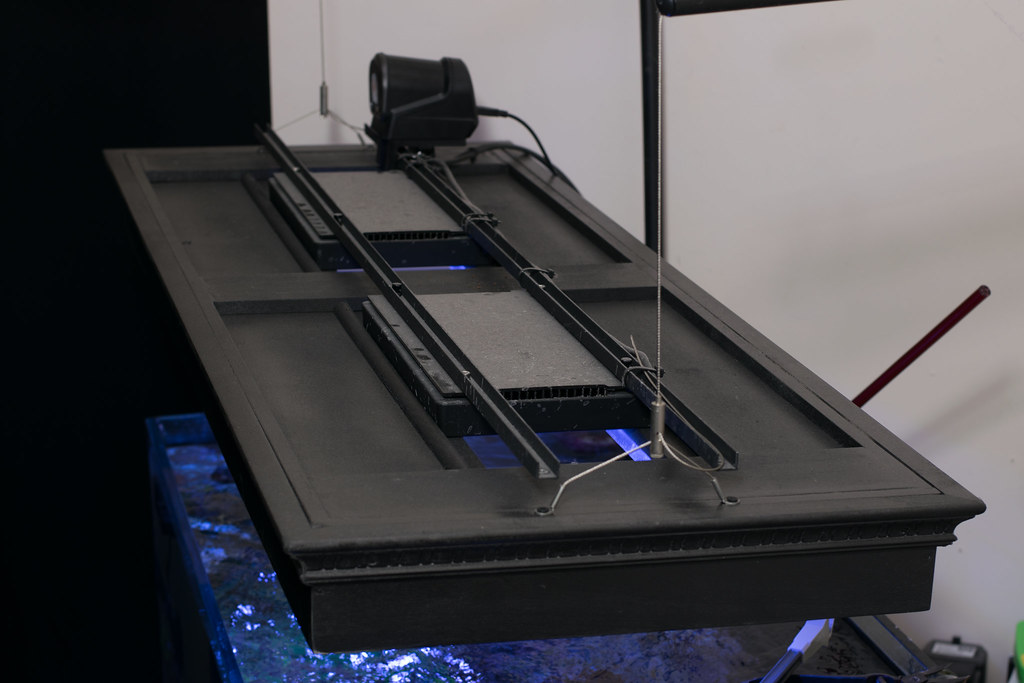
Current Lighting is provided by 2 Radion XR30 Gen 2 fixtures:

24155211065_3aa0d7e457_b.jpg


24072645931_d5825e9010_b.jpg


There are 2 54w T5 bulbs that are added into the hood but these only run for 45 min per day currently and I mainly use them when taking pictures of the tank and corals as they provide an easier lighting for the camera when not using flash.

Current Radion Lighting Schedule:


23548581263_47a9c1614e_b.jpg


24092764011_b219a5c665_b.jpg


24149285346_795dfe1231_b.jpg


The lights are quite high (12.5" above water) as I find Ecotech's recommendation of 8" to be crazy. Not enough spread and far too much intensity.

The main lighting period is only 6 hours long with a slow shift from the Radium setting to 14K at "noon" and then back to the Radium with low supplemental lighting for viewing purposes for a few hours on either end.
 
Flow in the tank is provided by 2 Gyre XF150s with the new "rugged" impellors. These are placed on either end of the tank and are set to alternate flow on a 3 hour interval. At the time of the changeover I have the Apex programmed to alternate between a 20 second calm period with both pumps off and a very rough period with both pumps on. I find that this changes up the flow patters sufficiently to prevent detritus from gathering anywhere in the tank. This programming is accomplished by using the DEFER command on the Apex. The left Gyre is DEFER 000:30 Then OFF and the Right Gyre is set using DEFER 000:30 Then ON.

23424775193_0e9ca5cd8f_b.jpg

23545363979_9182cfcc46_b.jpg

23773763146_8cbeb80fd8_b.jpg
23792309571_34468fd445_b.jpg
 
Thanks for starting the thread. I am replacing my T5 with LED as supplement for 100% LED. What settings are you running the Radions now?

EDIT: I was posting whilst you were posting. I see the Radion setting now. Thanks.
 
I love the attention to detail and the awesome work with the equipment. :thumbsup:

can you please write a little about what you feed the corals and fish? Ie which foods and additives you add daily and how many times a day?

Also, more photos please - your photography skill is top class! :beer:
 
I love the attention to detail and the awesome work with the equipment. :thumbsup:

can you please write a little about what you feed the corals and fish? Ie which foods and additives you add daily and how many times a day?

Also, more photos please - your photography skill is top class! :beer:

Thanks much appreciated! I have gotten a lot of advice from everyone in the photography forum. Also been taking a lot of pictures. Still working on getting a good full tank shot.

As for feeding I do the following:
1-2 cubes of frozen mysis soaked in 6-7 drops of selcon once daily
1/4 sheet of nori every other day.
The auto feeder feeds NLS pellets 3X a day (each feeding about 2 pinches)
TLF Acropower dosed at 3ml/day
Oyster Feast in small amounts whenever I think to add it.

The Acropower is likely a bottle of snake oil. However it has been my experience that corals do better in carbon dosed tanks when there is some sort of AA or other complex added. I think it makes up for missing nutrients. There is a sort of balancing act between getting nice colors, good growth and limiting the possibility of algae growth. I control this by a gate valve on the inlet of the biopellet rx. I try to control it to a trickle and adjust it so that I have to clean the glass once every 3 days or so if that makes sense.

I also do an 8-10 gallon water change once per week. This system deserves it one write up when I have the time as it is "half automated" as I would call it.
 
Beautiful eye candy love it


Thanks. I recently purchased a dedicated macro lens (Tokina 100mm) and have been enjoying taking some very close up shots of my corals.

I'm still trying to get a good full tank shot. I haven't as of yet been able to get a very sharp image of the whole tank.
 
My 120G SPS System

Alright so today I thought I would sit down and go over my "half automated" water change method.


There are many methods of performing automated water changes that can be found all over the internet. For a little while I did do a fully automated water change using a Masterflex peristaltic pump with two heads connected to at once draw water out of the display and add NSW.


While this worked I was really never comfortable with it. There are several reasons but the biggest ones are the following:


Due to small pressure differences caused by the relative heights of the bodies of water in question the rate of water in never exactly matched the rate of water out (even using a very precise lab style peri pump). This would result in a slow drift in salinity which needed to be manually corrected.


The second reason is that any auto water change system is pretty complex. More complexity = more chance of disaster when something misbehaves.


Because of this I feel that human action should be part of the water change process. However I hate carrying buckets of water around so I settled on the "half automated" water change system I use now:


23959078610_496a2594fb_z.jpg


The clear box I made to act as an interface between the Tunze 5017 ATO and the APEX. It is just a set of relays and two switches. When the Tunze calls for water it closes its output. This in turn, depending on switch position closes either the FW or SW relay which is monitored by the APEX. During normal operation this means that the APEX turns on the FW water pump to act as a normal ATO but controlled by the Tunze electronic eye and timing circuitry.


During a water change I grab a bucket, flip the switch from FW to SW and use a drip acclimation line to drain water into the bucket. When the level goes low the Tunze calls for water and the APEX starts the SW pump which fills the tank with water from the SW storage tank downstairs.


24146730872_36787f3181_z.jpg


I use two Avast Marine diaphram pumps for FW and SW ATO pumps. They work really well for my purposes. I change out 2 5 gal buckets of water each weekend which takes a few hours but means I don't need to heat my new SW and requires very little action/attention on my part other than to start the WC and dump the bucket twice.
 
Back
Top