
You are using an out of date browser. It may not display this or other websites correctly.
You should upgrade or use an alternative browser.
You should upgrade or use an alternative browser.
Petco Gigantea
- Thread starter OrionN
- Start date


Very good thread and glad it has helped so many people!Did you notice that the Cipro thread have been up 1 year now (a few days short) I am glad that I was able to contribute a little to our great hobby.
I cannot help but love this guy.

That one is nice!


OrionN
Moved on
Well, I lost that mice multicolor Gigantea. Could not save him. I think keep him in the Cipro train the bacterial that infected him to become resistant to Cipro.
Of the 5 Petco Gigantea I have 3 now. One died and I traded one for a Magnifica.
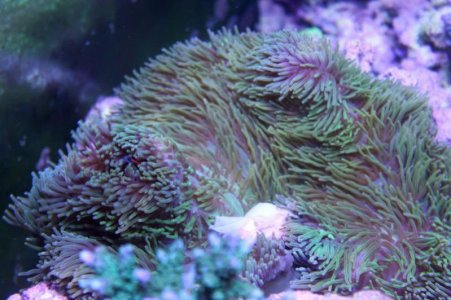
Here is one of the one I still have. All grow up and green. About 10 inches in this picture

Of the 5 Petco Gigantea I have 3 now. One died and I traded one for a Magnifica.
Here is one of the one I still have. All grow up and green. About 10 inches in this picture
marc price
Active member
Sorry Minh, you're still doing pretty good.
Btw, love that pic of the gig on that blue haddoni!
Btw, love that pic of the gig on that blue haddoni!


Reefahholic
New member
Well, I sure wish I could figure out why they are getting resistant to Cipro. Is it from us or others that have treated prior.
Are we not treating long enough?
What is an adequate number of days to treat. Specifically with Cipro? What's min and max time?
Are we not treating long enough?
What is an adequate number of days to treat. Specifically with Cipro? What's min and max time?
M Woodhill
New member
Well, I sure wish I could figure out why they are getting resistant to Cipro. Is it from us or others that have treated prior.
Are we not treating long enough?
What is an adequate number of days to treat. Specifically with Cipro? What's min and max time?
there won't be max time for should it fails to recover full in ht, it will perish in dt sooner or later. so itd better be left in ht either to full recovery or to its demise. or you can possibly try new antibiotics or antibiotics combo
or it's dyin with an uninfection cause
seriously can we get a marine scietist to look into mags and gigs carefully? labs in nyc are always full booked, the city is always full booked
Reefahholic
New member
I don't believe mine have died without infection.
I'm pretty positive they all had infections.
If it's viral, antibiotics won't touch it.
If it's gram positive, and we're using broad spec gram negative antibiotics such as Ciprofloxacin, then we have another problem.
The biggest question I have is this. Are these bacteria Aerobic, Anaerobic, or Facultative? Maybe Minh can chime in on this one. He and I are both in the medical field, but he knows a lot more than I do.
An anaerobic organism or anaerobe is any organism that does not require oxygen for growth. It may react negatively or even die if oxygen is present. An anaerobic organism may be unicellular or multicellular.
There are basically 3 categories of anaerobe:
Obligate aerobes need oxygen because they cannot ferment or respire anaerobically.
Obligate anaerobes are poisoned by oxygen.
Facultative anaerobes can grow with or without oxygen because they can metabolise energy aerobically or anaerobically.
Microaerophiles need oxygen because they cannot ferment or respire anaerobically. However, they are poisoned by high concentrations of oxygen.
Aerotolerant organisms do not require oxygen as they metabolise energy anaerobically. Unlike obligate anaerobes however, they are not poisoned by oxygen.
Obligate anaerobes, which are harmed by the presence of oxygen.
Aerotolerant organisms, which cannot use oxygen for growth, but tolerate its presence.
Facultative anaerobes, which can grow without oxygen but use oxygen if it is present.
Information source- Wikipedia
I'm pretty positive they all had infections.
If it's viral, antibiotics won't touch it.
If it's gram positive, and we're using broad spec gram negative antibiotics such as Ciprofloxacin, then we have another problem.
The biggest question I have is this. Are these bacteria Aerobic, Anaerobic, or Facultative? Maybe Minh can chime in on this one. He and I are both in the medical field, but he knows a lot more than I do.
An anaerobic organism or anaerobe is any organism that does not require oxygen for growth. It may react negatively or even die if oxygen is present. An anaerobic organism may be unicellular or multicellular.
There are basically 3 categories of anaerobe:
Obligate aerobes need oxygen because they cannot ferment or respire anaerobically.
Obligate anaerobes are poisoned by oxygen.
Facultative anaerobes can grow with or without oxygen because they can metabolise energy aerobically or anaerobically.
Microaerophiles need oxygen because they cannot ferment or respire anaerobically. However, they are poisoned by high concentrations of oxygen.
Aerotolerant organisms do not require oxygen as they metabolise energy anaerobically. Unlike obligate anaerobes however, they are not poisoned by oxygen.
Obligate anaerobes, which are harmed by the presence of oxygen.
Aerotolerant organisms, which cannot use oxygen for growth, but tolerate its presence.
Facultative anaerobes, which can grow without oxygen but use oxygen if it is present.
Information source- Wikipedia
M Woodhill
New member
I don't believe mine have died without infection.
I'm pretty positive they all had infections.
If it's viral, antibiotics won't touch it.
If it's gram positive, and we're using broad spec gram negative antibiotics such as Ciprofloxacin, then we have another problem.
The biggest question I have is this. Are these bacteria Aerobic, Anaerobic, or Facultative? Maybe Minh can chime in on this one. He and I are both in the medical field, but he knows a lot more than I do.
An anaerobic organism or anaerobe is any organism that does not require oxygen for growth. It may react negatively or even die if oxygen is present. An anaerobic organism may be unicellular or multicellular.
There are basically 3 categories of anaerobe:
Obligate aerobes need oxygen because they cannot ferment or respire anaerobically.
Obligate anaerobes are poisoned by oxygen.
Facultative anaerobes can grow with or without oxygen because they can metabolise energy aerobically or anaerobically.
Microaerophiles need oxygen because they cannot ferment or respire anaerobically. However, they are poisoned by high concentrations of oxygen.
Aerotolerant organisms do not require oxygen as they metabolise energy anaerobically. Unlike obligate anaerobes however, they are not poisoned by oxygen.
Obligate anaerobes, which are harmed by the presence of oxygen.
Aerotolerant organisms, which cannot use oxygen for growth, but tolerate its presence.
Facultative anaerobes, which can grow without oxygen but use oxygen if it is present.
Information source- Wikipedia
1, I treated mags with amoxicillin, sulfathiazole and cipro. They basically had the same reactions and bounced back after treatment
This doesn't guarantee a certain success
What caused an infection must be answered exactly by lab means. So if you're more accessible to a medic lab, you can take samples and do some tests to determine the exact pathogen
Plzzzzzzzzzzzzzzzzzzzzzzzz
I tried to use my moms lab but she just simply threw me few more bucks to purchase a new one. I guess this is the worst part of the hobby. Mags and Gigs are so cheap at the collection place and so expensive at the retailers, they don't care about the casualty while guys collect a blue gig at a price of like 10 bucks, selling it like 50 bucks in Hong Kong and 200 bucks in new york. 1 out of 10 making its way to New York even means a good profit
OrionN
Moved on
I fed mine contaminated food. I accidentally drop the food into the skimmer bucket. I fish it out washed it multiple times and feed 5 of my anemones. The other 5 were fed before I drop the food. Of the 5 that ate the bad food only one got sick. I was going out of town so I just put him in HT with high dose Ciprofloxacin. It did not work. He did OK for a few days but goes down hill. Treated with Ciprofloxacin and Septra did not help a whole lot. Hind sight is 20/20. I should not have fed them that contaminated food. The skimmer bucket is absolutely full of bacteria. The piece of food I fed him may have been porous ans soak up a lot of the bacterial and cannot be washed. He deflates the next morning and go down from there
Reefahholic
New member
That sucks!



CoralsAddiction
Active member
Great looking nem
Similar threads

- Replies
- 0
- Views
- 118
- Replies
- 0
- Views
- 89

