
You are using an out of date browser. It may not display this or other websites correctly.
You should upgrade or use an alternative browser.
You should upgrade or use an alternative browser.
Please help identify a disease
- Thread starter Staisman
- Start date

Dmorty217
Saltwater Addict
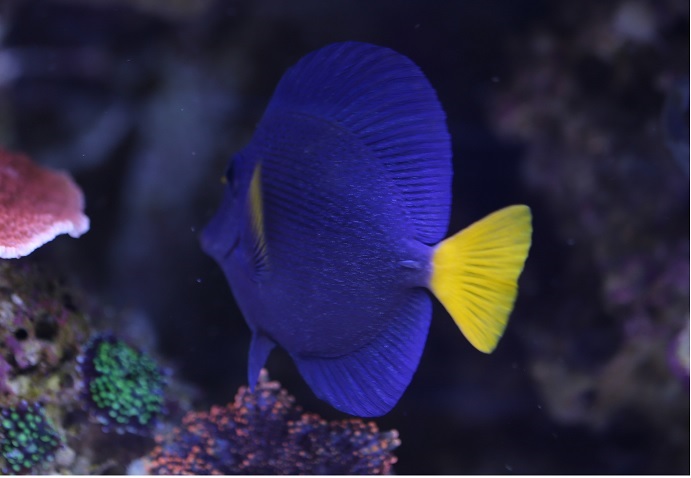
Looks like ich. Now its in your display tank with no options to rid the tank of it without taking all fish out and leaving them out a minimum of 90 days, even that might not be long enough. Read up on ich and treatment options, far too much to be explained and it will be much easier for you to read for yourself

Staisman
New member
Here is better pic
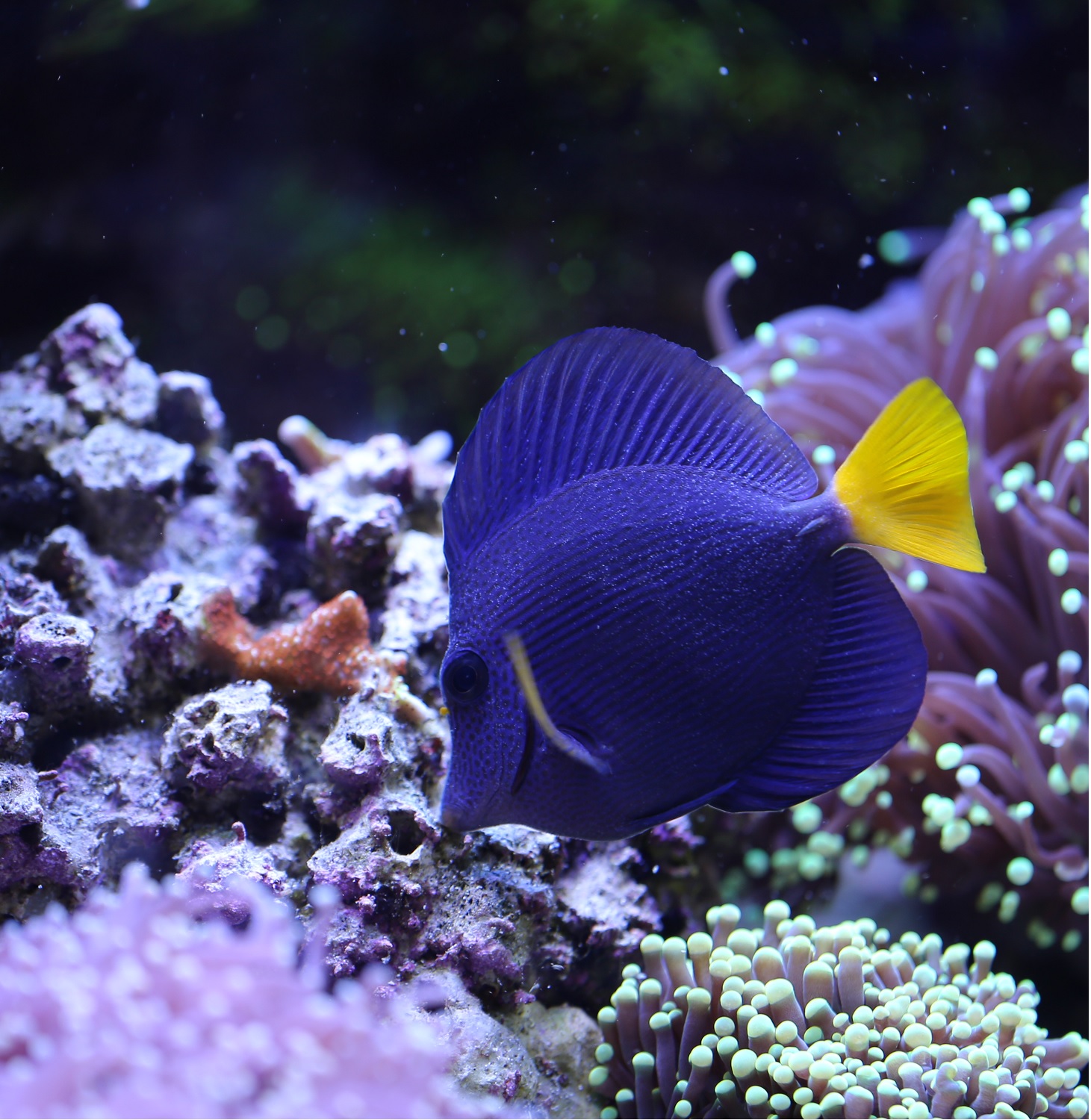
So here is the thing. I put him in the DT only yesterday, he was in my QT for over 3 weeks and I didnt see the signs because of the low light in the QT. He is eating fine, swimming also fine. So if I catch him somehow today, my other fish could be fine? I know ich has 7 days in between stages.
So here is the thing. I put him in the DT only yesterday, he was in my QT for over 3 weeks and I didnt see the signs because of the low light in the QT. He is eating fine, swimming also fine. So if I catch him somehow today, my other fish could be fine? I know ich has 7 days in between stages.

Staisman
New member
Since he is in the DT the ich is in your DT. Pulling him out, alone, cannot guarantee none of the ich has not already dropped off of him. See the stickies in this section.
I know, but it's all speculations, we do not know for sure, time will show. For now he is out of the DT and I gonna treat him for ich in my QT and will monitor other fish in my DT. I will post an updates. :deadhorse:
Staisman
New member
After a week of close observations I am leaning more to a velvet. The fish afraid of a light. Stays in the cave at all times, eats fine, breathing heavily, twitching. Fish developed some lines across the body and still have white spots. All fins remains intact. Lost some coloration.
I was dosing Ich-X for a week every day after 20% water change, nothing changed.
Now in my DT my leopard wrasse female got some sores on the body, itching and twitching, stays out of the light.
I was dosing Ich-X for a week every day after 20% water change, nothing changed.
Now in my DT my leopard wrasse female got some sores on the body, itching and twitching, stays out of the light.
Staisman
New member
After reading this I made a conclusion that it is Velvet i am dealing with.
My fish do look like it has a layer of dust on it, and countless amount of dots.
If visible physical symptoms do manifest:
Velvet may initially start out looking just like ich, with salt or sugar-like “sprinkles” visible mostly on the fins.
Within days or sometimes just hours, these tiny white dots will spread all over the fish’s body, covering it in “dust.” This dust may look grey-gold colored if viewed at the right angle and under the right spectrum of light. For this reason, it may be difficult to see velvet on a yellow or light colored fish (look from an angle, not directly from the side). However, sometimes a fish’s body will look “dirty” or show “dark areas” just before velvet appears.
There are two ways to differentiate velvet from ich:
Velvet trophonts (and the correlating dots) are much smaller than ich. They range in size from 10-80 micrometers in diameter. They are also perfectly round. Ich trophonts are more oval shaped and range in size from 48 x 27 to 452 x 360 micrometers. Both start off small but then grow in size before dropping off. It has been said that velvet makes a fish look like it has been dusted with a fine powder, whereas ich is more like salt grains.
If you can count the number of white dots on your fish, then you are probably dealing with ich. If they are too numerous to count, it is most likely velvet.
My fish do look like it has a layer of dust on it, and countless amount of dots.

The real issue is that you need to treat every single fish in that tank.
This. And if it is indeed velvet, and that is highly likely, speed is essential. Your display tank has it. The fallow period for velvet is six weeks. And, going forward, QT must be a minimum of two months.

ThRoewer
New member
One of the best indicators for ich is that it at first appears and disappears in fairly well defined waves. It usually takes a few weeks for the infection to get lethal.
With velvet you would not see such a clear wave pattern but rather a more steadily increasing infection level. First deaths can occur within a week or two.
If a freshwater or formalin bath reduces the number of spots and brings some temporary relief to the fish it would also clearly point towards velvet.
Most reliable would of course be a microscopic identification.
The most effective treatment against velvet would be Chloroquine Phosphate. Not only will it kill the parasite quickly, but also reduce inflammation which helps the fish.
The only issue with CP is that there are at least 2 fish families that won't tolerate it:
The Syngnathiformes (pipefish, seahorses and their relatives) and some members of the Labridae (wrasses).
Sent from my XT1254 using Tapatalk
With velvet you would not see such a clear wave pattern but rather a more steadily increasing infection level. First deaths can occur within a week or two.
If a freshwater or formalin bath reduces the number of spots and brings some temporary relief to the fish it would also clearly point towards velvet.
Most reliable would of course be a microscopic identification.
The most effective treatment against velvet would be Chloroquine Phosphate. Not only will it kill the parasite quickly, but also reduce inflammation which helps the fish.
The only issue with CP is that there are at least 2 fish families that won't tolerate it:
The Syngnathiformes (pipefish, seahorses and their relatives) and some members of the Labridae (wrasses).
Sent from my XT1254 using Tapatalk
Staisman
New member
UPDATE:
So far I had no signs of a disease in my DT. It is almost a month since and I think I would see something by now or have some fatalities.
Tang in my QT is doing better after some PraziPro and ICH X treatments but still has some spots on the body. I can't make a pics because he always hiding. The spots are not as clear as before.
The red sores on my wrasse are from a male being very aggressive to her lately, but he calmed down now.
So far I had no signs of a disease in my DT. It is almost a month since and I think I would see something by now or have some fatalities.
Tang in my QT is doing better after some PraziPro and ICH X treatments but still has some spots on the body. I can't make a pics because he always hiding. The spots are not as clear as before.
The red sores on my wrasse are from a male being very aggressive to her lately, but he calmed down now.
Similar threads

- Replies
- 8
- Views
- 525


- Replies
- 0
- Views
- 70